


Yes, air purifiers with True HEPA filters help with mold by trapping airborne spores before they settle and grow. However, while they clean your indoor air, they cannot kill or remove existing mold patches growing on walls or carpets. To fully solve a mold problem, you must also fix the underlying moisture source causing the dampness.
Imagine walking into your home and smelling a damp odor. You look around, but you cannot find the source. You might feel a tickle in your throat. You might start sneezing. Mold is a silent guest. It loves to hide in dark, wet spots. It can quickly affect your health and your comfort.
Many homeowners look for quick ways to clean the air they breathe. Many people ask: Do Air Purifiers Help With Mold? to see if it is a smart investment. If you are asking yourself this question, you are not alone. It is a very common question for people dealing with damp rooms. You might ask, Do Air Purifiers Help With Mold? when you first notice that musty smell.
In this guide, we will explore how these devices work against mold. We will look at the science behind HEPA filters and how they trap tiny spores. We will also share simple steps to keep your home fresh, dry, and completely mold-free.
Key Takeaways
- HEPA filters trap spores: True HEPA filters capture 99.97% of tiny mold spores floating in your indoor air.
- Active mold stays: Air purifiers only clean the air; they cannot destroy mold already growing on physical surfaces.
- PECO and UV-C help: Some purifiers use UV light or special technology to destroy the cellular structure of mold.
- Moisture control is key: You must fix water leaks and lower high humidity to prevent new mold from growing.
- Filter upkeep matters: Dirty filters can grow mold themselves, so change them regularly according to instructions.
- Strategic placement helps: Keep your air purifier in damp rooms like basements or bathrooms to catch spores early.
📑 Table of Contents
Understanding Mold and How It Spreads
To fight mold, we first need to know how it behaves. Mold is a type of fungus. It grows in warm, wet places like bathrooms and basements. It spreads by releasing tiny seeds into the air. These seeds are called spores. This makes people ask, Do Air Purifiers Help With Mold? when they see spores spread.
The Life Cycle of Airborne Spores
When mold grows on a wall, it releases millions of spores. These spores float through your home like dust. They land on carpets, furniture, and clothes. If they find a wet spot, they start to grow new mold. To understand this, it helps to read about how mold spores travel through the air and settle on surfaces. This cycle is why a small patch of mold can quickly turn into a big problem.
Why Mold Is Bad for Your Health
Breathing in these spores can cause health issues. You might get itchy eyes, a runny nose, or a dry cough. For people with asthma, mold can make it very hard to breathe. Keeping your indoor air clean is key to feeling good every day.
Do Air Purifiers Help With Mold? Yes, But Here is How
Let us answer the big question directly. Do Air Purifiers Help With Mold? Yes, they do, but they only do half the job. An air purifier acts like a net. It pulls in dirty air, traps the floating spores, and pushes out clean air. This keeps you from breathing in those bad particles.
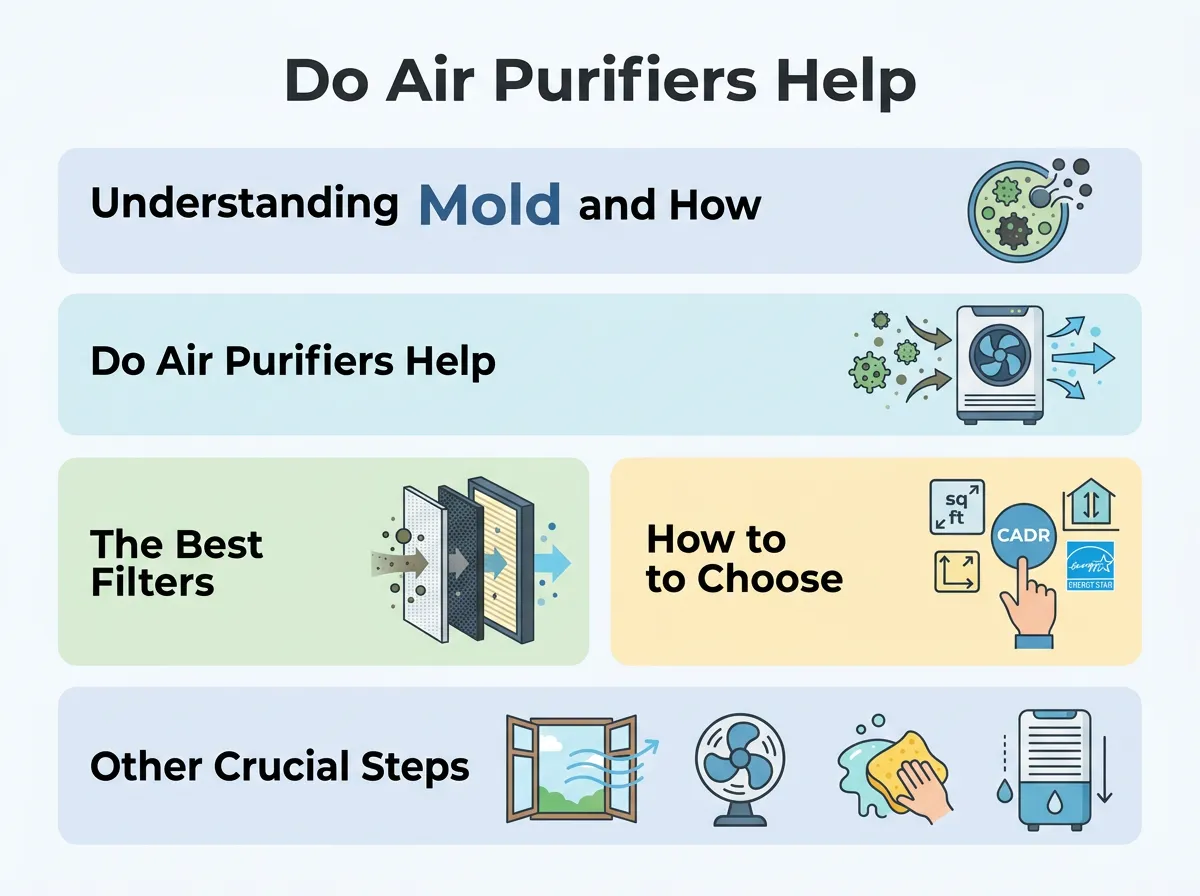
Do Air Purifiers Help With Mold? — key points at a glance
What an Air Purifier Can Do
The main job of an air purifier is to clean your air. It stops mold spores from floating from room to room. This prevents the spores from landing on new wet spots and growing. If you ask, Do Air Purifiers Help With Mold? you will find they do a great job on floating spores. By trapping these spores, the device helps reduce allergy symptoms. It also makes your home smell much cleaner.
What an Air Purifier Cannot Do
It is important to know that an air purifier cannot fix existing mold. If you have black spots on your walls or under your sink, the machine will not wash them away. It cannot reach onto walls to kill the roots of the fungus. You must scrub the mold away with soap and water or call a professional to help you.
The Best Filters for Trapping Mold Spores
Not all air purifiers are the same. If you are wondering, Do Air Purifiers Help With Mold?, the answer depends heavily on the filter inside. You need a filter that can catch very tiny particles.
Why You Need a True HEPA Filter
A True HEPA filter is the best choice for clean air. HEPA stands for High-Efficiency Particulate Air. This filter can trap 99.97% of particles as small as 0.3 microns. Since most mold spores are between 2 and 20 microns, a True HEPA filter catches them easily. When looking at filters, you might ask, Do Air Purifiers Help With Mold? if they do not have HEPA. Always avoid filters labeled HEPA-type, as they are not as powerful.
The Role of Activated Carbon Filters
Mold does not just look bad. It also smells bad. That classic musty smell comes from gases released by the growing fungus. A HEPA filter cannot trap gases. But an activated carbon filter can. This filter uses treated charcoal to absorb odors and chemicals. It leaves your home smelling clean and fresh.
UV-C Light and PECO Technology
Some modern purifiers use special lights or advanced filters to destroy mold. A UV-C light shines on the trapped spores to kill them. This stops them from growing. PECO technology goes a step further. It breaks down organic matter at a molecular level. If you want the best protection, look for these advanced features.
How to Choose and Position Your Air Purifier
Buying the right device is only the first step. You also need to know how to use it. If you want to know Do Air Purifiers Help With Mold? in real life, you must put the machine in the right spot.
Picking the Right Size
Every air purifier is rated for a specific room size. Before you buy, measure the square footage of your room. A small purifier in a large living room will not do much. We want to know, Do Air Purifiers Help With Mold? if the room is too large. The answer is no. You must look for the Clean Air Delivery Rate (CADR). This ensures the machine can clean the air in your room several times per hour. You can check out some of the top-rated units designed for damp environments to find a good match for your room.
Where to Place the Device
Place your air purifier near the source of the moisture. Good places include the basement, bathroom, or kitchen. Make sure there are no walls or furniture blocking the airflow. Keep it at least three feet away from walls for the best air circulation.
Simple Maintenance Tips
An air purifier cannot do its job if the filter is clogged. Check your filters every month. Change them as often as the maker recommends. If you leave a dirty HEPA filter in a damp room, mold can start growing on the filter itself. Always wash or replace filters in a well-ventilated area.
Other Crucial Steps to Control Mold in Your Home
While we know the answer to Do Air Purifiers Help With Mold? is a clear yes, you cannot rely on them alone. You must also tackle the root cause of mold. Mold always needs water and moisture to grow.
Keep Your Humidity Low
Mold loves wet air. Keep your home’s humidity level below 50%. You can use a small tool called a humidity monitor to check this. This brings us back to the question: Do Air Purifiers Help With Mold? when humidity is high. Yes, but you must pair it with a dehumidifier. This machine pulls water out of the air, making it impossible for mold spores to grow.
Fix Leaks and Improve Ventilation
Always fix leaky pipes or roofs right away. If you do not fix leaks, you will find yourself asking: Do Air Purifiers Help With Mold? forever. Use exhaust fans in the bathroom when you shower. Use them in the kitchen when you cook. Open your windows on dry, sunny days to let fresh air move through your home. These simple steps will keep your air healthy and dry.
The Health Benefits of Clean Air
Keeping your home dry and clean does wonders for your body. When you remove mold and dust, you will sleep better. You will also have more energy. To learn more about how this impacts your body, read about the health benefits of clean air and how it supports your immune system.
Conclusion: Breathe Easy with the Right Tools
So, Do Air Purifiers Help With Mold? They certainly do. They are excellent tools for trapping floating spores and keeping your indoor air fresh. By using a True HEPA filter, you can protect your lungs from breathing in bad particles.
However, remember that a purifier is only one part of the puzzle. You must also keep your home dry. Fix leaks and clean up any physical mold you find. When you combine an air purifier with good humidity control, you can create a healthy, mold-free home. You will be able to breathe easy every single day.
Frequently Asked Questions
Can an air purifier remove mold from walls?
No, an air purifier cannot remove mold from walls or other surfaces. It only traps loose mold spores that are floating in the air. To remove mold from physical surfaces, you must clean it with soap, water, or specialized cleaners.
Do all air purifiers catch mold spores?
No, not all air purifiers can catch mold spores. You need a device equipped with a True HEPA filter to trap these tiny particles. Standard filters are often too loose to catch small mold spores.
Can mold grow inside an air purifier?
Yes, mold can grow inside an air purifier if you do not change the filter. When the filter becomes clogged with dust in a damp room, it creates a perfect home for mold. Always change your filters on time to prevent this problem.
Will a dehumidifier or an air purifier help more with mold?
Both tools help in different ways, but a dehumidifier is better for preventing mold growth by removing moisture from the air. An air purifier is better for cleaning up the spores that are already floating around. Using both devices together gives you the best defense.
How long should I run my air purifier for mold?
You should run your air purifier continuously on a low or auto setting for the best results. Mold spores can release into the air at any time. Running the device 24/7 ensures your indoor air stays clean and safe.
Does UV light in air purifiers kill mold?
Yes, air purifiers with UV-C light can help kill or deactivate mold spores as they pass through the filter. The UV light damages the DNA of the mold, which stops it from growing or multiplying. This adds an extra layer of protection to your home.
