


Yes, air purifiers are absolutely worth it for most homes, especially if you deal with allergies, pets, or wildfire smoke. These compact devices capture up to 99.97% of airborne pollutants, helping you breathe much easier. While they do require ongoing filter costs, the long-term health benefits, better sleep, and cleaner air make them a highly valuable investment.
Imagine walking into your home after a very long day. You close the door and take a deep, relaxing breath. But instead of feeling fresh, your throat tickles. You smell the dinner you cooked yesterday, mixed with a hint of pet odor. In the background, tiny dust motes dance in the light shining through the window.
Most of us spend the majority of our lives indoors. Yet, we rarely think about the quality of the air we breathe. With rising wild fires, seasonal pollen, and pet allergies, many people are looking for help. We see sleek, modern air purifiers advertised everywhere online. They promise to give us clean, fresh air with the touch of a button.
But these devices are not cheap. They cost money to buy, and they cost money to run. This leaves many people wondering if they actually perform as promised. In this complete guide, we will look at how these machines work, what they can do, and whether you should buy one.
Key Takeaways
- Allergy and Asthma Relief: They remove dust, pollen, and pet dander from your indoor air.
- True HEPA is Crucial: Look for True HEPA filters to capture tiny particles effectively.
- Odor and Smoke Removal: Activated carbon filters work best to eliminate bad smells and smoke.
- Size Matters: You must match the device to the square footage of your room.
- Ongoing Expenses: Keep in mind the cost of replacing filters every few months.
📑 Table of Contents
How Do Air Purifiers Actually Work?
Air purifiers seem very simple. You plug them into the wall. You turn them on. They make a soft humming sound. But what is happening inside the machine? To understand if they are right for your home, it helps to look at how they clean your space. You can learn more about how they target airborne particles from Healthline’s guide on air purifiers.
The Magic of HEPA Filters
Most high-quality purifiers use a True HEPA filter. HEPA stands for High-Efficiency Particulate Air. This filter is a dense web of tiny fibers. It works by trapping small particles that float in the air. A True HEPA filter can trap 99.97% of particles that are 0.3 microns in size. To help you picture this, a single human hair is about 70 microns wide. This means the filter easily catches tiny pollen, dust mites, and mold spores. If you are asking yourself, Are Air Purifiers Worth It?, the HEPA filter is the main reason why the answer is yes.
The Role of Activated Carbon
A HEPA filter is great for dust, but it cannot stop smells. That is where activated carbon comes in. This filter is made of treated charcoal. It has millions of tiny pores. These pores trap gas molecules, chemicals, and smells. If you want to get rid of cooking odors, pet smells, or fresh paint fumes, you need a machine with a carbon filter.
The Core Benefits: Who Needs One Most?
Not everyone needs an air purifier in the same way. For some, it is a nice luxury. For others, it is a complete life changer. Let us look at who benefits the most from these machines.
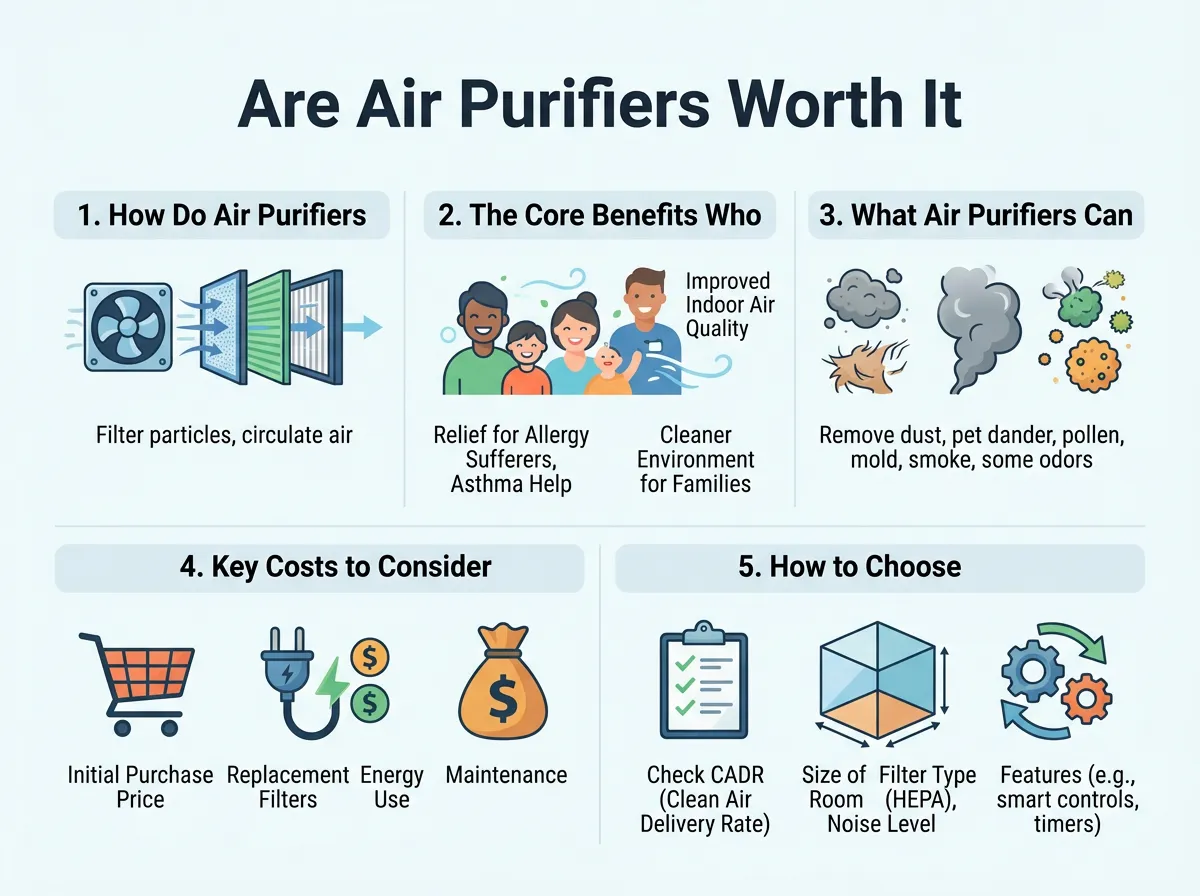
Are Air Purifiers Worth It? — key points at a glance
Pet Owners and the Battle Against Dander
We love our dogs and cats. But we do not love their dander. Dander consists of tiny flakes of dead skin. It floats in the air and sticks to your carpets and bedding. It can make you sneeze and itch. A good air purifier pulls pet dander out of the air before it lands. It also helps remove the smell of wet dog or kitty litter.
Allergy and Asthma Sufferers
If you have spring allergies, you know how hard it is to breathe. Pollen gets inside every time you open a door. It sticks to your carpets and blankets. An air purifier acts like a shield for your bedroom. It cleans the air while you sleep. This allows you to wake up without a stuffy nose or watery eyes.
City Dwellers and Smoke Protection
Do you live near a busy road? If so, you breathe in car exhaust and city soot. Also, many areas now face wildfire smoke during the summer. This smoke is very dangerous to your lungs. Standard home screens cannot stop it. A quality purifier is a lifesaver during smoke season. For people in these areas, asking Are Air Purifiers Worth It? is an easy question. The health protection alone makes them vital.
What Air Purifiers Can and Cannot Do
It is important to have realistic goals. Air purifiers are great tools, but they cannot solve every problem in your home.
They Do Not Clean Your Furniture
Some people think buying a purifier means they never have to dust again. This is not true. Dust is heavy. Large dust particles fall to the floor or settle on tables quickly. An air purifier can only catch particles while they float in the air. You will still need to vacuum your rugs and wipe down your shelves. But you will notice less fine dust settling on your furniture over time.
They Do Not Instantly Kill All Germs
Some models claim to kill viruses and bacteria using UV light. While this technology can help, it is not a perfect cure. A purifier can capture germs that float into it, but it cannot stop you from catching a cold if someone sneezes near you. Think of it as one part of your home health routine, not a magic shield.
Key Costs to Consider Before Buying
When asking Are Air Purifiers Worth It?, we must talk about the ongoing costs. It is not just about the price on the box. If you want to know if these devices are a waste of resources, you can read more about why some people view air purifiers as a waste of money before making your choice.
The Initial Purchase Price
You can find small purifiers for fifty dollars. You can also find large, high-end models that cost over five hundred dollars. Cheap models often only cover small bedrooms. Expensive models have smart sensors, quiet fans, and cover much larger spaces. Think about your budget and needs before you shop.
Filter Replacement Costs
Filters do not last forever. They get clogged with dust, hair, and dirt. You must replace them every six to twelve months. If you do not, the machine stops working well. A new HEPA filter can cost between thirty and eighty dollars. Before you buy a machine, check how much its replacement filters cost. This is a recurring cost you must plan for.
Electricity Usage
You need to run your purifier often to get the best results. This means it will use power. Luckily, most modern units are very energy efficient. Many use about the same power as a single light bulb. Look for the Energy Star label to keep your electric bill low.
How to Choose the Right Purifier for Your Home
If you decide to buy, you want to get the right model. Do not just buy the first shiny machine you see online. For a detailed breakdown of ratings and performance tests, check out the Consumer Reports air purifier buying guide.
Check the CADR Rating
CADR stands for Clean Air Delivery Rate. This rating shows how fast the machine cleans the air. There are three separate ratings: smoke, dust, and pollen. A higher number means the machine cleans the air faster. Look for a CADR rating that fits your needs.
Size the Machine Correctly
Every purifier is rated for a specific room size. A small unit made for a bedroom will not work in a large living room. Measure your room’s square footage first. Then, look for a model designed for that size. It is always better to buy a slightly larger unit than you need.
Making Your Verdict
So, let us look at the big picture. Are Air Purifiers Worth It? Many wonder if they are just a trendy gimmick, but as discussed in this analysis of whether air purifiers are worth it, the answer depends heavily on your environment.
When They Are Worth It
They are absolutely worth it if you have asthma or allergies. They are worth it if you live with pets or in a dusty city. They are also vital if you live in an area prone to wildfires. The clean air leads to better sleep and fewer allergy symptoms.
When You Can Skip Them
If you have no allergies, no pets, and live in a clean rural area, you might not need one. Also, if you keep your windows open all day, a purifier cannot keep up with the outdoor air. In these cases, you might not see enough benefits to justify the cost.
Conclusion
In the end, our homes should be safe havens. The air we breathe affects how we feel every single day. While air purifiers require some upfront costs and light upkeep, they offer incredible peace of mind. They quiet your allergies, clear out smoke, and freshen up stale spaces. When you ask Are Air Purifiers Worth It?, look at your own home and health. For most of us, the gift of clean, fresh air is worth every single penny.
Frequently Asked Questions
Do air purifiers remove odors?
Yes, air purifiers can remove odors if they have an activated carbon filter. Standard HEPA filters trap dust and pollen but cannot capture gas molecules or smells. Look for a model with a thick carbon layer to neutralize cooking, smoke, and pet odors.
Can I leave my air purifier on all day?
Yes, it is highly recommended to leave your air purifier on twenty-four hours a day. Air pollution is continuous, and turning the device off allows particles to build up again. Most modern units are designed to run constantly on low power settings without overheating.
Where is the best place to put an air purifier?
The best place is in the room where you spend the most time, such as your bedroom or living room. Ensure it sits on a flat surface with at least three feet of clear space around it. Avoid hiding it behind furniture or in tight corners where airflow is blocked.
Do air purifiers help with dust?
Yes, they help with light, floating dust particles in the air. However, they will not remove heavy dust that has already settled on your floors or tables. You will still need to do some light dusting and vacuuming.
How often do I need to change the filters?
Most HEPA filters need to be changed every six to twelve months, depending on use. Activated carbon filters usually last three to six months. Always check the manufacturer’s manual and the filter indicator light on your machine.
Do air purifiers dry out the air?
No, air purifiers do not dry out the air. They only filter out airborne particles and do not remove moisture like a dehumidifier does. Your indoor humidity levels will remain exactly the same.
