


Yes, air purifiers do help with smell, but only if they contain an activated carbon filter. While standard HEPA filters are great at capturing particles like dust and pet dander, they cannot trap gas molecules or odors. To successfully eliminate stubborn odors from cooking, pets, or smoke, you must choose an air purifier with a thick, high-quality carbon layer.
Imagine walking into your home after a long day. Instead of the cozy, welcoming scent you expect, you are hit by a wave of last night’s fish dinner or the musky odor of a wet dog. It is a common frustration that many homeowners face. When these stubborn smells linger, it is natural to look for a quick and reliable solution to clean up the air.
We often turn to sprays, candles, or open windows, but these remedies are often temporary. This leads to an important question: do air purifiers help with smell, or do they just circulate the same stale air around the room? In this guide, we will explore how air purifiers handle different odors, which technologies actually work, and how to choose the right device to keep your living space smelling fresh and clean.
Key Takeaways
- Carbon filters are essential: Traditional HEPA filters only trap physical particles, while activated carbon filters absorb gas-based odors.
- Different odors require different care: Cooking oils, pet smells, and tobacco smoke each behave differently in the air.
- Filter thickness matters: A thicker pellet-based carbon filter is much more effective at removing smells than a thin carbon-coated sheet.
- Source control is key: Air purifiers work best when you first remove the root cause of the bad smell.
- Room size matching is vital: Ensure your purifier’s CADR rating matches the square footage of the room for optimal odor control.
📑 Table of Contents
How Air Purifiers Process Odors
How do these machines handle bad scents? To find out, we must look inside them. Not all air purifiers are the same. Some only catch dust. Others can clean up bad smells. Many people who deal with tough kitchen odors want to know: do air purifiers help with smell when cooking? The answer depends entirely on the filters inside the machine.
The Role of HEPA Filters
Many purifiers have a True HEPA filter. This filter is great for dust. It catches pollen, pet dander, and mold spores. But it cannot stop smells. Why is this? Smells are made of tiny gas molecules. These gas molecules are too small for a HEPA filter. They pass right through it like sand through a net.
The Power of Activated Carbon
To stop bad scents, you need a different tool. You need an activated carbon filter. This filter is made of treated charcoal. It acts like a sponge for gases. If you wonder, do air purifiers remove smells, the answer lies here. The carbon traps the gas molecules. This keeps them from floating back into your room.
The Science Behind Activated Carbon Filters
Activated carbon is not just regular charcoal. It is treated with oxygen. This treatment opens up millions of tiny pores between the carbon atoms. These pores trap gases and odors through a chemical process. It makes the carbon highly effective at cleaning the air.
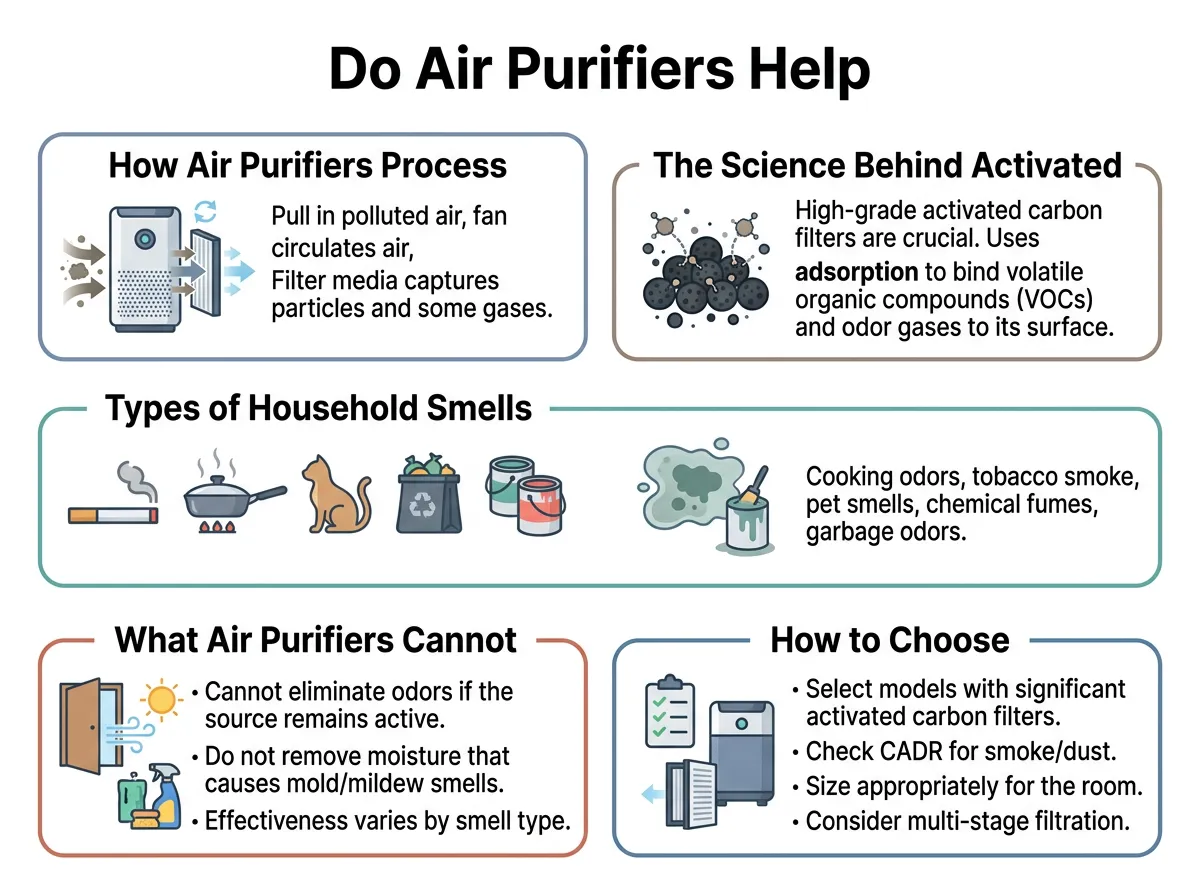
Do Air Purifiers Help With Smell? — key points at a glance
Adsorption vs. Absorption
How does carbon work? It uses a process called adsorption with a “d”. Absorption is like a sponge soaking up water. Adsorption is different. It means gas molecules stick to the outside of the carbon pores. They get trapped on the surface and cannot escape.
Why Carbon Pellet Filters Are Best
Some purifiers use a thin carbon sheet. These sheets do not have much carbon. They do not last long. For the best results, look for carbon pellets. A thick bed of pellets will trap more smells. This will keep your air fresh for a longer time. You can learn about the types of smells you can get rid of with these filters to see how they can improve your home.
Types of Household Smells You Can Eliminate
Our homes host many different scents. Some are nice, but many are not. Let us look at what an air purifier can clean up when you use the right filter.
Cooking Odors
Do you love to cook? Fish, garlic, and onions taste great. But their smells can linger for days. Grease gets into the air and sticks to walls. An air purifier with a carbon filter can catch these cooking smells. It keeps your kitchen smelling fresh and clean.
Pet Odors
We love our pets. But we do not love their smells. Wet dogs, cat litter boxes, and pet dander can make a home smell bad. If you ask yourself, do air purifiers help with smell from pets, the answer is a clear yes. A good purifier will clean the air near your pet’s favorite spot.
Smoke and VOCs
Smoke is very hard to get rid of. It comes from cigarettes, wildfires, or wood stoves. Smoke contains harmful chemicals. These are called Volatile Organic Compounds, or VOCs. New paint and furniture also release VOCs. A carbon filter traps these toxic gases safely.
What Air Purifiers Cannot Do
Air purifiers are great. But they are not magic. They have limits. It is important to know what they cannot do so you have the right expectations.
They Cannot Clean Dirty Surfaces
An air purifier only cleans the air. It cannot clean your carpets or walls. If your dog pees on the rug, the smell will stay. The purifier will help catch the smell in the air. But you must clean the rug first to stop the smell.
They Do Not Stop the Source
A purifier cannot fix a mold leak. It can catch mold spores in the air. But it will not stop mold from growing. You must fix the water leak to solve the problem. If you want to know more, read about how do air purifiers eliminate odors at their source.
How to Choose the Right Purifier for Smells
Are you ready to buy an air purifier? Keep these tips in mind. When shopping for a device, you might wonder, how do air purifiers help with smell so well? It all comes down to specifications.
Look for the Carbon Weight
Do not just buy any purifier. Check the specs. Look for the weight of the activated carbon. Some have only a few grams. Others have several pounds. More carbon means better smell control. It also means the filter will last longer.
Check the CADR Rating
CADR stands for Clean Air Delivery Rate. It tells you how fast the machine cleans the air. Look for a high CADR rating for smoke or odor. This means the machine will clean your room quickly and efficiently.
Match the Room Size
An air purifier must fit your room. If your room is large, a small purifier will not work. Check the square footage on the box. Make sure it matches your space for the best results.
Simple Tips to Get the Best Results
You have your new purifier. How do you get the most out of it? Here are some simple steps to keep your home smelling great.
Place It in the Right Spot
Do not hide your purifier in a corner. Do not put it behind a couch. It needs space to pull in air. Place it in the middle of the room or near the source of the smell, like the kitchen or litter box.
Change the Filters on Time
Carbon filters fill up over time. Once they are full, they cannot trap more smells. In fact, they might release old smells back into the room. Change your carbon filters every six months to a year to keep them working well.
Run It All the Time
Do not just turn it on when it smells. Run your purifier on a low setting all day. This keeps the air clean and prevents smells from building up in the first place.
Conclusion
Keeping your home fresh does not have to be hard. Bad smells can make your space feel less cozy. Now you know the answer to the big question: do air purifiers help with smell? Yes, they absolutely do, as long as they have a quality carbon filter. By choosing a purifier with activated carbon, you can say goodbye to tough cooking odors, pet scents, and smoke. Keep your filters clean, place the machine in a great spot, and enjoy fresh, clean air every day.
Frequently Asked Questions
Do air purifiers help with dog smells?
Yes, air purifiers help with dog smells if they have an activated carbon filter. The HEPA filter catches pet dander and fur, while the carbon layer traps the actual odor molecules. This combination keeps your home smelling fresh and clean.
How long does it take for an air purifier to remove smells?
An air purifier can begin to clear smells within thirty minutes to an hour in a standard room. The exact time depends on the size of the room, the strength of the odor, and the fan speed. Running the purifier on high speed will speed up the process.
Can a standard HEPA filter get rid of bad odors?
No, a standard HEPA filter cannot remove odors on its own. HEPA filters are designed to trap solid particles like dust, pollen, and pet dander. To remove odors and gases, you must use a filter that contains activated carbon.
Why does my air purifier smell bad?
If your air purifier smells bad, the filters are likely full and need to be replaced. Over time, the activated carbon and HEPA filters trap so much waste that they can start to release odors back into the room. Changing the filters will solve this problem.
Do air purifiers help with smoke smells?
Yes, air purifiers are very effective at removing smoke smells from cigarettes, wood stoves, or wildfires. You must ensure the purifier has a thick activated carbon filter to absorb the smoke gases and VOCs. Regular HEPA filters will not stop smoke odors.
Where should I put my air purifier to get rid of smells?
You should place your air purifier close to the source of the smell for the best results. Put it near the kitchen while cooking or near your pet’s bed. Make sure there are no walls or furniture blocking the airflow around the machine.
