


Yes, air purifiers are highly effective at reducing dust by trapping airborne particles before they settle on your furniture. By utilizing a True HEPA filter, these devices can capture up to 99.97% of fine dust, pollen, and other common household allergens. While they cannot eliminate existing heavy dust on surfaces, they significantly cut down on the amount of dust floating in your air.
Imagine sitting in your favorite chair. A warm ray of sunlight streams through the window. It looks beautiful, but then you notice something else. Thousands of tiny specks are floating in the air. This sight is all too common for many homeowners. You might find yourself wiping down your tables every single day, only to see a fresh gray layer return a few hours later. It can feel like a never-ending cycle that leaves you frustrated and sneezing.
If you are tired of this battle, you have likely looked for a solution. You may ask yourself, do air purifiers help with dust? This common question has a very interesting answer. These devices are built to clean the air, but they do not work quite like magic wands. Knowing how they operate can help you set realistic expectations for your home.
In this guide, we will explore the science behind these popular household appliances. We will look at what dust is made of and how filtration systems target these tiny particles. We will also discuss the limits of these machines and how to combine them with smart habits. By the end, you will know exactly how to use technology to breathe easier and keep your surfaces cleaner.
Key Takeaways
- HEPA filters are essential: True HEPA filters capture 99.97% of particles as small as 0.3 microns, making them the best choice for dust.
- They stop airborne dust: Purifiers pull in floating dust before it has a chance to land on your tables, shelves, or floors.
- They do not clean surfaces: An air purifier cannot remove heavy dust that has already settled on your furniture or carpets.
- Placement matters: To get the best results, place your purifier in high-traffic rooms or areas where you spend the most time.
- Regular maintenance is key: You must clean or replace filters on time to keep the unit running efficiently.
- Combine with cleaning: For a truly dust-free home, use your purifier alongside regular vacuuming and damp dusting.
📑 Table of Contents
Understanding What Dust Actually Is
To solve a problem, you must first understand it. Dust is not just simple dirt from the outdoors. It is actually a complex mix of many different things. It comes from both inside and outside your house. Every time you open a door or window, new particles enter. At the same time, your daily activities create dust inside.
The Surprising Ingredients of Household Dust
When you look at dust under a microscope, you see a tiny ecosystem. It contains dead skin cells, pet dander, and clothing fibers. It also holds pollen, mold spores, and tiny bits of plastic. Dust mites also thrive in these mixtures. These microscopic creatures feed on dead skin cells and release waste. This waste can trigger bad allergies and asthma attacks in sensitive people.
Why Dust Stays Airborne
Lightweight particles can float in the air for hours. Every time you walk across a carpet, sit on a couch, or fluff a pillow, you kick these particles back up. This keeps them floating in your breathing zone. Once the air calms down, these particles slowly settle onto your furniture. This is where the cycle of dusting begins again. If you can catch these particles while they are still in the air, you can stop them from landing.
How Air Purifiers Capture Airborne Dust
So, do air purifiers help with dust that is floating around? The short answer is yes, they are highly effective. However, they can only catch what is suspended in the air. Once a particle lands on a surface, the purifier cannot grab it.
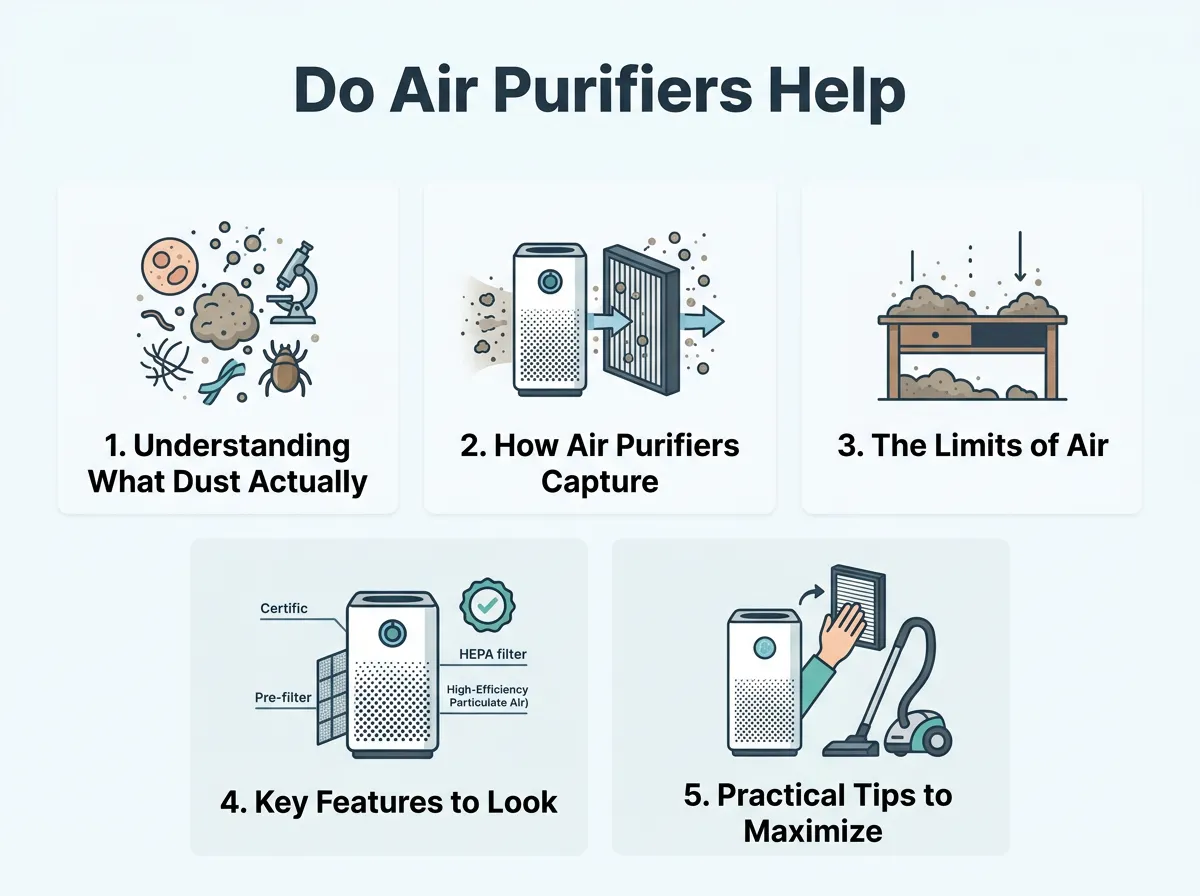
Do Air Purifiers Help With Dust? — key points at a glance
The Power of the HEPA Filter
The heart of any good air purifier is its filtration system. Most high-quality units use a True HEPA filter. This filter is made of a dense web of tiny glass fibers. As the purifier’s fan pulls air into the machine, these fibers trap particles. A True HEPA filter can trap 99.97% of particles that are 0.3 microns in size. This includes fine dust, pollen, and pet dander. According to real-world tests on dust reduction, running a HEPA filter can quickly lower the concentration of airborne particles in a closed room.
The Air Circulation Process
An air purifier works by constantly moving air. The fan draws dirty air in from your room. The air passes through the filters, which catch the dust. Finally, the machine releases clean air back into the room. This continuous cycle prevents floating dust from settling onto your flat surfaces. Over time, this means you will see much less buildup on your TV screens, bookshelves, and tables.
The Limits of Air Purifiers on Dust
While these machines are great, they are not perfect. It is important to know what they cannot do. This keeps you from being disappointed with your purchase. If you expect an air purifier to completely eliminate the need for cleaning, you may be disappointed.
Why Heavy Dust Still Settles
Air purifiers can only clean the air that actually passes through them. They cannot pull heavy dust off your tables, carpets, or curtains. Dust is subject to gravity. Heavy particles will fall to the floor or settle on flat surfaces very quickly. Once dust has landed, a standard air purifier cannot lift it back up. You can find helpful tips on home care strategies to eliminate settled dust to deal with these heavy particles.
The Range of the Fan
An air purifier has a limited range. It cannot clean the air in your entire house from a single corner. The fan can only pull air from a certain distance. This is why you must choose the right size machine for each room. A small purifier in a large living room will not do much to help with your dust problem.
Key Features to Look For in a Dust Purifier
Not all air purifiers are created equal. If your main goal is dust control, you need to look for specific features. Buying the wrong type of machine could result in poor performance and wasted money.
True HEPA Filters vs. HEPA-Type Filters
Always look for the label “True HEPA.” Some brands sell “HEPA-type” or “HEPA-like” filters. These are often cheaper, but they do not meet the same strict standards. True HEPA filters are much better at trapping the smallest dust particles. These tiny particles are the ones that stay airborne the longest and cause the most irritation to your lungs.
Prefilters for Large Dust Particles
A good purifier should have a prefilter. This is the first line of defense. The prefilter is a washable or replaceable mesh screen. It traps large items like pet hair, lint, and big dust clumps. This prevents the main True HEPA filter from clogging up too quickly, which saves you money over time. It also keeps the machine running at its best.
Proper Room Size and CADR Rating
Check the Clean Air Delivery Rate (CADR) of the unit. This number tells you how fast the machine can clean the air in a specific room size. Choose a unit with a high CADR rating for dust. Ensure the machine is rated for the square footage of the room where you plan to use it. If you have high ceilings, you may want to buy a slightly larger model than suggested.
Practical Tips to Maximize Dust Reduction
To get the most out of your machine, you need to use it correctly. A few simple adjustments can make a huge difference in your indoor air quality.
Where to Place Your Purifier
Do air purifiers help with dust if you put them in a corner? Not as well. Place your purifier in an open area. Keep it at least a couple of feet away from walls and furniture. This allows the fan to draw in air from all directions. It is best to place it in the rooms where you spend the most time, like your bedroom or living room.
How Long to Run the Device
For the best results, run your air purifier 24 hours a day. Dust is constantly being created in your home. If you turn the machine off, dust will build up quickly. Most modern purifiers are very energy-efficient. Running them constantly on a low speed will not cause a huge jump in your electricity bill. It will keep your air clean all day and night.
Keeping Up with Filter Replacements
A clogged filter cannot clean the air. Check your prefilter every few weeks. Wash or vacuum it if it is reusable. Replace your True HEPA filter according to the manufacturer’s guide, which is usually every 6 to 12 months. Keeping your filters clean ensures your machine works at peak efficiency. This is crucial for long-term allergy relief from indoor dust and pet dander.
A Complete Strategy for a Dust-Free Home
Do air purifiers help with dust on their own? They help a lot, but they work best as part of a larger plan. Combining a purifier with good cleaning habits is the ultimate way to achieve a dust-free home.
Damp Dusting is Better
When you clean, avoid dry feather dusters. They simply kick dust back into the air where it can settle again. Instead, use a damp microfiber cloth. The dampness traps the dust on the cloth so you can wipe it away for good. This simple change will prevent dust from flying around your room.
Use a HEPA Vacuum
Regular vacuuming is key. Ensure your vacuum cleaner has a HEPA filter. Standard vacuums often blow fine dust back out through their exhaust vents. A HEPA vacuum seals those particles inside the bag or canister. This keeps them from going right back into the air you breathe.
Wash Bedding Weekly
Your bed is a major source of dust and dust mites. Wash your sheets, pillowcases, and blankets once a week in hot water. This kills dust mites and removes the dead skin cells they feed on. It keeps your bedroom air much cleaner.
Conclusion
If you are constantly fighting a losing battle against floating particles, an air purifier is a wonderful investment. So, do air purifiers help with dust? They absolutely do. By pulling dirty air in and trapping tiny particles in a True HEPA filter, they keep dust from floating in your breathing space and eventually landing on your tables. While they cannot replace your vacuum cleaner or dusting cloth, they make your chore list much shorter and your indoor air much fresher.
Frequently Asked Questions
Do air purifiers remove dust mites?
Yes, they do. While they cannot crawl into carpets to get them, they trap airborne dust mites and their waste. This helps reduce allergy triggers in your home.
How long does it take for an air purifier to clean a dusty room?
It usually takes about 30 to 60 minutes. The exact time depends on the size of your room and the clean air delivery rate of your machine. Running it on high speed will speed up the process.
Where should I place my air purifier to get rid of dust?
Place it in an open area near the center of the room. Keep it away from walls and large furniture so the air can flow freely. It is best to place it in rooms where you spend a lot of time.
Can I run my air purifier 24/7?
Yes, you can and should run it constantly. Dust is always building up in your home from daily activities. Most modern units are designed to run safely and efficiently all day.
Does a washable filter work as well as a HEPA filter for dust?
Washable prefilters are great for catching large dust clumps and hair. However, they cannot trap tiny dust particles on their own. You still need a True HEPA filter to catch microscopic dust.
Why is there still dust in my house with an air purifier?
Air purifiers only capture floating particles. They cannot clean the dust that has already settled on your furniture, floors, or curtains. You still need to vacuum and wipe down surfaces regularly.
