


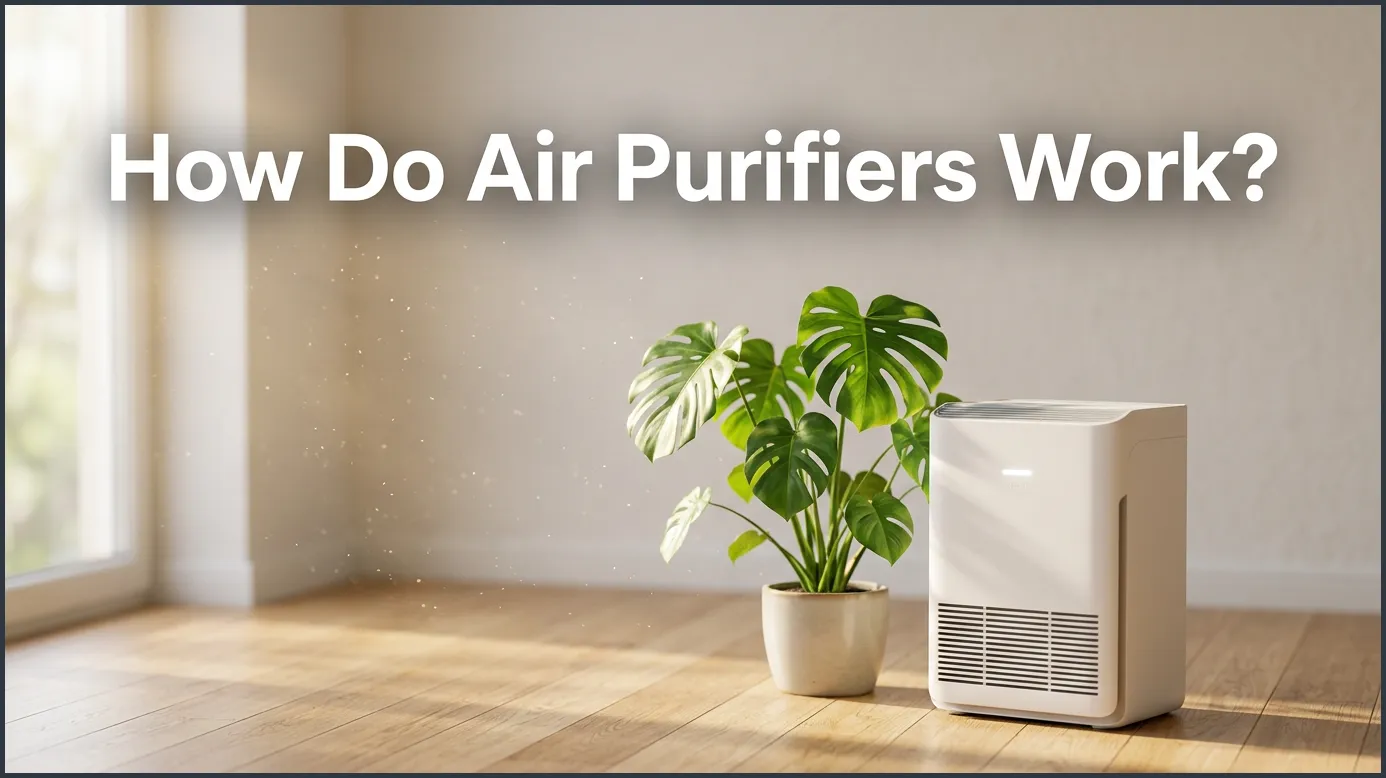
Air purifiers work by pulling dirty indoor air into a system of filters that trap airborne pollutants like dust, pollen, and pet dander. Once these particles are captured, the device blows clean, fresh air back into your living space. This continuous cycle helps you breathe easier and keeps your home’s air healthy.
You step into your living room. You take a deep breath. The room looks clean. Sunlight streams through the window. But look close. You will see tiny specks in the light. Dust, hair, and pollen float around us. We cannot see them all. But we breathe them in anyway. This is why many people buy clean air machines. They want to make their indoor air fresh.
But how do these little machines actually clean a whole room? You might see them sitting quietly in a corner, humming softly. It seems like magic. We want to know: how do air purifiers work? If you are thinking about buying one, you likely have many questions. It helps to understand the process before you spend your hard-earned money.
In this guide, we will unpack the science behind these handy home tools. We will look at how they pull in air and trap tiny pests. We will also look at the different filters you can buy. By the end of this post, you will know how to pick the best machine for your budget and needs. Let us dive in!
Key Takeaways
- Air filtration process: Air purifiers use fans to pull in dirty air, capture harmful particles in filters, and release clean air back into the room.
- The HEPA standard: True HEPA filters are highly effective, capturing 99.97% of tiny particles like dust, pollen, and mold.
- Odor and gas removal: Activated carbon filters work alongside HEPA filters to trap smelly odors, smoke, and chemical fumes.
- Different technologies: Some units use UV light or ionizers, but mechanical filtration remains the safest and most reliable method.
- Room sizing matters: You must match your air purifier’s Clean Air Delivery Rate (CADR) to the size of your room for best results.
📑 Table of Contents
How Do Air Purifiers Work? The Step-by-Step Process
At their core, these machines are quite simple. They do not use complex magic to clean your room. Instead, they rely on a basic cycle of air movement. Think of them as a security guard for your lungs. They pull, trap, and release. Let us look at how they do this step by step.
1. Pulling in the Dirty Air
First, the machine uses a powerful fan. This fan spins to pull the dirty air in your room into the device. Most units have vents on the sides or front. This intake pulls in dust, dander, and other floating items. It creates a gentle current that draws air from all corners of the room.
2. Trapping the Bad Stuff
Once the air is inside, it must pass through one or more filters. This is where the real work happens. The filters act like a very fine net. Large items like hair get caught first. Then, smaller things like pollen get stuck in the deeper layers. We will talk about these filters in detail soon.
3. Pushing Out Fresh Air
After the air passes through the filters, it is clean. The fan then pushes this fresh, clean air back into your room. This cycle happens over and over. A good unit can clean the air in a room several times in just one hour. This keeps the air fresh all day long.
The Core Technologies: Types of Filters
Not all clean air machines are the same. The secret to their power lies in the filters they use. Most good devices use a mix of different filters to get the job done. Let us look at the most common types you will find in the store.
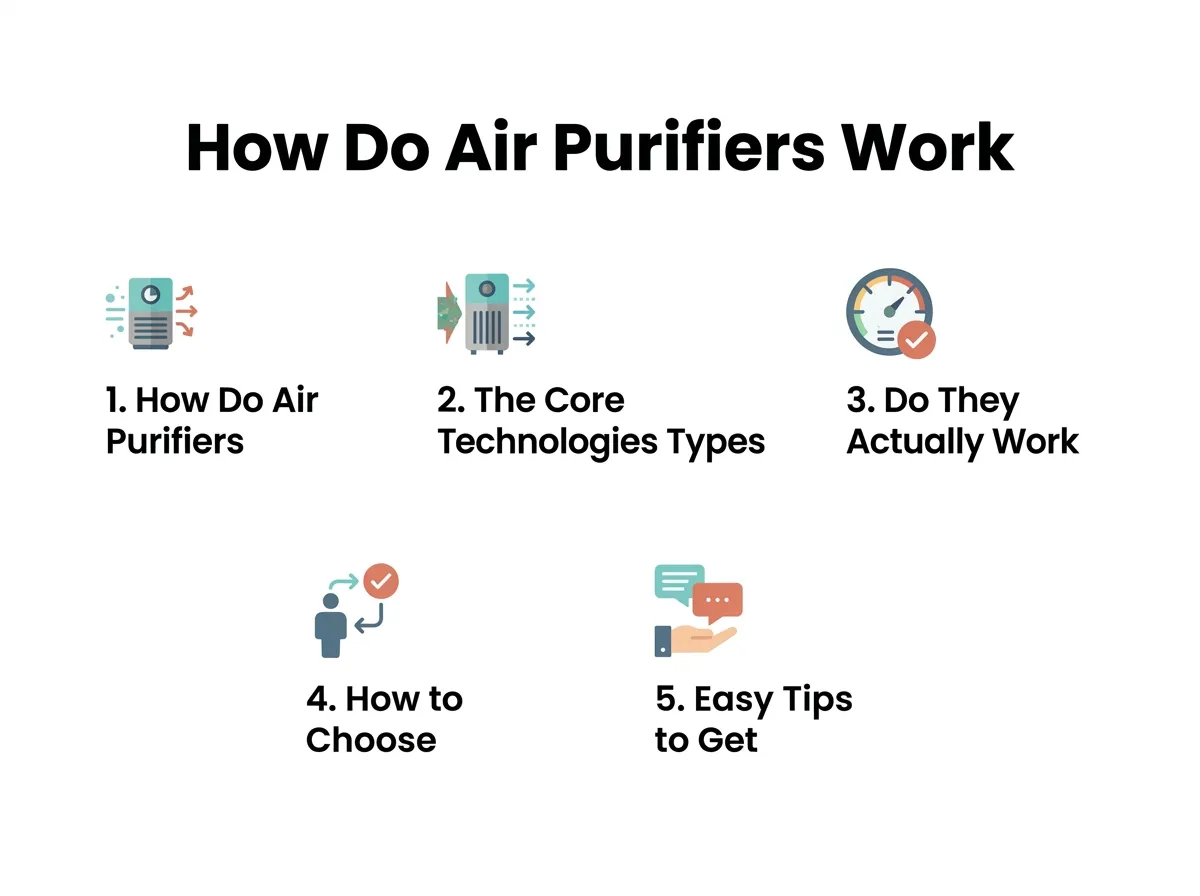
How Do Air Purifiers Work? — key points at a glance
True HEPA Filters
HEPA stands for High-Efficiency Particulate Air. A True HEPA filter is the gold standard for clean air. It is made of a dense web of glass fibers. This web is so tight that it can trap 99.97% of tiny particles. It traps things as small as 0.3 microns. To give you an idea of how small that is, a single human hair is about 70 microns wide! These filters are great for trapping dust, mold spores, and pet dander. You can learn more about the health benefits of clean air and how HEPA filters assist with breathing.
Activated Carbon Filters
HEPA filters are great for solid particles, but they cannot stop smells or gases. That is where activated carbon comes in. This filter uses a bed of charcoal. This charcoal has been treated with oxygen to open up millions of tiny pores. These pores trap gas, smoke, and bad odors. If you cook with spices or have indoor pets, a carbon filter is a must-have. It keeps your home smelling clean and fresh.
Pre-Filters
A pre-filter is the first line of defense. It is usually a simple mesh screen. It traps large items like dust bunnies, human hair, and pet fur. By catching these big pieces first, it keeps the HEPA filter from getting clogged too fast. This helps your expensive HEPA filter last much longer. Many pre-filters can be washed with water.
UV Lights and Ionizers
Some machines use extra tech like UV light or ions. UV light can kill bacteria and germs. Ionizers release charged particles into the air. These ions stick to dust, making them heavy so they fall to the floor. While these can help, mechanical filters like HEPA are still the safest and most reliable way to clean your air.
Do They Actually Work? What the Science Says
You might wonder if these devices are worth the money. Do they really make a difference? Yes, they do. Many scientific studies on air quality show that using a purifier with a HEPA filter can lower the number of fine particles in your home. This can lead to better health and comfort.
Relief from Allergy Triggers
If you sneeze during pollen season, these machines can be a lifesaver. They trap pollen before it lands on your rug or couch. Many users say they sleep much better and sneeze less when they run their unit at night. It can make your bedroom a safe haven from outdoor allergens.
Reducing Asthma Risks
Asthma is often triggered by mold, pet dander, or dust mites. By removing these triggers from the air, a purifier can help reduce asthma flare-ups. It keeps the air clean so your lungs do not have to work as hard. This is very helpful for young kids and the elderly.
Getting Rid of Bad Odors
Have you ever cooked fish and smelled it for days? A good carbon filter can clear that smell in hours. It also works well for tobacco smoke and paint fumes. To understand the full scope of how these devices process home air, you can read about how do air purifiers work in modern residential environments.
How to Choose the Right Air Purifier for Your Home
Buying a clean air machine can feel tricky. There are so many models on the market. How do you choose the right one? Here are three simple things to look for.
Check the CADR Rating
CADR stands for Clean Air Delivery Rate. This number tells you how fast the machine can clean the air. It has three different scores: one for smoke, one for dust, and one for pollen. Look for a higher CADR number. A higher number means the unit cleans the air faster.
Match the Room Size
Every machine is built for a specific room size. A small unit made for a bedroom will not work well in a large living room. Always check the package to see how many square feet the machine can cover. Buy a unit that matches or exceeds your room size.
Factor in Filter Replacement Costs
An air purifier is not a one-time purchase. You must replace the filters when they get dirty. Before you buy a machine, check the cost of new filters. See how often you need to swap them. Some need a change every six months, while others can last a year. Make sure the replacement cost fits your budget.
Easy Tips to Get the Most Out of Your Purifier
Once you bring your new machine home, you want to get the best results. Here are some quick tips to help your device work its best.
Keep Windows and Doors Closed
An air purifier cannot clean the whole outdoors. If you leave your windows open, dirty air will keep rushing in. Your machine will work too hard and will not keep up. Keep your windows closed when the unit is running. This keeps the clean air inside.
Place It in the Right Spot
Do not hide your machine behind a couch or in a tight corner. It needs space to draw in air. Keep it at least three feet away from walls and furniture. Place it in the room where you spend the most time, like your bedroom or living room.
Run It Continuously
Air quality changes all the time. Dust and dander continuously enter the air. To keep your air clean, leave your machine on all day. Most units have a low or auto mode that uses very little power. This keeps your home fresh without costing too much on your power bill.
Breathe Easy: Final Thoughts
Clean air is vital for a healthy life. Our homes can trap a lot of dust, pet hair, and tiny particles. Now that you know how these systems operate, you can see why they are so helpful. They are simple devices that do a big job. They pull in dirty air, trap the bad stuff in high-quality filters, and send fresh air back to you.
By choosing a unit with a True HEPA filter, matching it to your room size, and running it daily, you can make a big difference in your home’s air quality. You will sneeze less, sleep better, and breathe easier. It is a small investment that pays off in daily health and comfort.
Frequently Asked Questions
Do air purifiers remove odors?
Yes, models with activated carbon filters are great at removing odors. They trap gases, smoke, and cooking smells. A standard HEPA filter alone cannot trap odors.
Can I leave my air purifier on all night?
Yes, it is safe to leave your air purifier on all night. In fact, running it on a low or quiet setting while you sleep can help you breathe better and sleep deeper.
Where is the best place to put an air purifier?
Put your air purifier in the room where you spend the most time, like your bedroom. Make sure it is placed in an open area at least three feet away from walls or furniture so it can pull in air easily.
How often should I change the filter?
Most HEPA filters need to be changed every six to twelve months. Pre-filters can often be washed or vacuumed every few weeks to keep the unit running smoothly. Always check your product manual for details.
Do air purifiers cool the room down?
No, air purifiers do not cool the air like an air conditioner. They have fans that blow air, which can create a light breeze, but they do not change the room temperature.
Do they help with pet allergies?
Yes, air purifiers are very helpful for pet allergies. They quickly trap airborne pet dander and fur, which reduces the allergens that cause sneezing and itchy eyes.
