


An air ionizer is a device that cleans the air by releasing negatively charged ions into the room. These ions attach to airborne particles like dust, pollen, and smoke, making them too heavy to float so they fall out of the air. This process helps purify your indoor space, though it is often combined with other filters for the best results.
Have you ever walked into a room and felt like the air was heavy? Maybe you sneezed the moment you sat down on the couch. Indoor air can hold a lot of hidden pests. We cannot see them, but they are there. Dust, pollen, and pet hair float all around us. It is hard to keep our homes feeling fresh. You might look for tools to help you clean the air. You might see a small device called an air ionizer. It sounds fancy and modern. But what does it actually do for your home?
Many people ask this question when shopping for clean air. They want to know how these small machines can make a difference. If you are asking yourself, what is an air ionizer do not worry. This guide will walk you through the whole process. We will look at how they work in simple terms. We will share the pros and cons. By the end, you will know if you need one for your living room. Let us dive in and explore the world of clean air.
When you hear about these devices, you might ask what is an air ionizer do they really clean the air? To answer that, we must look at the science of negative ions. This process mimics what happens in nature to keep indoor spaces fresh and clean.
Key Takeaways
- How they work: Air ionizers release negative ions that attach to tiny particles in the air, making them clump together and fall.
- Particle removal: They are great at removing small particles like dust, pollen, pet dander, and smoke from your breathing zone.
- Ozone precaution: Some ionizers produce small amounts of ozone, so it is important to choose models that meet safety standards.
- No physical filter: Unlike HEPA filters, basic ionizers do not trap particles in a physical mesh unless they are hybrid units.
- Easy maintenance: They require very little upkeep compared to traditional purifiers since there are few or no filters to replace.
- Smart pairing: Combining an ionizer with a HEPA filter gives you the ultimate clean-air setup for your home.
📑 Table of Contents
Understanding the Basics of Air Ionization
To know how these machines work, we must look at science. Do not worry, we will keep it very simple. The air around us is full of tiny things called molecules. These molecules have electrical charges. Some charges are positive. Some charges are negative.
The Science of Negative Ions
Air ionizers focus on negative ions. A negative ion is a molecule that has gained an extra electron. In nature, these ions are everywhere. You can find them near waterfalls, beaches, and forests. They are created by crashing waves and rushing water. This is why the air near a beach feels so fresh and clean. The high number of negative ions makes the air feel alive.
You can read more about the history of air ionizers to see how we brought this natural process indoors. Scientists found a way to mimic nature inside our homes. They made small machines that generate these same fresh ions.
How Ions Attract Dust
Most dust and pollen in your home has a positive charge. In science, opposites attract. A negative ion will search for a positive particle. When they meet, they stick together. Think of it like two magnets. Once they join, the dust particle becomes heavy. It can no longer float in the air. This simple trick is the secret behind the whole system.
What Is an Air Ionizer Do?
Let us look closely at how the device acts in your room. If you ask, what is an air ionizer do in my home, the answer is simple. It acts as an active sweeper. It does not wait for air to pass through it. Instead, it sends help out into the room.
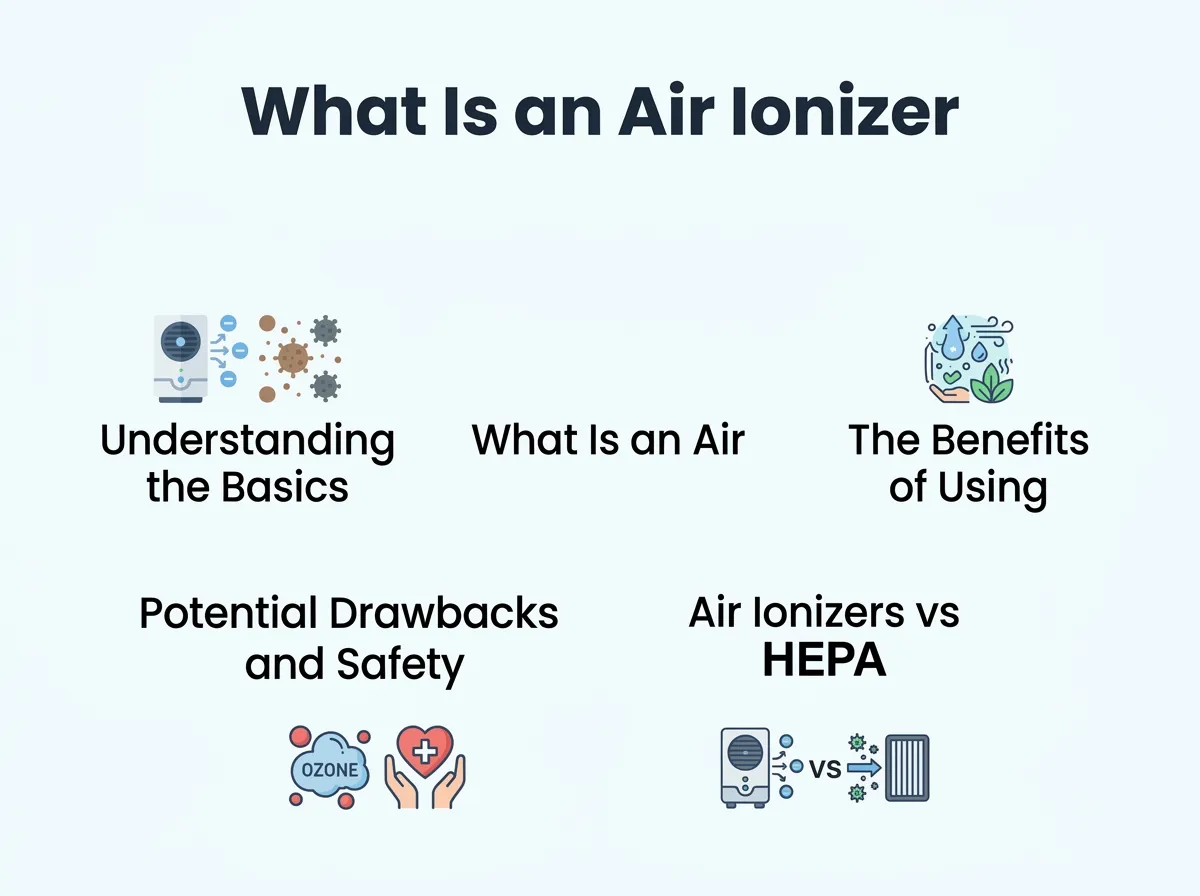
What Is an Air Ionizer Do? — key points at a glance
The Step-by-Step Process
First, you plug in the device and turn it on. The machine uses electricity to create negative ions. It then pushes these ions out into your room. To learn more about this, you can check this guide on how ionizers work in detail.
The ions spread fast. They fill the space and look for floating dirt. They find dust, mold spores, and pet dander. The ions attach to these particles. As more ions join, the clump gets bigger. Soon, the clump is too heavy to stay in the air.
Where Do the Particles Go?
This is a key point to understand. The clumped particles must go somewhere. Since they are heavy, they fall to the ground. They land on your floor, your tables, or your walls. Some ionizers have a special metal plate inside. This plate has a positive charge. It pulls the heavy dirt clumps back to the machine. You can then slide the plate out and wipe it clean. If your machine does not have a plate, you will need to vacuum or dust your room more often.
The Benefits of Using an Ionizer in Your Home
Why should you think about getting one of these devices? There are many good reasons to use them. They offer some unique perks that other air filters cannot match.
Reducing Common Allergens
If you suffer from seasonal allergies, you know the pain. Pollen and dust can make your eyes itchy. They can make you sneeze all day. An ionizer can help clear these triggers from your breathing space fast. By forcing these particles to the ground, you stop breathing them in. Many people notice they sleep better and sneeze less.
Eliminating Unpleasant Odors
We all love a fresh-smelling home. But cooking smells, pet odors, and smoke can linger. Standard filters sometimes struggle with smells. Ionizers are great at tackling odors. The negative ions can neutralize the molecules that cause bad smells. This leaves your home smelling clean and fresh. You can read about the health benefits of negative ions to see how they can improve your daily indoor life.
Potential Drawbacks and Safety Concerns
No device is perfect. While ionizers are great, they have some things you should watch out for. It is important to know these facts before you buy one. If you wonder what is an air ionizer do some research before buying.
The Question of Ozone
Some air ionizers create a gas called ozone. This happens during the process of charging the air. Ozone can be bad for your lungs. It can cause coughing or chest pain if you breathe too much of it. This is why you must check the EPA guidelines on ozone before you make a purchase. Look for devices that are certified to produce little to no ozone. Safe models are tested and approved for home use.
Static Electricity and Clean Up
Because these devices use static charges, they can create static in your room. You might feel a small shock when you touch a metal doorknob. Also, you will have to clean up the fallen dust. If your ionizer does not have a collection plate, the dust will land on your furniture. You will need to dust and vacuum your home more often to keep it clean.
Air Ionizers vs. HEPA Purifiers
You might wonder how these machines compare to other purifiers. The most common type of air cleaner uses a HEPA filter. Let us look at how they differ.
How HEPA Filters Work
A HEPA filter is a physical net. A fan pulls air through this net. The net traps the dust and pollen. The clean air then blows back into the room. This is a passive system. The air must go to the machine to get clean. An ionizer is active. It sends ions out to clean the room. It does not need a fan to pull all the air through a filter.
Why a Hybrid System Is Best
You do not have to choose just one. Many modern air purifiers have both. They use a HEPA filter to trap big dust particles. They also have an ionizer to catch the tiny things that get past the filter. This hybrid approach gives you the best of both worlds. It keeps your air clean and your surfaces dust-free. Now that you know what is an air ionizer do you feel ready to get one?
Tips for Choosing and Using an Air Ionizer
If you decide to buy one, here are some helpful tips. These will help you get the most out of your new device.
Check the CADR Rating
CADR stands for Clean Air Delivery Rate. It tells you how fast the unit can clean the air. Look for a high rating. Make sure the unit is the right size for your room. A small unit will not work well in a large living room.
Best Placement for Your Device
Place your ionizer in an open area. Do not hide it behind a couch or in a corner. It needs space to send the ions out. Keep it away from walls if it does not have a collection plate. This prevents the dust from staining your walls. A central spot on a table is often the best choice.
Conclusion
To sum up, what is an air ionizer do? It is a smart tool that uses nature’s trick to clean your indoor air. By releasing negative ions, it makes dust and allergens fall out of your breathing space. While you must watch out for ozone and do a bit of extra dusting, the benefits are clear. It can help you breathe easier and keep your home smelling fresh. Consider your options, look for safe models, and enjoy the clean air!
Frequently Asked Questions
What is the difference between an air ionizer and an air purifier?
An air ionizer releases negative ions to make dust particles clump together and fall to the ground. A standard air purifier uses a fan to pull air through a physical filter to trap particles inside the machine. Many modern devices combine both methods for the best results.
Do air ionizers remove odors?
Yes, air ionizers are very effective at removing common household odors. The negative ions released by the device can neutralize the molecules that cause smells from cooking, pets, and smoke. This leaves your indoor air smelling fresh and clean.
Is it safe to run an air ionizer all night?
Yes, it is generally safe if you use a certified, ozone-free model in a well-ventilated room. Always check that your device meets local safety standards for ozone emissions. If you have asthma, you may want to use a model without an ionizer option.
Do ionizers produce ozone?
Some older or low-quality ionizers can produce small amounts of ozone as a byproduct. However, modern ionizers are designed to meet strict safety limits and produce little to no ozone. Always look for certifications when buying a device.
Where does the dust go when using an ionizer?
The dust clumps together and falls out of the air onto nearby surfaces, such as floors and tables. Some ionizers have an internal metal plate that attracts and traps this dust. If your unit does not have a plate, you will need to vacuum and dust your room more often.
Do air ionizers help with pet dander?
Yes, they are excellent at reducing pet dander in the air. The negative ions attach to the lightweight dander particles, making them heavy so they fall to the floor. This prevents them from floating in the air where you can breathe them in.
