


Yes, air purifiers equipped with True HEPA filters can effectively capture airborne mold spores and prevent them from spreading. However, while they excel at cleaning the air, they cannot kill or remove active mold growing on physical surfaces. To fully solve a mold problem, you must combine air purification with moisture control and physical cleanup.
Imagine walking into your basement or bathroom and smelling that unmistakable, musty odor. It is a damp, earthy scent that instantly makes you feel uncomfortable. Mold is a common household headache that hides in dark, humid spaces, quiet corners, and behind walls. It ruins furniture, stains drywall, and can trigger annoying allergy symptoms like sneezing, coughing, and itchy eyes.
In your search for a quick solution, you might look at that sleek air purifier sitting in your living room and wonder about its potential. Can air purifiers help with mold, or are they just glorified fans? This article will dive deep into how these devices work, what they can and cannot do, and how to choose the right one to keep your home smelling fresh and feeling healthy. We will also explore the best ways to tackle the root cause of the problem.
Key Takeaways
- HEPA Filters are Essential: Only True HEPA filters can capture microscopic airborne mold spores down to 0.3 microns.
- Air Purifiers Don’t Kill Mold: They trap airborne spores but cannot remove existing mold growing on walls, carpets, or ceilings.
- Moisture Control is Key: Mold needs water to grow, so keeping humidity levels below 50% is critical to prevent outbreaks.
- Carbon Filters Help with Odors: Activated carbon pre-filters can neutralize the musty smell associated with mold growth.
- Maintenance Matters: Regularly replacing filters prevents trapped mold spores from multiplying or escaping back into the room.
- A Multi-Step Approach Works Best: Combine air filtration, humidity control, and physical cleaning with vinegar or specialized products.
📑 Table of Contents
Understanding Mold and How It Spreads
What is Mold?
Mold is a type of fungus. It is a natural part of our outdoor world. Outdoors, it helps break down leaves, wood, and organic matter. But inside your home, mold is an unwanted guest. It loves warm, damp, and dark environments. You will often find it in bathrooms, basements, kitchens, and crawl spaces. It can grow on wood, drywall, carpet, and even paper.
How Mold Spores Move Through Your Air
Mold does not just stay in one spot. It reproduces by releasing tiny, invisible particles called spores. These spores are incredibly light. They float through the air with ease. When you walk past, turn on a fan, or open a window, you stir up these spores. They travel from room to room. If they land on a wet surface, they start to grow. Soon, a tiny spot becomes a major colony. This is why controlling airborne spores is so important for your health and comfort.
Can Air Purifiers Help with Mold?
Yes, they can, but with some conditions. An air purifier works by pulling air in from the room. It passes this air through a series of filters. These filters trap tiny particles, including dust, pollen, and mold spores. Once the air is clean, the machine pushes it back out into the room. This process keeps the air in your room moving and fresh.
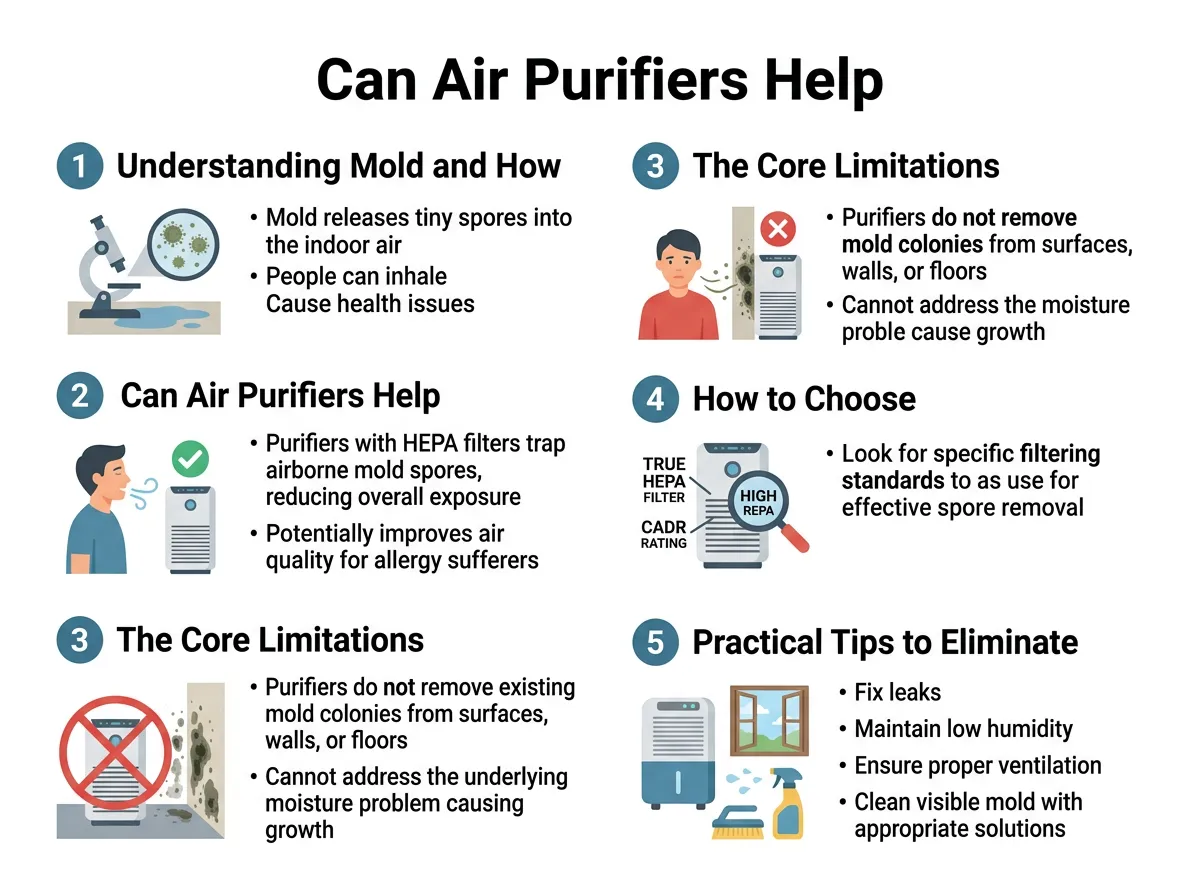
Can Air Purifiers Help With Mold? — key points at a glance
When you use a high-quality machine, you can significantly reduce the number of spores in the air. This helps lower your risk of breathing them in. To understand how this works in detail, you can read more about how air filters capture mold spores from the air. By catching these particles before they land, you can stop them from starting new colonies on your walls or furniture. This makes air purifiers a fantastic tool for prevention.
The Core Limitations of Air Purifiers
Active Mold vs. Airborne Spores
It is vital to know what an air purifier cannot do. It cannot cure an existing mold infestation. If you already have black spots growing on your drywall, an air purifier will not wash them away. It cannot reach onto surfaces to kill the fungus. It only works on what is floating in the air. Think of it like a pool skimmer. It can pick up leaves floating on the water, but it cannot clean the dirt stuck to the bottom of the pool.
The Moisture Problem
Mold needs moisture to survive. If you have a leaky pipe, a dripping roof, or a very humid room, mold will continue to grow. An air purifier does not dry out the air. It does not fix leaks. If you do not stop the moisture, mold will keep growing and releasing new spores. The air purifier will work overtime, but it will lose the battle. You must fix the water source first.
How to Choose the Best Air Purifier for Mold
Look for a True HEPA Filter
Not all air purifiers are created equal. If you want to combat mold, you must look for a True HEPA filter. HEPA stands for High-Efficiency Particulate Air. These filters are made of very fine mesh. They can trap 99.97% of particles as small as 0.3 microns. Mold spores are usually between 2 and 100 microns in size. This means a True HEPA filter can easily catch them. Avoid filters labeled “HEPA-type,” as they are not as efficient. For a detailed guide on selecting the right unit, check out this list of the choosing the best air purifier for mold options.
Activated Carbon Filters for Odors
Mold smells bad. That musty odor is caused by gases called microbial volatile organic compounds (mVOCs). A HEPA filter cannot trap gases. To get rid of the smell, you need an activated carbon filter. This filter uses a bed of carbon to absorb smells, gases, and smoke. Having both a HEPA filter and a carbon filter gives you the ultimate defense against both the spores and the odor.
Check the Clean Air Delivery Rate (CADR)
Before you buy, check the Clean Air Delivery Rate. This rating tells you how fast the unit cleans the air. It also tells you what room size the unit can handle. Make sure to choose a purifier that fits your room. If you put a small purifier in a large basement, it will not be able to clean the air fast enough to be useful. Look for a CADR rating that matches or exceeds your room’s square footage.
Practical Tips to Eliminate Mold in Your Home
Find and Fix the Water Source
Check under sinks, around windows, and near your water heater. If you find a leak, fix it right away. Wipe up any standing water. If your basement is damp, you might need to seal the walls or install a sump pump.
Lower the Humidity
Keep your home’s humidity level below 50%. You can use a simple tool called a hygrometer to measure this. If your home is too humid, use a dehumidifier. This is especially important in basements and crawl spaces. Run exhaust fans in the kitchen and bathroom while cooking or showering.
Clean Up Existing Mold
If you find mold on hard surfaces, you must clean it up. Mix one cup of bleach with one gallon of water. Or, you can use plain white vinegar for a safer option. Scrub the area clean and let it dry completely. Wear a mask and gloves to protect yourself during cleaning.
Run Your Purifier Constantly
Keep your air purifier running 24 hours a day. Modern purifiers are designed to run all the time. They use very little electricity, especially on low settings. This ensures the air stays clean and mold spores never get a chance to settle.
Frequently Avoided Mistakes with Air Purifiers
Placing the Purifier in the Wrong Spot
Do not hide your air purifier behind a couch or in a tight corner. It needs space to draw in air. Keep it at least three feet away from walls and furniture. Place it near the source of moisture or in the room where you spend the most time.
Neglecting Filter Replacements
Filters do not last forever. Over time, they get clogged with dust, hair, and mold spores. If you do not change them, your purifier will stop working well. In fact, a dirty filter can become a breeding ground for mold if it gets damp. Check your manual and change your filters on time. Some models have indicator lights to remind you. Learning about mould spore filtration technology can help you understand how vital clean filters are to your home’s air quality.
Conclusion
An air purifier is a powerful tool in your fight against mold. By trapping airborne spores, it keeps your air clean and helps prevent new mold colonies from starting. However, it is not a magic wand. It cannot clean active mold off your walls or dry out a wet basement. To truly win the battle, you must fix leaks, lower your home’s humidity, and clean up any existing mold. When you combine these steps with a high-quality HEPA air purifier, you can enjoy a fresh, clean, and healthy home all year round.
Frequently Asked Questions
Can an air purifier get rid of mold on walls?
No, an air purifier cannot remove mold that is already growing on walls or other physical surfaces. It can only capture microscopic mold spores that are floating in the air. To remove mold from walls, you must physically clean the area with vinegar, bleach, or a specialized mold cleaner.
Do I need a dehumidifier or an air purifier for mold?
For the best results, you should use both devices. A dehumidifier removes excess moisture from the air to prevent mold from growing in the first place. An air purifier removes the mold spores that are already floating in your indoor air to protect your health.
Can mold grow inside an air purifier?
Yes, mold can grow on the filters if the air purifier is turned off in a highly humid environment. To prevent this, always run your air purifier continuously and replace the filters according to the manufacturer’s recommended schedule.
How long does it take for an air purifier to clean mold spores?
Most quality air purifiers can clean the air in a single room within 30 to 60 minutes. However, because mold can continuously release new spores, you should keep the unit running 24/7 to maintain clean air.
Does a HEPA filter trap all mold spores?
A True HEPA filter can trap 99.97% of particles as small as 0.3 microns, which includes almost all household mold spores. Ensure you avoid “HEPA-type” filters, as they do not meet the same high standards of filtration.
Do air purifiers help with mold smells?
Yes, but only if they contain an activated carbon filter. While a HEPA filter traps the physical mold spores, the activated carbon layer is required to absorb the gases and volatile organic compounds that cause the musty odor.
