


Yes, air purifiers can remove odors, but only if they contain an activated carbon filter. While HEPA filters excel at trapping physical particles like dust and dander, they cannot stop gaseous odor molecules. To successfully eliminate smells from cooking, pets, or smoke, you must choose a purifier equipped with a thick, high-quality carbon layer.
Imagine walking into your home after a long day. Instead of the fresh scent of clean air, you are hit with a wall of last night’s fish dinner. Or maybe it is the unmistakable aroma of a wet dog that has settled into your living room rug. It is a frustrating feeling that many of us know all too well. Smells have a way of clinging to our furniture, rugs, and walls, making them incredibly hard to get rid of.
In your search for a fresher home, you might look at different gadgets online. If you are tired of lingering smells, you might ask: can air purifier remove odors? It seems like an easy fix. You just plug it in, turn it on, and let it clean the air. But do these machines really work on tough smells, or do they just move the air around?
This guide explores the science behind smelly air and how technology can help. We will break down which filters work, which ones fail, and how to choose the best device for your specific smell problems. By the end of this post, you will know exactly how to make your home smell clean and inviting once again.
Key Takeaways
- Activated Carbon is Key: Only air purifiers with activated carbon filters can capture gaseous odor molecules, as HEPA filters only trap solid particles.
- HEPA Alone is Not Enough: Standard HEPA filters do not stop smells, smoke gases, or volatile organic compounds (VOCs).
- Filter Thickness Matters: Purifiers with thick, pelletized carbon filters absorb odors much better than thin, carbon-coated fiber pre-filters.
- Target Various Odor Sources: The right air purifier can tackle kitchen smells, pet odors, tobacco smoke, and musty basement odors.
- Maintenance is Crucial: Carbon filters saturate over time and must be replaced every 3 to 6 months to keep removing odors effectively.
- Source Control is First: For the best results, always clean up the source of the smell before relying on your air purifier to clear the air.
📑 Table of Contents
How Odors Travel in Your Home
To understand if these devices work, we first need to look at what an odor actually is. Odors are not solid particles like dust, dirt, or pet hair. Instead, they are made of tiny, airborne gas molecules that float freely through your house.
The Science of Smells
These gases are often called Volatile Organic Compounds, or VOCs. Because they are so incredibly small, they easily bounce around your room. They drift through the air and settle deep into your carpets, curtains, and sofas. This is why a bad smell can linger for days, even after you open a window or spray some perfume.
Why Some Smells Are Stubborn
Some smells are much stickier than others. Pet dander can carry odors, but the real culprit is often pet urine or sweat. These liquids release ammonia and other strong gases into your living space. Cooking oils can also vaporize and coat your kitchen walls. To tackle these stubborn smells, we need a solution that can capture gases, not just solid dust.
Can Air Purifier Remove Odors? The Filter Breakdown
To answer the question, can air purifier remove odors, we must look at the technology inside these machines. Not all air purifiers are built the same way. If you buy the wrong type, you might still find yourself living with unwanted scents. Let us look at the two main types of filters you will find on the market today.
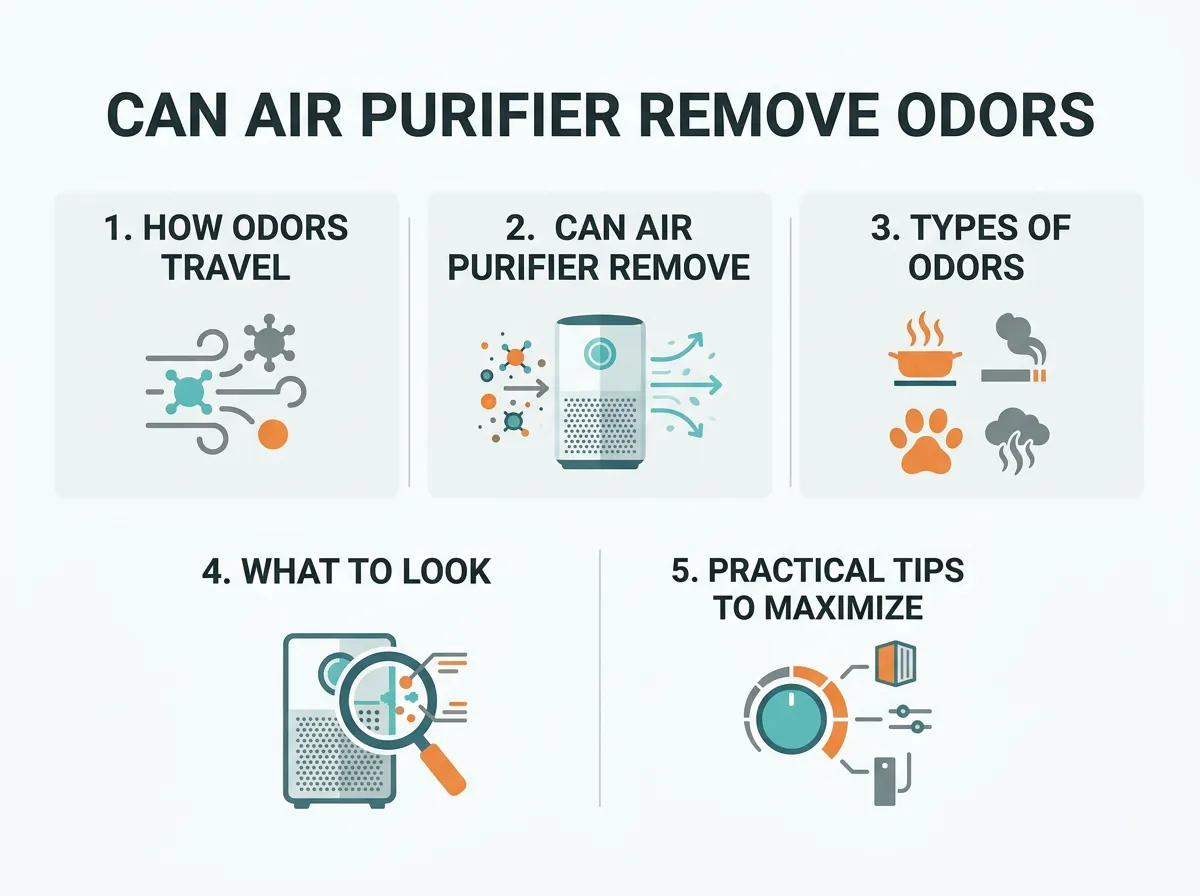
Can Air Purifier Remove Odors? — key points at a glance
The Truth About HEPA Filters
HEPA stands for High-Efficiency Particulate Air. These filters are amazing at trapping 99.97% of tiny particles like dust, pollen, mold spores, and pet dander. However, HEPA filters are made of a dense web of fiberglass. This web has tiny gaps that block solid particles, but gas molecules are far too small. They pass right through a HEPA filter like wind through a chain-link fence. So, if you have a HEPA-only purifier, it will not remove smells.
The Power of Activated Carbon Filters
To fight smells, you need an activated carbon filter. This is the magic ingredient. Activated carbon is charcoal that has been treated with oxygen. This treatment opens up millions of tiny pores between the carbon atoms. These pores act like sticky traps for gas molecules. When smelly gases pass through the carbon, they get stuck in these pores. This process is called adsorption. If you want a fresh home, always look for a model with a dedicated carbon filter.
Types of Odors an Air Purifier Can Fight
Many people buy these devices hoping to clear the air, wondering, can air purifier remove odors from pets and cooking? Once you have the right carbon filter, you can tackle a wide range of household scents. Let us look at some common issues and how a purifier handles them.
Cooking and Food Smells
We all love a home-cooked meal, but nobody wants their bedroom to smell like fried onions or garlic the next morning. A purifier placed near the kitchen can quickly draw in these airborne food vapors. It traps the greasy smell molecules before they have a chance to settle into your living room rug or your clean laundry.
Pet Odors
Even if we clean up after our pets, they still leave a distinct scent behind. From wet dog smell to litter box odors, pets keep our homes smelling busy. A purifier with an activated carbon filter will pull these organic smells out of the air. It also captures the pet dander that carries these smells around, giving you a double layer of defense.
Smoke and Tobacco
Smoke is one of the hardest smells to remove. It is made of both solid soot particles and toxic gases. A combination of a HEPA filter and a thick activated carbon filter is highly effective here. The HEPA traps the visible smoke particles, while the carbon absorbs the harmful chemicals and the harsh smoke smell.
What to Look For When Shopping
When you walk into a store, you may still wonder, can air purifier remove odors if the filter is cheap? Not all carbon filters are equal. You need to know what makes a carbon filter high quality before you spend your hard-earned money.
Avoid Thin Carbon Sheets
Many cheap purifiers use a thin, black sheet of fiber coated in carbon dust as a pre-filter. While this can catch a tiny bit of smell, it will saturate very quickly. It is simply not enough to handle heavy odors from cooking or pets. It will stop working after just a few weeks.
Choose Pelletized Activated Carbon
For real smell-fighting power, look for a filter that contains actual pellets of carbon. These look like small black rocks packed into a honeycomb frame. This type of filter contains pounds of carbon, offering a huge surface area to trap smells. They last much longer and work far better at keeping your air fresh.
Practical Tips to Maximize Odor Removal
An air purifier is a great tool, but it works best when you use it correctly. Here are a few simple tips to get the most out of your machine.
Place It Near the Source
If you are cooking, place the purifier near the kitchen entryway. If you have a cat, place it near the litter box. Capturing the smell at its source prevents it from spreading throughout your entire home. Just make sure not to place it too close to hot stoves or wet areas.
Run It Daily
Do not just turn your purifier on when things start to smell bad. Keep it running on a low or medium setting all day long. This keeps the air constantly moving and prevents smells from building up in your carpets and furniture in the first place.
Change Filters on Time
Unlike HEPA filters, which just get dirty, carbon filters get full. Once all the tiny pores in the carbon are filled with gas molecules, the filter stops working. If you start to notice smells returning, it is time to swap out your carbon filter. Most need to be replaced every 3 to 6 months.
Beyond Purifiers: A Whole-Home Approach
While an air purifier is a powerful ally, it should not be your only line of defense. For a truly fresh home, combine your purifier with other good habits.
Find and Clean the Source
If there is a rotten potato under your sink, no air purifier in the world will save your kitchen. Always find the source of the smell first. Clean up spills, wash pet bedding weekly, and take out the kitchen trash regularly.
Boost Ventilation
On nice days, open your windows to let fresh air in. Run your kitchen hood vent while cooking and your bathroom fan during showers. This helps flush out heavy concentrations of smells, allowing your air purifier to handle the rest with ease.
Conclusion
Keeping your home smelling fresh can sometimes feel like a full-time job. Thankfully, when you think about the big question, can air purifier remove odors, the answer is a warm yes. By choosing a device with a heavy-duty activated carbon filter, you can trap cooking odors, pet smells, and smoke before they take over your space. Remember to place your unit wisely, run it consistently, and change the filters on time. With these simple steps, you can finally say goodbye to stubborn smells and enjoy the clean, fresh home you deserve.
Frequently Asked Questions
Can a standard HEPA filter remove cooking odors?
No, a standard HEPA filter cannot remove cooking odors on its own. HEPA filters are designed to trap solid particles like dust and dander, but they let gaseous odor molecules pass right through. You need an activated carbon filter to capture those smells.
How often should I change my air purifier’s carbon filter?
You should replace your carbon filter every 3 to 6 months depending on use. Once the pores in the carbon are completely saturated with gas molecules, the filter will stop absorbing odors. If you notice smells returning, it is time for a replacement.
Do air purifiers work for strong pet odors like cat urine?
Yes, air purifiers can help reduce pet odors, but they work best when combined with thorough cleaning. An activated carbon filter will absorb ammonia and other pet smells from the air, but you must first clean the physical stain from your carpet or floor.
Can an air purifier get rid of tobacco smoke smell?
Yes, a purifier with both a True HEPA filter and a thick activated carbon filter can remove smoke smells. The HEPA filter captures the physical smoke particles, while the carbon filter absorbs the heavy, tar-like odor gases.
Where is the best place to put an air purifier for odor control?
The best place to put your purifier is close to the source of the smell, such as near the kitchen or the pet area. Make sure it is placed in an open spot with plenty of airflow around it, rather than tucked away in a corner or behind furniture.
Do cheap air purifiers work for removing household odors?
Cheap air purifiers often use thin carbon-coated sheets that saturate very quickly and lose their effectiveness within weeks. For reliable odor removal, it is better to invest in a purifier that uses a thick, pelletized activated carbon filter.
