


No, air purifiers do not help with humidity because they are designed to filter airborne particles rather than add or remove moisture from the air. To manage indoor humidity levels, you will need to use a dedicated humidifier to add moisture or a dehumidifier to remove it. However, using these devices alongside an air purifier can create the perfect, healthy home environment.
Imagine walking into your home on a hot, muggy summer afternoon. The air feels heavy, thick, and sticky. It is hard to breathe comfortably, and your skin feels instantly damp. You look around your living room and notice your sleek air purifier humming quietly in the corner. You might wonder if turning that machine up to its highest speed setting will help clear out that heavy, wet feeling in the air. After all, it does an amazing job of cleaning up dust, so shouldn’t it be able to dry things out too?
Many homeowners ask themselves this very question when trying to balance their indoor climate. We all want our homes to feel like a cozy, clean sanctuary, free of dust, pollen, and uncomfortable dampness. But our home appliances can sometimes feel like a confusing puzzle. It is easy to mix up what each machine does, especially when they all claim to improve the general quality of the air we breathe. In this guide, we will dive deep into how these devices function, clear up common myths, and show you how to build the ultimate home comfort system.
Key Takeaways
- No impact on moisture: Air purifiers only filter solid particles and do not change indoor humidity levels.
- Specialized roles: Use a dehumidifier to remove excess moisture and a humidifier to add moisture.
- Filter risks: High humidity can lead to mold growth on HEPA filters and reduce the lifespan of carbon filters.
- Strategic placement: Place your air purifier and humidifier on opposite sides of the room to avoid damaging filters.
- Synergy is key: Combining an air purifier with a humidity-control device offers the ultimate home comfort and cleaner air.
📑 Table of Contents
How Air Purifiers Actually Work
To understand why air purifiers behave the way they do, we first need to look under the hood. These machines are beautifully simple in their design and purpose. They do not change the temperature of your room, nor do they alter the moisture levels in the air. Instead, they focus entirely on cleaning. They act like a highly efficient security guard for your lungs, catching tiny particles before you can breathe them in.
The Filtration Process
An air purifier works by using an internal motor and a powerful fan to pull air from your room into the unit. Once inside, the air passes through a series of specialized filters designed to trap pollutants, dust, and other tiny irritants. Once the air is clean, the fan pushes the fresh, purified air back out into your room. This continuous cycle repeats several times every hour, slowly lowering the concentration of airborne particles and keeping the air feeling light and clean.
What HEPA Filters Capture
Most modern air purifiers rely on a High-Efficiency Particulate Air (HEPA) filter. These filters are made of a dense, chaotic maze of glass fibers. They are incredibly good at trapping solid particles like dust mites, pet dander, mold spores, and pollen. However, they are not designed to trap gas molecules. Because water vapor is a gas, it passes right through these microscopic fibers without getting caught. This is why standard air purifiers do not dry out air or alter the physical humidity levels in your home.
Do Air Purifiers Help with Humidity?
The short and simple answer is no. Standard air purifiers do not help with humidity. They do not have any mechanical parts designed to pull water out of the air, nor do they have a water tank to add moisture to your room. If your living space is humid and sticky, running an air purifier will not make the air feel any drier. It will simply give you very clean, very humid air.
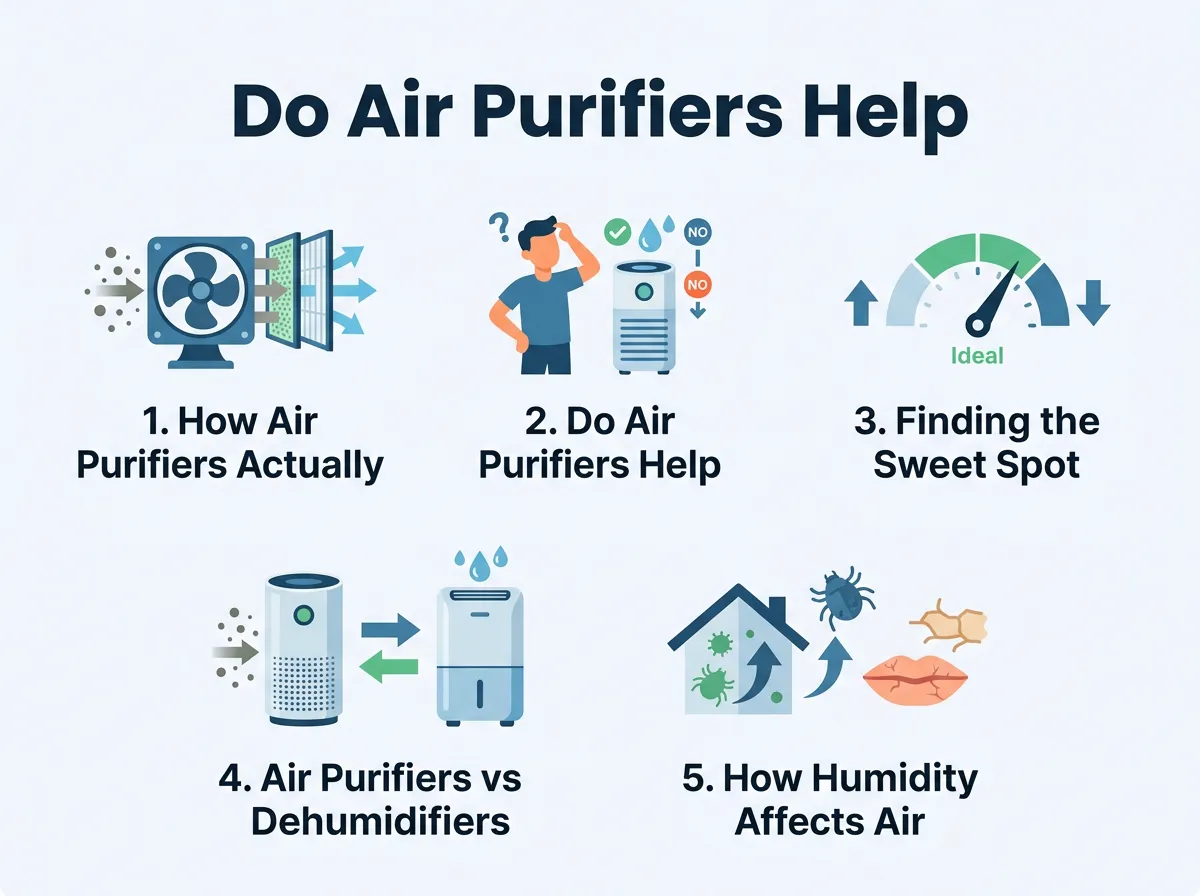
Do Air Purifiers Help With Humidity? — key points at a glance
It is also a common myth that these devices might make your room feel dry. Some people worry that the continuous airflow will strip moisture from their skin or throat. However, testing shows that air purifiers do not dry out air or change the water content of your room. The air coming out of the machine has the exact same humidity level as the air going in. The only thing that changes is the cleanliness of that air, which actually helps soothe your respiratory system rather than dry it out.
Finding the Sweet Spot: Ideal Indoor Humidity
To understand why managing both air quality and moisture is so important, we need to look at what makes a healthy indoor environment. The ideal indoor relative humidity level for comfort and health is between 30% and 50%. When humidity drops below 30%, you might experience dry skin, irritated sinuses, and static electricity. When humidity climbs above 50%, your home becomes a playground for unwanted house guests.
The Risks of High Humidity
High humidity does more than just make you feel sticky and uncomfortable. It also creates the perfect environment for mold, mildew, and dust mites to thrive. These pests love warm, moist air and will multiply rapidly if the moisture levels are not controlled. This is where the confusion often lies: people notice that their allergy symptoms improve when they run an air purifier, so they assume the machine is lowering the humidity. In reality, the purifier is simply catching the mold spores and dust mites that the humidity helped create.
The Risks of Low Humidity
On the flip side, extremely low humidity can also harm your health. Dry air dries out your mucous membranes, which are your body’s natural defense against viruses and bacteria. When these passages are dry, you are more susceptible to colds, flu, and other respiratory infections. Dry air can also damage wood furniture, cause musical instruments to warp, and make your skin feel itchy and flaky.
Air Purifiers vs. Dehumidifiers vs. Humidifiers
Because there are so many different appliances on the market, it is easy to get confused about which one you actually need. Let us break down the exact roles of the three most common air-treatment machines so you can choose the right tool for your specific problem.
The Role of an Air Purifier
As we have established, an air purifier is a filtration specialist. Its only job is to clean the air. It targets physical particles, smoke, pet dander, and odors. It is your best defense against seasonal allergies, pet smells, and dusty rooms. But it has absolutely no control over the moisture levels in your home.
The Role of a Dehumidifier
If your main goal is to get rid of that sticky, heavy feeling in a damp room, you need a dehumidifier. These machines are specifically built to pull moisture out of the air. They work like a small air conditioner. They pull in wet air, cool it down to condense the water vapor into liquid drops, and collect that water in a tank. Understanding how dehumidifiers and air purifiers work together can help you solve both dampness and dust at the same time.
The Role of a Humidifier
On the opposite end of the spectrum, we have the humidifier. If you live in a dry climate or suffer from dry skin and bloody noses during winter, this is the machine you need. A humidifier holds a tank of water and gently releases a cool or warm mist into the air to raise the humidity levels. According to medical experts in this guide on air filters and dehumidifiers, matching the right machine to your specific air quality or moisture issue is key to maintaining a healthy respiratory system.
How Humidity Affects Air Purifier Performance
While an air purifier cannot change the humidity levels in your home, the humidity levels can actually have a massive impact on your air purifier. High moisture levels can change how well your machine works and even shorten the lifespan of your filters.
High Humidity and Mold Growth on Filters
If you run an air purifier in a very damp basement or a humid bathroom, the filter inside will absorb some of that moisture. Over time, the damp fibers of a HEPA filter can become a breeding ground for mold and bacteria. Instead of cleaning your air, a moldy filter can actually start releasing mold spores back into your living space. If you notice a musty smell coming from your air purifier, it is a sign that high humidity has ruined your filter.
Odor Filter Issues in Damp Air
Many air purifiers use an activated carbon filter to eliminate bad smells and gases. Activated carbon works like a sponge, trapping odor molecules in tiny pores. However, water vapor can also fill these pores. In high-humidity environments, water molecules will clog the carbon filter, leaving no room for odors. This makes the odor-elimination feature of your air purifier far less effective.
Tips for Managing Both Air Quality and Humidity
Now that you know how these devices differ, you can combine them to create the ultimate comfortable home. Here are some practical tips to help you get the best results from your appliances.
Using Dual-Purpose Devices
If you do not want your home cluttered with multiple machines, look into 2-in-1 hybrid units. Some manufacturers offer high-quality air purifiers that have a built-in humidifier or dehumidifier. These units are highly convenient because they clean the air while keeping the humidity at a perfectly balanced level of around 40% to 50%.
Placement Strategies for Multiple Devices
If you choose to use two separate machines, placement is key. Do not place an air purifier and a humidifier right next to each other. The humidifier will blast wet mist directly into the air purifier, which can ruin the HEPA filter very quickly. Instead, place them on opposite sides of the room. This allows the moisture to disperse evenly through the room before the air purifier draws it in.
Conclusion
While air purifiers are incredible tools for keeping your home clean and allergy-free, they are not designed to tackle humidity. They will not dry out your home during a sticky summer, nor will they add moisture during a dry winter. To truly master your indoor climate, you must use the right tool for the job. Pair your air purifier with a dehumidifier to combat dampness, or run it alongside a humidifier to soothe dry winter skin. By understanding how these units work together, you can easily create a home environment that is both beautifully clean and perfectly comfortable all year round.
Frequently Asked Questions
Can I run an air purifier and a dehumidifier at the same time?
Yes, you can run both devices at the same time to clean the air and reduce moisture. For best results, place them in different areas of the room so they do not compete with each other’s airflow. This combination is highly effective for damp rooms like basements.
Do air purifiers remove water vapor?
No, standard air purifiers do not trap or remove water vapor from the air. Water molecules are too tiny to be caught by a HEPA filter, so they pass straight through the machine. You will need a dehumidifier if you want to pull water out of your indoor air.
Does high humidity ruin air purifier filters?
Yes, high humidity can negatively impact your air purifier filters. The dampness can cause mold and bacteria to grow directly on the HEPA filter fibers, leading to unpleasant musty smells. It can also clog activated carbon filters, making them less effective at removing odors.
Do air purifiers dry out your skin?
No, air purifiers do not dry out your skin because they do not change the humidity levels of the room. Any feeling of dry skin is usually caused by low natural humidity in your home, especially during winter. To fix this, you should use a humidifier alongside your air purifier.
Are there air purifiers that also dehumidify?
Yes, there are hybrid units available that combine both air purification and dehumidification features in one machine. These dual-purpose devices are great for saving space in damp rooms. However, they are often more expensive and harder to find than standalone units.
Can an air purifier help with mold caused by humidity?
An air purifier can help trap airborne mold spores that are floating around in a humid room, which prevents them from spreading. However, it will not fix the underlying moisture problem that caused the mold to grow in the first place. You must still use a dehumidifier or fix leaks to stop the mold at its source.
