


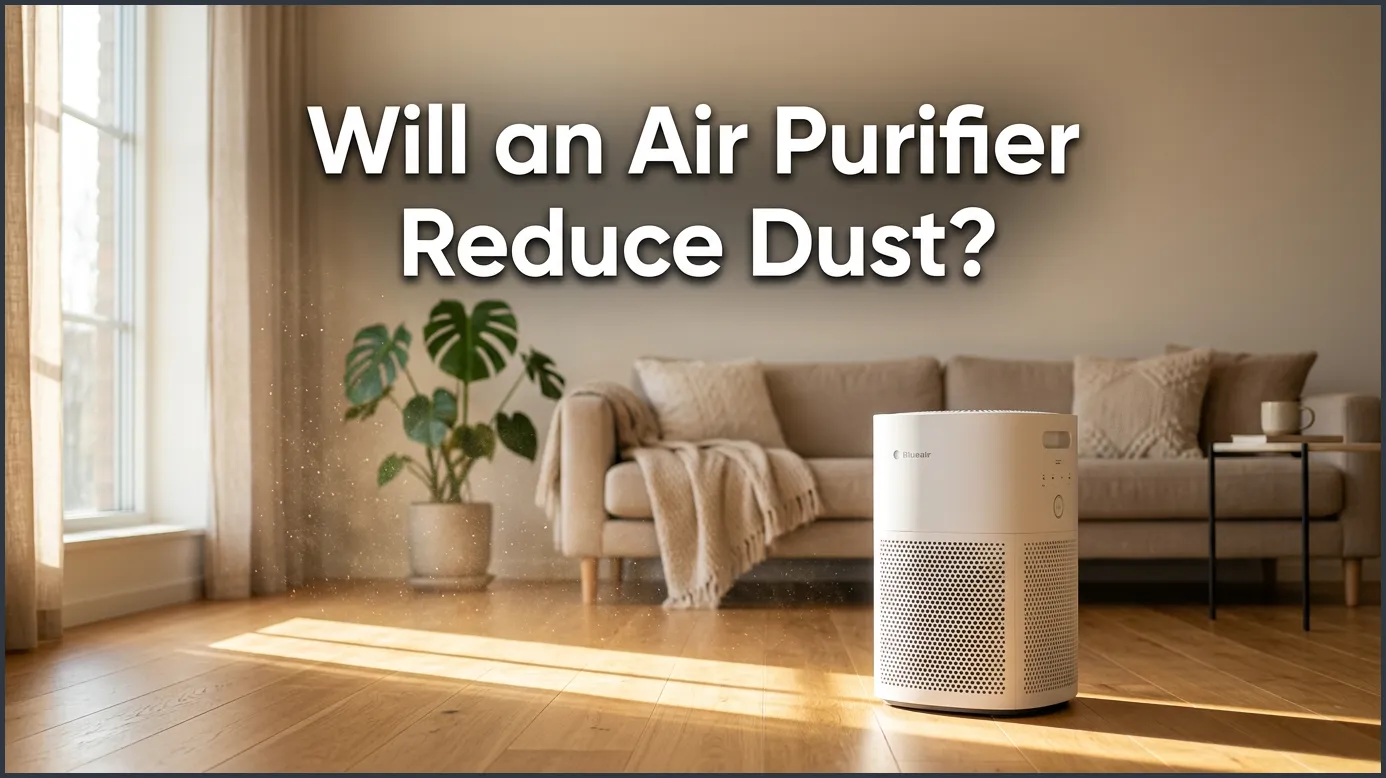
Yes, an air purifier will significantly reduce dust in your home by trapping airborne particles before they have a chance to settle on your surfaces. By using a True HEPA filter, these devices constantly clean your indoor air and capture microscopic debris. However, they work best when combined with regular dusting and vacuuming habits.
You just finished wiping down your coffee table. It looks clean, shiny, and fresh. But then, a warm ray of sunlight streams through your living room window. In that light, you see hundreds of tiny specks dancing in the air. Within just a few hours, those floating specks will land right back on the clean surfaces you just wiped. It can feel like a chore you are destined to repeat forever.
This frustrating cycle makes many people look for a real, long-term solution. If you are tired of constantly wiping down your shelves, you might wonder: Will an Air Purifier Reduce Dust? This is a very common question for homeowners, parents, and pet owners who want to breathe easier and clean less.
In this guide, we will explore how these helpful devices handle floating debris. We will look at how they work, the types of filters you need, and where to place your unit. We will also share simple daily habits that work alongside your machine to keep your space fresh and dust-free.
Key Takeaways
- HEPA filters are vital: True HEPA filters capture up to 99.97% of airborne dust and small particles.
- Captures floating dust only: Air purifiers can only trap dust while it is airborne, not after it settles on furniture.
- Pre-filters extend life: A pre-filter catches large particles like pet hair, protecting the main filter.
- Placement is key: Keep your unit in open areas of high-traffic rooms for the best results.
- Continuous operation: Run your air purifier 24/7 on a low or auto setting to prevent dust buildup.
- Combine with cleaning: Use your purifier alongside regular vacuuming and damp-wiping for a truly dust-free home.
📑 Table of Contents
How Dust Accumulates in Your Home
To stop dust, we must first understand what it actually is. Many people think dust is just dirt from the outdoors. In reality, household dust is a complex mix of many different things that come from inside and outside your house.
What is Dust Made Of?
Dust is made of dead skin cells, pet dander, and hair. It also contains clothing fibers, pollen, soil, and microscopic insect parts. Because these particles are so light, they easily float in the air. Every time you walk across a rug or sit on the couch, you kick these particles back up into your living space.
The Cycle of Airborne Dust
When dust is floating, it is easy to breathe in. This can trigger sneezing, coughing, or itchy eyes. Eventually, gravity pulls these floating particles down. They land on your tables, TV screens, and bookshelves. Once dust settles on a surface, a standard air purifier cannot grab it. The key is to capture the dust while it is still floating in the air.
How Air Purifiers Capture Dust
This is where an air purifier comes in. Think of it as a helpful assistant that never stops sweeping the air in your room.
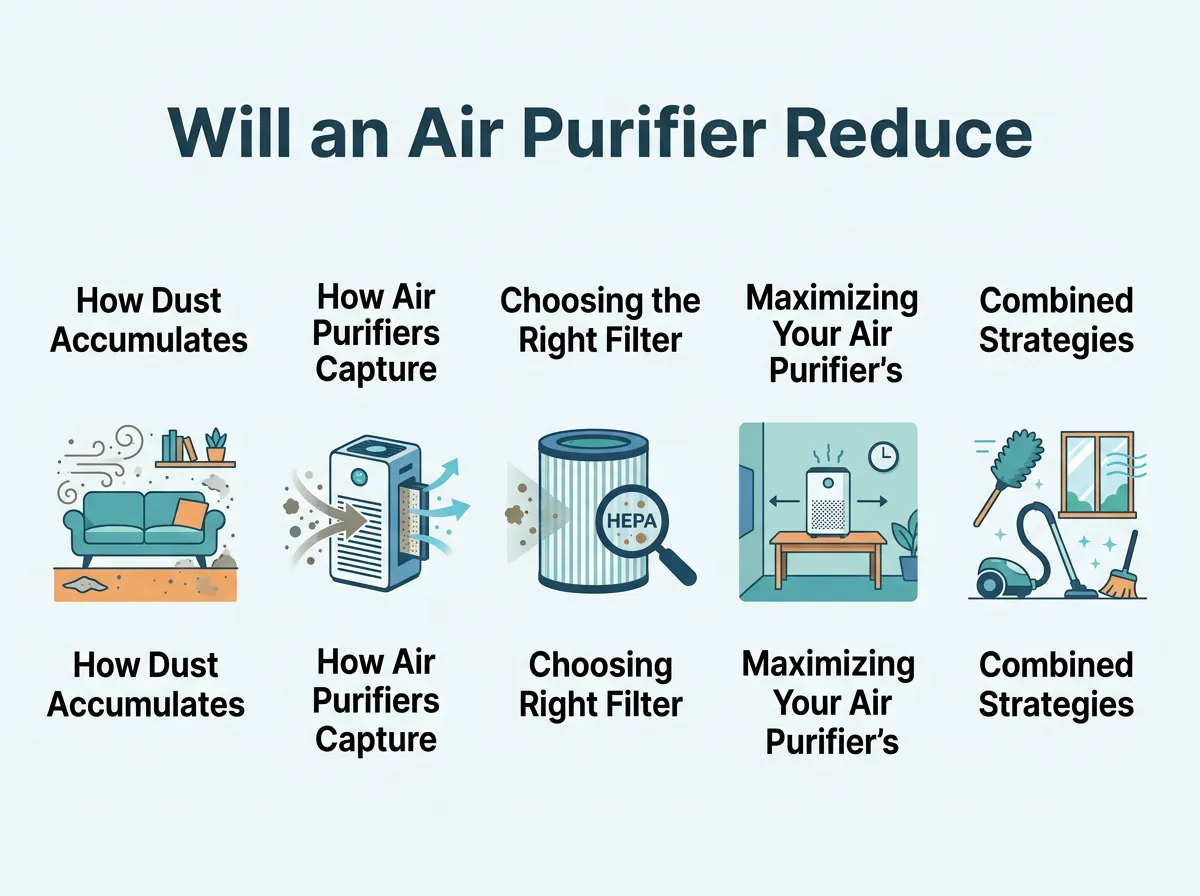
Will an Air Purifier Reduce Dust? — key points at a glance
The Role of the Fan
An air purifier uses a powerful internal fan. This fan pulls the air from your room into the machine. As the air passes through, it moves through a series of filters. The clean air is then pushed back out into the room. This continuous cycle creates a gentle airflow that draws floating particles toward the unit.
The Filtration Process
While the air flows through the machine, the filters trap the floating particles. The heavier particles get stuck first. The tiny, microscopic particles get trapped deeper inside the filter. By constantly pulling in dirty air and pushing out clean air, the machine stops dust from settling on your furniture. For a deeper look at this process, you can read about how will an air purifier reduce dust in my home to see how airflow dynamics play a major role.
Choosing the Right Filter for Dust Control
Not all air purifiers are created equal. If your main goal is to fight dust, the type of filter you choose is very important.
Why True HEPA is King
You should always look for a machine with a True HEPA filter. HEPA stands for High-Efficiency Particulate Air. A True HEPA filter can capture 99.97% of particles that are as small as 0.3 microns. This includes very fine dust, pollen, and pet dander. According to Southern Living’s guide on air purifiers for dust, choosing a HEPA-certified model is the single most important step for dust reduction. Avoid filters labeled “HEPA-type” or “HEPA-like,” as they do not meet the same strict standards.
The Importance of a Pre-Filter
A good dust-busting machine must have a pre-filter. This is the first line of defense. The pre-filter captures large particles like hair, fur, and big dust bunnies. By catching these large items, it stops the main HEPA filter from getting clogged too quickly. This helps your expensive HEPA filter last much longer. Many pre-filters are washable, making them very easy to clean and reuse.
Maximizing Your Air Purifier’s Performance
Simply buying a machine is not enough. You need to use it correctly to get the best results in your home.
Smart Placement Tips
Place your unit in the rooms where you spend the most time. Bedrooms and living rooms are great choices. Keep the machine in an open area. Do not hide it behind a couch or inside a bookshelf. It needs plenty of space around it to draw in air from all directions. Keep it at least three feet away from walls and furniture.
Running Time and Fan Speed
For the best results, run your purifier 24/7. Dust is constantly being created in your home by pets and people. If you turn the machine off, dust will quickly start to pile up again. Many modern units have “auto” modes. These modes sense the dust levels in the air and speed up the fan when needed. If you are cleaning or vacuuming, turn the fan speed to high to catch the extra dust you kick up.
Combined Strategies for a Dust-Free Home
An air purifier is a powerful tool, but it is not a magic wand. It cannot clean dust that has already landed on your floor or tables. To get a truly clean home, you must combine your purifier with smart cleaning habits.
Weekly Cleaning Habits
You should still dust and vacuum at least once a week. When you dust, use a damp microfiber cloth. This cloth grabs the dust instead of just pushing it back into the air. When you vacuum, use a vacuum with a HEPA filter so you do not blow dust out of the exhaust. Understanding these cleaning techniques and air purifier use will help you create a highly effective home maintenance routine.
Controlling Humidity and Clutter
Dust loves to hide in clutter. Keep your surfaces clear of stacks of paper, old toys, and unused items. Also, try to keep your home’s humidity between 30% and 50%. High humidity can lead to dust mites and mold growth, which only adds to the particles floating in your indoor air.
Conclusion
In the end, dealing with dust can feel like a never-ending chore. However, adding an air purifier to your home is one of the easiest ways to get some relief. By capturing airborne particles before they have a chance to land, these handy devices keep your air cleaner and your surfaces shinier.
To get the best results, always choose a unit with a True HEPA filter and a pre-filter. Place it in a central, open location, and let it run continuously. When you pair your new machine with simple weekly cleaning habits, you will notice a huge drop in household dust. You will spend less time cleaning and more time enjoying a fresh, healthy home.
Frequently Asked Questions
Will an air purifier remove dust that has already settled?
No, air purifiers can only capture airborne dust that is floating in the room. Once dust settles on your furniture, floors, or shelves, you will need to clean it manually using a damp cloth or a vacuum.
Where should I place my air purifier to get rid of dust?
You should place your air purifier in an open area with plenty of airflow, away from walls and furniture. Putting it in high-traffic areas like the living room or bedroom will help it capture the most dust.
Can I run my air purifier all day?
Yes, you should run your air purifier 24/7 for the best results. Since dust is constantly being generated by people and pets, continuous operation keeps the air consistently clean.
How often do I need to change the filters to keep dust down?
You should clean or wash the pre-filter every 2 to 4 weeks to remove large dust clumps. The main HEPA filter usually needs to be replaced every 6 to 12 months, depending on use.
Do cheap air purifiers work for dust?
Cheap air purifiers can work if they have a True HEPA filter and a strong enough fan for your room size. Always check the filter type and clean air delivery rate (CADR) before buying.
Will an air purifier help with my dust allergy?
Yes, an air purifier with a True HEPA filter is highly effective at capturing dust mites, pollen, and pet dander. Removing these particles from the air can significantly reduce sneezing, coughing, and other allergy symptoms.
