


No, air purifiers do not dry out the air because they only filter out airborne particles without removing any water vapor. If you experience dry skin or a scratchy throat while running one, the real cause is likely seasonal weather shifts, central heating, or air conditioning. You can easily maintain a comfortable indoor climate by running a humidifier alongside your air purifier.
Picture this: you wake up in the middle of the night with a scratchy throat. Your skin feels tight, and your nose feels uncomfortably dry. You look across the room and see the glowing light of your brand-new air purifier. It has been humming quietly all night, keeping your air clean. But you cannot help but wonder if this helpful little machine is actually the source of your physical discomfort.
When you start using a new home appliance, it is natural to question how it changes your living space. Many people notice a dry feeling in the air shortly after turning on a new cleaning device. This leads to a very common question: do air purifiers dry out the air? To get to the bottom of this mystery, we need to look at how these machines function and how they interact with the air in your home.
In this guide, we will break down the science of home air quality in simple terms. We will explore how air purifiers work, why your room might feel dry, and how you can keep your home both clean and perfectly comfortable. Let us dive in and clear up the confusion once and for all.
Key Takeaways
- No impact on moisture: Air purifiers only trap particles like dust and pollen; they cannot remove water vapor from your home.
- The breeze effect: The fan on your purifier can create a wind chill effect, making your skin feel dry even though the room’s humidity is unchanged.
- Dehumidifiers are different: Dehumidifiers are specifically designed to extract moisture from the air, whereas purifiers only clean it.
- Perfect pairing: You can safely run an air purifier and a humidifier together to achieve clean, comfortable, and moist air.
- Keep your distance: Place your humidifier and air purifier several feet apart to protect the purifier’s HEPA filter from moisture damage.
📑 Table of Contents
Understanding How Air Purifiers Actually Work
To understand why air purifiers do not dry out your home, it helps to look at what goes on inside the machine. These devices have one primary job: to remove pollutants from the air. They do not add anything to the air, and they do not take away gases or water vapor. They are simply advanced filtration systems.
The Role of HEPA Filters
Most high-quality air purifiers use a High-Efficiency Particulate Air (HEPA) filter. This filter is made of a very dense mat of tiny glass fibers. As the purifier’s fan pulls air through this mat, physical particles get trapped in the fibers. Dust, pet dander, mold spores, and pollen are all caught here. However, water molecules are incredibly small. They pass right through the HEPA filter without getting stuck. The filter has no physical way to grab onto water vapor.
The Role of Carbon Filters
Many modern purifiers also feature an activated carbon filter. This layer is designed to catch bad smells, smoke, and chemical fumes. It works through a process called adsorption, where gas molecules stick to the surface of the carbon. While carbon is great at trapping odors, it is not designed to absorb water vapor from the air. Your room’s humidity levels remain completely untouched as the air flows through this filter.
The Science of Humidity: Why Purifiers Can’t Dry Your Air
To change the humidity of a room, you must physically add water to the air or take it away. This requires a specific type of technology. Air purifiers simply do not have the components needed to alter humidity.
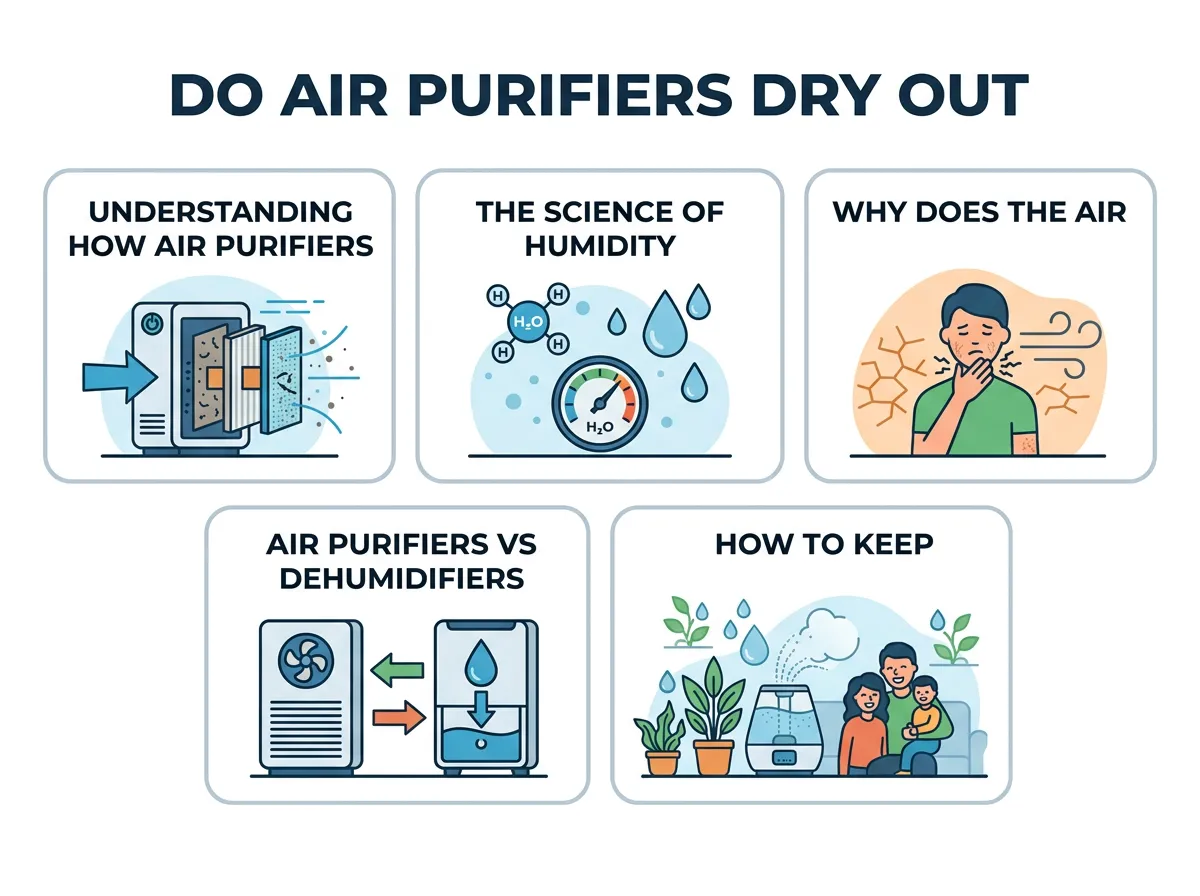
Do Air Purifiers Dry Out the Air? — key points at a glance
Think of an appliance that does dry the air, like an air conditioner or a dehumidifier. These devices use cold metal coils. When warm, moist air hits these cold coils, the moisture turns into liquid water. This water drips into a bucket or down a drain, which removes moisture from the room. Air purifiers do not have cold coils, cooling systems, or water collection tanks. Without these parts, it is physically impossible for them to lower the humidity of your home.
When you ask, do air purifiers dry out the air, science gives us a very clear answer. Because they lack any moisture-removal systems, air purifiers cannot dry out your air. They clean the air, but they leave the moisture levels exactly as they were.
Why Does the Air Feel Dry When Using an Air Purifier?
If science proves that air purifiers do not remove moisture, why do so many people experience dry skin and scratchy throats when using them? There are a few very simple explanations for this common issue.
The Wind Chill Effect of Fan Blades
Air purifiers use powerful fans to circulate air through their filters. When this cleaned air is blown back into your room, it creates a gentle breeze. If this breeze blows directly toward your bed or your desk, it can feel cool and drying. Just like a ceiling fan on a warm day, the moving air speeds up the evaporation of moisture from your skin and lips. The air in the room is not actually drier, but the moving air makes your body feel drier.
Seasonal Weather Shifts
We often start using air purifiers during seasons when our allergies flare up, such as spring or autumn. We also use them heavily in the winter when we spend more time indoors. Winter air is naturally very dry. Cold air cannot hold as much moisture as warm air. When this cold air enters our homes and gets heated up by our furnaces, the relative humidity drops drastically. You might blame your air purifier for your dry nose, but the seasonal winter weather is the real culprit.
Home Heating and Cooling Systems
Air conditioners and central heaters are major causes of dry indoor air. Air conditioners cool your home by actively removing moisture. Central heaters warm up dry outdoor air, which lowers the humidity level inside your home. If you run your heater or air conditioner at the same time as your air purifier, your home will feel dry. It is easy to mistake the air purifier as the cause of this dryness when your HVAC system is actually doing all the work.
Air Purifiers vs. Dehumidifiers: What is the Difference?
It is very common to get home air appliances confused. Let us compare air purifiers and dehumidifiers side-by-side so you can see how different they truly are.
An air purifier is a cleaning device. Its sole purpose is to clean the air you breathe by trapping dust, pollen, smoke, and pet dander. It does not collect water, and it does not change the room temperature.
A dehumidifier is a moisture-control device. Its sole purpose is to lower the humidity levels in a damp room, such as a basement or a bathroom. It pulls in wet air, removes the water, and collects it in a tank. If you want to make a room drier, you buy a dehumidifier. If you want cleaner air, you buy an air purifier.
How to Keep Your Home Perfectly Clean and Comfortable
You do not have to choose between breathing clean air and having comfortable humidity levels. You can easily enjoy both. Here are some simple, practical tips to keep your indoor air fresh and perfectly balanced.
Pair Your Purifier with a Humidifier
If your home feels dry due to winter weather or home heating, the best solution is to use a humidifier. A humidifier releases a fine mist of water vapor into the air to raise the humidity. Running a humidifier and an air purifier in the same room is a great way to create a healthy indoor climate. You get the benefits of allergen-free air along with the soothing comfort of proper moisture.
Keep Your Devices Spaced Apart
When you use an air purifier and a humidifier together, placement is very important. Keep them at least three to six feet apart. If you place them too close together, the air purifier might draw in the heavy mist from the humidifier. This can get the HEPA filter wet. A wet filter can become clogged, stop working properly, or even grow mold. Spacing them out allows both devices to do their jobs safely.
Monitor Your Indoor Humidity Levels
The ideal humidity level for a comfortable home is between 30% and 50%. You can easily track this with a cheap tool called a hygrometer. If your hygrometer shows that your home’s humidity has dropped below 30%, turn on your humidifier. You can leave your air purifier running at the same time without any worries.
Adjust the Fan Direction and Speed
To avoid the drying effects of moving air, make sure your air purifier is not blowing air directly at your face, bed, or couch. Point the air output toward a wall or into the center of the room. This keeps the room’s air circulating without drying out your skin. You can also turn the fan speed down to the lowest setting at night to reduce the breeze.
Conclusion
It is easy to understand why people ask, do air purifiers dry out the air. The cool breeze from the fan and seasonal drops in humidity can easily make your skin, nose, and throat feel dry. However, the physical reality is that air purifiers only clean the air; they cannot remove moisture.
If you are struggling with dry indoor air, look to your heater, air conditioner, or the outdoor weather as the cause. By using a humidifier alongside your air purifier, keeping them spaced apart, and directing the airflow away from your bed, you can enjoy clean, healthy, and perfectly balanced air all year round.
Frequently Asked Questions
Can I use an air purifier and a humidifier in the same room?
Yes, you can absolutely use both devices in the same room. Just make sure to place them at least three to six feet apart so the purifier does not suck in the damp mist from the humidifier. This combination gives you the perfect balance of clean, moist air.
Why does my throat feel dry when I run my air purifier?
Your throat might feel dry because the purifier’s fan is blowing a breeze directly at you, which speeds up moisture evaporation from your skin and mouth. Seasonal dry weather or indoor heating systems are also very likely causes of a dry throat.
Do HEPA filters remove moisture from the air?
No, HEPA filters cannot remove moisture. They are designed to trap physical particles like dust, pollen, and pet dander, but water vapor molecules are far too small to be caught by the filter fibers.
Does an air purifier make the room colder?
An air purifier does not change the actual temperature of a room because it has no cooling elements. However, the moving air from the fan can create a wind chill effect, making the room feel slightly cooler to your skin.
What is the difference between an air purifier and a dehumidifier?
An air purifier cleans the air by removing dust, pollen, and allergens without changing the humidity. A dehumidifier is specifically designed to pull water vapor out of the air to make a damp room drier.
How can I stop my air purifier from making me feel dry?
You can prevent dryness by pointing the air output away from your bed or seating areas so the breeze does not blow directly on you. You can also lower the fan speed or run a humidifier to add comfortable moisture back into the room.
