


Yes, air purifiers can remove smells, but only if they contain an activated carbon filter. While standard HEPA filters trap physical particles like dust and pet dander, they cannot stop gaseous odor molecules. To eliminate stubborn smells like pet odors, cooking aromas, and smoke, you must choose a purifier equipped with a thick layer of carbon.
Do Air Purifiers Remove Smells?
Imagine walking through your front door after a long, exhausting day. You want to breathe in the comforting, clean scent of home. Instead, you are hit with a wave of stale fish from last night’s dinner. Or maybe the damp, heavy smell of a wet dog welcomes you. Odors have a sneaky way of taking over our living spaces. They settle deep into our furniture, carpet, and curtains. It is hard to feel relaxed when your nose is constantly on high alert.
Many people try to solve this problem with scented sprays. They light expensive candles or plug in chemical air fresheners. However, these products only hide the problem. They mask the bad scent with a stronger, artificial perfume. This can make the air feel heavy and even trigger allergies. You might find yourself wondering if there is a better, healthier way to clean your air. This brings us to a very common question: Do Air Purifiers Remove Smells? In this guide, we will dive deep into how these machines handle bad scents, which filters do the heavy lifting, and how to make your home smell fresh every single day.
Key Takeaways
- Activated Carbon is Essential: Only purifiers with activated carbon filters can capture gas, smoke, and odor molecules.
- HEPA Filters Target Particles: True HEPA filters trap airborne particles like dust and pollen but do not stop odors on their own.
- Adsorption is the Secret: Carbon filters work through adsorption, trapping gas molecules inside tiny pores.
- Filter Thickness Matters: A thicker carbon filter with more surface area will remove odors faster and last longer.
- Avoid Ozone Generators: Some odor-removing machines produce ozone, which can irritate your lungs and harm your health.
- Regular Maintenance is Key: Carbon filters saturate over time and need replacement every six to twelve months to remain effective.
📑 Table of Contents
The Science of Smell: Why Odors Stick Around
To solve a problem, we must first understand it. Why do some smells linger for days while others fade away? It all comes down to chemistry. Smells are not solid things. They are made of tiny, invisible gas molecules. Science calls these volatile organic compounds, or VOCs. These compounds escape from physical items and float freely through the room. Because they are gases, they behave differently than dust or dirt.
Why Normal Cleaning Fails
When you sweep or dust, you clean physical particles. You can see dust on your table, so you wipe it away. But you cannot sweep away a gas molecule. These tiny gases find their way into soft fabrics. They cling to your sofa and sink into your rugs. Because they are so small, normal air flow does not always get rid of them. They just bounce around your room, waiting for your nose to find them.
The Air Flow Problem
Houses today are built to be energy efficient. They are sealed tight to keep heat in during the winter and cold air in during the summer. While this is great for your electric bill, it is bad for air quality. Without fresh air moving through, odor molecules get trapped inside. They build up over time, creating a stale, stuffy environment. This is why a simple open window is not always enough to clear the air.
Not All Filters Are Created Equal
If you look at the box of a standard air purifier, you will see a lot of big words. The most common term you will see is HEPA. This stands for High-Efficiency Particulate Air. Many people assume a HEPA filter can solve all their air quality problems. However, this is a common misunderstanding. Let us break down the difference between the filters inside your machine.
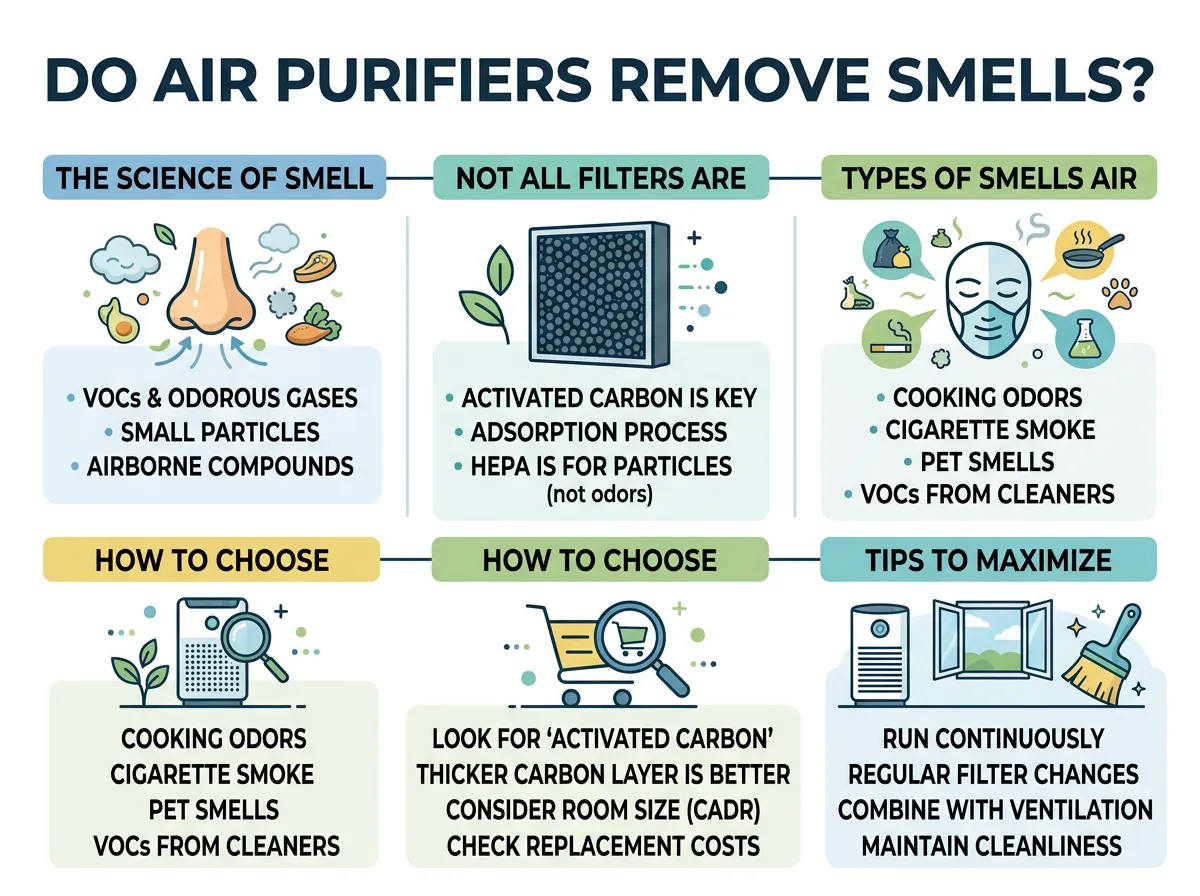
Do Air Purifiers Remove Smells? — key points at a glance
The HEPA Filter Myth
HEPA filters are amazing at what they do. They trap 99.97% of tiny airborne particles. This includes dust, pollen, mold spores, and pet dander. But here is the catch: HEPA filters only trap physical particles. Gas molecules are much, much smaller than dust. Trying to catch an odor molecule with a HEPA filter is like trying to catch sand with a tennis net. The gas simply slips right through the fibers. If your machine only has a HEPA filter, your room will still smell bad.
The Power of Activated Carbon
To trap gases, you need a different kind of tool. This is where activated carbon comes in. To understand this, we must look at how air purifiers help with smell by targeting specific molecules. Activated carbon is charcoal that has been treated with oxygen. This treatment opens up millions of tiny pores between the carbon atoms. It turns the charcoal into a massive, invisible net.
These pores act like a molecular trap. When gas molecules pass through the filter, they get stuck in these tiny pores. This process is called adsorption. It is different from absorption, where a sponge drinks water. Adsorption means the gas molecules stick to the surface of the carbon. Once they stick, they cannot escape back into your room. This is the only reliable way to remove chemical smells and gases from your indoor air.
Types of Smells Air Purifiers Can (and Can’t) Eliminate
Now you know that carbon is the key. But what kinds of smells can you actually target with this technology? Let us look at some common household scents.
Kitchen and Cooking Odors
We all love a good home-cooked meal. However, no one wants their bedroom to smell like fried onions the next morning. Oils and spices release strong VOCs during cooking. A good carbon filter is highly effective at catching these grease-based odors. It cleans the air quickly, so your home smells like home again, not like a fast-food kitchen.
Pet Odors and Wet Dog Scents
Pets bring joy to our lives, but they also bring smells. Pet odors are a mix of two things: physical dander and gaseous smells. Wet dog smell, for example, is caused by bacteria on your pet’s skin. A quality air purifier solves this with a two-step approach. The HEPA filter catches the dander and fur, while the carbon filter traps the smelly gases. This combination is highly effective. For more help on identifying what is causing the stink, check this guide on understanding different household odors in your living space.
Smoke and Tobacco Scents
Smoke is one of the hardest smells to remove. It is made of both tiny physical ash particles and heavy chemical gases. When eliminating odors with air purifiers, you must realize that smoke particles are incredibly tiny. They stick to every surface they touch. To fight smoke, you need a machine with a very thick carbon filter and a high-grade HEPA filter. While a purifier will help a lot, you will also need to wash fabrics to remove the smoke that has already settled on them.
How to Choose the Best Air Purifier for Odors
If you are shopping for a new machine, you need to know what to look for. Do not buy the first cheap model you see online. Here are three simple rules to guide your purchase.
Check the Weight of the Carbon
Not all carbon filters are the same. Some cheap purifiers use a thin, fabric-like sheet coated with a little bit of carbon dust. These sheets saturate very quickly. They might stop smells for a week or two, then stop working. For real smell control, look for a filter with pelletized carbon. These filters contain pounds of actual carbon pellets. They last much longer and can trap far more gas.
Avoid Ozone Generators
Some companies sell machines called ozone generators. They claim ozone is a natural way to clean the air and destroy smells. While ozone does destroy odors, it is also highly toxic. Breathing ozone can irritate your lungs, cause coughing, and worsen asthma. Health organizations strongly warn against using ozone generators in occupied rooms. Stick to safe, passive filtration like HEPA and activated carbon.
Look at the CADR Rating
CADR stands for Clean Air Delivery Rate. This number tells you how fast the machine cleans the air in a specific room size. If you have a large kitchen, a small desktop purifier will not help much. Make sure the unit you buy is rated for the size of the room you want to clean. A higher CADR means faster smell removal.
Tips to Maximize Your Purifier’s Smell-Fighting Power
Once you have the right machine, you need to use it correctly. You can get much better results by following a few simple tips.
Strategic Placement
Place your purifier close to the source of the smell. If you want to stop litter box smells, put the machine in the same room as the box. If you are cooking, run the purifier in the kitchen. Make sure there are no walls or furniture blocking the airflow around the machine. It needs to pull in air from all sides to work well.
Run It Continuously
Do not just turn your purifier on when you smell something bad. It is much easier to prevent smells from building up than it is to clean them later. Run your machine on a low setting all day long. This keeps the air moving and traps smells as soon as they are created. Most modern purifiers are very energy-efficient, so running them 24/7 will not hurt your electric bill.
Replace Filters on Time
Carbon filters are like sponges. Eventually, they get completely full. Once a carbon filter is full, it cannot trap any more gas. In fact, it might even start releasing the old smells back into your room! Check your manual and change your filters on time. This is usually every six to twelve months, depending on how smelly your home is.
A Clean Home is a Happy Home
In conclusion, air purifiers are incredibly powerful tools for keeping your home smelling fresh and clean. However, they are not magic. They work best when combined with regular cleaning habits. Wipe down your counters, wash your pet’s bedding, and vacuum your rugs. When you combine these habits with a high-quality carbon air purifier, you can say goodbye to stubborn smells for good. You will finally be able to walk into your home, take a deep breath, and enjoy the clean, fresh air you deserve.
Frequently Asked Questions
Can a HEPA filter get rid of bad smells?
No, a standard HEPA filter cannot get rid of bad smells on its own. HEPA filters are designed to capture physical particles like dust and dander, but gaseous smell molecules simply slip through them. To eliminate odors, you must use a purifier that also contains an activated carbon filter.
How long does it take for an air purifier to remove smells?
Most high-quality air purifiers can noticeably reduce odors within thirty to sixty minutes. The exact time depends on the size of the room, the strength of the smell, and the speed setting of the machine. Running the unit on its highest speed will clear the air much faster.
Will an air purifier help with dog and cat smells?
Yes, an air purifier with both a HEPA filter and an activated carbon filter is highly effective against pet odors. The HEPA filter captures airborne pet dander and fur, while the carbon filter traps the gases that cause pet odors. Regular filter maintenance is essential to keep pet smells under control.
Can air purifiers remove damp or musty mold smells?
Yes, they can help, but they will not fix the root cause. The carbon filter will trap the musty odor molecules, and the HEPA filter will capture airborne mold spores. However, you must fix the water leak or dampness to stop the mold from growing back and creating new odors.
Why does my air purifier smell bad?
If your air purifier is releasing a bad smell, it usually means the filters are dirty and completely saturated. When a carbon filter gets full, it can no longer hold gas and may start releasing trapped odors back into the room. Replacing the old filters with fresh ones will solve this problem immediately.
Are ozone generators safe for removing household odors?
No, ozone generators are not safe to use in occupied rooms. While ozone is highly effective at destroying smells, it is a lung irritant that can cause breathing problems and worsen asthma. It is much safer to use a passive air purifier with a thick activated carbon filter instead.
