


Yes, an air purifier can get rid of smells, but only if it has an activated carbon filter. While standard HEPA filters excel at trapping physical particles like dust and pet dander, they cannot stop gaseous odor molecules. To eliminate stubborn smells from cooking, pets, and smoke, you must choose a purifier designed with a thick layer of carbon.
Imagine walking into your home after a long day. You want to drop your bags and relax. But as soon as you step inside, a strong wave of last night’s fish dinner hits your nose. Or maybe your sweet dog left a damp, musty scent on your favorite living room rug. We have all been there. It is hard to feel comfortable when your home does not smell clean.
You might look at the dust floating in the air and wonder if a new gadget can help. As you search online, you probably ask: Will an Air Purifier Get Rid of Smells? It is a fair question. Nobody wants to waste hard-earned money on a device that fails to do the job. You want to make sure your home stays fresh and inviting.
In this guide, we will dive deep into how these machines handle bad scents. We will look at the exact technology needed to clear the air. Plus, you will learn how to pick the right model for your home and how to keep it running strong. Let us get started and clear the air once and for all.
Key Takeaways
- Carbon is Key: Only purifiers with activated carbon filters can capture gas and odor molecules.
- HEPA Alone Fails on Odors: True HEPA filters trap dust, pollen, and pet dander, but they do not stop smells.
- Odors You Can Fight: A good carbon filter easily removes odors from cooking, pets, smoke, and garbage.
- Filter Thickness Matters: Thin carbon sheets wear out fast, so look for heavy, pellet-based carbon filters.
- Source Control is Vital: You must still clean up the root cause of the smell for the very best results.
📑 Table of Contents
- Understanding How Air Purifiers Target Smells
- HEPA vs. Activated Carbon: Which One Fights Smells?
- Types of Household Smells an Air Purifier Can Fix
- When an Air Purifier Might Need Some Extra Help
- How to Choose the Best Odor-Busting Air Purifier
- How to Boost Your Air Purifier’s Performance
- Conclusion
Understanding How Air Purifiers Target Smells
To know how these machines work, we first need to look at what smells really are. Smells are not like dust bunnies or pet hair. They are much smaller. To learn more about this process, you can read about how do air purifiers help with smell on Alen’s helpful resource page. This will give you a great foundation for understanding the science of clean air.
The Battle Against Gas and Particles
There is a big difference between physical particles and gas. Particles are solid things. This group includes dust, pollen, and mold spores. Smells are made of gases and volatile organic compounds, also known as VOCs. Because gas molecules are tiny, they easily slip through standard filters. This is why a simple dust filter will not make your home smell better.
Why Standard Filters Miss Odors
When you ask yourself, Will an Air Purifier Get Rid of Smells?, you must look at how smells work. If a machine only has a basic mesh filter, the smelly gases will pass right through it. The air will blow back out, but the scent will remain. You need a specific type of filter to grab those tiny gas molecules and hold onto them tight.
HEPA vs. Activated Carbon: Which One Fights Smells?
Many people buy a machine because it has a HEPA filter. They think HEPA does everything. If you ask, Will an Air Purifier Get Rid of Smells?, you must know the difference between filters. These two filters do very different jobs, and you need both for a truly clean home.
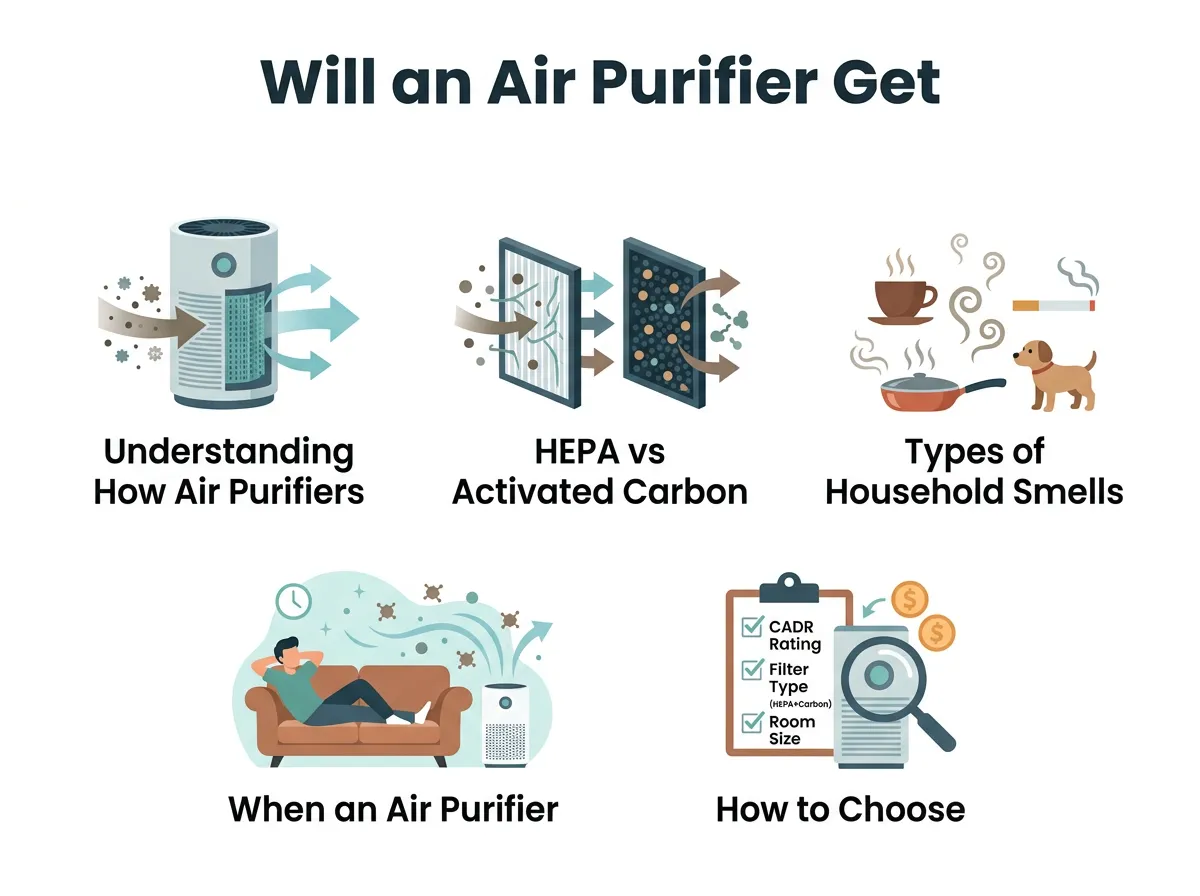
Will an Air Purifier Get Rid of Smells? — key points at a glance
Why True HEPA Filters Fall Short on Odors
A True HEPA filter is amazing at trapping solids. It stops 99.97% of tiny particles. This includes dust, pet dander, and pollen. But HEPA filters are made of fiberglass threads. They work like a net. Gas molecules are too small for this net. They flow right through the gaps. So, a HEPA filter alone will not stop the smell of bacon or wet dog.
The Magic of Activated Carbon
To fight odors, you need an activated carbon filter. This filter uses a process called adsorption. Do not confuse this with absorption. Absorption is like a sponge soaking up water. Adsorption means the gas molecules stick to the outside of the carbon. For a deeper dive into the science of filtration, check out how air purifiers remove smells and odors from the experts at Blueair.
Activated carbon is treated with oxygen. This opens up millions of tiny pores between the carbon atoms. These pores act like tiny traps. When smelly gases drift into the carbon, they get stuck in these pores. They cannot escape. This is how the air becomes clean and fresh again.
Types of Household Smells an Air Purifier Can Fix
Not all smells are the same. Some are easy to clean, while others are very stubborn. Luckily, a good machine can handle many of them. You can discover the 5 types of smells you can get rid of with an air purifier to see which ones match your home’s needs.
Cooking Odors and Burnt Foods
Cooking is fun, but the lingering smells are not. Fried fish, onions, and garlic can leave a heavy scent for days. If you burn toast, the smoky smell can fill the whole house. A carbon filter is perfect for this. It quickly pulls the cooking oils and food gases out of the air. Your kitchen will smell fresh again in no time.
Pet Smells and Litter Boxes
We love our pets, but they can be smelly. Dogs can bring in a wet, musty scent from outside. Cats have litter boxes that can quickly spoil the air in a room. An air purifier helps in two ways here. The HEPA filter grabs the pet dander and hair. At the same time, the carbon filter traps the ammonia and pet odors. This keeps your home smelling like pets do not live there.
Smoke and VOCs
Wildfire smoke, cigarette smoke, and fireplace soot are tough. They carry both particles and toxic gases. If you paint a room or buy new furniture, you might smell chemical fumes. These fumes are VOCs. A thick carbon filter will trap these harmful gases. This keeps your lungs safe and keeps your air smelling clean.
When an Air Purifier Might Need Some Extra Help
While these machines are great, they are not magic. They have limits. Knowing these limits will save you time and frustration. Let us look at what an air purifier cannot do on its own.
Deep Mold and Dampness
If you have a damp basement, you might smell a musty odor. This smell comes from mold growing on walls or carpets. An air purifier will trap mold spores in the air. This helps stop the mold from spreading. But it cannot dry out the room or kill the mold on the walls. You will need a dehumidifier and some bleach to fix the source of the problem.
Strong Chemical Spills and Heavy Rotten Garbage
If you have a pile of rotting garbage in the kitchen, a purifier will help, but it will not solve the issue. The garbage will keep making new smell molecules. The same goes for large chemical spills. You must throw out the bad trash and clean up the spill first. Once the source is gone, the machine can clean up the leftover scent in the air.
How to Choose the Best Odor-Busting Air Purifier
When shopping and asking, Will an Air Purifier Get Rid of Smells?, look closely at the specs. Not all machines are built the same way. Some have lots of carbon, while others only have a thin coat. Here is what to look for to get the best results.
Look for Pellet Carbon Filters
Some cheap purifiers use a thin sheet of foam coated in carbon dust. These sheets do not have enough carbon to last. They fill up fast and stop working after a few weeks. Instead, look for a filter with real carbon pellets. These filters are heavy. They hold ounces or even pounds of real carbon. They can trap much more gas and last for many months.
Match the CADR to Your Room Size
CADR stands for Clean Air Delivery Rate. It tells you how fast the machine cleans the air. If you put a small machine in a huge living room, it will not work well. It cannot move enough air to catch the smells. Always check the room size rating on the box. Buy a machine that is rated for your room size or even slightly larger.
How to Boost Your Air Purifier’s Performance
Once you have your machine, you want to get the most out of it. A few simple tricks can make a big difference in how well it cleans. Follow these tips for the freshest air possible.
Place It Near the Source
Do not hide your purifier behind a couch or in a far corner. It needs room to breathe. If you are cooking, place it near the kitchen. If your dog sleeps in a specific spot, place it nearby. Keeping the machine close to the source of the smell helps it trap the gases before they spread through your whole house.
Keep It Running 24/7
Many people only turn their machines on when they smell something bad. But it takes time to clean the air. It is much better to leave the machine running all the time. Most modern units have a low or auto mode. They use very little power on low. Leaving it on keeps a constant flow of clean air in your home.
Change Filters on Time
Carbon filters are like sponges. Once all the tiny pores are full, they cannot hold any more gas. If you do not change the filter, the smells will just blow right back out. Most brands suggest changing the carbon filter every six months. If you have pets or smoke, you may need to change it more often. Always follow the manufacturer’s guide.
Conclusion
So, Will an Air Purifier Get Rid of Smells? Yes, it absolutely will, as long as you choose a model with a thick activated carbon filter. Remember that HEPA filters are great for dust, but they need the help of carbon to stop bad scents. By choosing the right machine, placing it in the right spot, and keeping the filters fresh, you can enjoy a home that smells clean and welcoming every single day.
Frequently Asked Questions
Can a HEPA filter alone get rid of smells?
No, a HEPA filter alone cannot get rid of smells. HEPA filters are designed to trap physical particles like dust and pollen, but gas molecules from odors easily pass through them. To stop smells, you need a filter that contains activated carbon.
How long does it take for an air purifier to remove odors?
An air purifier can usually start reducing odors within 30 to 60 minutes in a standard room. The exact time depends on the size of the room, the strength of the smell, and the speed of the fan. For the best results, leave the machine running on a high setting during heavy odors.
Why does my air purifier smell bad?
If your air purifier smells bad, it usually means the filters are dirty and full. When a carbon filter gets overloaded, it can no longer trap gases and may start releasing the trapped smells back into the room. Simply replacing the old filters with fresh ones will solve this issue.
Do air purifiers help with damp or musty smells?
An air purifier with a carbon filter can help reduce musty smells in the air, but it will not fix the root cause. Musty smells are usually caused by mold and high humidity. You will need to use a dehumidifier and clean up the moisture to stop the smell permanently.
Can an air purifier get rid of cigarette smoke smell?
Yes, an air purifier can significantly reduce cigarette smoke smell if it has a heavy activated carbon filter. The carbon will trap the toxic chemicals and gases, while the HEPA filter traps the physical smoke particles. However, heavy smoke may require frequent filter changes.
Where is the best place to put an air purifier for odors?
The best place to put an air purifier is close to the source of the smell, such as near the kitchen, kitty litter box, or pet bed. Make sure the machine is in an open area with a few feet of space around it so it can easily pull in air from all directions.
