


No, a standard air purifier does not help with humidity because it cannot add or remove moisture from the air. Instead, it uses filters to capture airborne particles like dust, pollen, and pet dander. To manage your indoor moisture levels, you will need to use a dedicated humidifier or dehumidifier.
Imagine sitting in your living room on a hot, sticky summer day. The air feels heavy. Your skin feels damp. You look at your sleek new air purifier sitting in the corner. It hums quietly as it cleans the air. You start to wonder if this smart little machine can make the room feel less sticky. You might ask yourself: does an air purifier help with humidity? It is a very common question. Many people buy these devices hoping for a single fix for all their air problems. We all want our homes to feel fresh and comfortable.
Understanding how your home air works can be tricky. There are many devices on the market today. We have air purifiers, humidifiers, and dehumidifiers. They all sound like they do similar things. However, they actually have very different jobs. It is easy to get them mixed up when you want to fix a stuffy room. You might buy the wrong machine if you do not know the difference.
In this guide, we will break down how these devices work. We will look at what an air purifier can and cannot do for your indoor climate. We will also explore the best ways to control the moisture levels in your home. Let us dive in and clear up the confusion once and for all.
Key Takeaways
- No moisture control: Standard air purifiers do not add or remove water vapor from the air.
- No drying effect: Running an air purifier will not dry out your room or skin.
- Specific roles: Dehumidifiers reduce high moisture, while humidifiers boost low moisture.
- Indirect benefit: Clean air can make a damp room feel fresher by removing mold spores and odors.
- Hybrid options: Some 2-in-1 devices can clean your air and humidify it at the same time.
- Ideal levels: Keeping your indoor humidity between 30% and 50% is best for your comfort and health.
📑 Table of Contents
Understanding How an Air Purifier Works
Air purifiers are wonderful tools for your home. But to answer the question, does an air purifier help with humidity, we must look at how they function. These machines are designed for one main goal: to clean the air. They do not change the temperature of the air, and they do not change the water levels in the room.
The Filtration Process
An air purifier works by pulling air from your room into the device. Inside, the air passes through one or more filters. The most common filter is a HEPA filter. This filter captures very tiny particles. It traps dust, pollen, pet dander, and smoke. Once the air is clean, a fan blows it back into the room. This process happens over and over. It keeps your indoor air clean and healthy to breathe. But during this process, the water in the air goes right through the filter.
What Air Purifiers Do Not Do
Air purifiers are great at catching solid particles. Some can even trap gasses and smells using carbon filters. However, they do not have any parts that can hold or release water. They do not have water tanks. They do not have heating coils to make steam. They also do not have cooling coils to collect water. This means they cannot change the amount of water vapor in your room. So, if you ask, do air purifiers help control humidity levels, the simple answer is no. They only clean what is already in the air.
Air Purifiers vs. Dehumidifiers vs. Humidifiers
To get the perfect home climate, you need to know the differences between these three machines. Each one has a specific job. Mixing them up can lead to a home that is too wet or too dry. Let us look at what makes each one unique. You can learn more about the difference between an air purifier and a humidifier to see how they compare.
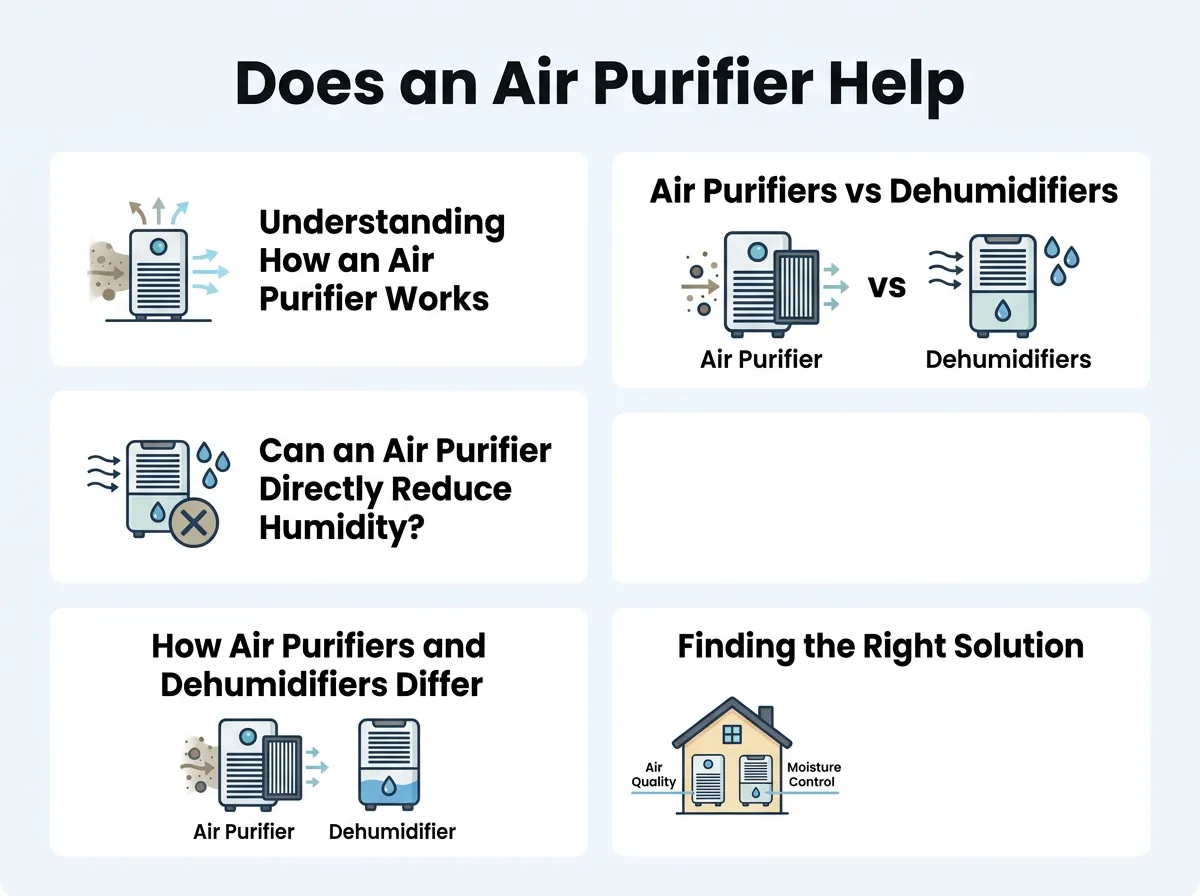
Does an Air Purifier Help With Humidity? — key points at a glance
The Role of a Dehumidifier
A dehumidifier has one main job. It lowers the humidity in your home. It does this by pulling damp air into the machine. The air passes over cold coils inside. This cools the air down, and the water in the air turns into liquid. The water drips into a bucket or goes down a drain. Then, the dry air is warmed up and blown back into your room. If your home feels like a damp basement, this is the tool you need. It directly solves the problem of high humidity.
The Role of a Humidifier
A humidifier does the exact opposite of a dehumidifier. It adds moisture to dry air. This is very helpful during cold winter months when heaters dry out the air. A humidifier holds water in a tank. It turns this water into a fine mist or steam. Then, it pushes the mist into your room. This helps soothe dry skin, dry throats, and chapped lips. It makes the air feel much warmer and softer.
Making the Right Choice
So, how do you choose? It all depends on your main goal. If you have allergies and want to breathe cleaner air, get an air purifier. If your walls are sweating and you smell mold, get a dehumidifier. If your skin is dry and itchy, get a humidifier. When thinking about understanding your dehumidifier and air purifier options, remember that they work best when they do their own jobs. They can also be used together for the best results.
Can an Air Purifier Dry Out the Air?
Some people worry that running a clean air machine will make their room feel dry. They think the filters might absorb all the moisture. They might ask: does an air purifier help with humidity by drying the air out? Let us look at why this is not true.
Airflow and Moisture Levels
It is easy to see why people might think this. When you run an air purifier, you will feel a cool breeze. Moving air always feels cooler and drier than still air. It is like sitting in front of a fan. The fan does not dry out the room, but the moving air makes your sweat dry faster. This makes your skin feel dry. But the actual humidity in the room stays exactly the same. The air purifier does not remove any water.
The Myth of the Drying Filter
People also ask: do air purifiers dry out the air by trapping water? The answer is no. HEPA filters are made of glass fibers or plastic. Carbon filters are made of charcoal. None of these materials can absorb enough water vapor to change a room’s humidity. The water molecules are far too small to get trapped by a HEPA filter. They pass right through it with the rest of the air. Your air stays just as wet or dry as it was before.
How Air Purifiers and Humidity Work Together
Even though they do different things, these two elements are linked. High humidity can cause air quality problems. An air purifier can help deal with the results of high humidity, even if it cannot lower the moisture itself. This is why using both can be very helpful.
Tackling Mold and Mildew
When humidity levels go above 60%, mold and mildew start to grow. They love warm, damp spaces like bathrooms and basements. Mold releases tiny spores into the air. These spores can cause sneezing, coughing, and itchy eyes. This is where your air purifier shines. It cannot stop the mold from growing because it cannot lower the humidity. But it can trap the mold spores floating in the air. This protects your lungs from those nasty allergens.
Neutralizing Damp Odors
Damp homes often have a musty smell. This smell comes from mold, mildew, and wet wood. An air purifier with an activated carbon filter is great at removing these odors. It pulls the smelly air in and traps the odor molecules. Your home will smell clean and fresh again. But remember, the mold will keep growing until you fix the high humidity with a dehumidifier. The air purifier only treats the symptom, not the cause.
Finding the Right Solution for Your Home
Now you know how these devices differ. But what should you do if you have both dirty air and high humidity? You do not have to choose just one solution. There are many ways to get the best of both worlds and keep your home comfortable.
Choosing a Hybrid 2-in-1 Device
If you want to save space, you might look for a hybrid device. Some brands make 2-in-1 machines. These are air purifiers that also have a built-in humidifier. They clean the air and add moisture at the same time. These are great for dry winter climates. However, finding a combination air purifier and dehumidifier is much harder. They are rare and often very expensive. It is usually better to buy two separate machines for wet rooms.
Practical Tips for Home Comfort
Here are some simple steps to keep your home healthy:
- Use a cheap tool called a hygrometer to measure your indoor humidity. Keep it between 30% and 50% for best comfort.
- Run your air purifier all day long to keep the air clean and free of dust and pollen.
- Use exhaust fans in your kitchen and bathroom to pull wet air out of your home when you cook or shower.
- Open windows on dry days to let fresh air inside and lower indoor humidity naturally.
- Clean your air purifier filters often so the machine can run at its best.
Conclusion
So, does an air purifier help with humidity? The clear answer is no, it does not. An air purifier cannot change the moisture levels in your home. Its only job is to clean the air you breathe by trapping dust, pollen, and other pollutants. To control humidity, you must use a humidifier for dry air or a dehumidifier for wet air.
However, these devices make an amazing team. By using an air purifier alongside a humidity control tool, you can create the perfect indoor environment. You will enjoy air that is both clean and perfectly balanced. Your home will feel fresher, and your lungs will thank you. Investing in the right tools will make your home a much more comfortable place to live.
Frequently Asked Questions
Does an air purifier help with humidity?
No, a standard air purifier does not help with humidity. It does not have the ability to add or remove moisture from the air. It only cleans the air by filtering out particles like dust and pollen.
Can running an air purifier dry out my skin?
No, an air purifier will not dry out your skin because it does not remove water from the air. Any dry feeling you experience is usually due to natural weather changes or indoor heating. The breeze from the air purifier might make your skin feel cool, but it does not lower the humidity.
Should I get an air purifier or a dehumidifier for a damp basement?
You should get a dehumidifier first to lower the high moisture levels and prevent mold growth. Once the humidity is under control, you can add an air purifier to remove any lingering mold spores and musty smells. Using both together is the best way to keep a basement fresh.
Is there a machine that is both an air purifier and a dehumidifier?
While there are some hybrid machines on the market, they are very rare and often less effective than separate units. It is usually best to buy a high-quality air purifier and a separate dehumidifier to get the best results for your home.
Does high humidity affect how well an air purifier works?
Yes, very high humidity can make air purifier filters damp. When HEPA filters get wet, they can develop mold or clog more quickly. It is best to keep your indoor humidity below 50% so your air purifier can run smoothly.
Can an air purifier get rid of the smell of mold?
Yes, an air purifier with an activated carbon filter can help remove mold odors from the air. However, it will not kill the mold source. You must lower the humidity with a dehumidifier to stop the mold from growing back.
