


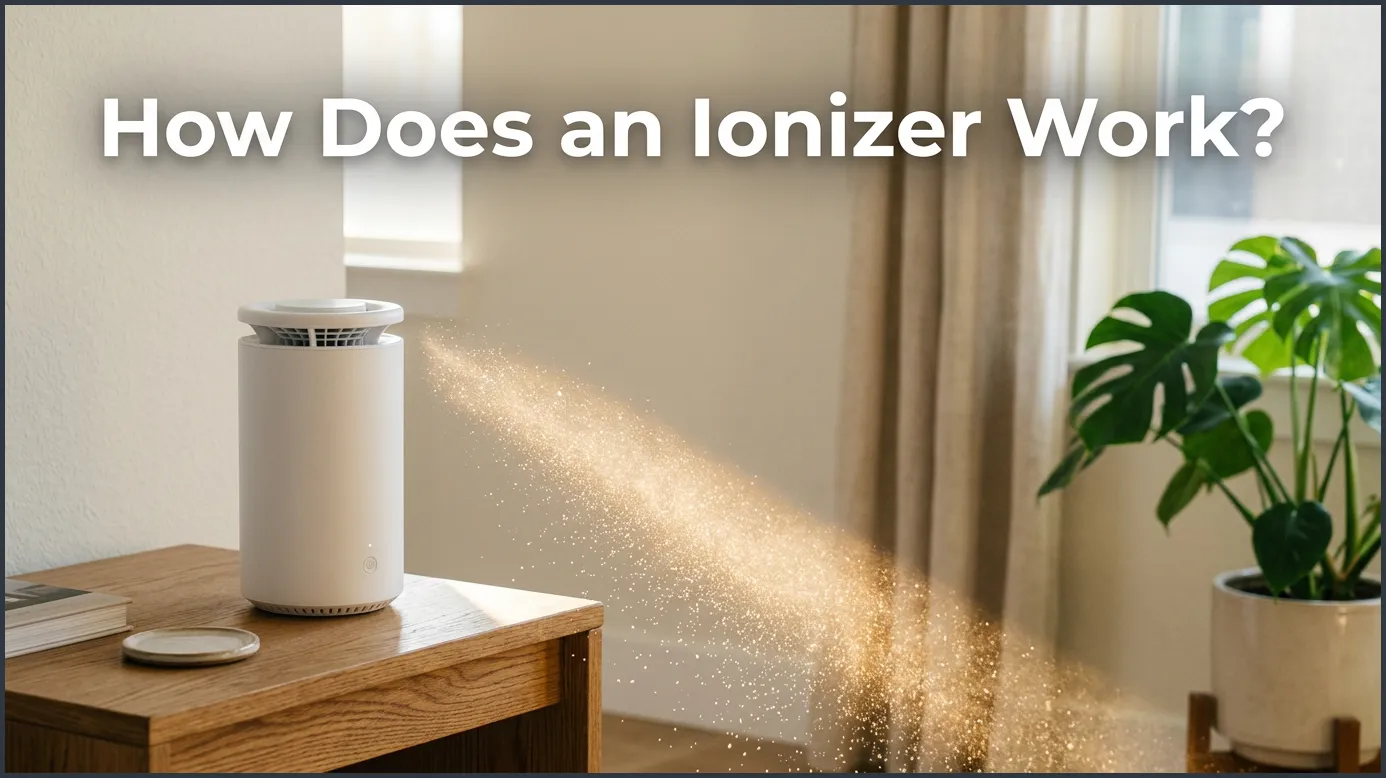
An air ionizer works by releasing negatively charged ions into the air, which magnetically attach to positively charged particles like dust, pollen, and smoke. Once these particles clump together, they become too heavy to remain airborne and fall to the ground or stick to walls, effectively clearing the air you breathe. Some models also use built-in collection plates to trap these heavy clumps for easy cleaning.
Imagine walking through a pine forest right after a fresh summer rainstorm. The air feels incredibly crisp, clean, and light. You take a deep breath, and it feels like your lungs are getting a much-needed reset. Now, contrast that with the air inside a closed living room on a hot afternoon. That indoor air can often feel heavy, dusty, or completely stale. Why does nature feel so different from our indoor spaces?
The secret lies in charged molecules called ions. In nature, rushing water, crashing ocean waves, and lightning storms generate billions of negative ions that clear the air. Inside our homes, we do not have waterfalls or lightning. If you have ever stared at a display in an electronics store and wondered, how does an ionizer work?, you are in the right place. We can easily bring this natural cleaning process into our homes with the right technology.
In this guide, we will break down the science of air ionizers in a simple, friendly way. We will cover how they generate ions, how they clean your room, and how they compare to traditional filters. By the end, you will know exactly if an ionizer is the right choice for your household.
Key Takeaways
- Negative Ion Release: Ionizers emit negatively charged molecules to target indoor air pollutants.
- Particle Clumping: The negative ions bond with positive particles like dust and dander, making them heavy.
- Settling Out of Air: Heavy dust clumps fall to the floor, removing them from your breathing zone.
- No Filter Replacements: Basic ionizers do not require physical filters, making them highly cost-effective.
- Ozone Awareness: Some older models produce trace amounts of ozone, so choosing an ozone-free model is key.
- Easy Maintenance: Models with electrostatic collection plates only require occasional wiping.
📑 Table of Contents
The Core Science: What is an Ion?
To truly understand how these devices clean your space, we need to take a quick trip back to basic science class. Do not worry, we will keep it simple and fun! Everything around us is made of tiny atoms. These atoms contain even smaller parts, including protons, which have a positive charge, and electrons, which have a negative charge.
Normally, these charges are balanced. But sometimes, an atom gains or loses an electron. When this happens, it becomes an ion. An air ioniser is designed specifically to manipulate these charges to clean up your indoor environment.
Positive vs. Negative Ions
In the air around us, positive ions are often the bad guys. They are commonly associated with dust, pollen, pet dander, mold spores, and even chemical vapors. These tiny particles float freely through your home, easily slipping into your nose and lungs when you breathe. On the flip side, negative ions are the good guys. They are highly active molecules with an extra electron, searching for something to bind to. When negative ions meet positive ions, they stick together like tiny magnets.
Nature’s Natural Air Purifier
Nature is incredibly good at cleaning itself. Sunlight, wind, and moving water constantly break apart air molecules to create negative ions. This is why mountain air or beach air feels so fresh. An indoor ionizer mimics this exact natural mechanism, bringing the power of the great outdoors directly into your bedroom or office.
Step-by-Step: How Does an Ionizer Work?
So, how does this scientific process play out inside a small device on your desk? When people ask, how does an ionizer work?, they are usually curious about the physical mechanism inside the machine. Let us look at the step-by-step journey of how these units clean your air.
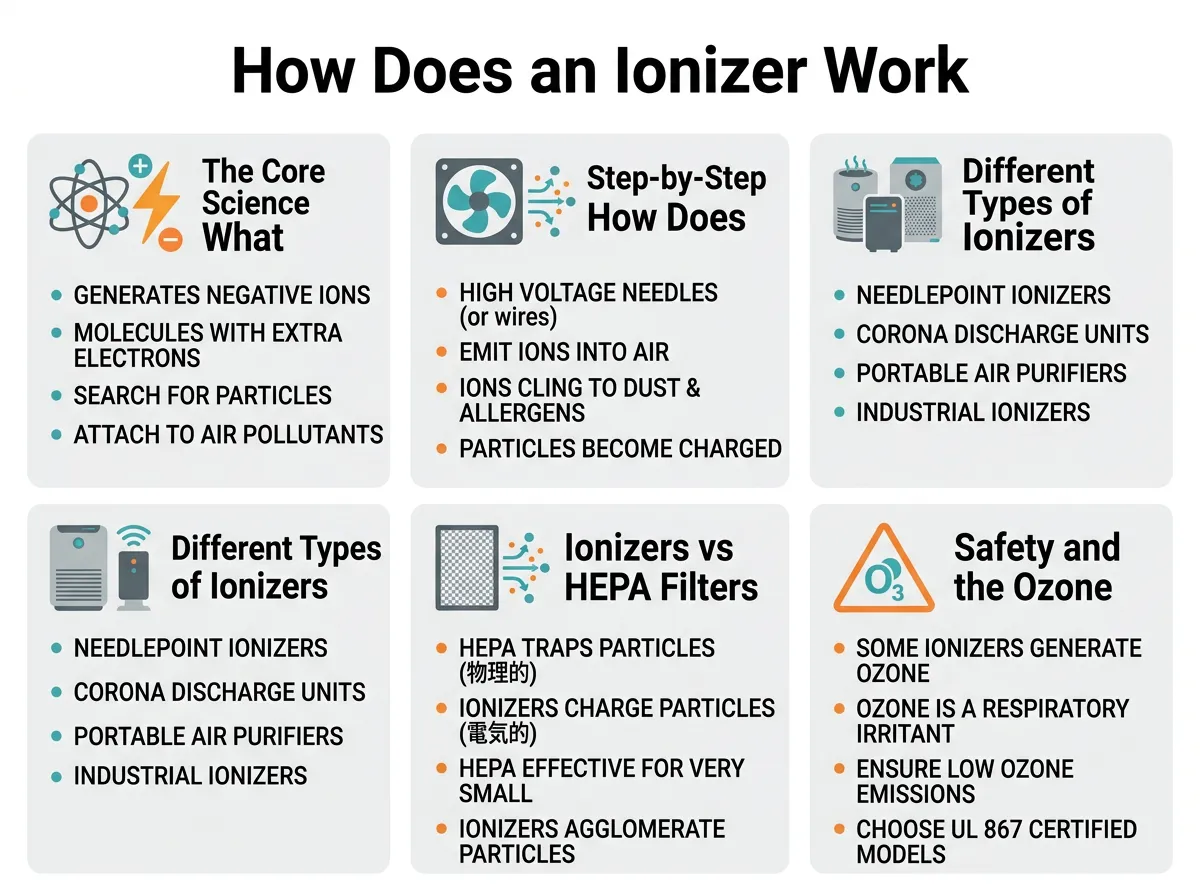
How Does an Ionizer Work? — key points at a glance
If you want to study the deeper mechanics, you can read more about the air ionizer working principle, but the core process is remarkably straightforward.
Step 1: Creating Negative Ions
First, the ionizer needs electricity. The device plugs into your wall and sends an electric current to an internal component, often a small metal needle or a series of tiny brushes. This electrical energy is highly concentrated at the tips of these needles. The intense voltage forces electrons off the metal tips and pushes them out into the surrounding air molecules, converting them into negative ions.
Step 2: Releasing Ions into the Room
Once these negative ions are created, they do not stay inside the machine. The device releases them into your living space. Some ionizers use a small fan to blow these ions across the room. Others rely on natural air currents to spread the ions. Within minutes, millions of invisible, negatively charged ions are floating through your room, searching for targets.
Step 3: Bonding with Air Pollutants
This is where the real cleanup action begins. The negative ions quickly seek out positively charged particles. These include common household nuisances like floating dust, pet dander, mold spores, tobacco smoke, and pollen. As the negative ions collide with these pollutants, they transfer their electrical charge. The dust particles become negatively charged, causing them to stick to other nearby particles.
Step 4: Dropping Out of the Air
As more and more particles clump together, they grow larger and heavier. Eventually, they become too heavy to remain suspended in the air. The laws of gravity take over, and these heavy clumps drop down onto the floor, your furniture, or nearby walls. Because they are no longer floating, you can no longer inhale them. You can easily remove these fallen particles during your weekly vacuuming or dusting routine.
Different Types of Ionizers Explained
Understanding how does an ionizer work can help you choose between different styles on the market. Depending on your budget and your specific needs, you might encounter a few different designs.
Needlepoint Ionizers
This is the most common and classic design. These units use sharp metal needles to generate a high-voltage electrical field. They are simple, durable, and highly effective at releasing a massive volume of ions. They are often built into compact tabletop units or even portable car air purifiers.
Electrostatic Precipitators
If you do not like the idea of dust falling onto your floor or walls, an electrostatic precipitator is a great solution. These devices contain built-in metal collection plates that have a positive electrical charge. When the negatively charged dust clumps float back near the machine, the positively charged plates pull them in like a magnet. The dust sticks directly to the plates inside the unit, keeping your floors clean. All you have to do is slide the plates out and wipe them clean with a damp cloth.
Hybrid Air Purifiers
Many modern manufacturers combine ionizers with other filtration technologies. For example, a hybrid unit might feature a mechanical pre-filter, an active carbon filter, a HEPA filter, and an ionizer stage. This gives you physical filtration for larger particles and ionic charging for ultra-fine dust and odors.
Ionizers vs. HEPA Filters: What is the Difference?
Now that we understand how does an ionizer work on a molecular level, let’s compare this technology to traditional filters. When shopping for clean air solutions, you will often find yourself choosing between an ionizer and a traditional HEPA (High-Efficiency Particulate Air) filter.
Physical Trapping vs. Electrical Attraction
The primary difference lies in how they handle dirt. A HEPA filter acts like a very fine net. A fan forces air through this paper-like net, trapping dust, pollen, and pet dander inside the fibers. The air is physically cleaned as it passes through the filter. An ionizer, on the other hand, does not trap particles inside a physical barrier. Instead, it changes the electrical charge of the particles in your room, forcing them to settle out of the air. To learn more about how this impacts your health and well-being, you can explore the medical perspectives on what does an ionizer do to improve your daily living environment.
Maintenance and Cost Comparison
HEPA filters are highly effective, but they require regular maintenance. Over time, the physical filters become clogged with dust and must be replaced. Buying replacement HEPA filters can become expensive over the years. Pure ionizers, especially those with electrostatic plates, have no filters to replace. You simply clean the plates or vacuum the room. This makes ionizers a highly cost-effective, low-maintenance option for budget-conscious homeowners.
Safety and the Ozone Question
While knowing how does an ionizer work helps you appreciate the technology, you also need to think about safety. There is an important safety topic we must discuss: ozone.
Understanding Ozone Risks
Some electrical ionizers produce a small amount of ozone as a byproduct of the electrical ionization process. Ozone is a gas made of three oxygen atoms. While ozone high up in the atmosphere protects us from solar radiation, ground-level ozone can irritate your lungs, tickle your throat, and worsen asthma symptoms. Because of this, the U.S. Environmental Protection Agency (EPA) advises caution. You can read the detailed EPA guidelines on what are ionizers and other ozone-generating air cleaners to understand the potential risks and regulations surrounding these devices.
How to Choose a Safe Ionizer
Fortunately, modern technology has come a long way. Many high-quality modern ionizers are carefully engineered to produce zero or extremely negligible amounts of ozone. When shopping for an ionizer, look for certifications from trusted testing bodies. For example, always check the product label for certifications to ensure you are buying a safe device for your family.
Practical Tips for Using an Ionizer
If you decide to bring an ionizer into your home, here are a few practical tips to help you get the absolute best performance out of your new device.
- Use in open spaces: Do not hide your ionizer behind a couch or inside a bookshelf. The negative ions need room to spread freely throughout the air.
- Regular dusting is key: Since basic ionizers cause dust to settle on your furniture and floors, you will need to dust and vacuum your room slightly more often to keep your surfaces looking clean.
- Wash collection plates weekly: If your unit has an electrostatic plate, clean it once a week. If the plate gets too dirty, it loses its electrical pull and will not trap dust as effectively.
- Turn it off when you leave: If you are concerned about ozone build-up in a small room, run the ionizer while you are away, and turn it off when you are hanging out in the room.
Conclusion
Breathing clean air is one of the easiest ways to boost your energy, sleep better, and protect your respiratory health. Ionizers offer a fascinating, filter-free way to clear out the airborne dust, pollen, and smoke that clutter our homes. By using simple electrical science to mimic nature’s natural purification process, these smart little devices can make a massive difference in your daily comfort. Just remember to choose a safe, ozone-free model, keep up with your dusting, and enjoy the crisp, fresh air!
Frequently Asked Questions
How does an air ionizer clean the air?
An air ionizer cleans the air by releasing negatively charged ions into your living space. These ions attach to positively charged pollutants like dust, pollen, and pet dander. The bonded particles become heavy and fall to the ground or stick to walls, removing them from your breathing zone.
Do air ionizers actually remove dust?
Yes, air ionizers are highly effective at removing dust from the air. However, unlike traditional air purifiers that trap dust inside a filter, an ionizer causes the dust to settle on your floors and furniture. This means you will need to vacuum and dust your room to fully remove the settled dust.
Are air ionizers safe to use inside the house?
Most modern air ionizers are completely safe to use inside your home. Some older or cheaper models can produce small amounts of ozone, which can irritate your lungs. To stay safe, always purchase certified ozone-free or low-ozone ionizers for your living spaces.
Do I need to replace filters in an air ionizer?
No, standard air ionizers do not use physical filters, so there are no replacement costs. If your ionizer has a built-in electrostatic collection plate, you simply slide it out and wipe it clean with a damp cloth. This makes them much cheaper to maintain than traditional HEPA purifiers.
Can I leave my air ionizer on all night?
Yes, you can safely leave an ozone-free air ionizer running all night. It is very quiet and will continuously clean the air while you sleep, which can help reduce morning congestion. Just make sure the unit is certified safe for indoor use before leaving it on continuously.
What is the difference between a HEPA filter and an ionizer?
A HEPA filter uses a fan to pull air through a fine physical mesh to trap dust and allergens. An ionizer does not have a physical filter and instead releases charged ions to make dust clump together and drop to the ground. Many modern home air purifiers combine both systems for the best results.
