


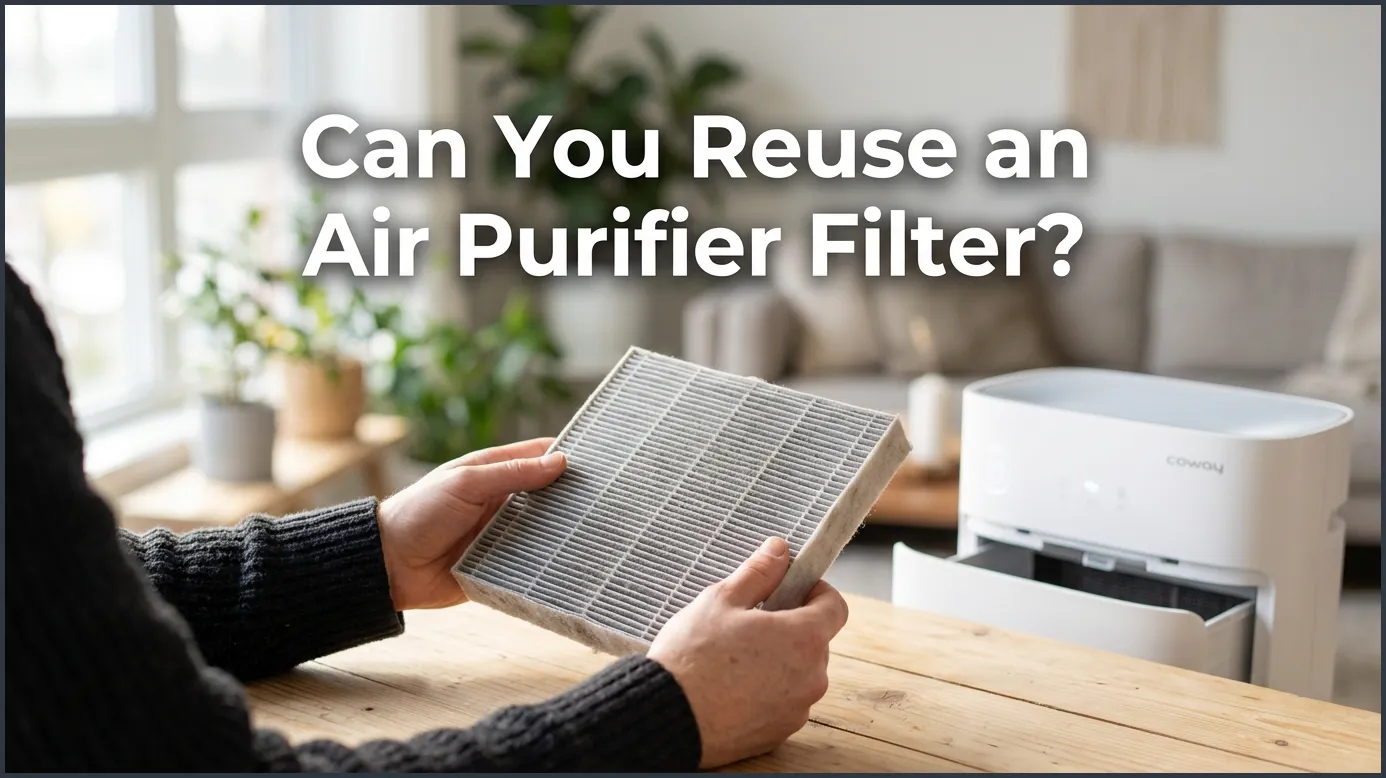
Generally, you cannot reuse standard HEPA or activated carbon air purifier filters once they are dirty. Washing or vacuuming these disposable filters damages their delicate fibers, which ruins their ability to trap tiny particles and can even lead to mold growth. However, some specialized models feature permanent, washable pre-filters that are specifically designed for regular cleaning and reuse.
Imagine walking into your home after a long day. You take a deep breath, expecting a breath of fresh, clean air. Instead, you notice a faint, musty smell. You look over at your trusted air purifier in the corner. The little red indicator light is glowing, telling you it is time to change the filter. You pull out the filter cartridge and sigh. It is covered in a thick layer of grey dust, pet hair, and lint.
A replacement filter can be quite expensive. It is only natural to wonder if you can save a few dollars. You might ask yourself: Can You Reuse an Air Purifier Filter? It seems like a simple question. After all, we wash our clothes, our dishes, and even our car filters. Why should an air purifier filter be any different?
In this guide, we will dive deep into how these filters work. We will look at why some filters should never meet water or a vacuum cleaner. We will also explore the rare exceptions where you actually can clean and reuse parts of your filtration system. By the end, you will know exactly how to keep your air fresh without ruining your machine.
Key Takeaways
- Disposable HEPA filters are one-time use: Trying to wash them destroys the micro-fiber mesh that traps tiny allergens.
- Water causes mold and mildew: Wetting a paper or carbon filter can trap moisture, leading to mold blowing back into your room.
- Washable pre-filters are an exception: The outermost mesh layer is often designed to be rinsed under tap water.
- Vacuuming is only a temporary fix: Running a vacuum over a HEPA filter removes surface dust but fails to clean deep-seated particles.
- Replacing filters is vital for health: Using a clogged or damaged filter strains your machine and degrades indoor air quality.
📑 Table of Contents
Understanding How Air Purifier Filters Work
To understand why cleaning is such a hot topic, we first need to look at how these devices capture dust. An air purifier is not just a fan with a screen. It is a highly engineered system designed to catch microscopic particles.
The Magic of HEPA Filters
Most high-quality air purifiers use a True HEPA filter. HEPA stands for High-Efficiency Particulate Air. These filters are made from tiny glass fibers tangled together in a random web. The web is so tight that it can trap 99.97% of particles as small as 0.3 microns. To put that in perspective, a single human hair is about 70 microns wide. These fibers act like a sticky maze. Once dust, pollen, or smoke enters, it gets trapped and cannot escape.
Activated Carbon Filters
Many purifiers also feature an activated carbon filter. This filter looks like a black sponge or a honeycomb grid filled with tiny black pellets. Carbon filters do not trap dust. Instead, they use a process called adsorption to trap gases, odors, and volatile organic compounds (VOCs). The carbon has millions of tiny pores that chemical smells stick to. Once those pores are full, the carbon can no longer clean the air.
Why You Cannot Clean Standard HEPA Filters
It is incredibly tempting to take a dirty HEPA filter to the sink. You might think a quick rinse will wash away the dust and make it as good as new. However, trying to wash a disposable HEPA filter is a recipe for disaster. You can check the guidelines to understand when you can clean and reuse your HEPA filter safely, but the general rule for standard filters is a strict no.
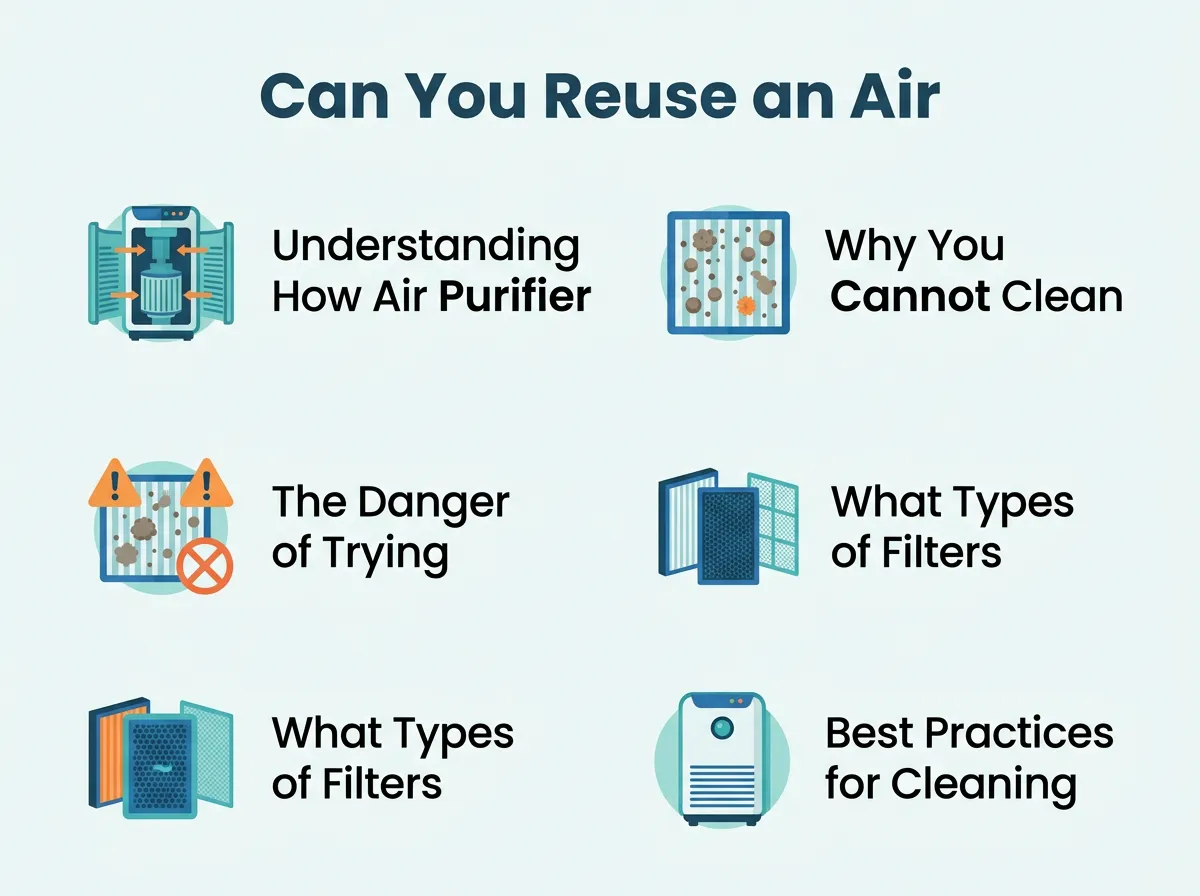
Can You Reuse an Air Purifier Filter? — key points at a glance
Water Destroys the Fiber Web
Water is the natural enemy of disposable HEPA paper. The tiny glass fibers are held together by special binders. When these fibers get wet, they stretch, clump together, and pull apart. This creates tiny, invisible tears in the filter media. The tight maze becomes a wide-open highway for dust. Even if the filter looks clean after washing, it will no longer stop the microscopic allergens that make you sneeze.
Vacuuming Fails to Reach the Core
If water is bad, what about using a vacuum? It seems safer to suck the dust away. Unfortunately, a vacuum cleaner only removes the large, visible dust bunnies on the very surface. The microscopic particles like mold spores and pollen are trapped deep inside the fiber matrix. A standard vacuum does not have enough suction power to pull those tiny particles out. Worse yet, the hard plastic nozzle of your vacuum can easily tear the delicate paper pleats, rendering the filter useless.
The Danger of Trying to Wash Disposable Filters
Some people still try to wash their filters despite the warnings. They assume that a slightly less efficient filter is better than none at all. However, using a washed disposable filter can actually make your indoor air quality worse. Experts warn that trying to wash your air purifier filter is a dangerous mistake that can directly impact your health and home environment.
Mold and Bacteria Growth
When you get a HEPA filter wet, it takes a very long time to dry completely. The dense pleats trap moisture inside the core. Since the filter is already packed with organic dust and skin flakes, it becomes the perfect breeding ground for mold and bacteria. When you turn the air purifier back on, the fan will blow active mold spores directly into your living room. Instead of cleaning your air, you are now actively polluting it.
Reduced Efficiency and Motor Strain
Washing a filter can also clog the tiny airways within the paper fibers. The wet dust turns into a muddy paste that dries hard. When the air purifier tries to pull air through this clogged barrier, the motor has to work twice as hard. This causes the machine to run loud, consume more electricity, and eventually overheat. You might save a few dollars on a filter, but you risk burning out a costly appliance.
What Types of Filters Can You Actually Reuse?
When trying to find out Can You Reuse an Air Purifier Filter?, the answer often depends on the specific layers inside your machine. While you should avoid washing your main HEPA filter, not all filters are destined for the trash can. Some parts of your air purifier are built to be cleaned. It is important to learn when you can wash air purifier filters and which types are designed for it.
Washable Pre-Filters
Almost every modern air purifier has a pre-filter. This is the very first layer of defense. It looks like a fine plastic mesh, similar to a window screen. Its job is to catch large items like pet hair, lint, and big dust clumps. Because it is made of durable plastic or nylon, you can absolutely wash it. In fact, washing this pre-filter every few weeks is highly recommended. It keeps the heavy debris off the inner HEPA filter, making the main filter last much longer.
Permanent HEPA-Type Filters
A few select air purifiers come with permanent or HEPA-type filters. These are made from synthetic materials that do not fall apart when wet. They are designed to be vacuumed or rinsed under cold water. However, you must read your owner’s manual carefully. True HEPA filters are rarely washable. If your manual does not explicitly say the filter is washable, you must assume it is disposable.
Best Practices for Cleaning Washable Filters Safely
If your air purifier has a washable pre-filter or a certified permanent filter, you must clean it correctly to avoid damage. Follow these simple steps to ensure you do not accidentally ruin your reusable parts.
Step-by-Step Rinsing Guide
First, turn off and unplug your air purifier. Gently remove the front grill and slide out the pre-filter. Take it to the bathroom or kitchen sink. Run lukewarm water through the filter in the opposite direction of the airflow. This pushes the dust out instead of driving it deeper. Avoid using harsh chemical sprays or soaps. If the filter is greasy, a single drop of mild dish soap rubbed gently with your fingers is more than enough.
Crucial Drying Tips
This is the most important step: the filter must be completely dry before you put it back. Never put a damp filter into your machine. Shake off any excess water and lay the filter flat on a clean towel. Let it air dry in a well-ventilated room for at least 24 hours. Do not use a hairdryer, as the high heat can melt the plastic mesh or distort the frame. Once it is bone dry, slide it back into the unit.
When and How to Replace Your Filters
Even with excellent care, every disposable filter eventually reaches the end of its life. Knowing when to make the swap keeps your home smelling sweet and your lungs happy.
Signs Your Filter is Done
Most modern units have a built-in filter indicator light. However, you should also trust your senses. If your air purifier starts running louder than usual, it is likely because the filter is clogged. If the air coming out of the grill smells musty or dusty, the filter has lost its ability to clean. You can also do a visual check. A brand new filter is bright white. A spent filter will be dark grey or brown.
How to Find the Right Replacement
When buying replacements, it is best to stick to Original Equipment Manufacturer (OEM) filters. These are made by the same company that built your purifier. They fit perfectly and guarantee the best performance. If you choose third-party filters, make sure they are highly rated and sized correctly. A loose filter lets dirty air bypass the system entirely, rendering your machine useless.
Conclusion
Taking care of your air purifier does not have to be a guessing game. While the idea of washing a dirty filter to save money is tempting, doing so can damage the delicate HEPA fibers and invite harmful mold into your home. Keep your disposable filters dry and replace them on schedule. Keep your washable pre-filters clean to extend the life of the unit. By following these simple rules, you can enjoy crisp, fresh air all year round.
Frequently Asked Questions
Can you vacuum a HEPA filter to reuse it?
No, you should not vacuum a HEPA filter to reuse it. The vacuum’s powerful suction can pull and tear the delicate glass fibers, which ruins its filtration ability. It also fails to remove the microscopic particles trapped deep inside.
What happens if you wash a non-washable filter?
Washing a non-washable filter destroys the paper fibers and ruins its ability to trap dust. It also traps moisture inside the thick pleats, which can cause mold and bacteria to grow. When you turn the machine back on, it will blow mold spores into your room.
How often should I wash my reusable pre-filter?
You should wash your reusable pre-filter every two to four weeks. Regular cleaning prevents large dust clumps and pet hair from blocking airflow. This keeps your purifier running efficiently and helps your main HEPA filter last longer.
Can I clean an activated carbon filter?
No, you cannot clean or wash an activated carbon filter. Carbon filters work by absorbing odors into tiny chemical pores, and water will not clear these pores out. Once the carbon is saturated, the filter must be replaced.
How long do air purifier filters typically last?
Standard HEPA filters usually last between six to twelve months depending on use. Carbon filters typically last three to six months. Always check your manufacturer’s guide to see when you should swap yours out.
Is it safe to use cheap off-brand replacement filters?
Off-brand filters can be safe if they fit your model perfectly and use certified HEPA material. However, some cheap filters have poor seals that let dirty air bypass the filter entirely. Buying OEM filters ensures the best fit and performance.
