


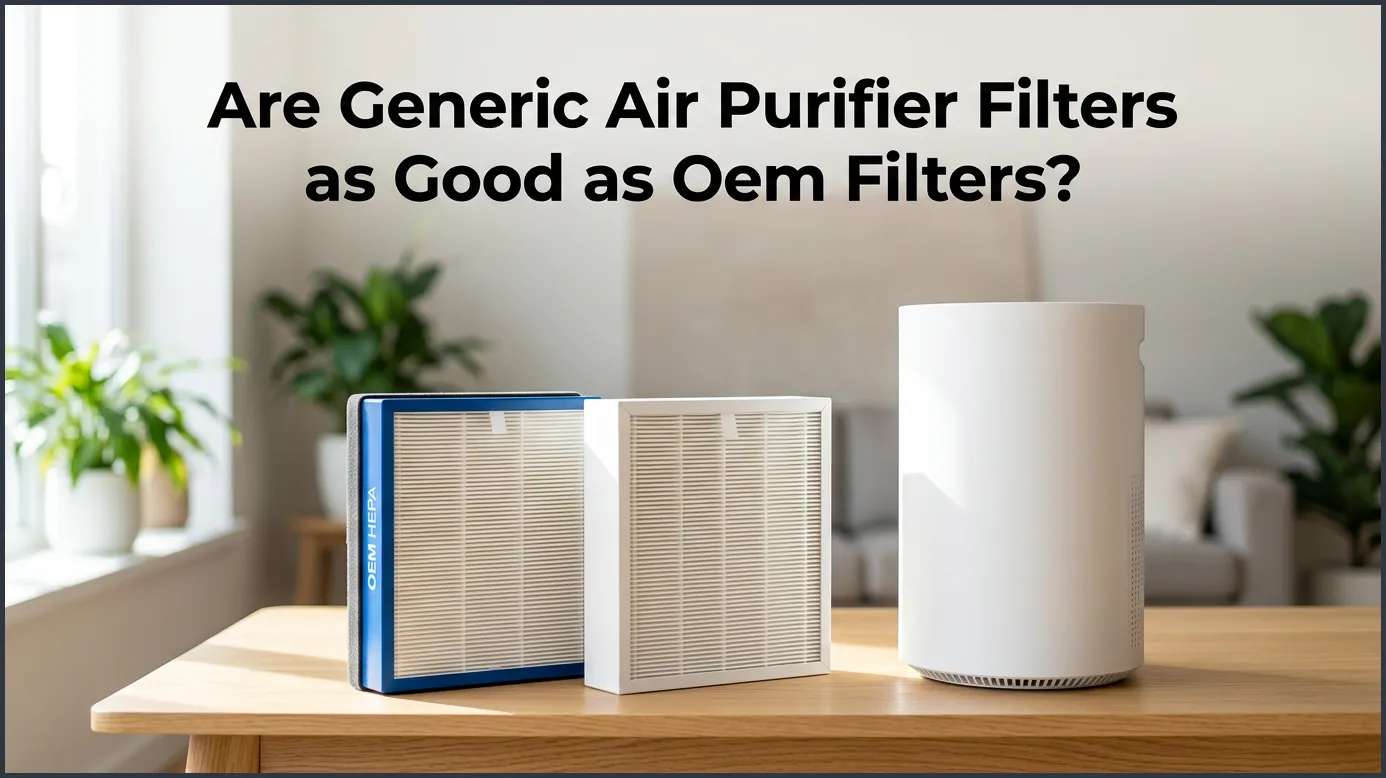
While generic air purifier filters offer massive upfront cost savings, they often fall short of OEM filters in fit, filtration efficiency, and build quality. Opting for aftermarket brands can save money, but it may compromise your indoor air quality and potentially void your manufacturer’s warranty.
Imagine this. You wake up with a stuffy nose and itchy eyes. You look across the room at your air purifier. The little red light is blinking. It is time to change the filter. You open your phone to buy a replacement. Your jaw drops when you see the price. The brand-name filter costs fifty dollars. Right next to it, you see a generic brand for fifteen dollars. They look almost the exact same. You wonder, is the cheap one just as good?
This is a common choice for many homeowners. We all want clean air in our homes. We also want to save our hard-earned money. The price of original parts can add up fast over a year. But we must ask a vital question. Are Generic Air Purifier Filters as Good as OEM Filters? In this guide, we will look at how they match up. We will look at price, fit, clean air ratings, and risks.
By the end of this post, you will know exactly which filter to buy. You will learn how to spot a good deal. You will also learn how to protect your machine and your health.
Key Takeaways
- Huge Cost Savings: Generic filters are often 50% cheaper than brand-name options.
- Sizing Issues: Aftermarket filters can have slight gaps that let dirty air bypass the system.
- Filtration Quality: Many generic filters lack true HEPA ratings, reducing their ability to trap small particles.
- Warranty Risks: Using a non-OEM filter can void the warranty on your air purifier.
- Motor Strain: Poorly made filters can restrict airflow and damage your purifier motor over time.
📑 Table of Contents
Understanding the Terms: OEM vs. Generic Filters
Before we compare them, let us define what these words mean. It helps to know what you are paying for when you shop.
What is an OEM Filter?
OEM stands for Original Equipment Manufacturer. This means the filter is made by the same brand that built your air purifier. If you have a Honeywell purifier, an OEM filter is made by Honeywell. These filters are made to fit your specific model. The brand tests them to make sure they work perfectly with their machines.
What is a Generic Filter?
Generic filters are also called aftermarket or third-party filters. They are made by other companies. These companies did not make your air purifier. Instead, they copy the size and shape of the original filter. They sell them as cheaper options that fit popular models. You can find them easily on sites like Amazon.
The Price Gap: Why Are OEM Filters So Expensive?
The biggest reason people buy generic filters is the price. The difference in cost can be huge. Sometimes, you can buy three generic filters for the price of one OEM filter. Why is this the case?
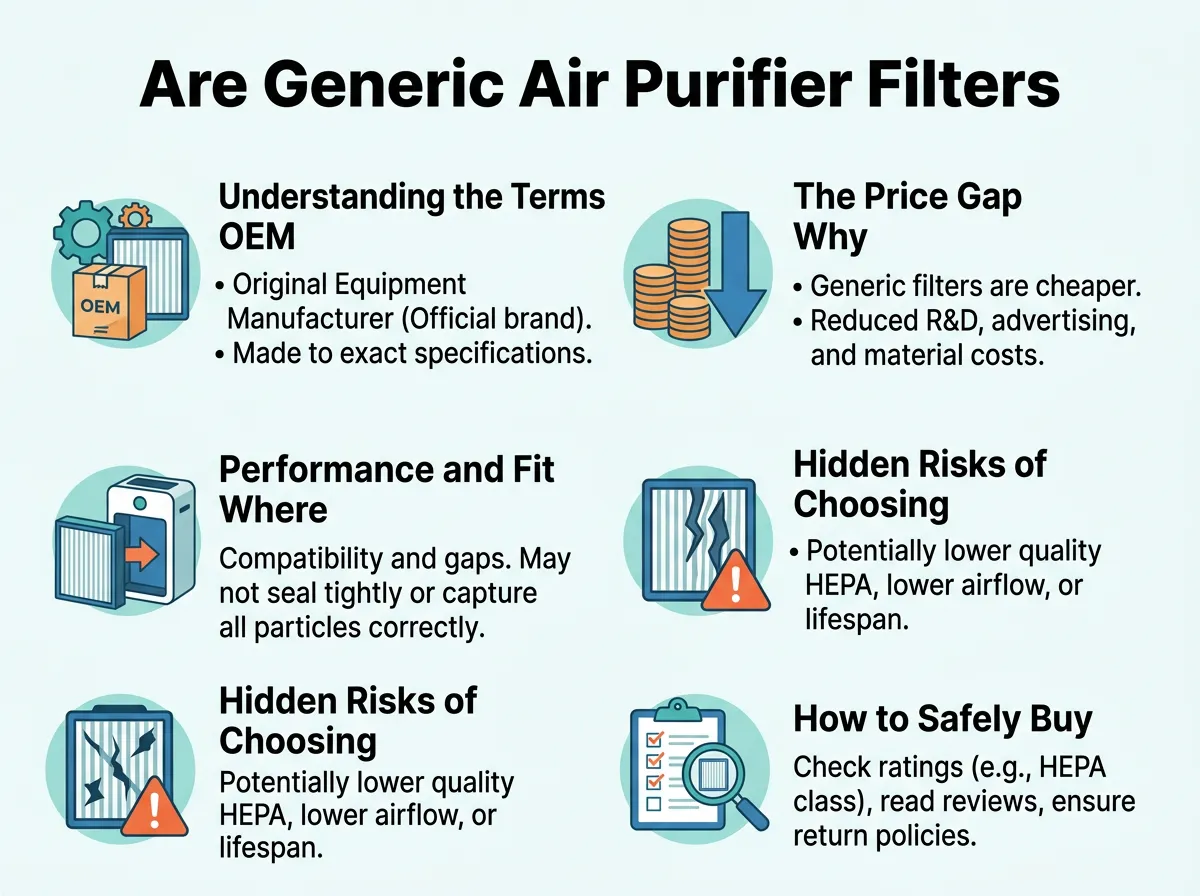
Are Generic Air Purifier Filters as Good as OEM Filters? — key points at a glance
Research and Development
Big brands spend a lot of money to design their machines. They research how air moves. They test different materials to find the best way to trap dust and pollen. This research costs a lot of money. The brand adds these costs to the price of the filter. Generic brands do not have to do this research. They simply copy the design, which keeps their costs very low.
Brand Markup and Quality Control
Famous brands have a reputation to protect. They have strict quality checks. Every filter must meet their high standards. This testing costs money. They also add a brand markup because people trust their name. Generic brands often have looser quality checks. They focus on fast, cheap production to sell at low prices.
Performance and Fit: Where Generics Often Fall Short
Price is important, but performance matters most. An air purifier is only as good as its filter. If the filter fails, dirty air stays in your home. This is where we see the biggest differences between the two options.
The Importance of a Perfect Seal
An air purifier works by pulling air through a filter. For this to work, the filter must fit perfectly. There should be no gaps around the edges. OEM filters are made with exact measurements. They fit snugly inside the machine. Many generic filters are off by just a few millimeters. This seems small, but it is a big deal. If there is a tiny gap, air will take the path of least resistance. It will go around the filter instead of through it. This means dirty air bypasses the filter and goes right back into your room.
True HEPA vs. HEPA-Type Materials
True HEPA filters are the gold standard. They trap 99.97% of particles as small as 0.3 microns. This includes dust, mold, pollen, and bacteria. OEM filters usually use true HEPA material. Many cheap generic filters use HEPA-type material. It sounds similar, but it is not the same. HEPA-type filters may only trap 85% to 90% of particles. They let smaller allergens pass right through. If you have asthma or allergies, this difference can affect your health.
Hidden Risks of Choosing Aftermarket Filters
Saving money on a cheap filter can sometimes cost you more in the long run. There are hidden risks that many buyers do not think about.
Voiding Your Device Warranty
Your air purifier came with a warranty. This warranty promises to fix or replace the machine if it breaks. However, most brands have a strict rule. If you use a non-OEM filter and the machine breaks, the warranty is void. They will not help you. If your two-hundred-dollar purifier stops working, you will have to pay for a new one yourself.
Strain on the Purifier Motor
Every air purifier motor is tuned to work with a specific filter thickness. If a generic filter is too thick, the motor must work harder to pull air. This can cause the motor to overheat and burn out. If the filter is too thin, the motor might spin too fast. Both issues can shorten the life of your air purifier.
How to Safely Buy Generic Filters
You may still want to try generic filters to save money. That is okay! Many people use them with no issues. You just need to be a smart shopper. Here are a few tips to help you choose a good one.
Look for Certified Ratings
Do not just trust the words on the box. Look for real certifications. Check if the generic filter has been tested by an independent group. Look for CARB approval or AHAM certification. These seals show that the filter actually does what it claims to do.
Read Customer Reviews Carefully
Do not just look at the star rating. Read the written reviews. Search the reviews for words like fit, smell, or noise. If many users say the filter is too small or has a bad chemical smell, stay away. If users say it fits perfectly and works quietly, it is likely a safe bet.
Measure Your Old Filter
Before you throw away your old OEM filter, measure it. Use a ruler to get the exact height, width, and depth. When your generic filter arrives, compare the sizes. If the generic filter is even slightly smaller, return it. It is not worth the risk of dirty air bypass.
Conclusion: Making the Right Choice for Your Home
So, are generic air purifier filters as good as OEM filters? The short answer is usually no. OEM filters offer better fit, higher filtration quality, and peace of mind. They protect your machine and your health. But generic filters have their place. If you are on a tight budget and do not have severe allergies, a high-quality generic filter can work well. Just make sure to check the fit and read reviews first.
For those with bad allergies, pets, or asthma, we recommend sticking with OEM filters. Clean air is an investment in your health. Sometimes, paying a little extra is worth every penny.
Frequently Asked Questions
Do generic filters void my warranty?
Yes, using generic filters can void your air purifier’s warranty. Most manufacturers state that damage caused by third-party parts is not covered. It is best to check your product manual before making a purchase.
How can I tell if a generic filter fits properly?
A properly fitting filter should slide into place with no force but leave zero gaps around the edges. If you can wiggle the filter or see light passing around the sides, the fit is too loose. This will let dirty air bypass the filtration media.
Are all generic filters True HEPA?
No, many generic filters are labeled as “HEPA-type” or “HEPA-like.” These filters do not meet the strict standards of True HEPA, which must capture 99.97% of tiny particles. Always read the fine print to ensure you are getting real HEPA quality.
Can a cheap filter damage my air purifier?
Yes, a poorly made generic filter can damage your machine. If the filter material is too dense, it restricts airflow and strains the motor. Over time, this strain can cause the motor to overheat and break down permanently.
Why do some generic filters smell bad?
Some cheap filters use low-grade adhesives or chemical treatments during manufacturing. When you turn on the purifier, these chemicals release a strong odor into your room. If your new filter smells chemical or sweet, you should return it.
How often should I replace a generic filter?
Generic filters often need to be replaced more frequently than OEM filters. Since they usually contain less active carbon or thinner HEPA material, they clog faster. Inspect them every two months and replace them if they look gray or dirty.
