

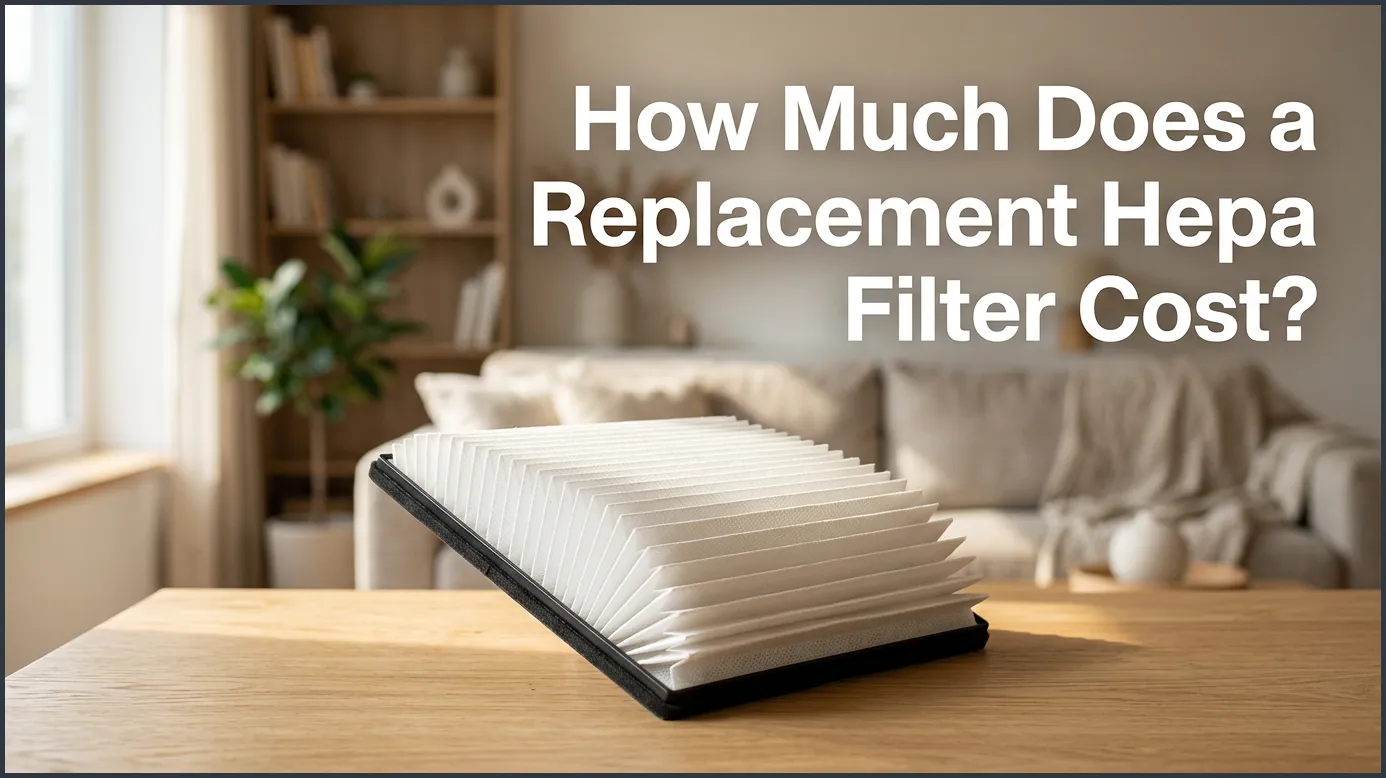
A standard replacement HEPA filter typically costs between $15 and $100, depending on your device’s brand and size. Large whole-house HVAC HEPA filters or medical-grade systems can cost upwards of $100 to $300. Regular maintenance and buying in bulk are great ways to keep these recurring costs as low as possible.
Imagine walking into your home after a long, busy day. You close the door, take a deep breath, and relax. The air feels light, clean, and fresh. If you use an air purifier, you know this wonderful feeling well. But then, you notice a small red light flashing on your machine. It is time to change the filter. Your mind quickly turns to your budget. You begin to wonder about the ongoing price of clean air.
Buying an air purifier is a one-time expense, but keeping it running is a journey. The filter is the heart of the machine. Over time, it fills up with dust, pollen, and pet dander. When it gets full, it cannot do its job anymore. To keep your air fresh, you must buy a new one. But what should you expect to pay? Let us dive into the details of filter pricing so you can plan ahead with confidence.
In this guide, we will break down the costs. We will look at different types of machines. We will explore why some filters cost more than others. Finally, we will share simple tips to help you save money on your next purchase.
Key Takeaways
- Average Cost Range: Most portable room air purifier HEPA filters cost between $20 and $60.
- Size and Brand Impact: Name-brand OEM filters cost more, while third-party aftermarket options offer savings.
- HVAC Systems Cost More: Large, whole-house HEPA filters are thicker and can run from $100 to over $300.
- Lifespan Matters: HEPA filters generally last 6 to 12 months, which helps you plan your annual budget.
- Watch for Quality: Always choose True HEPA over cheaper “HEPA-type” filters to ensure proper air cleaning.
📑 Table of Contents
What is a HEPA Filter and Why Must You Replace It?
Before we talk about dollars, let us talk about what you are buying. HEPA stands for High-Efficiency Particulate Air. These filters are special. They are not like the simple mesh filters in a window fan. They are made of tiny glass fibers tangled together in a dense mat. This design creates a maze that traps even the smallest particles.
The Power of True HEPA
A True HEPA filter is highly efficient. It traps 99.97% of particles that are as small as 0.3 microns. To put that in perspective, a single human hair is about 70 microns wide. This means a HEPA filter catches things you cannot even see. It stops dust mites, mold spores, pet dander, and pollen in their tracks. This high level of cleaning is why doctors often recommend them for people with allergies or asthma.
Why Replacements are Necessary
Think of a HEPA filter like a sponge. A sponge can only hold so much water before it is full. In the same way, a filter can only hold so much dust. As it fills up, the air has a harder time passing through. Your machine has to work much harder to pull air through the clogged fibers. This can make your utility bills go up. It can also cause your machine to wear out faster. Replacing the filter keeps your air clean and protects your investment.
How Much Does a Replacement HEPA Filter Cost by Device?
The price of a filter depends heavily on the device you own. A small bedroom unit uses a much smaller filter than a whole-house system. Let us look at the price ranges for the most common devices.
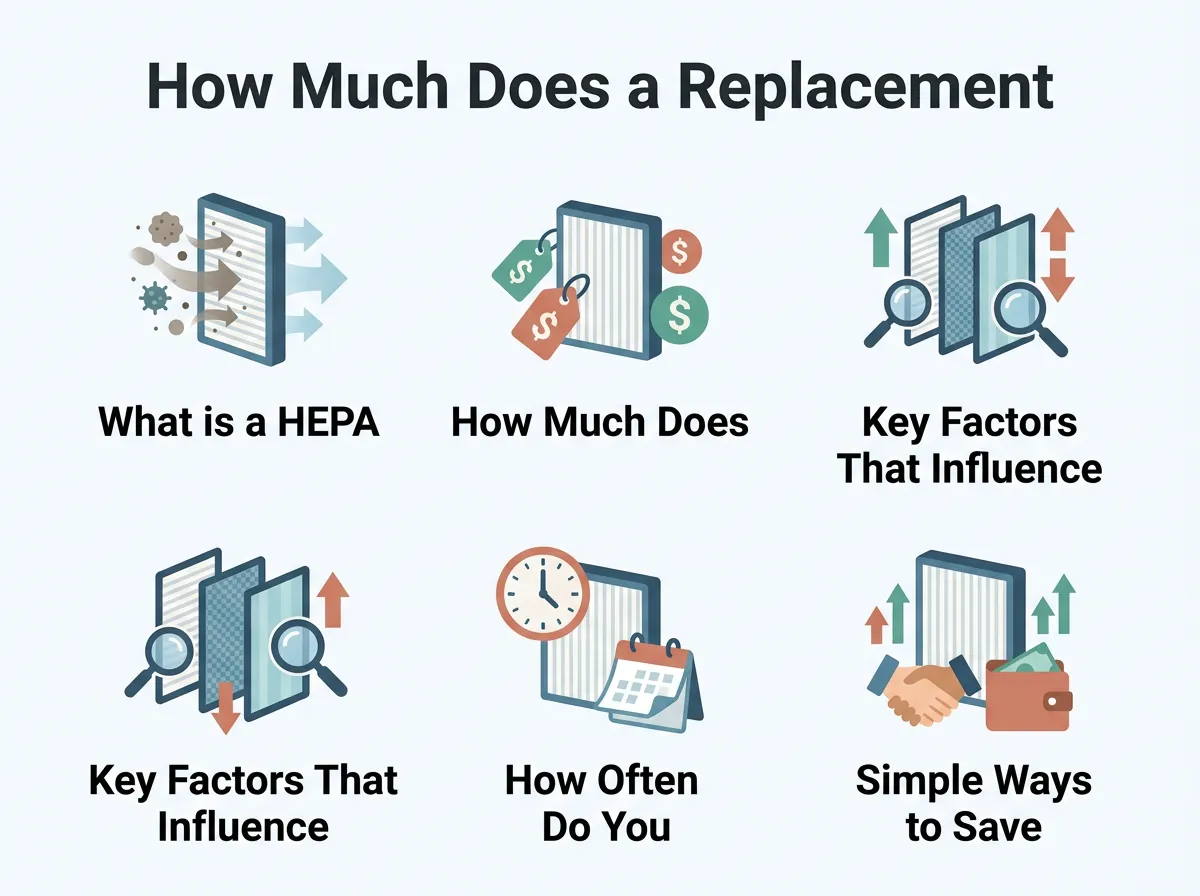
How Much Does a Replacement HEPA Filter Cost? — key points at a glance
Portable Room Air Purifiers
These are the most common air purifiers on the market. People use them in bedrooms, offices, and living rooms. If you own one of these, you have a wide range of options. A replacement filter for a small room unit usually costs between $15 and $40. For a medium to large room purifier, the cost generally ranges from $40 to $80. High-end, extra-large room units may require filters that cost up to $100.
Whole-House HVAC HEPA Systems
Some homes have HEPA filtration systems attached directly to their main heating and cooling ducts. These systems clean the air for the entire house at once. Because they handle a massive volume of air, these filters are very large and thick. They often look like deep metal or plastic boxes. A replacement filter for a whole-house system is a larger investment. You can expect to pay between $100 and $300 for a single filter.
HEPA Vacuum Cleaners
Many modern vacuum cleaners use HEPA filters to keep dust from escaping back into the room while you clean. These filters are quite small compared to air purifier filters. Because of their compact size, they are very affordable. Most vacuum HEPA filters cost between $10 and $25. They also tend to last a long time because they only run when you vacuum.
Key Factors That Influence the Cost
When shopping, you might notice two filters that look identical but have very different prices. Why is that? Several factors drive the price of a replacement filter up or down.
OEM vs. Aftermarket Brands
OEM stands for Original Equipment Manufacturer. These are filters made by the same company that built your air purifier. They are designed to fit your exact model perfectly. They offer guaranteed quality, but they come with a higher price tag. Aftermarket filters are made by third-party companies. They are built to fit popular models but are usually much cheaper. You can often save 30% to 50% by choosing aftermarket brands. Just make sure to read customer reviews to ensure they fit tightly without gaps.
Filter Grade and Materials
Not all HEPA filters are the same. A standard True HEPA filter is perfect for most homes. However, you can also buy medical-grade HEPA filters, often labeled as H13 or H14. These capture even smaller particles, up to 99.99%. Because they use more advanced materials, they cost more. If you see a filter that is very cheap, check the label carefully. It might be labeled as “HEPA-type” or “HEPA-like.” These are not true HEPA filters and do not meet the same high standards of filtration.
Carbon Pre-Filter Bundles
Many HEPA filters come sold as a set with an activated carbon pre-filter. The carbon layer is excellent because it traps odors, smoke, and gases that a standard HEPA filter cannot catch. While these bundles offer great value and complete cleaning, they do raise the upfront cost of your replacement package.
How Often Do You Need to Buy a New Filter?
To understand the true cost of clean air, you must look at how often you need to replace your filter. This determines your yearly budget. Most manufacturers recommend changing a HEPA filter every 6 to 12 months. However, your actual schedule depends on your home environment.
The Pet Factor
If you have dogs or cats, your filter will fill up much faster. Pet hair and dander are large particles that can quickly coat the outer layer of your filter. In a home with multiple pets, you might need to change your filter every 6 months to keep the air fresh.
Air Quality in Your Area
Do you live near a busy road, a construction site, or an area prone to wildfires? High levels of outdoor pollution will find their way inside. This means your air purifier will work harder, and the filter will clog faster. In these situations, more frequent changes are necessary.
An Example Yearly Budget
Let us look at a quick example. Suppose you own a medium-sized air purifier. The replacement filter costs $40. If you change it twice a year, your annual cost is $80. If you only need to change it once a year, your cost is $40. Knowing this helps you plan your home maintenance budget easily.
Simple Ways to Save Money on Replacement Filters
You do not have to pay full price for your filters. With a little planning, you can easily lower your ongoing costs. Here are some of the best ways to save money.
Buy in Multi-Packs
Many sellers offer discounts if you buy two or more filters at the same time. While you spend more money upfront, the cost per filter is much lower. This is a great option because filters do not expire. You can safely store them in a dry closet until you need them.
Sign Up for Subscription Services
Many online retailers and brand websites offer auto-delivery subscriptions. If you sign up to have a filter shipped to your home every six months, they will often give you a discount of 10% to 15% on every order. This also ensures you never forget to replace your filter on time.
Keep the Pre-Filter Clean
Most air purifiers have a thin, washable pre-filter in front of the HEPA filter. This outer layer traps large particles like hair and dust clumps. If you vacuum or wash this pre-filter every month, you keep the main HEPA filter from clogging too quickly. This simple chore can extend the life of your expensive HEPA filter by several months.
Conclusion
Keeping your indoor air clean is a wonderful investment in your health and comfort. While the recurring cost of replacements can feel like a chore, it does not have to break the bank. By understanding the options, choosing the right filter grade, and using smart shopping tips, you can keep your home fresh and your budget happy.
Frequently Asked Questions
Can I wash a HEPA filter to save money?
In most cases, you cannot wash a HEPA filter. Water will damage the delicate glass fibers and ruin the filter’s ability to trap tiny particles. Only wash a filter if the manufacturer specifically labels it as washable.
What is the difference between True HEPA and HEPA-type filters?
True HEPA filters are certified to capture 99.97% of tiny particles down to 0.3 microns in size. HEPA-type filters are cheaper but do not meet these strict standards, often trapping only 85% to 90% of airborne particles.
How do I know when my HEPA filter needs to be replaced?
Many modern air purifiers have an indicator light that flashes when it is time for a change. You can also check the filter visually; if it looks dark grey, dusty, or clogged, it is time for a new one.
Are generic or aftermarket HEPA filters safe to use?
Yes, most high-quality aftermarket filters are perfectly safe to use and can save you a lot of money. Just make sure to read customer reviews carefully to ensure the filter fits your specific model tightly without any gaps.
Why are some HEPA filters so expensive?
The price is driven by the high-quality materials used to trap microscopic particles, the physical size of the filter, and the brand name. Medical-grade filters (H13 or H14) and those bundled with carbon layers also cost more due to their advanced features.
Does a dirty HEPA filter use more electricity?
Yes, a clogged HEPA filter restricts airflow, forcing the air purifier’s motor to work much harder to pull air through. This increased strain can raise your electricity usage and shorten the lifespan of your machine.
