

Knowing when to replace your HEPA filter is crucial for maintaining pristine indoor air quality and protecting your family from airborne allergens. Common warning signs of a clogged filter include visible gray dust buildup, reduced airflow from your system, and persistent musty odors in your home. Monitoring these key indicators ensures your air purifier or HVAC system continues to trap harmful pollutants effectively.
Imagine walking into your living room on a warm, sunny afternoon. The sunlight streams beautifully through the window, but instead of a pristine space, you see millions of tiny dust motes dancing in the air. You bought an air purifier to solve this exact problem, yet the air still feels heavy, stale, and difficult to breathe. This frustrating situation leaves many homeowners asking a very important question: How Do You Know If Your HEPA Filter Is Dirty?
It is incredibly easy to plug in an air purifier or install a new HVAC filter and completely forget about it. After all, these devices work quietly in the background of our busy lives. However, keeping track of your filter health is vital for your comfort, your health, and your wallet. If you neglect this simple maintenance task, you might as well not run your appliance at all.
In this guide, we will explore the clear signals that your filter has reached the end of its life. We will also discuss how a clogged filter impacts your home, and share easy ways to keep your indoor air fresh and clean. Let us dive in and learn how to read the warning signs your appliances are sending you.
Key Takeaways
- Visual Inspection: A physical check is the easiest way to spot thick gray dust or dark discoloration on your filter media.
- Airflow Reduction: Weak air coming from your purifier or HVAC system indicates a severely clogged filter that needs immediate changing.
- Musty Odors: If your home starts smelling stale or moldy, your HEPA filter has likely reached its capacity and is harboring organic debris.
- Allergy Flare-ups: Increased sneezing, coughing, or itchy eyes suggest the filter is no longer trapping fine particles efficiently.
- Increased Energy Bills: A dirty filter makes your appliance motor work much harder, consuming more electricity and raising costs.
- Use Calendar Alerts: Do not rely solely on memory; set a recurring digital reminder based on your manufacturer’s recommended schedule.
📑 Table of Contents
The Visual Test: What Does a Dirty HEPA Filter Look Like?
The simplest way to evaluate your filter is to look at it directly. A quick physical inspection can tell you almost everything you need to know about the state of your filtration system.
Checking for Discoloration
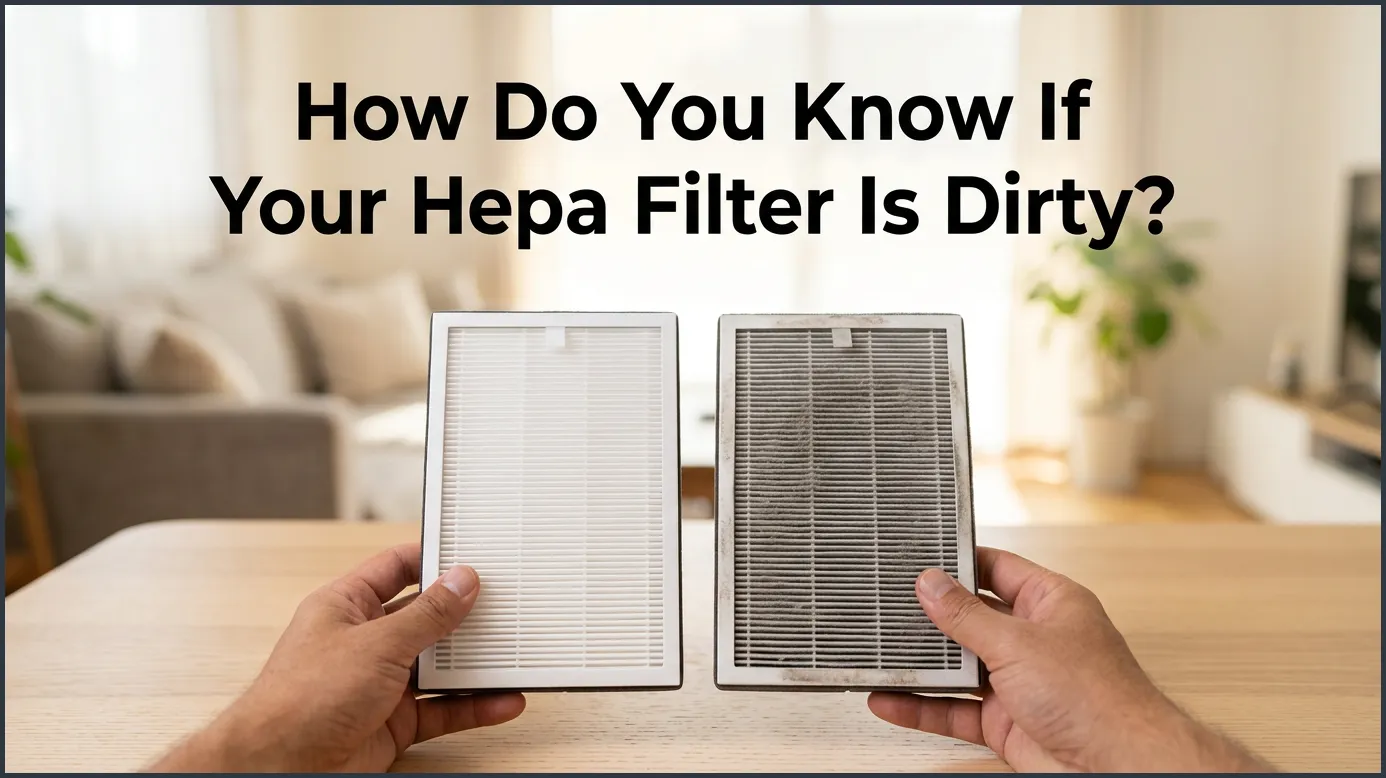
Brand new HEPA filters are a bright, clean white. This is because they are made of tightly woven fiberglass fibers designed to catch the smallest particles. Over time, as air passes through the filter, it traps dust, soot, pollen, and pet dander. When you pull the filter out of its slot, check the color of the pleats. If the bright white fibers have turned a dull gray, brown, or even black, your filter is loaded with debris. This dark discoloration is a clear sign that the filter has done its job and is ready to be replaced.
Spotting Physical Damage and Mold
While looking at your filter, pay close attention to its structure. Are the pleats bent, crushed, or torn? A damaged filter allows dirty air to bypass the filtration media entirely, rendering the device useless. Additionally, look for dark spots that resemble mold or mildew. If you live in a humid climate, moisture can get trapped inside the filter fibers. When mold begins to grow on a dirty filter, it can actually release spores back into your living space, making your indoor air quality worse than before.
Performance Warning Signs You Cannot Ignore
Sometimes, you do not even need to open up your appliance to know there is a problem. The way your machine performs will often give you all the clues you need.
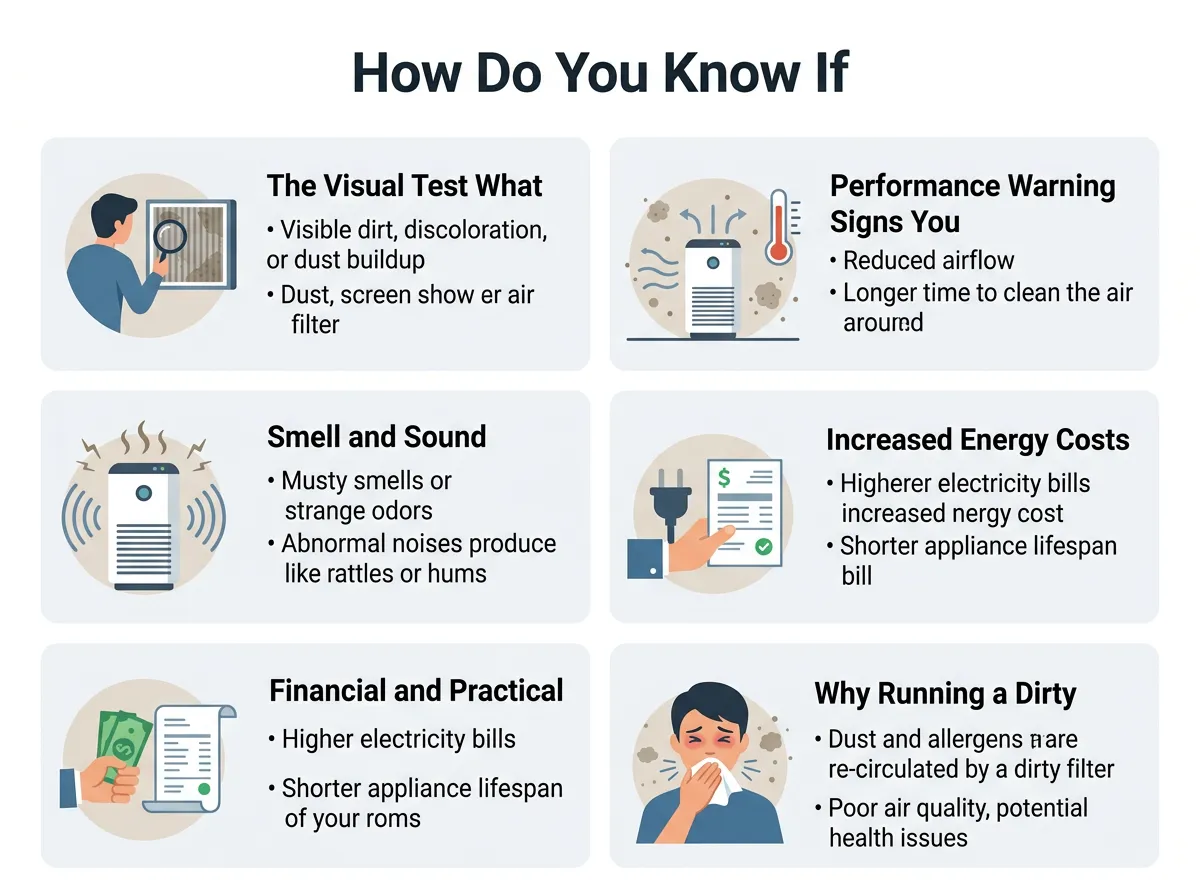
How Do You Know If Your HEPA Filter Is Dirty? — key points at a glance
Weak Airflow and Poor Circulation
HEPA filters are incredibly dense. When they become packed with dirt, it becomes very difficult for air to pass through them. If you notice that the breeze coming out of your air purifier or HVAC vents feels weak, a clogged filter is the most likely culprit. You can test this by placing your hand near the exhaust vent. If you can barely feel any air movement, your system is struggling to breathe. This lack of airflow means the air in your room is not being circulated or cleaned efficiently.
The Return of Dust and Allergies
Have you noticed that you need to dust your furniture much more often than usual? Or perhaps you and your family members are waking up with itchy eyes, runny noses, and frequent sneezing fits. When a HEPA filter is completely full, it can no longer capture new particles. Instead, the dust and allergens simply blow right past or around the filter, settling back down onto your tables, shelves, and carpets. If your allergy symptoms are flaring up indoors, it is time to inspect your filter.
Smell and Sound: The Sensory Clues
Your senses of smell and hearing are powerful tools when it comes to home maintenance. Your appliances will often tell you they need help through odors and noises.
Musty and Stale Odors
A healthy air purifier should make your home smell clean and neutral. However, as filters collect organic matter like pet hair, dead skin cells, and kitchen grease, they can start to smell. If you notice a musty, earthy, or sour odor coming from your vents, the filter is likely holding onto damp debris. Running a smelly filter will only spread that stale odor throughout your entire house, so a quick swap is highly recommended.
Strange Whirring or Whining Noises
When an air filter is clogged, the fan motor inside your purifier or HVAC system has to work twice as hard to pull air through the blockage. This extra strain can cause your appliance to make unusual noises. You might hear a high-pitched whistling sound as air forces its way through tiny remaining gaps. Alternatively, you might hear a loud humming, rattling, or whining noise from the overworked motor. Ignoring these sounds can eventually lead to complete motor burnout, resulting in expensive repairs.
The Financial and Practical Signs of a Clogged Filter
A dirty filter does not just affect the air you breathe; it also impacts your household budget and the life expectancy of your home appliances.
Rising Utility Bills
Because your HVAC blower motor has to work harder to push air through a dirty filter, it consumes significantly more electricity. If you notice a sudden, unexplained spike in your monthly energy bills, a clogged filter could be the silent thief. Just like programmers talk about the long-term dangers of writing messy or dirty code, running an appliance with a clogged filter creates hidden technical debt for your home systems. It drags down efficiency and costs you more money every single day it is left unaddressed.
Filter Change Indicators and Timers
Many modern air purifiers come equipped with a “filter change” indicator light. This light is usually triggered by a timer or a built-in sensor that measures air pressure. While these lights are incredibly helpful, you should not rely on them blindly. Some cheap systems use simple timers that go off after a set number of hours, regardless of how dirty your air actually is. If you have pets or live in a dusty area, your filter may get dirty long before the indicator light turns on.
Why Running a Dirty HEPA Filter is Dangerous
It can be tempting to push your filter past its limit to save a few dollars. However, doing so can have serious consequences for your health and your home appliances.
Impact on Air Quality and Health
According to a recent BBC News report on clean air initiatives, proper ventilation and filtration are key pillars of public health. When your filter is dirty, it can no longer capture microscopic particles like mold spores, bacteria, and virus-carrying droplets. This can lead to increased respiratory issues, asthma attacks, and poor sleep quality. Your home should be a safe haven, and keeping your HEPA filter clean is the best way to protect your loved ones from airborne hazards.
Severe Strain on Your HVAC and Purifier Motors
As mentioned earlier, a clogged filter forces your system’s motor to work under extreme pressure. Over time, this constant strain causes the motor to overheat. This can lead to system failures, short-cycling, or a complete system breakdown. Replacing a HEPA filter costs a fraction of what you would pay to replace an entire air purifier or hire an HVAC technician to fix a broken furnace blower. Regular maintenance is always the most cost-effective path.
How to Keep Your HEPA Filter in Top Shape
To avoid the headaches of weak airflow and poor air quality, you should establish a simple maintenance routine. Here are a few best practices to keep your system running smoothly:
- Check the Filter Monthly: Make it a habit to pull out the filter once a month to check for gray dust and physical damage.
- Vacuum the Pre-Filter: Many HEPA systems have a washable or vacuumable pre-filter that catches large dust bunny particles. Cleaning this pre-filter every few weeks can significantly extend the lifespan of your main HEPA filter.
- Never Wash a Non-Washable HEPA Filter: Unless your filter is explicitly labeled as “washable,” never get it wet. Water will ruin the delicate fiberglass mesh, rendering the filter useless.
- Set Calendar Reminders: Most manufacturers recommend replacing HEPA filters every 6 to 12 months. Set a recurring alarm on your phone so you never forget.
Conclusion
Your HEPA filter is the silent guardian of your home’s indoor air quality. By keeping an eye out for visual discoloration, listening for strained motor noises, sniffing out musty smells, and watching your energy bills, you can easily tell when it is time for a fresh replacement. Taking care of your filter ensures that your air remains clean, your appliances run efficiently, and your home stays comfortable and healthy for years to come. Do not wait for your system to fail—check your filter today!
Frequently Asked Questions
How often should I change my HEPA filter?
Most manufacturers recommend replacing your HEPA filter every 6 to 12 months, depending on use. However, if you have pets, allergies, or live in a dusty area, you may need to replace it every 3 to 6 months. Always check your specific device manual for guidance.
Can I wash a HEPA filter to clean it?
Generally, you cannot wash a HEPA filter because water will damage the delicate fiberglass mesh that traps fine particles. Only wash your filter if it is specifically labeled by the manufacturer as “washable” or “permanent.” For standard filters, replacement is the only safe option.
Will a dirty HEPA filter make my air purifier loud?
Yes, a dirty filter blocks airflow, forcing the fan motor to work much harder to draw in air. This strain can cause your air purifier to make loud humming, whistling, or rattling noises. Replacing the clogged filter usually resolves these unusual sounds immediately.
What happens if I do not change my HEPA filter?
If you do not change your filter, it will become completely clogged and stop cleaning your air, leading to a buildup of dust and allergens. Additionally, the lack of airflow will strain the appliance’s motor, potentially causing it to overheat and burn out. Your energy bills will also likely increase.
Is a gray HEPA filter always dirty?
Yes, a gray or dark brown color on a HEPA filter is a clear sign of heavy dirt, soot, and dust accumulation. Because brand new HEPA filters are bright white, any noticeable gray discoloration indicates that the filter fibers are packed with pollutants and require a replacement.
Does vacuuming a HEPA filter extend its life?
You can gently vacuum the black carbon pre-filter or the outer mesh pre-filter to remove large dust clumps and pet hair. However, you should never vacuum the main delicate white HEPA filter material. Vacuum suction can tear the fragile microfibers, ruining the filter’s ability to trap microscopic particles.
