


An air ionizer is an electronic device that cleans indoor air by releasing negatively charged ions. These ions attach to airborne particles like dust, pollen, and smoke, making them too heavy to float so they drop out of the air. This process helps freshen your room and reduce airborne pollutants without relying solely on physical filters.
We all want our homes to feel like a safe haven. But sometimes, when the afternoon sunlight streams through the window, you might notice thousands of tiny dust specks floating in the air. You might also notice lingering cooking smells or pet dander that makes you sneeze. When shopping for clean air solutions, you might ask yourself: What Is an Air Ionizer, and how does it actually work?
It sounds highly scientific and perhaps a bit confusing. You might wonder if this device is just another overhyped trend or if it actually does something useful for your home. In this guide, we will break down everything you need to know about this technology. We will explore how these devices work, how they compare to regular filters, the pros and cons of using one, and how to choose the safest option for your family.
Key Takeaways
- Natural Cleaning: Ionizers emit negative ions to attract and weigh down airborne pollutants.
- Allergen Reduction: They are highly effective at removing small particles like dust, pollen, and pet dander.
- The Ozone Factor: Some models produce small amounts of ozone, so choosing an ozone-free, certified model is crucial.
- Physical vs. Electrical: Ionizers precipitate particles out of the air, while standard purifiers trap them inside physical filters.
- Low Maintenance: Many ionizers do not require expensive replacement filters, making them highly cost-effective.
- Regular Cleanup Needed: Because particles fall to the floor, you will need to vacuum and dust your surfaces to fully remove them.
📑 Table of Contents
How Does an Air Ionizer Work?
To understand this device, we have to look at a bit of basic science, but we will keep it very simple. In nature, air molecules naturally gain or lose electrical charges. When they gain a negative charge, we call them negative ions. You can find high levels of negative ions near waterfalls, beaches, and forests. This is part of why the air in those places feels so crisp and refreshing.
An air ionizer is a device that recreates this natural process inside your home. It uses electricity to create a stream of negative ions and releases them into your room.
The Science of Negative Ions
Once these negative ions are out in your room, they act like tiny magnets. Most airborne particles, such as dust, pollen, mold spores, and pet dander, have a positive charge. Since opposites attract, the negative ions quickly stick to these positive particles.
The Charging Process
When the negative ions attach to the dust, the particles clump together. As they bond, they become too heavy to remain floating in the air. To learn more about this detailed chemical reaction, you can read about the air ioniser process. Because these clumps are now heavy, gravity pulls them down to the floor, walls, or nearby furniture. This removes them from the air you breathe, keeping your lungs safe from irritation.
Air Ionizer vs. Traditional Air Purifier
Many people confuse ionizers with standard air purifiers. While both devices aim to clean your indoor air, they use completely different methods to achieve this goal. Knowing the differences can help you decide which one is right for your needs.
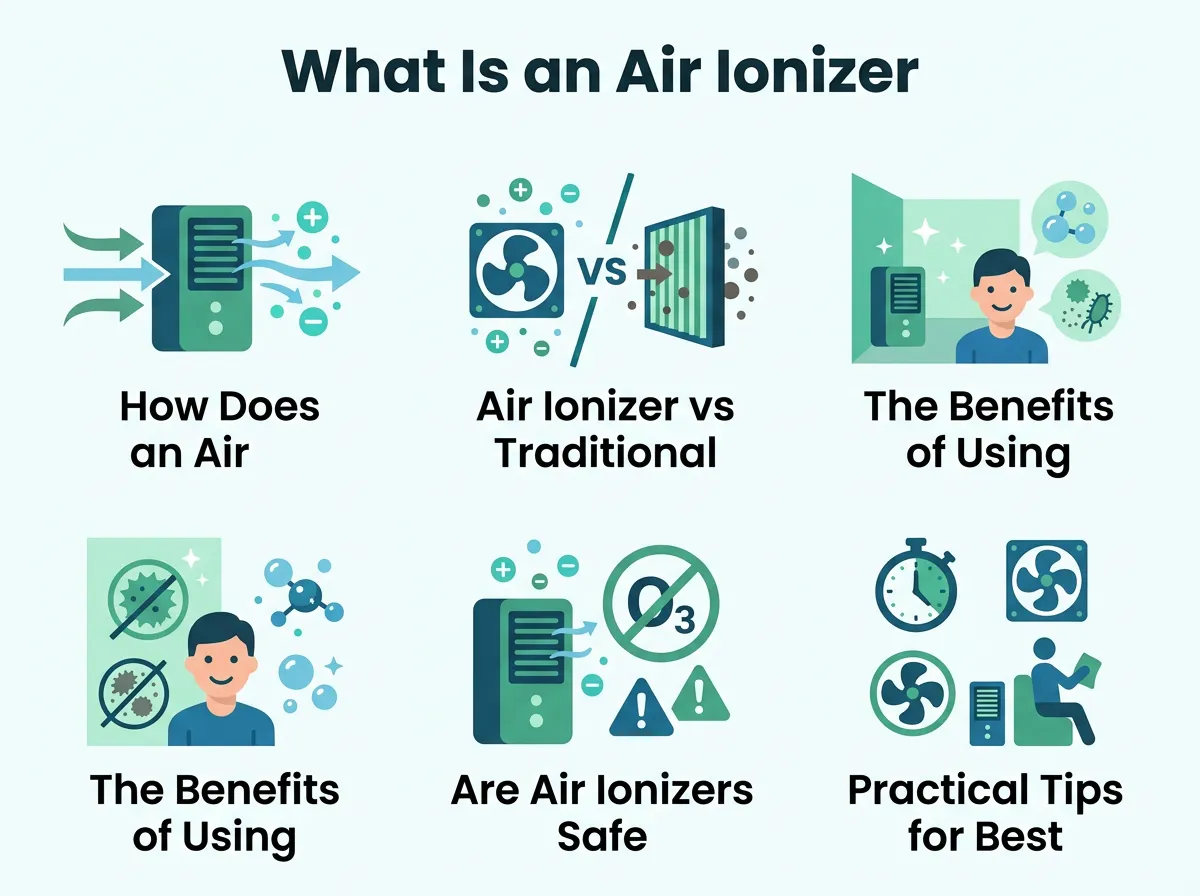
What Is an Air Ionizer? — key points at a glance
HEPA Filters vs. Ion Emission
A traditional air purifier uses a fan to pull dirty air through physical filters. The most common filter used is a HEPA filter, which traps tiny particles inside its dense fibers. Once the air is clean, the fan blows it back into the room.
An ionizer, on the other hand, usually does not use a fan or a physical filter. Instead of pulling the air in, it sends ions out into the room. You can read a deeper breakdown of these differences in this guide on air ionizer vs. air purifier technology.
Where the Dust Goes
This brings us to a major difference: where the dirt actually ends up. With a HEPA purifier, the dust stays trapped inside the filter. When the filter gets dirty, you simply throw it away. With an ionizer, the dust drops onto your floor, tables, and walls. This means you will need to sweep, vacuum, or dust your surfaces to completely remove those particles from your home.
The Benefits of Using an Ionizer in Your Home
Using an ionizer can bring several unique benefits to your living space. If you suffer from allergies or live in a dusty area, this device can make a noticeable difference in your daily life.
Reducing Allergens and Dust
For allergy sufferers, airborne pollen and pet dander are constant enemies. Because ionizers target even the smallest particles, they can quickly clear these irritants from your breathing zone. Many users report that they sneeze less and sleep better once they start using one. According to medical reviews on what does an ionizer do, reducing these airborne particles can greatly ease respiratory discomfort for sensitive individuals.
Eliminating Odors and Smoke
Do you have a pet that leaves a musty smell? Or perhaps you enjoy cooking foods with strong aromas that linger for days. Ionizers are highly effective at neutralizing odors. The negative ions can attach to tiny smoke particles and volatile organic compounds, pulling them out of the air. This leaves your home smelling clean and fresh without the need for artificial air fresheners or heavy perfumes.
Furthermore, because they lack loud fans, many ionizers operate in complete silence. This makes them perfect for bedrooms or home offices where you need quiet to sleep or focus.
Are Air Ionizers Safe? Understanding Ozone
While ionizers offer great benefits, you might have heard some safety concerns regarding them. The main concern revolves around a gas called ozone. It is important to understand this topic so you can make an informed decision.
What Is Ozone and Why Does It Matter?
When some ionizers release electrical charges to create ions, they also split oxygen molecules in the air. This process can create ozone as a byproduct. While ozone high up in the atmosphere protects us from the sun, breathing it in at ground level can irritate your lungs. It can trigger asthma attacks, cause coughing, and make throat irritation worse.
The Environmental Protection Agency (EPA) warns that ozone-producing air cleaners can actually be harmful to indoor air quality. Therefore, it is vital to know if your device produces this gas.
How to Choose a Safe Ionizer
The good news is that technology has improved vastly over the years. Many modern ionizers are designed to produce zero or extremely low, safe levels of ozone. When shopping, look for devices that are certified by reputable safety organizations. In the United States, look for the California Air Resources Board (CARB) certification. This certification guarantees that the device meets strict safety standards for ozone emissions.
Practical Tips for Best Results
To get the absolute most out of your device, you should follow a few simple best practices. Proper placement and maintenance will keep your air clean and your home looking tidy.
Where to Place Your Ionizer
Place your device in an open area where air can circulate freely. Do not hide it behind furniture or tuck it into a tight corner. Putting it on a table or shelf about three to five feet off the ground is usually ideal. Keep it away from delicate electronics, as the static charge can sometimes attract dust to your screens.
Cleaning Up the Settled Dust
Since the device makes dust fall out of the air, you will need to do a bit of extra cleanup. Plan to vacuum your carpets and wipe down nearby hard surfaces at least once a week. Some ionizers come with built-in metal collector plates. These plates have a positive charge that attracts the heavy, negative particles before they hit your floor. If your model has one of these plates, be sure to slide it out and wipe it clean regularly.
Conclusion
Indoor air quality plays a massive role in how we feel every day. When we breathe clean air, we have more energy, sleep better, and suffer from fewer allergies. An air ionizer offers a unique, filter-free way to tackle the invisible pollutants floating in your home.
By releasing negative ions, these devices mimic the refreshing power of nature to clear the air of dust, smoke, and pollen. While you must be mindful of ozone emissions and look for certified safe models, a high-quality ionizer can be a fantastic addition to your home. Pair it with regular cleaning, and you will enjoy a fresher, healthier living space for years to come.
Frequently Asked Questions
Do air ionizers remove dust permanently?
No, they do not destroy dust. They only make dust particles heavy so they fall out of the air onto floors and furniture, meaning you will still need to vacuum and dust your home to get rid of them permanently.
Can I leave an air ionizer on all night?
Yes, you can safely leave a certified, ozone-free ionizer on all night. It operates quietly and will keep the air fresh while you sleep without disrupting your rest.
Do air ionizers kill viruses and bacteria?
Some ionizers can reduce airborne bacteria and viruses by pulling them out of the air and onto surfaces. However, they should not be used as a primary medical-grade disinfectant for your home.
How often do I need to clean an air ionizer?
If your model has a built-in metal collector plate, you should clean it every two to four weeks. If it does not have a plate, simply wipe down the exterior of the device monthly to prevent dust buildup.
Are air ionizers bad for pets?
Safe, ozone-free models are perfectly fine for pets. However, you should avoid ozone-producing models, as pets have very sensitive lungs that can easily be irritated by ozone gas.
Do ionizers make rooms smell fresh?
Yes, they are highly effective at neutralizing odors from pets, cooking, and smoke. The negative ions break down odor compounds, leaving your room smelling crisp, natural, and clean.
