


Yes, a high-quality air purifier with a True HEPA filter will help with mold by trapping airborne mold spores before they can land and grow. However, while it is excellent for cleaning your air, an air purifier cannot remove existing physical mold from your walls or furniture. To fully solve a mold problem, you must also fix the underlying moisture issue that caused it.
Imagine walking into your home. Instead of a fresh, clean scent, you get a quick whiff of something musty. It smells like a damp basement or an old book left in the rain. You look around the room, and you notice a tiny dark spot on the corner of the wall. Could it be mold? Suddenly, you feel a tickle in your throat, and your eyes start to water. It is a common worry for many homeowners. We all want our families to breathe clean, healthy air every day.
When you see or smell mold, your mind starts racing for quick solutions. You might wonder if you can just plug in a machine and make the whole problem disappear. Specifically, you might ask, will an air purifier help with mold? It sounds like an easy, hands-off fix. But before you buy a new device, it is important to know exactly how these machines work against mold.
In this guide, we will dive deep into how mold behaves in our homes. We will look at how air purifiers interact with tiny spores in the air. We will also talk about what these machines can and cannot do for your living space. By the end, you will have a clear, step-by-step plan to keep your home fresh, clean, and comfortable.
Key Takeaways
- HEPA filters trap spores: True HEPA filters capture 99.97% of airborne particles, including microscopic mold spores.
- Prevents new growth: By catching spores before they land, air purifiers help stop mold from spreading to new areas.
- Does not kill active mold: Purifiers cannot clean or remove mold that is already growing on walls, carpet, or grout.
- Carbon filters help with odor: Activated carbon filters absorb the musty, damp smells associated with mold.
- Moisture control is key: You must fix leaks and lower humidity levels to stop mold at its source.
- Strategic placement matters: Put your purifier in damp rooms like basements or bathrooms for the best results.
📑 Table of Contents
How Mold Spreads in Your Home
Mold is a type of fungus. It is a natural and helpful part of our outdoor world. Outdoors, mold helps break down dead leaves, plants, and wood. But inside your home, mold is a completely different story. It can damage your walls, ruin your furniture, and cause unwanted health issues.
The Role of Airborne Spores
Mold does not just stay in one place. It reproduces by releasing tiny, invisible seeds called spores. These spores are incredibly small and light. They float through the air like dust. Because they are so light, even a gentle breeze can carry them from room to room. According to the IQAir guide on mold spores, millions of these tiny particles can float in a single room without you ever seeing them. When you breathe, you inhale these spores. For people with allergies or asthma, this can trigger coughing, sneezing, and runny noses.
Ideal Breeding Grounds
Mold spores are always present in the air around us. However, they need a few key elements to grow into visible patches. They need food, warmth, and moisture. Mold feeds on organic materials. This includes wood, drywall, carpet, and paper. If these materials get wet, mold can start growing in as little as 24 to 48 hours. Bathrooms, kitchens, and basements are the most common trouble areas because they often have high humidity and poor ventilation.
How Air Purifiers Fight Mold
Now, let us look at the main question: will an air purifier help with mold? The answer is a clear yes, but with a few conditions. The success of the machine depends entirely on where the mold is located.
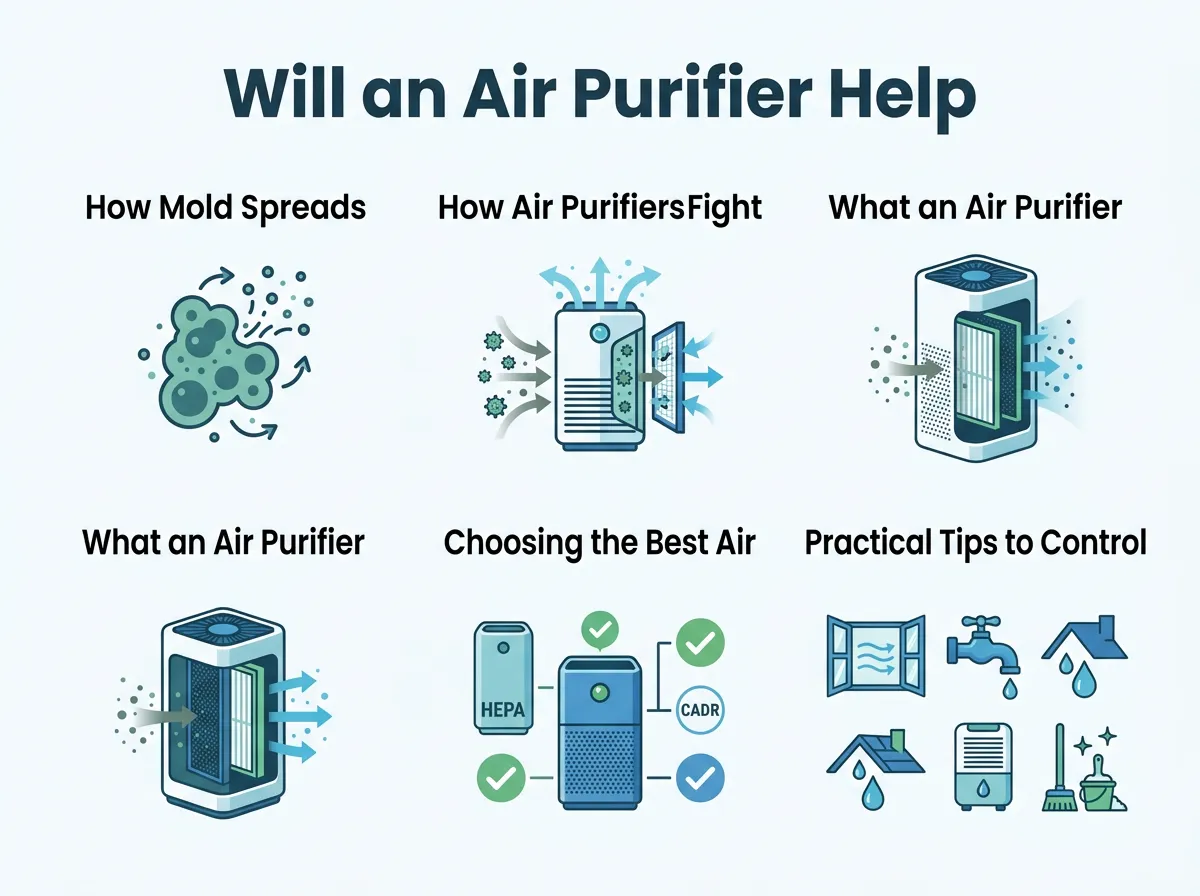
Will an Air Purifier Help With Mold? — key points at a glance
The Magic of True HEPA Filters
An air purifier works by pulling dirty air into the machine. It passes the air through filters and pushes clean air back into the room. To catch mold, you must use a True HEPA filter. HEPA stands for High-Efficiency Particulate Air. These filters are made of very fine, dense fibers. They can trap 99.97% of particles that are as small as 0.3 microns. Since most mold spores are between 2 and 20 microns, a True HEPA filter easily stops them in their tracks. By catching these floating spores, the purifier prevents them from landing on your walls and starting new colonies.
Eliminating Musty Odors
Mold does not just look bad; it smells bad too. Active mold releases gases called microbial volatile organic compounds. These gases cause that classic, damp smell. A standard HEPA filter cannot stop gases. However, many good purifiers also include an activated carbon filter. This filter has tiny pores that trap gas molecules. It absorbs the musty smell and makes your home smell fresh again. If you want to find a device that has both filters, you can check this Health.com review of top mold purifiers to see which models perform best in real homes.
What an Air Purifier Cannot Do
While air purifiers are great tools, they are not magic. They have very specific limits. It is crucial to understand what they cannot do so you do not waste your time or money.
The Limits on Existing Physical Mold
An air purifier only cleans the air. It cannot clean physical surfaces. If you have black spots growing on your bathroom ceiling, a purifier will not make them disappear. It will not scrub the spores off your drywall, and it will not remove mold from your carpets. You must still scrub, disinfect, or replace the affected materials. Think of the purifier as a helper that stops the spread, not a maid that cleans your walls.
Why Moisture Control is Essential
Even the best air purifier in the world cannot fix a plumbing leak. If you have water coming through your roof, mold will keep growing. If your bathroom has no fan, the air will stay damp. This constant moisture will allow new mold to grow day after day. The purifier will trap spores, but new ones will keep forming. As the Blueair expert guide on mold explains, physical cleanup and moisture control must always come first before you rely on an air purifier.
Choosing the Best Air Purifier for Mold
If you decide to buy an air purifier for mold, you must choose the right one. Not all purifiers are created equal. When asking will an air purifier help with mold, the type of machine you choose matters greatly.
Key Features to Look For
First, look for a True HEPA filter. Do not buy filters labeled HEPA-type or HEPA-like. These are not as effective at trapping tiny spores. Second, make sure it has an activated carbon filter for odors. Third, check the Clean Air Delivery Rate. This rating tells you how fast the unit cleans the air. Choose a model with a rating that matches your room size. A machine that is too small will not keep up with the spores in a large room.
What to Avoid
Avoid ozone generators. Some companies claim ozone kills mold. While this can be true in high amounts, ozone is a strong lung irritant. It can make asthma and breathing issues much worse. It is not safe to use in rooms where people or pets are present. Also, be careful with simple ionizers. They make particles heavy so they fall out of the air. This means the mold spores might just land on your floor or furniture instead of being trapped in a filter. Stick to safe, mechanical filtration like HEPA.
Practical Tips to Control Mold in Your House
An air purifier is just one tool in your toolbox. To truly win the war against mold, you need a complete plan. Here are some simple, practical steps you can take today.
Keep Humidity Low
Mold loves humid air. Keep your indoor humidity below 50% if possible. You can buy a cheap tool called a hygrometer to measure this. If your home is damp, use a dehumidifier. Run exhaust fans in the kitchen when you cook. Keep the fan on in the bathroom for at least twenty minutes after you shower to clear out the steam.
Proper Placement and Maintenance
Put your air purifier where air flows freely. Do not hide it behind a couch or in a tight corner. Leave a few feet of space around all sides. Most importantly, change the filters on time. A clogged HEPA filter cannot clean the air. Check the manual to see how often to replace your filters. Usually, this is every six to twelve months. Always wear a mask when changing the filter to avoid breathing in trapped spores.
Conclusion
So, will an air purifier help with mold? Yes, it is an amazing tool to clean your air and stop mold from spreading. It traps floating spores and removes musty smells. But remember, it cannot fix the root cause of the problem. You must still clean up any damp spots and stop water leaks. Combine a True HEPA air purifier with good moisture control. By doing this, you will protect your home and enjoy clean, fresh air every single day.
Frequently Asked Questions
Can an air purifier kill mold?
No, standard air purifiers do not kill mold. Instead, they use filters to trap airborne spores so they cannot land and grow elsewhere. To actually kill mold on physical surfaces, you must use disinfectant cleaners like bleach, vinegar, or specialized sprays.
Will a dehumidifier or an air purifier help more with mold?
Both tools serve different purposes, so they work best when used together. A dehumidifier removes moisture from the air to stop mold from growing in the first place. An air purifier removes floating mold spores and musty odors from the air you breathe.
Where should I place my air purifier for mold control?
Put your air purifier in the room where you notice the most dampness or musty smells. Keep it in an open area with good airflow, away from walls and large furniture. This allows the machine to pull in air from all directions effectively.
How long does it take for an air purifier to clear mold spores?
Most quality air purifiers can clean the air in a single room within 30 to 60 minutes. However, the machine must run continuously to catch new spores as they are released. Leaving the unit on a low setting all day is the best approach.
Can mold grow inside the air purifier filter?
Yes, if the air purifier is turned off in a highly humid room, mold can potentially grow on the dirty filter. To prevent this, keep your purifier running constantly to maintain airflow. You should also replace your filters regularly according to the manufacturer guidelines.
Does a HEPA filter get rid of black mold?
A True HEPA filter can trap black mold spores that are floating in the air. This helps protect your lungs and stops the spores from spreading to other rooms. However, the filter cannot remove black mold that is already growing on your walls or wood.
