



Yes, a humidifier can significantly help soothe a stuffy nose by adding vital moisture to the air. This moisture thins the thick mucus inside your nasal passages, allowing it to drain much easier. It also lubricates dry, swollen airway tissues, giving you fast and natural relief from congestion.
Imagine waking up in the middle of the night. Your chest feels heavy. Your head hurts. Worst of all, you cannot breathe through your nose. It is blocked tight. You reach for tissues, but they do not help. Your throat feels dry and scratchy. This is a common scene during winter or allergy season. Many people wonder about simple ways to find relief at home.
Specifically, they ask: Can a Humidifier Help With Stuffy Nose? It is a great question to ask when you are tired of struggling to breathe. We often reach for pills, sprays, or hot tea when congestion strikes. But sometimes, the best remedy is simply changing the air around us.
In this guide, we will explore how these simple devices work. We will look at the science of moisture and your sinuses. You will also learn how to use one safely for quick and lasting relief.
Key Takeaways
- Adds Vital Moisture: Humidifiers release water vapor into the air, preventing dry nasal passages.
- Thins Out Mucus: Moist air breaks up thick, stubborn mucus, making it easier to blow your nose.
- Soothes Irritations: Keeping your airways moist calms swollen tissues caused by colds or allergies.
- Improves Sleep Quality: Running a humidifier at night stops throat tickles and congestion so you sleep soundly.
- Cool Mist is Safest: Cool mist humidifiers are highly recommended, especially for children, to avoid burn risks.
- Cleanliness is Key: You must clean your unit regularly to prevent mold and bacteria from blowing into your room.
📑 Table of Contents
How Dry Air Affects Your Sinuses
To understand why moisture helps, we first need to look at how our noses work. Your nasal passages are not just empty tubes. They are lined with sensitive tissue that has a very important job. This tissue filters, warms, and moistens the air you breathe in.
The Mucus Membrane Defense System
Your nose produces mucus every single day. This might sound unpleasant, but it is vital for your health. This mucus traps dust, pollen, and germs before they can reach your lungs. Tiny hair-like structures called cilia sweep this mucus away. It is a highly active defense system that keeps you healthy.
The Dry Air Dilemma
When the air is dry, this system fails. Dry air is very common in the winter. Indoor heating systems strip the moisture right out of the room. When you breathe in dry air, it dries out your nasal passages. The mucus becomes thick, sticky, and hard. It stops moving. Your cilia get stuck and cannot do their job. This leads to that stuffed-up feeling we all dislike.
The Science of Moisture: How Humidifiers Relieve Congestion
This is where the magic of water vapor comes into play. If you are asking, “Can a Humidifier Help With Stuffy Nose?” the science points to a clear answer. By putting moisture back into your room, you change the environment inside your nose.
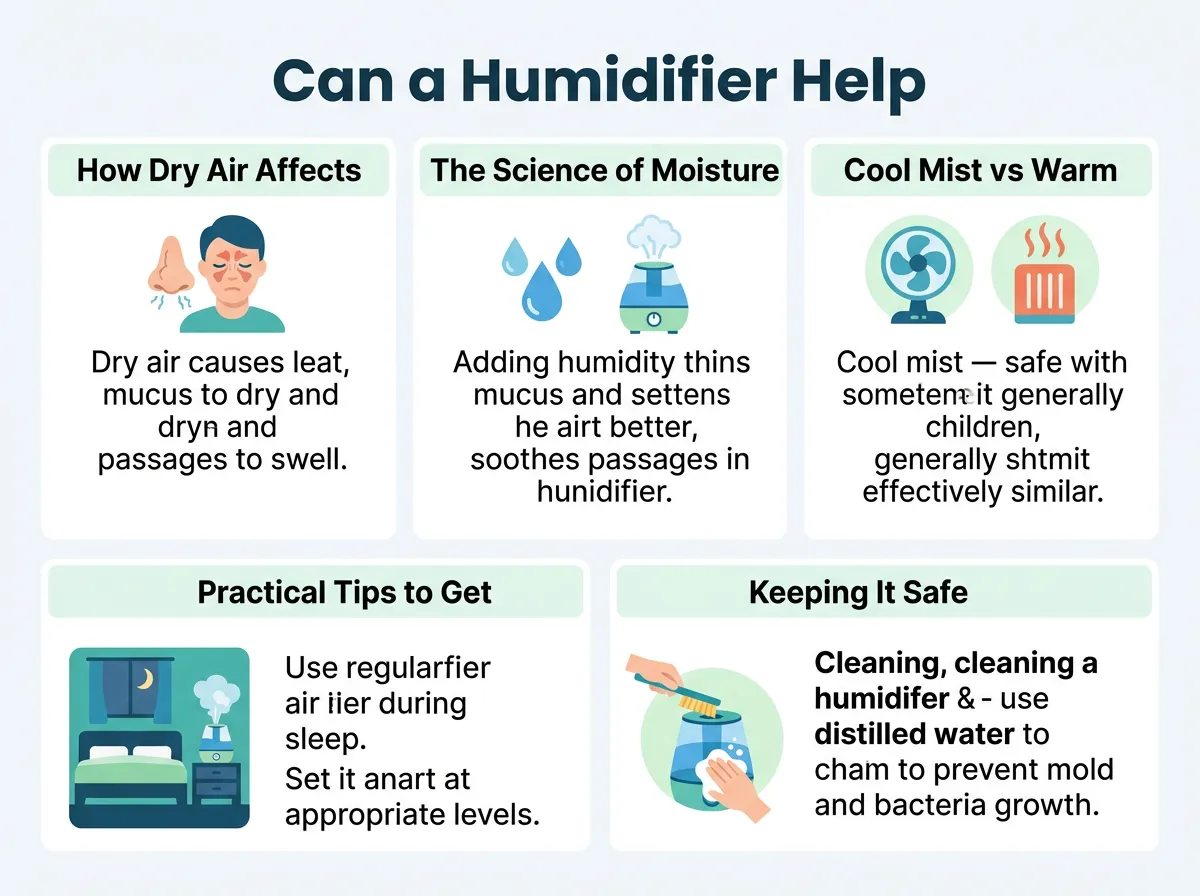
Can a Humidifier Help With Stuffy Nose? — key points at a glance
Thinning Out Thick Mucus
When a humidifier runs, it fills the air with tiny water droplets. You breathe these droplets in. The moisture goes straight to work on your dried-out nasal passages. It mixes with the thick, hard mucus. This water thins the mucus down. Think of it like adding water to thick paint. Once the mucus is thin and runny, it can drain out naturally. You will find it much easier to blow your nose and clear your airways.
Reducing Swelling and Inflammation
Congestion is not just caused by mucus. It is also caused by swollen blood vessels in your nose. When your nasal tissues get too dry, they get irritated. This irritation causes the tissues to swell up. The swelling blocks the air passages. Moist air acts like a gentle balm. It cools and calms the irritated tissue. As the swelling goes down, more air can flow through. You will feel instant relief from that heavy, clogged sensation.
Cool Mist vs. Warm Mist Humidifiers
Once you decide to try a humidifier, you will face a choice. There are two main types on the store shelves. You can choose a cool mist model or a warm mist model. When people ask us, Can a Humidifier Help With Stuffy Nose?, they also want to know which type of machine to buy.
Why Cool Mist is a Fan Favorite
Cool mist humidifiers are very popular. They use a rapidly spinning disk or an ultrasonic vibration to create a fine, cool fog. Many doctors recommend cool mist models, especially for households with children or pets. There is no heating element inside. This means there is zero risk of hot water spills or accidental burns. They are also very energy-efficient and can cover large rooms easily.
When to Use Warm Mist
Warm mist humidifiers use a heating element to boil water. This creates steam that cools slightly before leaving the machine. Many people find the warm air very soothing when they have a cold. The boiling process also helps kill bacteria inside the water tank. However, you must keep them out of reach of children. The hot water inside can cause severe burns if the machine tips over.
Practical Tips to Get the Best Results
Buying a humidifier is just the first step. To get the most relief, you need to use it correctly. Here are some simple, practical tips to help you breathe easier tonight.
Perfect Placement for Maximum Relief
Where you put your humidifier matters. Do not place it on the floor. The moisture will settle quickly and could ruin your carpet or wood floors. Instead, place it on a water-resistant table or nightstand. It should be about three feet off the ground. Keep it close to your bed, but not right next to your face. You want to breathe the moist air, but you do not want a wet face when you wake up.
The Golden Rule: Use Distilled Water
It is tempting to fill your humidifier straight from the kitchen tap. However, tap water contains natural minerals. When the machine turns tap water into mist, it also releases these minerals into the air. This can create a fine white dust on your furniture. More importantly, you can breathe these minerals into your lungs. To avoid this, always use distilled or demineralized water. It is cheap, safe, and keeps your machine running smoothly.
Keeping It Safe and Clean
A humidifier can be your best friend when you are sick. While we know the answer to Can a Humidifier Help With Stuffy Nose? is yes, this is only true if the air is clean. If you do not clean your unit, it can quickly become your enemy. Mold, mildew, and bacteria love warm, wet spaces. If these pests grow inside your tank, the machine will blow them right into your air.
How Often to Clean Your Humidifier
You should clean your humidifier at least once a week. Every day, empty any leftover water and rinse the tank. Wipe it dry with a clean towel. Once a week, do a deep clean. Fill the tank with water and a few tablespoons of white vinegar. Let it sit for twenty minutes. This loosens any mineral buildup and kills mold. Rinse it thoroughly until the vinegar smell is gone.
Signs It is Time to Clean
Pay close attention to your machine. If you see a slimy film inside the tank, clean it immediately. If the water looks cloudy, or if you notice a musty smell, stop using it. These are clear signs that bacteria or mold have taken over. Always dry all parts of the machine before storing it away for the summer.
When to See a Doctor for Your Congestion
While a humidifier is a fantastic tool, it is not a cure-all. Sometimes a stuffy nose is a sign of a deeper issue that needs medical attention.
Red Flag Symptoms to Watch For
If your stuffy nose lasts for more than ten to fourteen days, it is time to see a doctor. You might have a sinus infection that needs medication. Other warning signs include a high fever, severe facial pain, or yellow-green nasal discharge. If you experience shortness of breath or wheezing, seek medical help immediately. Your health is always the top priority.
Conclusion
Dealing with a stuffy nose can ruin your day and steal your sleep. Thankfully, the answer to “Can a Humidifier Help With Stuffy Nose?” is a resounding yes. By adding gentle moisture to the air, you can thin out thick mucus, reduce painful swelling, and breathe easily once again. Just remember to choose the right model for your home, use distilled water, and keep the unit clean. With these simple steps, you can turn your bedroom into a comfortable oasis and get the restful sleep you deserve.
Frequently Asked Questions
Can I run a humidifier all night?
Yes, you can safely run a humidifier all night while you sleep. Doing so keeps the air moist and prevents your nose and throat from drying out. Just ensure the room is well-ventilated and the machine has an automatic shut-off feature.
Is a warm or cool mist humidifier better for congestion?
Both types are highly effective at relieving nasal congestion. However, cool mist humidifiers are generally preferred because they are safer to use around children and pets. Warm mist models can pose a burn hazard if they are accidentally knocked over.
Can a humidifier make a stuffy nose worse?
A humidifier can make your congestion worse if it is not cleaned regularly. Dirty humidifiers can blow mold, bacteria, and allergens directly into the air you breathe. Always clean your machine weekly to keep the mist safe and healthy.
Should I put essential oils in my humidifier?
You should only add essential oils if your humidifier has a dedicated medicine cup or diffuser tray. Putting oils directly into the main water tank can crack the plastic and ruin the machine. Always read the manufacturer manual before adding anything but water.
How close should a humidifier be to my bed?
You should place your humidifier about three to six feet away from your bed. This allows the mist to disperse evenly through the air before you breathe it in. Placing it too close can damp your bedding and make you feel uncomfortably wet.
Can I use tap water in my humidifier?
While you can use tap water, it is highly recommended to use distilled water instead. Tap water contains minerals that can create a fine white dust on your furniture and feed mold growth inside the tank. Distilled water keeps the air cleaner and extends the life of your machine.
