


Yes, a high-quality air purifier equipped with a True HEPA filter can help with mold by trapping airborne mold spores before they can land, grow, and multiply. While it cannot clean up existing active mold patches on your walls or furniture, it is an excellent preventative tool to protect your lungs and keep mold from spreading. For best results, you must combine your air purifier with humidity control and routine cleaning.
We all know that distinct, earthy scent. You walk into a basement, a bathroom, or a long-closed guest room, and it hits you instantly. That damp, musty smell is the unmistakable calling card of mold. It is a common household headache that can make your eyes itch, your nose run, and your throat tickle. If you are dealing with this pesky intruder, you are probably looking for a quick and reliable way to clear the air.
When you start searching for solutions, a very common question comes up: Can Air Purifier Help With Mold? After all, we rely on these smart little machines to clean up dust, pet dander, and wildfire smoke. It seems natural to expect them to tackle mold too. But how do they actually interact with mold, and can they really make your home safe again?
In this guide, we will explore exactly how air purifiers work against mold. We will look at what they can do, what they cannot do, and how you can use them to keep your living space smelling fresh and feeling healthy. By the end, you will know how to pick the right tools and set up a solid defense system for your home.
Key Takeaways
- HEPA Filters Are Essential: True HEPA filters trap 99.97% of tiny airborne mold spores down to 0.3 microns.
- Prevention, Not a Cure: Air purifiers capture floating spores but will not remove physical mold colonies growing on surfaces.
- Odor Control: Units with activated carbon filters are highly effective at neutralizing the musty smell of mold.
- Moisture Control is Key: An air purifier cannot stop a mold problem if you do not fix the leaks and high humidity causing it.
- Continuous Run Time: For the best results, keep your air purifier running constantly on a low, quiet setting.
- Regular Maintenance: You must change your filters on schedule so the purifier does not become a source of trapped mold.
📑 Table of Contents
Understanding Mold and How It Spreads
To understand how to fight mold, we first need to look at how it behaves. Mold is a type of fungus that plays a vital role in nature by breaking down dead organic matter. Outdoors, it is helpful. Indoors, however, it is an unwelcome guest that can damage your house and irritate your lungs.
What Are Mold Spores?
Mold does not travel on legs. Instead, it reproduces by releasing tiny, invisible seeds called spores. These spores are incredibly light and small, often measuring between 2 and 100 microns. For comparison, a single strand of human hair is about 70 microns wide. Because these spores are so small, they easily float through the air. They can enter your home through open windows, doors, heating vents, or even by hitching a ride on your clothes and pets.
Why Is Mold a Problem in Homes?
Once these floating spores land on a damp surface, they begin to grow. They love moisture, warmth, and food sources like drywall, wood, carpet, or ceiling tiles. Within 24 to 48 hours of finding water, mold can start to colonize. Once active, mold can ruin your belongings and release allergens into the air. This can trigger sneezing, coughing, and breathing issues for anyone in the household, especially people with asthma or allergies.
How Air Purifiers Fight Against Mold
This is where your indoor air quality comes into play. If mold spores are constantly floating in the air, how can we stop them from landing and growing? An air purifier can be a powerful line of defense in this battle. When looking at how to protect your home, you might ask: Can Air Purifier Help With Mold? The answer is a clear yes, but only if you use the right technology.
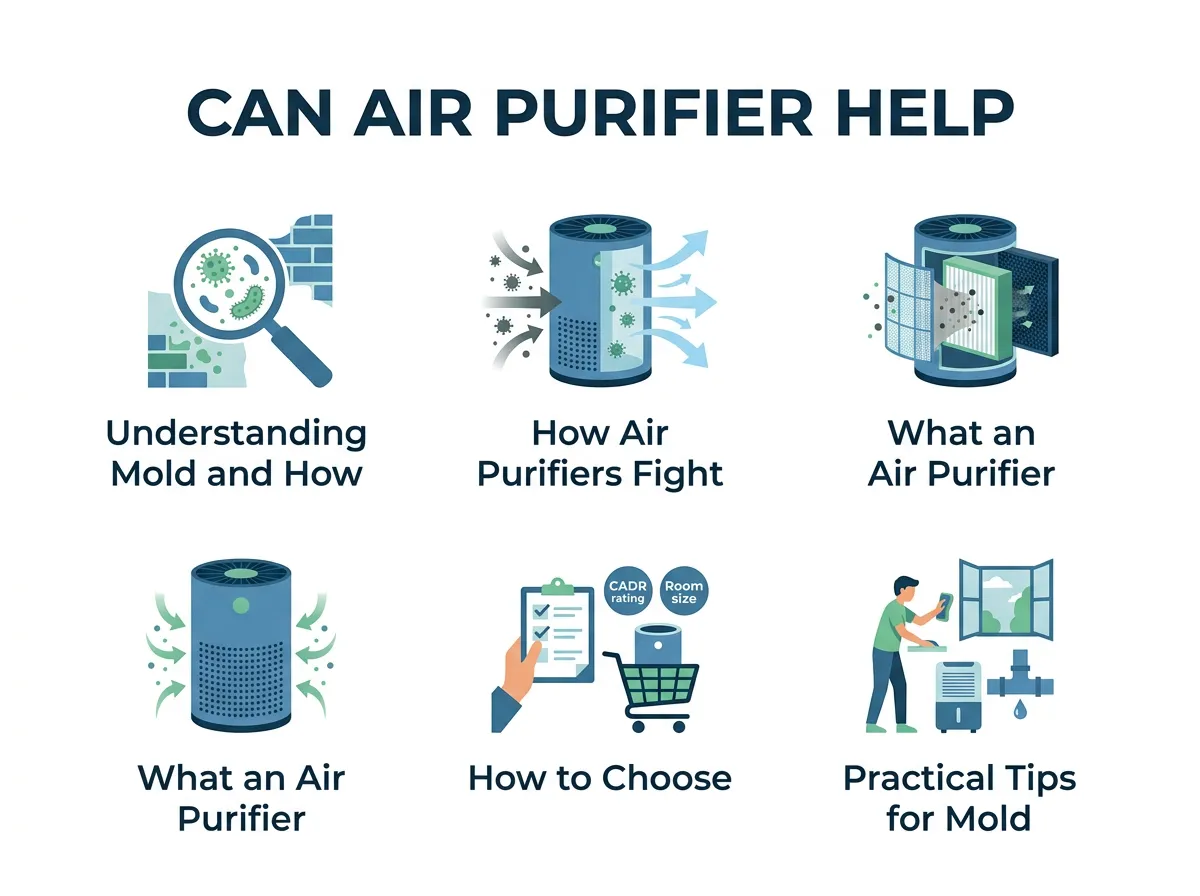
Can Air Purifier Help With Mold? — key points at a glance
The Power of True HEPA Filters
Not all air purifiers are built the same. If you want to tackle mold, you need a machine with a True HEPA (High-Efficiency Particulate Air) filter. A True HEPA filter is designed to trap 99.97% of airborne particles that are as small as 0.3 microns. Since mold spores are usually larger than 0.3 microns, a True HEPA filter captures them with ease.
When you run your purifier, it constantly pulls in the dirty air from your room. The air passes through the filter, which snatches the spores out of circulation. The clean air is then pushed back into your room. By removing these floating seeds, you significantly reduce the chances of mold spreading to new spots. If you want to understand this process better, learning about how an air purifier help with mold spore removal can give you deeper insights into filter mechanics.
The Role of Activated Carbon
Have you ever noticed that damp, earthy odor that lingers in rooms with mold? That smell comes from microbial volatile organic compounds (mVOCs) released by growing mold. While a HEPA filter is great for trapping physical spores, it cannot catch gases or odors.
To fight the smell, you need an activated carbon filter. This filter layer uses a process called adsorption to trap gases, chemicals, and odors inside its highly porous surface. A purifier that combines a True HEPA filter with an activated carbon filter will not only clean the physical air but also keep your home smelling clean and fresh.
What an Air Purifier Cannot Do
While these machines are incredibly helpful, we must be realistic about their limits. An air purifier is a preventative tool, not a complete cure-all for a wet home.
It Will Not Remove Active Mold from Surfaces
It is vital to know that air purifiers only clean the air. They do not clean surfaces. If you already have black spots growing on your bathroom ceiling, under your kitchen sink, or behind your drywall, an air purifier will not make them vanish.
The physical mold must be scrubbed, treated, or completely replaced. You can read more about how these devices operate to learn how do air purifiers remove mold from the air while leaving surface-level issues to manual cleaning. To get rid of surface mold, you will need to use soap and water, vinegar, or specialized mold cleaners. For large infestations, you might even need to call in a professional remediation team.
It Does Not Solve the Moisture Problem
Mold cannot grow without water. An air purifier can trap all the spores in the world, but if you have a leaky pipe under your floorboards or a dripping roof, new spores will eventually find their way in and thrive. To truly solve a mold problem, you must find and stop the source of moisture. Fix leaks, seal drafty windows, and ensure your home has proper ventilation.
How to Choose the Best Air Purifier for Mold
If you are shopping for a new unit to help protect your home, you want to make sure you get the right features. Here is what to keep in mind to get the most value for your money.
Look for True HEPA Technology
As we mentioned earlier, do not settle for “HEPA-type” or “HEPA-like” filters. These terms are often marketing tricks. They do not meet the strict standards of a True HEPA filter and might let small mold spores slip right through. Always double-check the product details to ensure you are buying the real deal. You can find highly rated models by looking at a list of the best air purifier for mold to guide your purchase.
Consider the CADR (Clean Air Delivery Rate)
The CADR rating tells you how quickly the unit can clean the air in a specific room size. You want to choose a purifier with a CADR rating that matches or exceeds the square footage of the room where you plan to place it. If the unit is too small, it will struggle to clean the air fast enough to stop spores from settling on your furniture.
Avoid Ozone Generators
Some air purifiers claim to kill mold by releasing ozone into the air. However, ozone is a known lung irritant. It can worsen asthma and damage your lungs, especially in enclosed spaces. Health agencies warn against using ozone generators in occupied spaces. Stick to safe, mechanical filtration like HEPA and carbon instead.
Practical Tips for Mold Control in Your Home
Using an air purifier is just one part of a healthy home routine. To keep your living space completely dry and comfortable, try incorporating these practical habits into your weekly routine.
Control Indoor Humidity Levels
Keep your home’s relative humidity below 50% if possible. You can measure this easily with a cheap tool called a hygrometer. If your basement or bathroom is consistently damp, consider running a dehumidifier. While air purifiers clean the air, dehumidifiers pull water out of it, making the environment hostile for mold growth.
Keep Air Purifiers Running and Maintained
Mold spores are a constant threat, so it is best to run your air purifier continuously on a low, quiet setting. This ensures the air is always being filtered. Also, do not forget to change the filters according to the manufacturer’s instructions. A clogged filter cannot do its job and might even release trapped particles back into your home when you turn it on.
Conclusion
So, can air purifier help with mold? The answer is a clear and resounding yes, but with a few important conditions. A good air purifier with a True HEPA and activated carbon filter is an excellent ally. It will capture drifting mold spores and neutralize musty odors, keeping your air fresh and clean.
However, it cannot work miracles on its own. You must combine your purifier with smart moisture control and regular cleaning. By fixing leaks, keeping humidity low, and letting your air purifier run, you can create a dry, clean, and healthy home for you and your family.
Frequently Asked Questions
Can an air purifier kill mold?
No, standard air purifiers do not kill mold. Instead, they capture the floating mold spores in their filters to stop them from spreading. To physically kill mold, you must use cleaning solutions like vinegar, bleach, or professional mold removers on surfaces.
Will an air purifier help with the musty mold smell?
Yes, but only if the air purifier has an activated carbon filter. While HEPA filters trap physical mold spores, they cannot stop smells. An activated carbon filter adsorbs the gases and odors, making your home smell clean again.
Where should I place my air purifier for mold?
Place your air purifier in the room where you notice the most dampness or musty odor, such as the basement or bathroom. Make sure it is set up in an open area with plenty of space around it so it can pull in air easily.
Do I need a dehumidifier or an air purifier for mold?
Ideally, you should use both. A dehumidifier removes moisture from the air to stop mold from growing in the first place, while an air purifier removes the existing mold spores and odors from your breathing space.
Can a dirty air purifier filter spread mold?
Yes, if you do not change your filters on time, trapped mold spores can accumulate. In rare cases, if the filter gets damp, mold can actually grow on the filter itself, so regular filter replacement is crucial.
Are UV air purifiers better for mold?
UV air purifiers can help kill some mold spores as they pass through the light, but they are often less effective than True HEPA filters. For the best defense, look for a unit that combines a True HEPA filter with UV light technology.
