


Yes, a high-quality air purifier with a True HEPA filter can effectively capture airborne mold spores and prevent them from spreading. However, an air purifier cannot remove active mold growing on physical surfaces. To completely solve a mold problem, you must combine air purification with moisture control and direct physical cleanup.
Picture this. You walk into your basement or guest bathroom, and a familiar, musty smell hits your nose. You look around and notice a dark, fuzzy patch starting to grow in the corner of the ceiling. Mold is a common household nightmare that can sneak up on anyone. It looks bad, smells worse, and can make you sneeze, cough, or itch. When you see it, your first instinct is to find a quick and easy solution to clean the air.
Naturally, you might look at that sleek air purifier sitting in your living room and wonder if it can solve your problem. Many people ask, “Can an Air Purifier Help with Mold?” to protect their families and keep their homes fresh. In this guide, we will break down exactly how these machines interact with mold. We will look at what they can do, what they cannot do, and how you can use them to reclaim your home from these stubborn spores.
We will cover the science behind mold growth, the specific types of filters you need, and how to tackle the root cause of the problem. By the end of this article, you will have a clear, step-by-step plan to keep your indoor air clean and healthy.
Key Takeaways
- HEPA filters are essential: Only True HEPA filters can trap tiny mold spores floating in the air.
- Spores vs. active mold: Purifiers clean the air but will not kill or remove mold growing on walls or carpets.
- Moisture is the enemy: You must fix leaks and lower humidity to stop mold from returning.
- Activated carbon helps: If mold smells musty, a carbon filter is needed to neutralize the odor.
- Placement matters: Put your purifier in damp, high-risk areas like basements or bathrooms for the best results.
- Regular maintenance: You must change filters on time so the purifier does not become a breeding ground itself.
📑 Table of Contents
How Mold Spreads in Your Home
To understand if a purifier can help, we first need to look at how mold behaves. Mold is a type of fungus that thrives in warm, damp places. It plays an important role in nature by breaking down organic matter, but it is a major nuisance when it moves indoors.
The Life Cycle of Mold
Mold does not just stay in one place. It reproduces by releasing tiny, invisible particles called spores into the air. These spores are incredibly light. They drift through your home on the slightest air current, searching for a wet surface to land on. When a spore finds moisture and a food source, like drywall or wood, it takes root and begins to grow. Within days, a single spore can turn into a brand-new colony, releasing millions more spores into your living space.
Why Mold Spores Are a Health Hazard
Inhaling these tiny floating spores can cause a range of health issues. For many people, exposure leads to allergy symptoms like a runny nose, red eyes, and skin rashes. If you have asthma or a weakened immune system, the effects can be much more severe. Breathing in mold-laden air day after day puts constant stress on your respiratory system. This is why keeping the air clear of floating spores is so important for your well-being.
How Air Purifiers Handle Mold
Now, let’s answer the big question. When we ask, “Can an Air Purifier Help with Mold?” the answer comes down to filtration. Air purifiers are designed to pull air from your room, run it through a series of filters, and push clean air back out. This process can be highly effective at catching the floating seeds of mold before they land and grow.
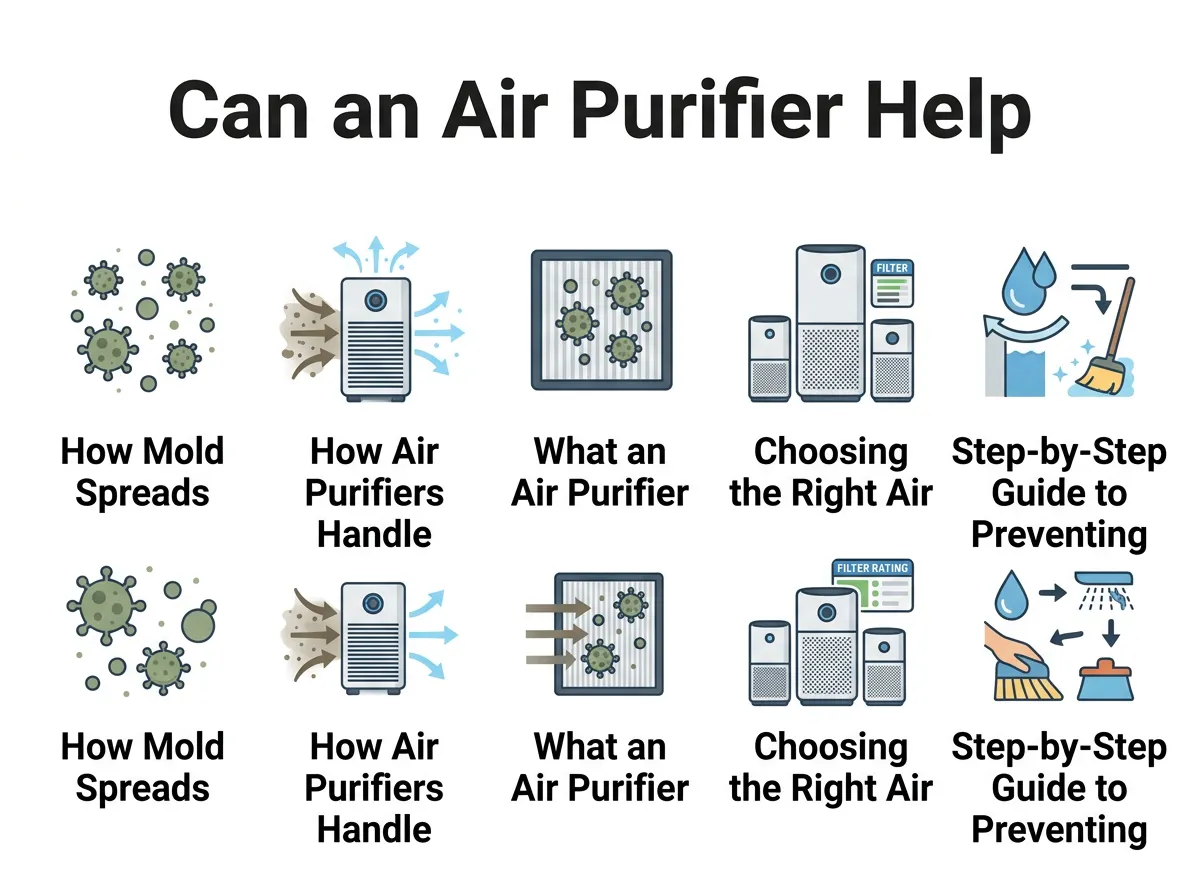
Can an Air Purifier Help With Mold? — key points at a glance
The Power of HEPA Filters
The secret weapon against airborne mold is the HEPA filter. True HEPA filters are designed to capture 99.97% of particles as small as 0.3 microns. Since most mold spores range in size from 2 to 100 microns, they are far too large to escape a HEPA filter. When the purifier pulls in the air, these spores get trapped tightly in the dense fibers of the filter. If you want to achieve successful mold spore removal from your home’s air, a HEPA-equipped unit is absolutely necessary.
Do UV Light Purifiers Actually Kill Mold?
Some air purifiers come with built-in ultraviolet (UV) lights. These systems aim to destroy the DNA of mold spores and bacteria as they pass through the machine. While this sounds great in theory, the spores must be exposed to the UV light for a certain amount of time to be completely neutralized. In a fast-moving stream of air, the exposure might be too brief to destroy the spore. Therefore, you should always treat UV light as an extra feature, rather than a replacement for a solid physical HEPA filter.
What an Air Purifier Cannot Do
While these devices are fantastic at cleaning the air, they are not magical cure-alls. It is vital to understand their limitations so you do not get a false sense of security.
Treating the Source vs. Treating the Air
An air purifier only cleans the air that passes through its intake grill. It cannot reach onto your walls, ceilings, baseboards, or carpets to scrub away active mold growth. If you have a colony growing behind your drywall, an air purifier will not stop it. To understand the limits of these machines, we must realize how air purifiers help with indoor mold by trapping loose spores, but they do not kill the actual fungus growing on your property.
The Risk of Neglecting Physical Cleanup
If you rely solely on a purifier and ignore a growing patch of mold, the problem will get worse. The source will continue to release spores faster than the machine can clean them. Over time, the mold will destroy the materials it is growing on, leading to costly home repairs. You must combine air purification with active, physical cleaning to get real, lasting results.
Choosing the Right Air Purifier for Mold
Not all air purifiers are built the same way. If you are dealing with mold, you need to be selective about the unit you buy to ensure it actually does the job.
Key Features to Look For
First and foremost, look for a machine labeled with a “True HEPA” filter. Avoid units that use terms like “HEPA-type” or “HEPA-like,” as these do not meet the same strict standards. Second, look for an activated carbon filter. Mold often brings a terrible, musty smell. While a HEPA filter traps the spores, only an activated carbon filter can absorb the gases and odors that cause that unpleasant damp smell. To find the right fit, you can look up lists of the top-rated air purifiers for mold issues to compare options that include both of these essential filters.
Sizing Your Purifier Correctly
An air purifier can only clean the air if it is powerful enough for the room it is in. Check the Clean Air Delivery Rate (CADR) of the unit. The CADR tells you how quickly the machine can clean the air in a specific room size. Choose a model that is rated for a slightly larger space than your target room. This ensures the unit can easily cycle the air multiple times per hour without running at maximum, noisy speeds constantly.
Step-by-Step Guide to Preventing Mold
An air purifier is a valuable tool, but it should be part of a larger plan. Here is a simple, practical guide to keeping mold out of your home for good.
Control Humidity Levels
Mold cannot survive without moisture. Keep your home’s humidity level below 50% if possible. You can buy a cheap device called a hygrometer to measure the humidity in your rooms. If a room like your basement is too damp, run a dehumidifier alongside your air purifier. Always use exhaust fans when cooking, showering, or washing dishes to vent moist air outside.
Clean Up Existing Mold Safely
If you find a small patch of mold (less than ten square feet), you can usually clean it yourself. Wear protective gear, including a mask, gloves, and goggles. Scrub the mold off hard surfaces using soapy water, a vinegar solution, or a commercial mold cleaner. Once the area is completely dry, run your air purifier on high in that room to catch any spores that were kicked up during the cleaning process. For larger infestations, always call in a professional remediation team.
Maintenance Tips to Keep Your Air Clean
Owning an air purifier comes with a bit of responsibility. Without proper care, your machine can lose its efficiency or even become a source of mold itself.
Changing Filters on Schedule
As your purifier works, its filters fill up with dust, hair, and mold spores. If you do not replace them, the airflow will slow down, and the machine will stop working effectively. Most HEPA filters need to be replaced every six to twelve months, while carbon pre-filters should be changed every three months. Always follow the manufacturer’s guidelines. When replacing a dirty filter, do it outside or wear a mask to avoid breathing in any trapped spores.
Cleaning the Unit Itself
Every few weeks, take a damp cloth and wipe down the exterior of your purifier, especially the air intake and outlet vents. Dust can build up here and block airflow. If your unit has a washable pre-filter, rinse it under running water and let it dry completely before putting it back in. Never put a damp filter back into your air purifier, as moisture inside the machine can encourage mold to grow right on the filter itself.
Conclusion
So, can an air purifier help with mold? The answer is a clear yes, but with some important conditions. A good air purifier with a True HEPA filter is an excellent tool for capturing floating mold spores. This helps prevent the mold from spreading to new spots and protects your lungs from breathing in irritating allergens. However, a purifier cannot wash away existing mold patches on your walls or fix the leaks that caused them in the first place.
To enjoy a truly healthy, mold-free home, you must take a complete approach. Use your air purifier to keep the air fresh, but also control the humidity, fix leaks quickly, and clean up any visible mold immediately. By combining these steps, you can create a clean, comfortable living environment for you and your family.
Frequently Asked Questions
Can an air purifier get rid of the musty mold smell?
Yes, but only if the purifier has an activated carbon filter. While HEPA filters capture physical spores, they cannot stop odors. Activated carbon absorbs the gases and VOCs that cause the musty smell, making your room smell fresh again.
Should I run my air purifier 24/7 for mold?
Yes, it is best to run your air purifier continuously, especially if you have a known mold issue. Modern air purifiers are designed to run constantly on low energy. Keeping it on ensures that newly released spores are trapped before they can settle and grow.
Can mold grow inside an air purifier filter?
Yes, mold can grow on a filter if the filter becomes wet or if the room has extremely high humidity. To prevent this, never run your purifier in a soaking wet area, and change your filters on schedule. Always make sure washable pre-filters are completely dry before putting them back in.
Where is the best place to put an air purifier for mold?
Place the air purifier in the room where you notice the most dampness or musty odor, such as a basement, bathroom, or kitchen. Make sure it is positioned in an open area with plenty of space around it so air can flow freely. Avoid blocking the intake vents with furniture or walls.
Does a HEPA filter kill mold spores?
No, a HEPA filter does not actively kill mold spores, but it traps them securely so they cannot float back into the room. Because the filter environment is dry, the trapped spores cannot grow or multiply. When you replace the filter, you safely discard the trapped spores.
Can I clean a moldy HEPA filter?
No, you should never try to wash or clean a standard HEPA filter, as water will ruin the delicate fibers and make it useless. If your HEPA filter is dirty or moldy, you must replace it with a brand-new one. Always discard the old filter carefully in a sealed bag to prevent spores from escaping.
