


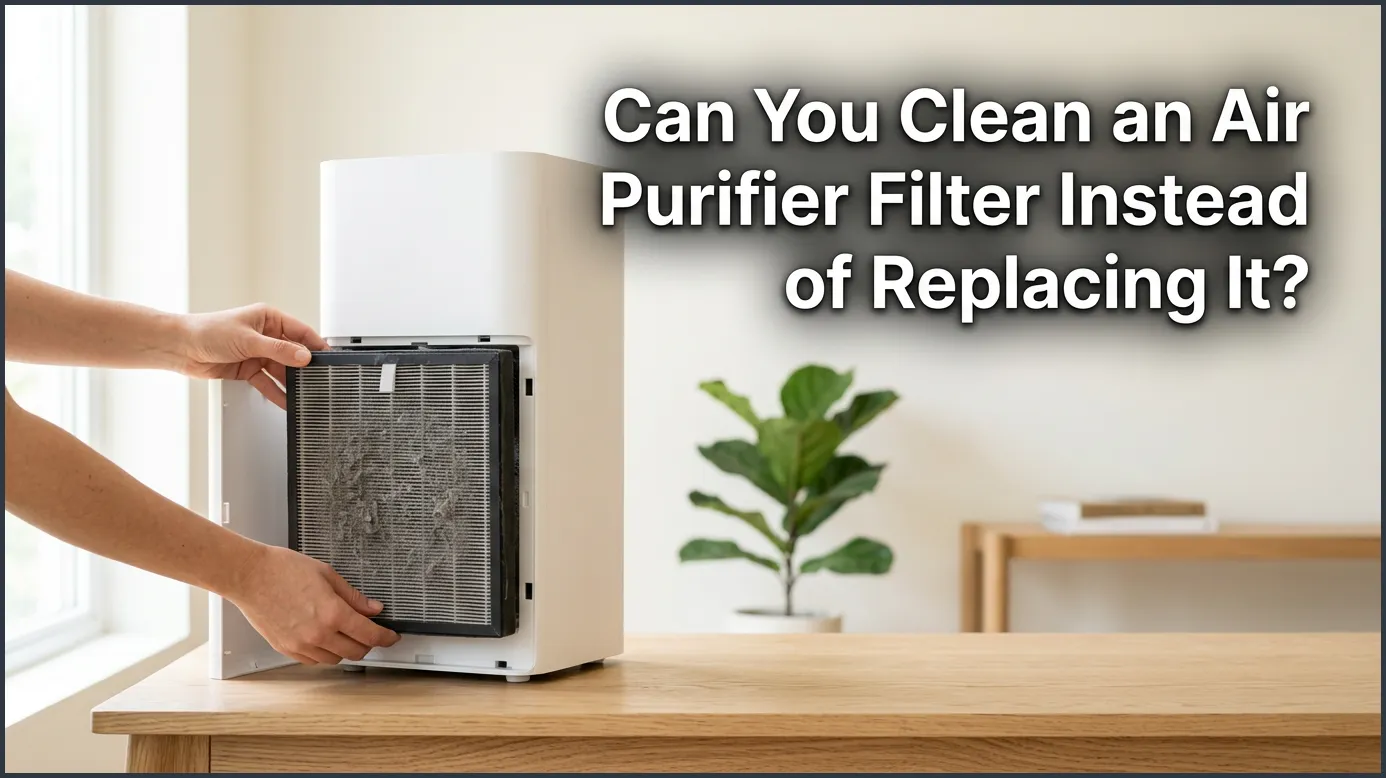
While you can safely wash or vacuum some pre-filters, you should never wash or vacuum a standard True HEPA filter. Doing so can easily damage the delicate fibers and render the purifier useless. To keep your home healthy and your machine running smoothly, always replace your main filters as recommended by the manufacturer.
We all love the feeling of clean, fresh air in our homes. It helps us breathe easier, sleep better, and stay healthy. But when that little “change filter” light begins to blink, your wallet might feel a sudden pinch. Replacements are often quite expensive. It is very natural to look at that dusty mesh and ask yourself a simple question: Can you clean an air purifier filter instead of replacing it?
It seems like a quick and easy way to save some money. After all, we wash our clothes, our dishes, and our carpets. Why not clean the filter too? It looks like it just needs a good rinse or a quick run under the vacuum. However, air purifiers are complex machines with delicate parts.
In this guide, we will explore the science behind these home appliances. We will look at the different types of filters inside your unit. You will learn which parts are safe to clean and which ones must be replaced. We will also share the hidden risks of cleaning the wrong parts and show you how to make your filters last longer without breaking them.
Key Takeaways
- True HEPA filters are not washable: Water and vacuum suction destroy the microscopic fibers that trap tiny allergens.
- Pre-filters are usually washable: You can rinse or vacuum the outer mesh pre-filter to extend the life of the inner filters.
- Damp filters cause mold: Putting a wet filter back into your machine creates a breeding ground for mold and bacteria.
- Carbon filters cannot be cleaned: Water ruins the odor-absorbing properties of activated carbon.
- Dirty filters strain the motor: Keeping a clogged filter in your machine raises energy bills and can burn out the motor.
- Regular dusting helps: Keeping your home vacuumed reduces the dust load on your air purifier filters.
📑 Table of Contents
- Understanding Your Air Purifier Filters
- Why Cleaning a True HEPA Filter Is a Bad Idea
- Which Filters Can You Actually Clean?
- Step-by-Step Guide to Safely Cleaning Washable Filters
- The Hidden Costs of Not Replacing Filters
- How to Extend the Life of Your Air Purifier Filters
- When Is It Time to Replace Your Filter?
- Conclusion
Understanding Your Air Purifier Filters
To find out if you can clean your filter, we must first look at what is inside your machine. Most modern air purifiers do not rely on just one single filter. Instead, they use a multi-stage system to clean the air. Each stage has a completely different job to do.
The Pre-Filter
The pre-filter is the first line of defense. It catches big things like pet hair, large dust bunnies, and human hair. Think of it like a screen door. It stops the big debris so the inner filters do not get clogged too quickly.
The HEPA Filter
HEPA stands for High-Efficiency Particulate Air. This filter is the star of the show. It traps tiny particles that your eyes cannot see. This includes smoke, pollen, mold spores, and pet dander. According to a helpful guide on reusing air purifier filters, true HEPA filters trap 99.97% of tiny particles. They are made of very thin fibers packed tightly together.
The Activated Carbon Filter
This filter handles bad smells, gases, and smoke. It uses small pieces of charcoal to trap odors. It does not catch dust. Instead, it absorbs chemical vapors, pet odors, and cooking smells.
Why Cleaning a True HEPA Filter Is a Bad Idea
Many people want to wash their HEPA filters to save money. But can you clean an air purifier filter instead of replacing it when it is a HEPA filter? The short answer is no. Doing this will actually ruin the filter completely.
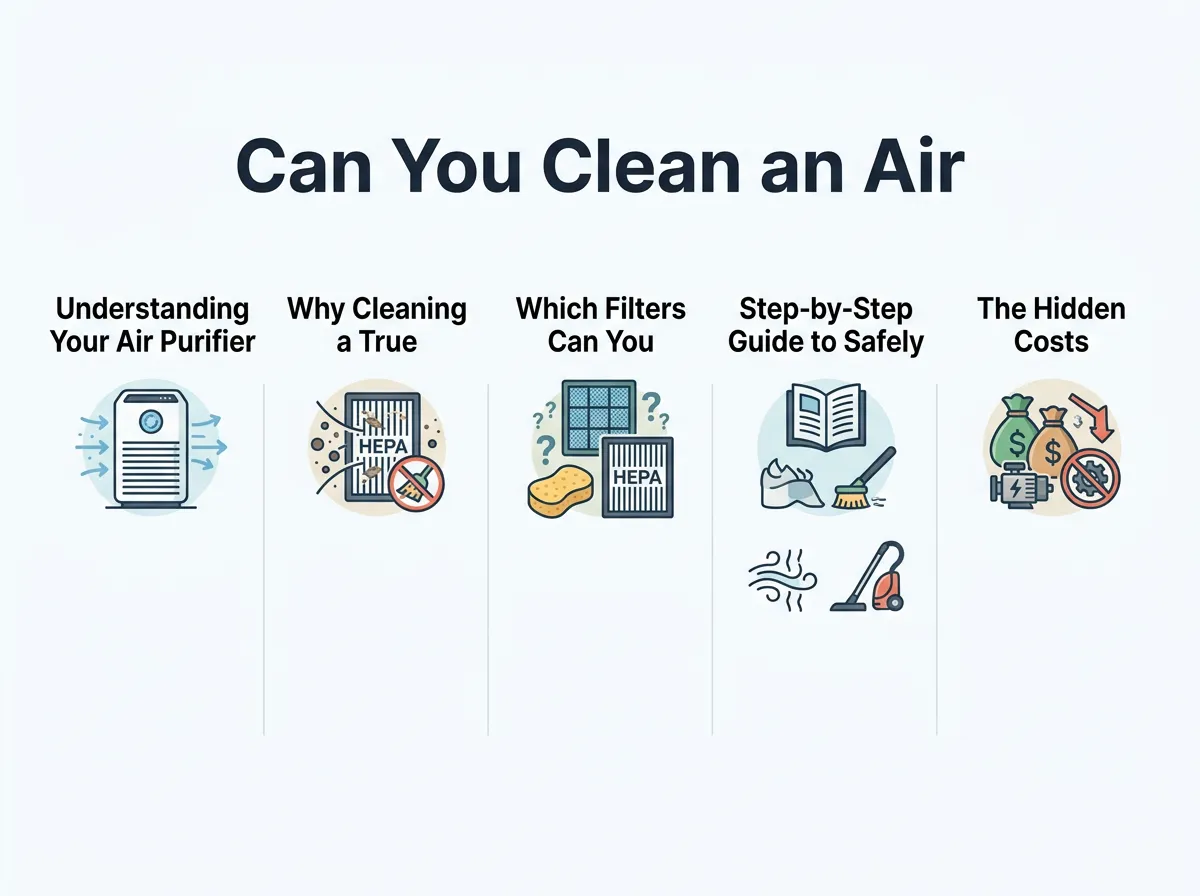
Can You Clean an Air Purifier Filter Instead of Replacing It? — key points at a glance
The Delicate Structure of HEPA Fibers
HEPA filters are made of fiberglass fibers. These fibers are much thinner than a human hair. They are woven together in a complex, chaotic maze. When air passes through, the tiny dust particles get stuck in this maze. This structure is very fragile.
The Invisible Damage of Water and Vacuums
If you wash a HEPA filter with water, the fibers will stick together. This ruins the maze. The holes become too big, or the filter gets clogged. Even if you use a vacuum, the strong suction can rip the tiny fibers. You might not see the tears with your eyes. But the dust will fly right through the holes. Your purifier will stop cleaning your air.
The Risk of Mold Growth
Water is the enemy of HEPA filters. If you wash a paper or fiberglass filter, it will stay damp for a long time. Damp filters are the perfect place for mold to grow. When you turn the machine back on, it will blow mold spores into your room. This is the opposite of what you want!
Which Filters Can You Actually Clean?
Not all hope is lost. There are some parts of your air purifier that you can clean. Knowing the difference will save you money and protect your health.
Washable Pre-Filters
Almost all pre-filters are washable. Since they only catch large dust and hair, they are made of sturdy materials. They are often made of plastic mesh, foam, or metal. You can safely wash these under a tap or vacuum them. Cleaning your pre-filter every month helps your main filter last much longer.
Permanent or Washable HEPA-Type Filters
Some brands sell “washable” HEPA-type filters. Note that these are different from “True HEPA” filters. If your manual says the filter is washable, you can clean it. However, you must follow the steps carefully. If you want to know more about the cleaning process, you can read this guide on cleaning your air purifier safely.
Step-by-Step Guide to Safely Cleaning Washable Filters
If you have a washable pre-filter or a washable HEPA-type filter, here is how to clean it. Always refer to your owner’s manual before you start.
Step 1: Power Down and Unplug
Safety always comes first. Turn off your air purifier. Unplug it from the wall outlet. Never open the machine while it is running.
Step 2: Remove the Outer Cover
Open the front or back panel. Carefully slide out the pre-filter. Be gentle so you do not spill dust back into your room. You may want to do this outside or near a trash can.
Step 3: Gentle Vacuuming or Washing
For a pre-filter, use the brush attachment on your vacuum to remove dust. If it is very dirty, rinse it under cool tap water. Do not use harsh soaps or chemical cleaners. Use gentle water pressure.
Step 4: Complete Air Drying
This is the most important step. Let the filter dry completely. This can take up to 24 or 48 hours. Never put a wet filter back into the machine. A wet filter will ruin the motor and cause mold to grow inside the purifier.
The Hidden Costs of Not Replacing Filters
It is tempting to keep using an old filter. You might think you are saving cash. But using an old, dirty filter has hidden costs. It can cost you more money in the long run.
Reduced Airflow and Strain on the Motor
When a filter is full of dust, air cannot pass through easily. Your air purifier has to work twice as hard to pull air in. This strains the motor. Over time, the motor can burn out. Replacing a motor or buying a new machine is much more expensive than a new filter. A well-maintained machine is vital, and you can learn more about proper air purifier maintenance to keep your unit running efficiently.
Higher Energy Bills
A strained motor uses more electricity. If your filter is clogged, your utility bills will go up. Changing your filter on time keeps your energy costs low.
Poor Air Quality and Health Risks
An old filter cannot trap new dust. It may even start releasing dust back into your home. If you have asthma or allergies, you will feel the difference quickly. Your eyes might itch, and you might sneeze more often. Clean air is worth the price of a new filter.
How to Extend the Life of Your Air Purifier Filters
If you want to save money, you do not have to wash your HEPA filter. There are safer ways to make your filters last longer.
Vacuum the Pre-Filter Often
Clean your pre-filter every two to four weeks. This keeps large dust from reaching the HEPA filter. The less work your HEPA filter has to do, the longer it will last.
Keep Your Home Clean
Vacuum your carpets and dust your furniture regularly. If there is less dust in your home, there is less dust for your purifier to catch.
Run the Purifier on Auto Mode
Many modern purifiers have an “auto” mode. This mode adjusts the fan speed based on the air quality. It runs on low when the air is clean. This saves your filter from wearing out too fast.
When Is It Time to Replace Your Filter?
So, how do you know when it is time to buy a new one? Here are a few clear signs:
- The check filter light comes on.
- The filter looks dark grey or black.
- The machine smells musty or dusty when running.
- The airflow feels very weak, even on high speed.
Most brands recommend replacing HEPA filters every 6 to 12 months. Carbon filters should be replaced every 3 to 6 months.
Conclusion
So, can you clean an air purifier filter instead of replacing it? For pre-filters, the answer is a big yes. Cleaning them keeps your machine happy. But for True HEPA and carbon filters, the answer is a firm no. Trying to clean them will damage their fine fibers and reduce their ability to clean your air.
Investing in new filters is an investment in your health. By cleaning your pre-filter regularly and keeping your home tidy, you can stretch your dollar further. Keep your air clean, your motor running smoothly, and your lungs happy by replacing your filters on time!
Frequently Asked Questions
Can I vacuum a True HEPA filter?
No, you should not vacuum a True HEPA filter. The powerful suction of a vacuum cleaner can rip the tiny, delicate fiberglass fibers inside the filter. This ruins its ability to trap small particles, making the filter useless.
How often should I clean my washable pre-filter?
You should clean your pre-filter once every two to four weeks. Regular cleaning prevents dust and pet hair from clogging the inner HEPA filter, which helps the entire system run more efficiently.
What happens if I wash a non-washable HEPA filter with water?
Washing a non-washable HEPA filter will ruin its structure. Water causes the tiny fibers to stick together, which blocks airflow and makes the filter ineffective. It also creates a damp environment where mold and bacteria can grow.
How can I tell if my air purifier filter is washable?
You can check your owner’s manual or look at the filter frame itself. If a filter is washable, it will be clearly labeled as “washable” or “permanent,” whereas standard True HEPA filters will not have these labels.
Can I wash the activated carbon filter?
No, you cannot wash activated carbon filters. Water will wash away the charcoal coating or clog the tiny pores that trap gases and odors, rendering the filter useless.
Why does my air purifier smell dusty or musty?
A dusty or musty smell usually means your filter is dirty and needs to be replaced. It can also happen if you washed a filter and put it back in while it was still damp, which allows mold to grow inside.
