


Yes, air purifiers can significantly reduce and eliminate indoor odors, but only if they contain the right type of filter. While HEPA filters capture particles like dust and pet dander, you need an activated carbon filter to absorb gases, smoke, and cooking smells. Choosing a purifier with both technologies ensures your home smells clean and fresh all day long.
Have you ever walked into your living room and smelled something strange? Maybe it is the leftover fish from last night’s dinner. Or perhaps your dog spent too much time rolling around in the wet grass this afternoon. Whatever the cause, stubborn household smells can quickly ruin the comfort of your home. We have all tried spraying heavy air fresheners, lighting scented candles, or using perfumes. Unfortunately, these solutions only mask the odor for a short time before the bad smell returns.
This frustrating battle makes many homeowners wonder: do air purifiers help with smells? If you are tired of stale air, pet odors, or burnt toast, you have likely looked into these popular devices. It is easy to feel overwhelmed by the science and the sheer number of options on the market. In this guide, we will dive deep into how air purifiers handle stubborn aromas. We will look at the science behind odor removal, highlight the specific filters you need, and share practical tips to make your living space smell amazing.
Key Takeaways
- Active Carbon is Key: Standard HEPA filters do not trap smells; you must have an activated carbon filter to absorb gas-based odors.
- Traps Diverse Odors: A proper air purifier can easily eliminate pet smells, kitchen smoke, burnt food, musty mildew, and chemical VOCs.
- HEPA’s Dual Action: HEPA filters help by catching dust and pet dander, which are the physical particles that often carry bad smells.
- Strategic Placement: Place your air purifier close to the source of the smell with plenty of open space around it for maximum airflow.
- Regular Maintenance: Carbon filters become full over time, so you need to replace them every 3 to 6 months to keep odors away.
- Source Cleanup: Air purifiers clean the air, but you still need to scrub surfaces and remove the source of the odor for permanent freshness.
📑 Table of Contents
How Do Air Purifiers Capture Odors?
To understand how these machines clean the air, we have to look inside them. Not all air purifiers are built the same way. In fact, some basic models will do absolutely nothing to stop smells. It all comes down to the types of filters inside the machine and how they interact with different types of pollution.
The Power of Activated Carbon Filters
When it comes to odors, the real hero is the activated carbon filter. This is not just a regular piece of fabric or mesh. Activated carbon is charcoal that has been treated with oxygen. This special treatment opens up millions of tiny pores between the carbon atoms. These microscopic pores act like a massive sponge for gases and chemicals.
When smelly gases pass through the carbon, they stick to the surface of the filter. This process is called adsorption. This is different from absorption, where a liquid is soaked up. Adsorption means the odor molecules physically bond to the outside of the carbon. If you want to know if air purifiers help with smell, the answer is yes, but only if they have a thick layer of this active carbon.
Why True HEPA Filters Aren’t Enough for Smells Alone
Many people buy a True HEPA filter thinking it will solve all their indoor air problems. While HEPA filters are incredible, they have a major limitation. They are designed to trap solid particles like dust, pollen, mold spores, and pet dander. These particles are relatively large.
Smells, however, are made of volatile organic compounds (VOCs) and gases. These gas molecules are incredibly tiny—much too small for a HEPA filter to catch. They simply pass right through a HEPA filter like wind through a chain-link fence. So, while a HEPA filter is vital for clean air, it must pair up with an activated carbon filter to tackle smells.
Common Household Smells You Can Eliminate
Your home is full of different odor sources. Some are mild, while others can make you want to plug your nose. Let’s look at the types of smells you can get rid of using a quality air purifier in your daily life.
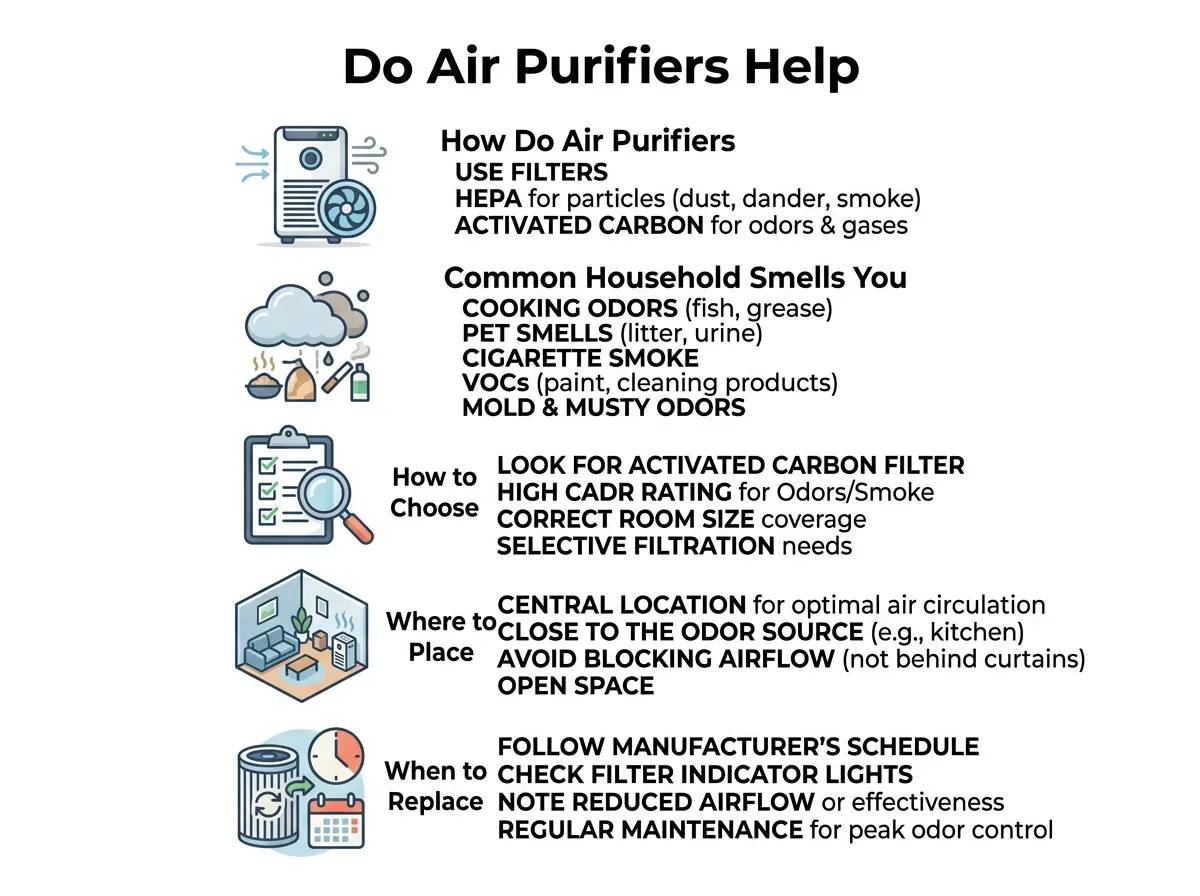
Do Air Purifiers Help With Smells? — key points at a glance
Pet Odors and Dander
We love our furry friends, but we do not always love how they smell. Wet dogs, cat litter boxes, and dirty pet beds can create a strong, lasting odor in your home. An air purifier helps in two ways here. First, the HEPA filter traps the pet dander and hair that float in the air. Second, the carbon filter absorbs the ammonia and other smelly gases that come from litter boxes and pet coats.
Cooking Aromas and Kitchen Smoke
Cooking a delicious meal is wonderful, but the leftover smell of fried fish, garlic, or onions can linger for days. If you accidentally burn your dinner, the smoky smell can quickly spread to your bedrooms. A good air purifier can pull these cooking smells and smoke out of the air rapidly. This prevents the grease and odor molecules from settling into your carpets, curtains, and furniture.
Musty Mold and Mildew Odors
Damp basements, bathrooms, and closets often have a distinct, earthy smell. This musty odor is caused by mold spores and microbial volatile organic compounds released by dampness. An air purifier with a HEPA filter traps the mold spores before they can grow, while the carbon filter absorbs the musty smell itself. This keeps your home smelling dry, clean, and healthy.
How to Choose the Right Air Purifier for Odors
If you are shopping for a new device, you might feel overwhelmed by the choices. How do you find one that actually works on smells rather than just circulating the air?
Look for High Carbon Weight
When shopping, check the product details for the weight of the activated carbon filter. Some cheap purifiers only use a thin, carbon-coated pre-filter that looks like a black sponge. This thin layer will saturate and stop working in just a few weeks. For heavy odors, look for a purifier with several pounds of solid, pelletized activated carbon. The more carbon the filter has, the more odors it can trap and hold.
Match the CADR Rating to Your Room Size
The Clean Air Delivery Rate (CADR) tells you how fast the purifier can clean the air in a specific room size. If you put a small purifier in a large living room, it will struggle to clean the air fast enough to stop smells. Always choose a model that is rated for the exact square footage of your room, or even slightly larger. This ensures the air is cycled through the filters multiple times per hour, catching smells before they spread.
Where to Place Your Purifier for the Best Results
Once you have your purifier, where you put it matters just as much as what model you bought. You want to make sure it can draw in the smelly air before it spreads throughout your home.
Keep It Near the Source
If your kitchen is the main source of smells, place the purifier nearby. If your dog sleeps in a specific corner, set up the unit in that room. Placing the machine close to the source of the odor allows it to capture the smelly molecules immediately before they have a chance to drift and cling to your fabrics.
Ensure Good Airflow and Clearance
Do not hide your air purifier behind a couch or stick it deep inside a corner. To work efficiently, the machine needs space around it. Try to leave at least two feet of clear space on all sides of the unit. This allows the purifier to draw in dirty air from the entire room and blow clean air back out without any blocks.
When to Replace Your Filters to Keep Smells Away
An air purifier is not a “set it and forget it” appliance. Over time, the filters get full of dirty particles and smells, making them less effective.
Signs Your Filter is Saturated
How do you know when it is time to change your filter? The most obvious sign is that your home starts smelling bad again. If the air coming out of your purifier smells stale, sweet, or slightly dusty, the carbon filter is likely full. At this point, it cannot hold any more odors and will actually start releasing them back into the room.
Maintenance and Care Tips
To get the most out of your unit, check the manufacturer’s guide for filter replacement schedules. Usually, HEPA filters last 6 to 12 months, while carbon filters need to be replaced every 3 to 6 months. To make your filters last longer, vacuum the fabric pre-filter once a month to remove large dust bunnies and hair. Remember, eliminating odors with air purifiers requires clean, active filters to be truly successful.
Simple Ways to Help Your Air Purifier Do Its Job
While an air purifier is an amazing tool, it cannot do everything on its own. You will get the best results if you combine it with good home habits.
Clean the Source of the Odor
An air purifier cleans the air, but it cannot scrub your floors or wash your trash can. If you have a food spill, a full trash can, or a dirty litter box, you must clean those up first. The purifier will clean up the lingering smells left in the air, but it cannot fix a continuous source of dirt.
Open Windows When Possible
On nice days, open your windows for ten to fifteen minutes to let fresh air circulate. This flushes out stagnant air. Once you close the windows, turn your air purifier back on to clean and maintain that fresh, crisp indoor atmosphere.
Conclusion
Having a clean, fresh-smelling home makes a massive difference in how you feel every day. Do air purifiers help with smells? Yes, they absolutely do, as long as you choose a model with a thick, high-quality activated carbon filter paired with a True HEPA filter. By placing your purifier in the right spot, keeping up with filter changes, and practicing good household hygiene, you can say goodbye to stubborn odors for good. Enjoy breathing in crisp, clean, and completely odor-free air!
Frequently Asked Questions
Do standard HEPA filters remove smells?
No, standard HEPA filters are designed to capture solid particles like dust, dander, and pollen. They cannot trap gas molecules or volatile organic compounds that cause smells. You must have an activated carbon filter to remove odors effectively.
How long does it take for an air purifier to remove a smell?
In a standard-sized room, a properly sized air purifier can significantly reduce odors within 30 to 60 minutes. The exact time depends on the strength of the smell, the CADR rating of the purifier, and the fan speed you select.
Can an air purifier get rid of cigarette smoke smell?
Yes, but you will need a heavy-duty air purifier with a large amount of activated carbon. Smoke contains both tiny physical particles and toxic gases, so a combination of a True HEPA filter and a thick carbon filter is required to fully neutralize the odor.
Why does my air purifier smell bad?
If your air purifier is emitting a bad smell, it usually means the filters are dirty and saturated. When an activated carbon filter becomes completely full, it can no longer adsorb gases and will begin releasing the trapped odors back into your room.
Should I run my air purifier 24/7 to stop smells?
Yes, running your air purifier continuously on a low or automatic setting is highly recommended. This keeps the air constantly circulating and prevents everyday smells from settling into your furniture, carpets, and walls.
Do air purifiers help with musty basement smells?
Yes, they are very effective at fighting musty smells. The HEPA filter captures the airborne mold spores that cause the odor, while the activated carbon filter absorbs the damp, musty gases to make the air smell fresh.
