


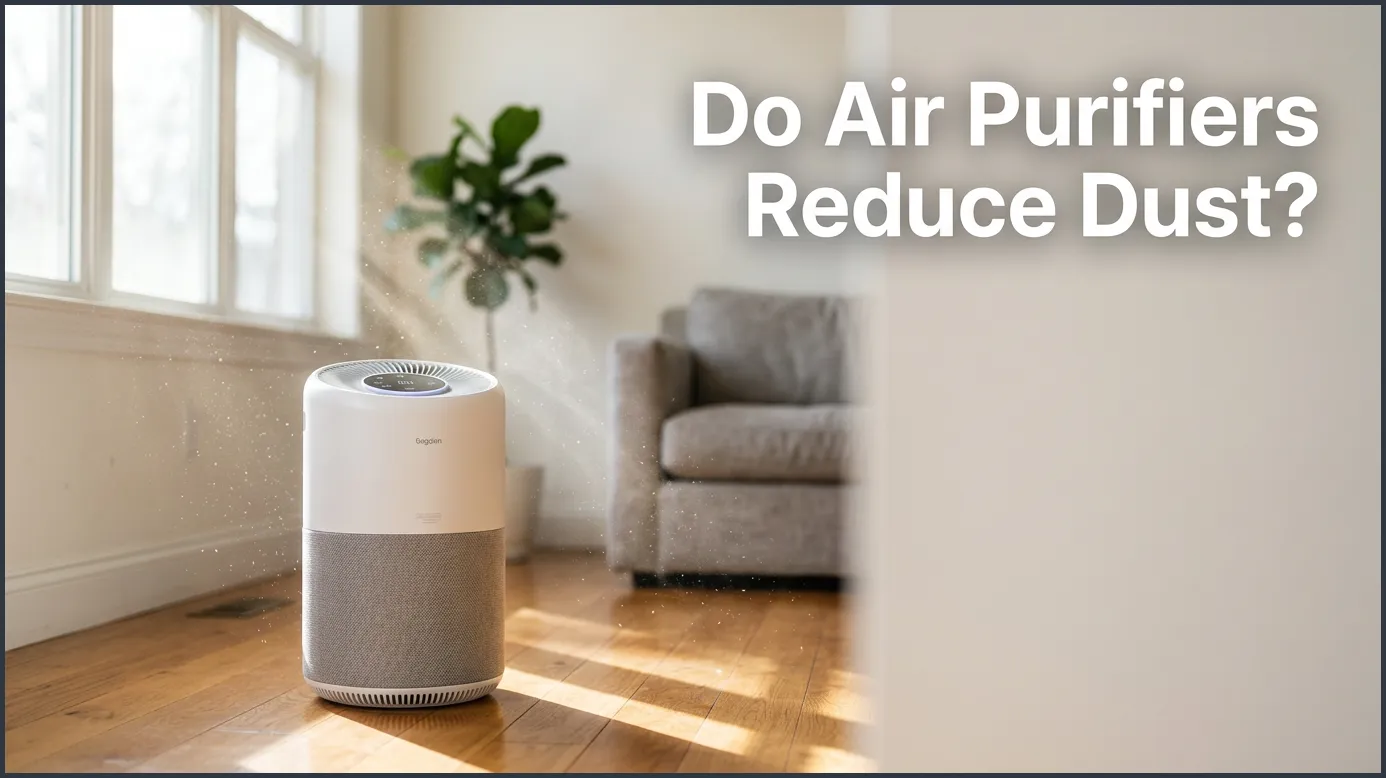
Yes, air purifiers do reduce dust. By using a High-Efficiency Particulate Air (HEPA) filter, these devices draw in dirty air and trap tiny airborne particles before they can settle on your furniture or floors. However, they only catch floating dust, so you will still need to do some manual cleaning to get rid of heavier particles that have already landed.
Have you ever spent a whole Saturday cleaning your home? You wipe down every shelf. You vacuum every rug. You make your living room look perfect. But just a day later, you see a thin layer of gray dust on your coffee table. It can feel like an endless battle that you are losing daily.
Many people wonder if there is an easier way to keep their homes clean. If you are tired of chasing dust bunnies, you might think about buying an air purifier. These small machines promise to clean your indoor air. Many people turn to these devices to improve their health and comfort. Understanding the dust reduction benefits of air purifiers can help you decide if one is right for your space.
In this guide, we will look at how air purifiers work against dust. We will explain what they can and cannot do to help with your dust problem. Plus, we will share simple tips to help you get the cleanest air possible with less effort.
Key Takeaways
- HEPA Filters are Essential: True HEPA filters capture 99.97% of airborne dust particles as small as 0.3 microns.
- Airborne Dust Only: Purifiers can only clean dust while it is floating in the air, not after it settles on surfaces.
- Placement Matters: Putting your purifier in high-airflow areas or busy rooms makes it much more effective.
- Regular Maintenance Needed: You must clean or replace filters regularly to keep the device running well.
- A Combined Effort: An air purifier works best when paired with regular vacuuming, dusting, and washing.
- Better Health: Reducing dust can ease allergy symptoms, protect your lungs, and improve your sleep.
📑 Table of Contents
What is Dust and Where Does It Come From?
To fight dust, we first need to know what it is. Dust is not just dirt from outside. It is actually a mix of many different things that build up in our homes over time. Every home has it, no matter how clean you keep things.
The Hidden Ingredients in Your Dust
Most household dust is made of tiny particles that fall off people and pets. This includes dead skin cells and hair. It also includes pet dander, which is tiny flakes of dead skin from your dog or cat. Dust also holds clothing fibers, pollen, soil, and even tiny insect parts. Dust mites also live in this mixture, eating the dead skin cells we shed.
Why Dust Keeps Piling Up
Every time you walk, sit on the couch, or open a window, you stir up these particles. They float in the air for a while before they land. Because we are always shedding skin and wearing clothes, our homes constantly make new dust. This is why it feels like the dust never truly goes away. It is a continuous loop of shedding and settling.
How Air Purifiers Capture Airborne Dust
An air purifier works like a fan with a highly advanced filter. It draws in dirty air, traps the bad particles, and blows clean air back out. This cycle repeats over and over again to keep the air fresh.
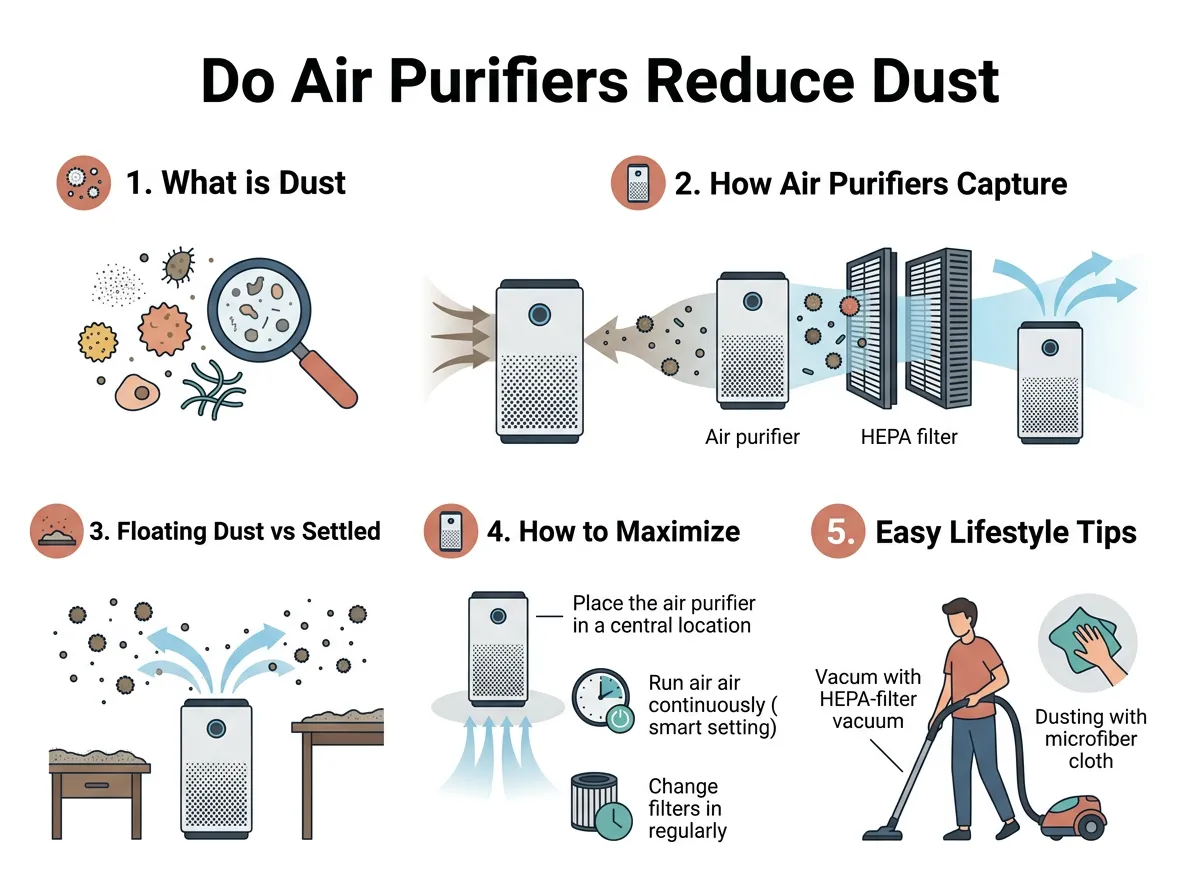
Do Air Purifiers Reduce Dust? — key points at a glance
The Magic of HEPA Filters
The secret to a good air purifier is its filter. Most high-quality purifiers use a HEPA filter. These filters are made of a dense mesh of tiny fibers. Experts note that HEPA filters can trap airborne dust particles as small as 0.3 microns. To give you an idea of how small that is, a single human hair is about 70 microns wide. This means a HEPA filter can easily catch the tiny dust particles floating around your home.
The Role of Pre-Filters
Many air purifiers also have a pre-filter. This is the first line of defense. The pre-filter catches large items like pet hair, lint, and big dust clumps. By catching these large pieces first, it keeps the HEPA filter from getting clogged too quickly. This helps your main filter last much longer and work much better.
Airflow and Circulation
For a purifier to work, it must keep the air moving. The machine uses a fan to pull air through the filter. This constant air movement helps to grab dust before it has a chance to settle on your hard surfaces. If the air is still, the dust will fall to the ground instead of going into the filter.
Floating Dust vs. Settled Dust
It is important to have the right expectations when you buy a purifier. Air purifiers are great, but they cannot do magic. They can only clean the air, not your furniture.
The Limit of Air Purifiers
Once dust lands on your table, floor, or couch, an air purifier cannot help. The fan on the machine is not strong enough to suck dust off your furniture. It is helpful to understand the limitations of air purifiers on settled dust so you do not expect a totally hands-free cleaning routine. The machine cannot replace your duster or your broom.
Why You Still Need to Vacuum
Since purifiers only catch floating dust, you still need to vacuum and wipe down your surfaces. However, you will notice a big change. You will not have to dust nearly as often. The purifier catches the dust while it is still in the air, preventing it from landing on your TV or bookshelves in the first place.
How to Maximize Your Purifier’s Dust-Busting Power
To get the best results, you need to use your air purifier the right way. Just plugging it in is not always enough. A few simple steps will help you get the most out of your machine.
Choosing the Right CADR Rating
When you buy a purifier, look for the CADR rating. This stands for Clean Air Delivery Rate. It tells you how fast the machine can clean the air in a room. Look for a unit with a high CADR for dust. Make sure the model you choose is rated for the size of your room. A small purifier in a huge living room will not do much.
Ideal Placement in Your Home
Where you put your machine matters a lot. Do not hide it in a corner or behind a couch. It needs space to draw in air from all sides. If you want to know where to place an air purifier for maximum dust control, try putting it in your busiest room. Keep it a few feet away from walls and furniture so air can flow freely around it.
Keeping Filters Fresh
A dirty filter cannot catch dust. Over time, the filter gets clogged with hair and dirt. Check your owner’s manual to see how often to change the filter. Most HEPA filters need to be replaced every six to twelve months. Some models also have a washable pre-filter. Wash this pre-filter once a month to keep the air flowing well.
Easy Lifestyle Tips to Reduce Dust Naturally
You can help your air purifier do an even better job. By changing a few small habits, you can stop dust at the source and keep your home cleaner.
Groom Your Pets Often
Our furry friends are major dust makers. They shed hair and dander every day. Brush your pets outdoors or in a designated area. This keeps their loose fur from floating into your living spaces and clogging your air purifier too fast.
Use Microfiber Cloths
When you do dust, do not use a dry feather duster. Feather dusters just kick the dust back into the air. Instead, use a damp microfiber cloth. Microfiber has a static charge that holds onto the dust. A damp cloth traps the dust so you can wipe it away for good.
Wash Bedding Weekly
Your bed is a hot spot for dead skin and dust mites. Wash your sheets, pillowcases, and blankets once a week in hot water. This kills dust mites and keeps your bedroom air much cleaner. It also stops dust from flying up when you make your bed in the morning.
Conclusion
Dealing with dust can feel like a chore that never ends. While an air purifier will not stop you from ever dusting again, it is a powerful tool to have in your home. It catches floating dust, keeps your surfaces cleaner for longer, and helps you breathe easier. By picking a good HEPA filter, placing it in the right spot, and keeping up with basic cleaning, you can enjoy a fresher, healthier home every day.
Frequently Asked Questions
Do air purifiers eliminate the need for dusting?
No, air purifiers do not eliminate the need for dusting. They only trap dust while it is floating in the air. You will still need to wipe down surfaces to clean up heavier dust that has already settled.
Where is the best place to put an air purifier for dust?
The best place to put an air purifier is in the room where you spend the most time, such as your bedroom or living room. Keep it in an open area at least a few feet away from walls and furniture so it can pull in air easily.
Can a cheap air purifier reduce dust?
Yes, even a budget air purifier can help if it has a True HEPA filter. Avoid models that only use ionizers or basic carbon filters, as they are not as effective at trapping small dust particles.
How long does it take for an air purifier to clean a dusty room?
It usually takes between 30 minutes and two hours for an air purifier to clean the air in a single room. This depends on the size of the room and the Clean Air Delivery Rate (CADR) of your specific machine.
Should I run my air purifier 24/7?
Yes, it is best to run your air purifier all the time to keep dust levels low. Most modern air purifiers have energy-efficient settings so they will not use much electricity when left on.
Do air purifiers catch dust mites?
Air purifiers can catch dust mites and their waste if they are floating in the air. However, because dust mites live deep inside mattresses, carpets, and pillows, you also need to wash bedding and vacuum regularly to get rid of them.
