


Yes, air purifiers do work to clean indoor air by capturing airborne pollutants like dust, pollen, pet dander, and smoke. They use advanced filters like HEPA to remove up to 99.97% of tiny particles from your home. However, they work best when paired with regular cleaning and proper room ventilation.
Imagine walking into your living room on a warm, sunny afternoon. You look at the bright beams of light streaming through your window. In those beams, you see thousands of tiny dust specks floating in the air. It can make you stop and think about what you are breathing in every single day. Since we spend so much of our time indoors, the quality of our indoor air is incredibly important for our comfort and health.
Many of us turn to modern technology to solve this invisible problem. When you start searching for ways to clean your home, you will find a lot of talk about special cleaning devices. You might start to ask yourself a very common question: do air purifiers work? It is a fair question to ask because these machines can be quite an investment, and you want to be sure they are worth it.
In this guide, we will dive deep into how these devices clean the air. We will look at the science behind them in a simple way. You will learn what they can trap, what they cannot clean, and how to get the absolute best results for your home.
Key Takeaways
- HEPA filters are essential: True HEPA filters capture 99.97% of tiny airborne particles down to 0.3 microns.
- Great for allergy sufferers: They help reduce allergy triggers like dust mites, mold spores, and pet dander.
- Odor control needs carbon: You need an activated carbon filter to remove smells, smoke, and household gases.
- Room size matters: You must match the device’s Clean Air Delivery Rate (CADR) to the size of your room.
- They do not clean surfaces: Purifiers only clean floating air particles, not dust that has already settled on floors or furniture.
- Regular maintenance is required: You must replace the filters every few months to keep the machine working well.
📑 Table of Contents
How Do Air Purifiers Actually Work?
To answer the question, do air purifiers work, we must first look at how they run. Most of these machines are actually very simple. They do not use complex chemical reactions to clean your air. Instead, they rely on basic mechanical processes to trap physical particles.
The Fan and Filter Mechanism
Inside every standard air purifier, you will find a fan and a series of filters. The fan is the engine of the machine. It spins to pull the dirty air from your room into the device. Once inside, the air is forced through the filters. These filters act like a very fine net. They catch the tiny particles that are floating in the air. Finally, the clean air is pushed back out into your room. This cycle repeats over and over again to keep the air fresh.
The Web of a HEPA Filter
The most important part of any good air purifier is the HEPA filter. HEPA stands for High-Efficiency Particulate Air. Think of a HEPA filter as a dense maze made of tiny glass fibers. When air flows through this maze, particles get trapped in different ways. Some hit the fibers directly and stick. Others get caught as they try to squeeze through tight gaps. According to health experts, these filters are highly efficient at trapping particles. For more details on how these filters impact your health, you can read about how air purifiers work to reduce allergens on Healthline. A true HEPA filter is rated to trap 99.97% of particles that are 0.3 microns in size.
The Power of Activated Carbon
While HEPA filters are great for solid dust, they cannot trap smells or gases. That is where activated carbon filters come in. These filters contain carbon that has been treated to have tiny pores. These pores act like a sponge for chemicals, gases, and odors. If you want to get rid of cooking smells, pet odors, or wildfire smoke, you need a machine that has both a HEPA filter and an activated carbon filter.
What Air Purifiers Can and Cannot Filter
These machines are very good at their jobs, but they are not magic. They have very clear limits. Knowing what they can and cannot do will help you set realistic expectations for your home.
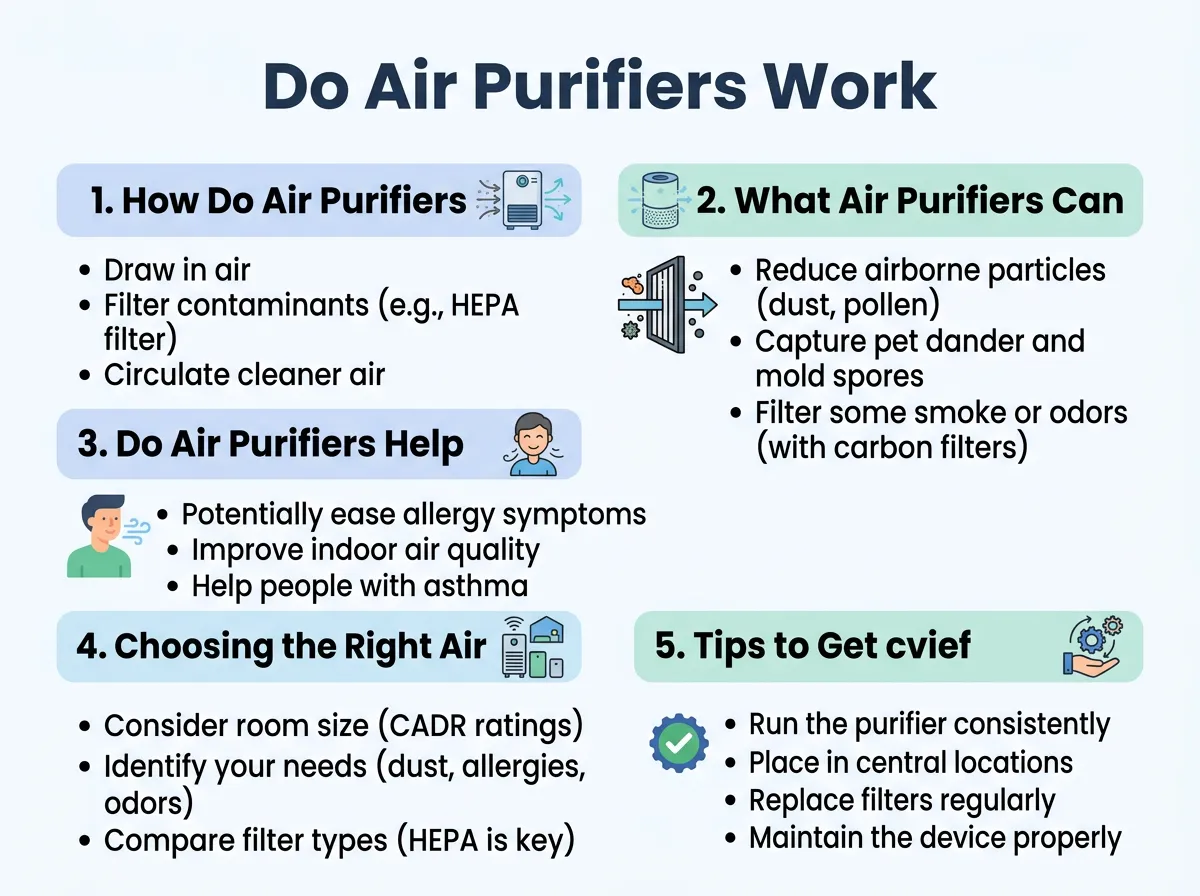
Do Air Purifiers Work? — key points at a glance
The Pollutants They Excel at Removing
Air purifiers are excellent at trapping pollutants that float in the air. This includes common allergy triggers like pet dander, pollen from plants, and mold spores. They are also great for catching dust mites and small smoke particles. If you have a dog or a cat, a purifier will quickly catch the tiny skin flakes they shed, which helps keep your air clean.
The Things They Cannot Clean
It is important to remember that these machines can only clean the air that passes through them. They cannot clean heavy particles that have already landed on your surfaces. If dust has settled on your coffee table, or if pet hair is stuck to your rug, a purifier cannot pull it up. You still need to vacuum, sweep, and dust your home. If you want to know if these devices are worth the cost for your home, you can read the Texas A&M health analysis on whether air purifiers are worth the investment for everyday families. They are meant to assist your cleaning routine, not replace it.
Do Air Purifiers Help with Health Issues?
If you wonder, do air purifiers work to improve your health, the answer depends on your symptoms. Many people buy these machines to find relief from common health problems.
Relieving Allergy and Asthma Symptoms
If you have seasonal allergies, you know how hard it can be to breathe. Pollen from outdoors can easily sneak inside through windows and doors. Once inside, it settles in your nose and makes you sneeze. An air purifier helps by trapping these pollen grains before they reach your face. Many people with asthma also find that clean air reduces their symptoms. With fewer particles in the air, your lungs do not have to work as hard, and you can sleep much better at night.
Reducing Airborne Pathogens
Can a purifier keep you from catching a cold? Yes, to some degree. Some high-end filters can trap very small germs, bacteria, and virus particles. This can lower the risk of catching an airborne illness from someone else in your home. However, they will not protect you from germs on surfaces like door handles, kitchen tables, or cell phones. Washing your hands often is still your best defense. To dive deeper into the science of indoor air cleaning, you can learn more about how air purifiers work to clean indoor spaces from the experts at Airthings.
Choosing the Right Air Purifier for Your Home
When asking yourself, do air purifiers work for your specific needs, you must look at ratings. If you decide to buy a purifier, you will find many options. Here are two main things to check before you buy.
Understanding CADR Ratings
CADR stands for Clean Air Delivery Rate. This number tells you how fast the machine can clean the air in a room. It gives three different ratings: one for smoke, one for dust, and one for pollen. A higher CADR rating means the machine works faster to clean the air. If you have pets or live in an area with a lot of dust, you should look for a machine with high CADR numbers.
Matching Room Size to the Device
A small machine made for a small bedroom will not work in a large open living room. Every purifier has a recommended room size listed on the box. Before you buy, measure the square footage of your room. It is always a good idea to choose a machine that is rated for a slightly larger room than yours. This ensures the machine can clean all the air in the room several times each hour.
Tips to Get the Best Results from Your Purifier
Many people buy a great machine but then ask, do air purifiers work when placed in a corner? The answer is no, not very well. To get the best value, you must use the machine correctly.
Perfect Placement Strategies
Do not hide your purifier behind a couch or slide it under a desk. It needs space to draw in air from all directions. Try to keep it at least two to three feet away from walls and furniture. Place it in the room where you spend the most time. For most people, this is the bedroom or the living room.
Keep Up with Filter Changes
A dirty filter cannot clean the air. Over time, the filter grid gets completely clogged with dust, hair, and lint. If you do not change it, the machine will work harder, use more energy, and clean less air. Most HEPA filters need to be changed every six to twelve months. Check the manual for your specific model to see when to buy a replacement.
Run Your Purifier Constantly
Some people only turn their machine on for an hour a day. This does not work well because indoor air is constantly changing. Every time you open a door, cook a meal, or walk by with a pet, new dust enters the air. To keep the air clean, you should run your purifier on a low setting all day and night. Modern machines use very little electricity, so running them all the time will not hurt your budget.
Conclusion
So, do air purifiers work? The simple answer is yes, they do. They are highly effective at trapping the airborne dust, pollen, pet dander, and smoke that make breathing difficult. While they cannot clean your furniture or floors, they are an excellent tool for keeping your air fresh. By choosing the right size machine and changing your filters regularly, you can enjoy a cleaner, healthier home for you and your family.
Frequently Asked Questions
Do air purifiers get rid of dust?
Yes, air purifiers are very effective at trapping dust that is floating in the air. However, they cannot clean heavy dust that has already settled on your furniture, carpets, or floors. To keep your home completely dust-free, you must still vacuum and wipe down surfaces regularly.
Should I leave my air purifier on all night?
Yes, you should leave your air purifier running all night, especially in your bedroom. Running the machine on a low or quiet sleep setting ensures you breathe clean, allergen-free air while you sleep. This can help reduce morning stuffiness and improve your overall sleep quality.
Can an air purifier help with pet smells?
Yes, an air purifier can help with pet smells, but only if it contains an activated carbon filter. While HEPA filters are great for trapping pet dander and hair, they cannot stop odors. An activated carbon filter is designed to absorb and neutralize gas molecules and strong pet smells.
Where is the best place to put an air purifier?
The best place to put an air purifier is in the room where you spend most of your time, such as your bedroom or living room. Ensure the device is placed in an open area at least two to three feet away from walls and furniture. This allows the machine to pull in air from all directions without blockage.
How often do I need to change the filters?
Most HEPA filters need to be replaced every six to twelve months, depending on how often you use the machine. Activated carbon filters usually need to be replaced more often, typically every three to six months. Always check your device manual and inspect the filter regularly for heavy dust build-up.
Do air purifiers use a lot of electricity?
No, modern air purifiers are designed to be very energy-efficient. Running a standard air purifier on a low or medium setting uses about the same amount of electricity as a traditional lightbulb. Many models are Energy Star certified, meaning they will not cause a major increase in your monthly power bill.
