


If you struggle with allergies, pet dander, mold, or stubborn household odors, getting an air purifier is highly recommended. These devices work wonders to clean your indoor air and help you breathe easier every day. However, if you already have great air quality and no respiratory issues, you might not need one.
We spend a lot of time indoors. Most of us spend almost all our time inside. We lock our windows to keep the cold air out. We seal our doors to save on energy bills. But when we keep the outdoor air away, we trap dust inside. Dust bunnies gather in the corners. Pet hair floats through the light beams. Cooking smells can linger for days. You might sit on your couch, take a deep breath, and feel very stuffy. This is a common problem that makes many people ask: Do I Need an Air Purifier?
It is easy to feel confused by all the clean air gadgets on the market today. Every store seems to sell a new device. They promise to cure your allergies or make your home smell great. But do these machines actually work? Or are they just expensive fans? In this guide, we will look at the science of clean air. We will help you see if your home needs one. By the end, you will have a clear answer to your question: Do I Need an Air Purifier?
Key Takeaways
- Allergy Relief: Purifiers excel at removing dust, pollen, and pet dander from your living spaces.
- Smoke and Odor Control: True HEPA and activated carbon filters neutralize cooking odors, pet smells, and wildfire smoke.
- Symptom Improvement: Better air quality can lead to fewer sinus headaches, less sneezing, and improved sleep.
- Room Size Matters: Always match the purifier’s coverage area to the size of your specific room.
- Filter Maintenance: Regular filter replacements are necessary to keep the unit running at peak performance.
📑 Table of Contents
What is an Air Purifier and How Does It Work?
Before you spend money, it helps to know how these devices operate. Air purifiers are actually very simple. They have a fan and a few filters inside. The fan pulls air from your room into the machine. The air passes through the filters. These filters catch tiny particles. Then, the clean air is pushed back out. If you want to know more, you can read about how clean air devices function to keep your indoor spaces clear.
The Magic of HEPA Filters
Not all filters are the same. The best kind is called a True HEPA filter. These filters are made of very thin fibers. They can trap almost all tiny particles. They catch dust, mold, pollen, and pet dander. These particles are often too small to see with your eyes. A HEPA filter stops them from floating in your air.
Carbon Filters for Odors
HEPA filters are great for dust, but they cannot stop smells. That is where carbon filters come in. These filters use activated carbon to trap gases and odors. If you cook with strong spices, you will love this filter. It also works well for pet smells and smoke. Most good purifiers use both HEPA and carbon filters together.
Key Signs You Need an Air Purifier
Not everyone needs to buy a new machine. But some homes really do need them. If you notice these signs, you might want to ask yourself: Do I Need an Air Purifier? Look closely at your daily life to see if any of these signs sound familiar.
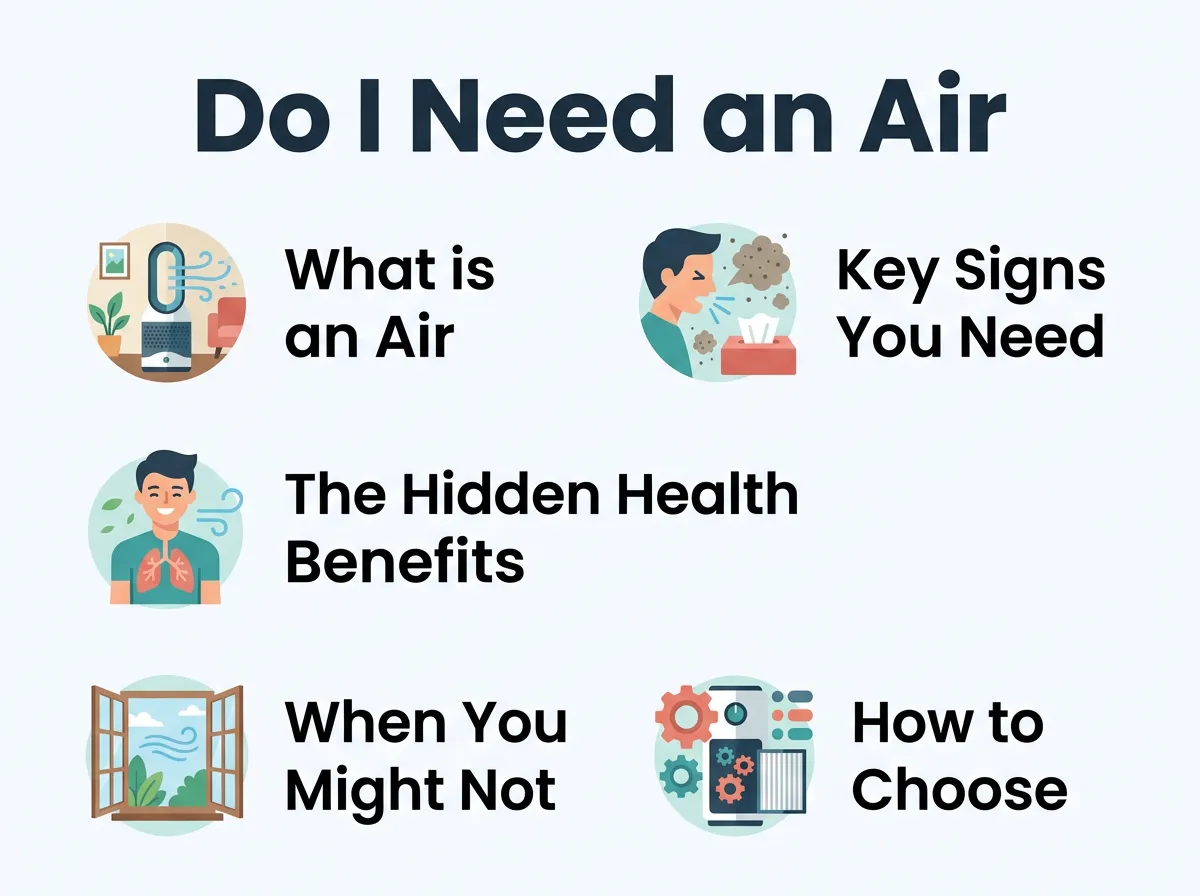
Do I Need an Air Purifier? — key points at a glance
Chronic Allergies and Sneezing
Do you wake up with a stuffy nose? Do your eyes itch when you sit on your couch? If you suffer from indoor allergies, your home should be your safe spot. But dust mites and pollen still find a way inside. If you constantly ask, “Do I Need an Air Purifier?” because of your endless sneezing, the answer is likely yes. A good filter will clear those triggers out of your room.
Pet Hair and Dander Everywhere
We love our pets, but they make our homes dusty. Dogs and cats shed hair all the time. They also shed tiny flakes of skin called dander. This dander floats in the air for hours. It gets into your rugs, your bed, and your lungs. Pet owners often wonder, Do I Need an Air Purifier? The answer is almost always yes if you want to keep your air free of pet dander. You can check the key signs your home needs clean air to see if your pets are causing issues.
Lingering Odors and Musty Smells
Sometimes, homes just smell old. This is common in damp areas. Cooking smells can also stick around too long. If you cook fish on Tuesday and still smell it on Thursday, your air is stagnant. A carbon filter can scrub these odors away quickly. This leaves your home smelling clean and fresh without sprays.
Living in High-Pollution Areas
Where you live matters a lot. If you live near a busy road, car exhaust can leak inside. If you live near wildfires, smoke can enter your house. Wildfire smoke is very bad for your lungs. In these cases, a purifier is not just a luxury. It is a vital tool to protect your health.
The Hidden Health Benefits of Cleaner Air
Using a purifier does more than stop sneezing. It can improve your life in ways you might not expect. Once you start breathing clean air, you will notice nice changes. Here are some of the most common benefits.
Better Sleep Night After Night
It is hard to sleep when you have a stuffy nose. Your body fights dust all night. When you put a purifier in your bedroom, you create a clean sleep zone. Your breathing slows down. You can rest easy. Many people find they wake up with more energy when they use a purifier at night.
Protection from Seasonal Viruses
We all want to stay healthy. A purifier cannot replace washing your hands. But it can help stop the spread of germs. Many purifiers can capture tiny virus particles from the air. This is very helpful if someone in your house is sick. Running a purifier can protect the rest of the family. Read more about the health benefits of purifying your indoor air to keep your family safe.
When You Might Not Need an Air Purifier
It is good to be honest about your home. You do not always need to spend money on new tools. Let us look at when you can skip this purchase.
Low Pollution and No Allergies
If you live in the country, your air might be very clean. If you have no pets and no allergies, you are likely fine. Your body can handle normal, low levels of dust. If you are in this group, you can stop asking, Do I Need an Air Purifier? and save your money instead.
Proper Home Ventilation
Do you keep your windows open a lot? If you have fresh air moving through your home, you might not need a machine. Natural airflow keeps indoor air fresh. If you can air out your home daily, a purifier may not add much value.
How to Choose the Right Purifier for Your Space
Once you have settled the question of Do I Need an Air Purifier? and decided to buy one, you need to choose the right model. There are many options out there. Keep these simple tips in mind to get the best one.
Check the Clean Air Delivery Rate (CADR)
The CADR rating shows how fast a machine cleans the air. There are ratings for smoke, dust, and pollen. Always check this number. A small bedroom unit will not work in a big living room. It will run all day and do nothing. You can use a comprehensive air purifier buying guide to help you find the right size for your room.
Consider the Ongoing Costs
Buying the machine is just the start. You must also buy replacement filters. Some filters last six months. Others last a year. Check the price of these filters before you buy. If they cost too much, look for a different model. You should also check the power use. Look for an Energy Star label to keep your power bills low.
Conclusion
Let us go back to our main question: Do I Need an Air Purifier? The answer depends on your home and your health. If you have asthma, allergies, or pets, a purifier can change your life. It will help you sleep, reduce your symptoms, and keep your home fresh.
But if you are healthy and your air is clean, you do not need one. Look closely at your house and how you feel. We hope this guide has helped you settle the debate of Do I Need an Air Purifier? once and for all. If you do buy one, pick a True HEPA model that fits your room. Your lungs will thank you for the fresh air.
Frequently Asked Questions
How do I know if my indoor air quality is bad?
You might notice a lot of dust on your furniture or smell musty odors that do not go away. Frequent sneezing, coughing, or waking up with a stuffy nose are also common signs of poor air quality. If your eyes itch often while indoors, your air likely contains allergens.
Can I leave my air purifier on all day?
Yes, it is best to leave your air purifier running constantly. Most modern units are designed to run all day and night on a low setting. This keeps your indoor air clean without using too much electricity.
Where is the best place to put an air purifier?
The best place is in the room where you spend the most time, like your bedroom or living room. Keep the device in an open space at least a few feet away from walls and furniture. This allows the fan to pull in air from all directions easily.
Do air purifiers help with dust?
Yes, air purifiers with True HEPA filters are highly effective at trapping dust. They pull the dusty air into the filter and catch the particles before they can settle on your furniture. This means you will not have to dust your home as often.
How often do I need to replace the filters?
Most HEPA filters need to be replaced every six to twelve months depending on use. Carbon filters for odor control usually need to be swapped every three to six months. Always check your specific model’s manual for the best results.
Does an air purifier cool down a room?
No, an air purifier does not cool down a room like an air conditioner. It uses a fan to circulate the air, which can create a light, cool breeze if you sit close to it. However, it does not actually lower the temperature of the air.
