


Yes, air purifiers can highly reduce and eliminate household smells, but only if they contain an activated carbon filter. While standard HEPA filters trap physical particles like dust and pet dander, they cannot stop gaseous odor molecules. To successfully remove bad smells from cooking, pets, or smoke, you must choose an air purifier designed with a thick layer of active carbon.
You walk through your front door after a long day at work. You take a deep breath, expecting the comfort of home. Instead, you get a strong whiff of last night’s fish dinner. Or maybe it is the distinct aroma of a wet dog. Household odors have a sneaky way of taking over our living spaces. They cling to the air, settle into our rugs, and make us feel a bit self-conscious when guests visit.
We try lighting scented candles, spraying aerosols, or opening windows. Yet, these often just mask the odor rather than solve the problem. This frustrating experience leads many people to look for a permanent solution. You might find yourself searching the internet, wondering, does air purifier help with smell? In this guide, we will dive deep into how these devices handle odors. We will explore the science of smells, look at which filters actually work, and discuss what types of odors you can easily neutralize. By the end, you will know exactly how to reclaim your fresh indoor air.
Key Takeaways
- Carbon filters are essential: Only air purifiers with activated carbon filters can trap gas molecules and odors.
- HEPA filters have a different job: Standard HEPA filters capture particles like dust, pollen, and pet dander, but they do not stop smells.
- Odors have different sources: Air purifiers work great for cooking, pet, and smoke odors, but they may not solve deep-set mold or dampness issues.
- Filter thickness matters: A heavier, thicker carbon filter will absorb far more odor and last longer than a thin, carbon-coated sheet.
- Source control is first: For the best results, always clean up the source of the smell before turning on your air purifier.
- Proper placement helps: Put your air purifier close to the source of the odor, like the kitchen or near the litter box, for fast results.
📑 Table of Contents
Understanding How Air Purifiers Tackle Odors
To truly understand if a device can clean your air, we must look at how it is built. Not all air purifiers are created equal. In fact, some are designed to trap dust, while others are built to destroy odors. Let us break down the technology.
The Magic of Activated Carbon Filters
The secret weapon against bad odors is the activated carbon filter. This is not just regular charcoal. It is carbon that has been treated with oxygen. This treatment opens up millions of tiny pores between the carbon atoms. These pores create a massive surface area. In fact, just one gram of activated carbon can have a surface area of over 3,000 square feet!
When smelly gases pass through this filter, they get trapped. This process is called adsorption. The odor molecules stick to the outside of the carbon pores like glue. If you want to know, does air purifier help with bad smells, the answer is a clear yes, but only if it contains a generous amount of activated carbon.
Why HEPA Filters Alone Can’t Stop Smells
Many people buy an air purifier because it has a True HEPA filter. High-Efficiency Particulate Air (HEPA) filters are amazing. They can capture 99.97% of tiny particles like dust, pollen, mold spores, and pet dander. However, they are completely useless against smells.
Why is this? Odor molecules are gases, and gases are incredibly tiny. They are much smaller than the physical particles that HEPA filters are built to catch. Smelly gases will pass right through a HEPA filter like wind through a chain-link fence. That is why a good odor-busting air purifier always combines both a HEPA filter and a carbon filter.
The Types of Household Smells You Can Eliminate
Now that we know how they work, let us talk about the everyday odors you deal with. You might still wonder, does air purifier help with smell when it comes to specific, stubborn odors? Let’s look at how they perform in real-world scenarios.
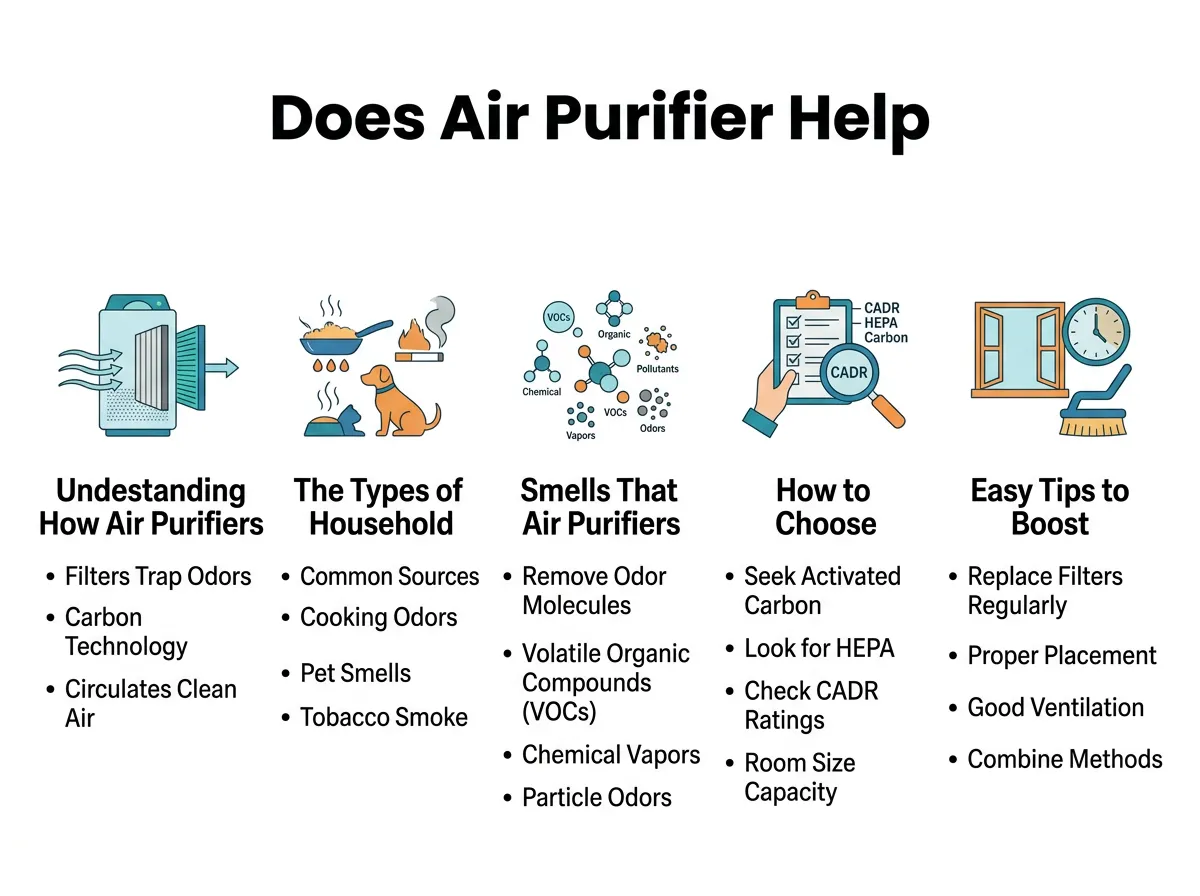
Does Air Purifier Help With Smell? — key points at a glance
Cooking Odors and Kitchen Grease
We all love a home-cooked meal, but we do not always love smelling it the next day. Frying bacon, searing steaks, or cooking curry can leave a heavy scent in the air. This happens because tiny grease droplets and food gases escape into your living space. Many people ask, does air purifier help with smell from cooking? Fortunately, yes.
A quality air purifier with a carbon filter is highly effective here. It pulls in the oily air and traps the food odors before they sink into your furniture. Many people find that running their purifier on high during and after cooking keeps their kitchen smelling neutral. To see how these devices handle different scents, you can learn more about the types of odors you can neutralize with the right setup.
Pet Smells and Litter Box Funk
Our furry friends bring us joy, but they also bring unique scents. Wet fur, kitty litter, and pet accidents can quickly compromise your indoor air quality. If you ask pet owners, does air purifier help with smell, they will likely give you a resounding yes.
An air purifier helps in two ways. First, the HEPA filter traps pet dander and hair, which carry odor-causing bacteria. Second, the carbon filter absorbs the ammonia from litter boxes and the general musk of your pets. It is a dual-action system that keeps your home smelling like humans live there, too.
Smoke, Vapes, and Wildfires
Smoke is one of the hardest smells to remove. It is made of tiny ash particles mixed with harmful chemicals and gases. Whether you are dealing with cigarette smoke, vape clouds, or seasonal wildfire smoke, the smell can make your home feel unlivable.
Fortunately, air purifiers can help with odors caused by smoke. You will need a heavy-duty carbon filter for this job. The carbon absorbs the toxic gases and chemical smells, while the HEPA filter traps the physical smoke particles. It is the best defense against stubborn smoke residue.
Smells That Air Purifiers Cannot Fix
While these machines are powerful, they are not magical. They cannot fix every odor issue in your home. It is important to have realistic expectations.
Dampness, Mold, and Mildew Issues
If your basement smells like a damp cave, you might wonder, does air purifier help with smell from damp spaces? An air purifier might help a little by catching floating mold spores, but it will not solve the root problem. Mold and mildew grow because of high humidity and water leaks. To fix this smell, you must fix the moisture issue first. You may need a dehumidifier alongside your air purifier.
Sewage and Gas Leaks
If you smell rotten eggs or sewage, do not rely on an air purifier. A rotten egg smell usually means a natural gas leak, which is highly dangerous. A sewage smell means a plumbing issue. In these cases, open your windows, leave the house, and call a professional immediately. An air purifier is meant for daily household odors, not dangerous gas leaks.
How to Choose the Best Air Purifier for Odors
If you have decided to get a device, you need to know what to look for. Not all purifiers are built for odor control. When looking at product reviews, you might ask, does air purifier help with smell if the carbon filter is thin?
Look for Pelletized Carbon Filters
When shopping, avoid purifiers that only have a thin, carbon-coated sheet. These sheets look like black sponges and only contain a tiny dusting of carbon. They will saturate quickly and stop working in a few weeks. Instead, look for a filter that contains actual pellets of activated carbon. These look like small black rocks packed into a honeycomb frame. They are heavy, thick, and can absorb odors for many months.
Pay Attention to the Clean Air Delivery Rate (CADR)
The Clean Air Delivery Rate, or CADR, tells you how fast the unit can clean the air in a room. To successfully remove smells from the air, you need a unit with a high CADR rating for gases. Make sure the model you choose is rated for the size of your room. A small purifier in a large living room will not be able to keep up with the odors.
Easy Tips to Boost Your Air Purifier’s Performance
Once you have your new machine, you can maximize its odor-fighting power with a few simple tricks.
Place It Near the Odor Source
Do not hide your air purifier in a corner behind a couch. To clear smells fast, place it close to the action. If you are frying fish, put it near the kitchen. If you have a cat, place it a few feet away from the litter box. Just make sure there is plenty of space around the unit so air can flow freely.
Keep Your Windows and Doors Closed
It might seem natural to open a window when it smells bad. However, if you are running your air purifier, keep the room sealed. Opening windows brings in outdoor air, which forces your purifier to work much harder. Let the machine clean the indoor air first.
Practice Source Control
An air purifier should be your second line of defense. A common question is: does air purifier help with smell from trash cans? Yes, but the first line of defense is always cleaning up the source. Take out the trash, wash your pet’s bedding, and wipe down your kitchen counters. Once the main source of the smell is gone, your purifier will easily clean up the remaining odor molecules lingering in the air.
Conclusion
So, does air purifier help with smell? The answer is a clear, comforting yes. As long as you choose a model with a thick, activated carbon filter, you can say goodbye to stubborn kitchen scents, pet odors, and smoke. These devices work quietly in the background, trapping gaseous molecules and leaving your home smelling clean and fresh. By combining source control with the right filtration technology, you can finally enjoy breathing easy in your own living space.
Frequently Asked Questions
Can a standard HEPA filter remove smells?
No, a standard HEPA filter cannot remove smells because it is designed to trap solid particles like dust and dander. Odors are made of tiny gas molecules that pass right through a HEPA filter. To get rid of smells, you must use an air purifier with an activated carbon filter.
How long does it take for an air purifier to get rid of a smell?
It usually takes between 30 to 60 minutes for an air purifier to noticeably reduce odors in a medium-sized room. The exact time depends on the size of your room, the strength of the smell, and the fan speed of your machine.
Do air purifiers help with wet dog and cat litter smells?
Yes, air purifiers are highly effective at reducing pet odors. The True HEPA filter captures smelly pet dander and hair, while the activated carbon filter adsorbs the gaseous odors from wet fur and litter boxes.
How often should I replace the carbon filter to keep smells away?
Most activated carbon filters need to be replaced every 6 to 12 months. If you have pets, cook often, or live with a smoker, you may need to replace the filter more frequently to maintain optimal odor removal.
Will an air purifier get rid of cigarette and wildfire smoke?
Yes, but you will need a heavy-duty air purifier with a large amount of activated carbon. The carbon filter absorbs the toxic chemical gases and strong odors, while the HEPA filter traps the physical ash and smoke particles.
Can an air purifier help with strong paint fumes?
Yes, air purifiers with thick activated carbon filters can successfully absorb Volatile Organic Compounds (VOCs) and chemical fumes from fresh paint. Running the purifier on high will help clear the chemical scent much faster.
