


To get rid of a musty smell, you must first locate and eliminate the source of excess moisture, as damp conditions encourage mold and mildew growth. Once the area is dry, clean it using natural odor-neutralizers like white vinegar and baking soda. Finally, keep the space fresh by improving airflow and using a dehumidifier to prevent the stale scent from returning.
You walk into your home after a long day, expecting a clean and cozy space. Instead, a heavy, damp, earthy odor hits you the moment you open the door. It smells like wet cardboard, dusty attics, or a pile of laundry left in the washer for too long. Instantly, your mood drops and you find yourself asking: How Do I Get Rid of Musty Smell?
This is a highly common household issue that can make even the cleanest homes feel dirty. It is an annoying problem, but it is also one you can solve. You do not need to live with this stale scent, nor do you need to spend a fortune on professional cleaning services to resolve it.
In this guide, we will look at exactly what causes these stale odors. We will show you how to hunt down the source, how to clean it up using safe and natural methods, and how to keep the air fresh. With a few simple steps, you can restore clean, breathable air to your living space.
Key Takeaways
- Find the moisture source: Musty odors are caused by mold and mildew, which cannot grow without dampness.
- Dry it out first: Always dry wet areas with fans or dehumidifiers before attempting to clean them.
- Use natural remedies: White vinegar and baking soda work incredibly well to neutralize odors without harsh chemicals.
- Wash fabrics carefully: Wash smelly clothes with vinegar on a hot cycle to break down trapped odor molecules.
- Maintain good ventilation: Keep interior doors open and run bathroom exhaust fans to keep air moving.
- Monitor indoor humidity: Keep your home’s humidity level below 50 percent to prevent mold from returning.
📑 Table of Contents
Understanding the Cause of Musty Smells
Before you start cleaning, you need to know what you are fighting. Musty smells are not just a random occurrence. They are a direct warning sign from your environment.
The Connection Between Moisture and Mold
Musty smells are almost always caused by mold, mildew, or bacteria. These tiny organisms thrive in dark, damp, and warm environments. When mold spores find a wet surface, they begin to grow and multiply. As they feed, they release gases called microbial volatile organic compounds. These gases are what actually create that signature sour scent. To learn more about this process, you can read about the common causes of a musty smell in the house and how dampness acts as the primary fuel for these odors.
Why Masking the Odor Does Not Work
Many people try to solve this problem by spraying heavy perfumes or lighting scented candles. This is a mistake. Chemical air sprays only cover up the scent for a short time. Once the artificial perfume fades, the damp smell will return. Even worse, mixing floral perfumes with musty air often creates an even weirder, more unpleasant odor. To truly answer the question of “How Do I Get Rid of Musty Smell?”, you must fix the root cause of the dampness.
Finding the Source of the Stench
Before you grab your cleaning supplies, you need to do some detective work. You cannot solve the mystery of “How Do I Get Rid of Musty Smell?” without finding the source.
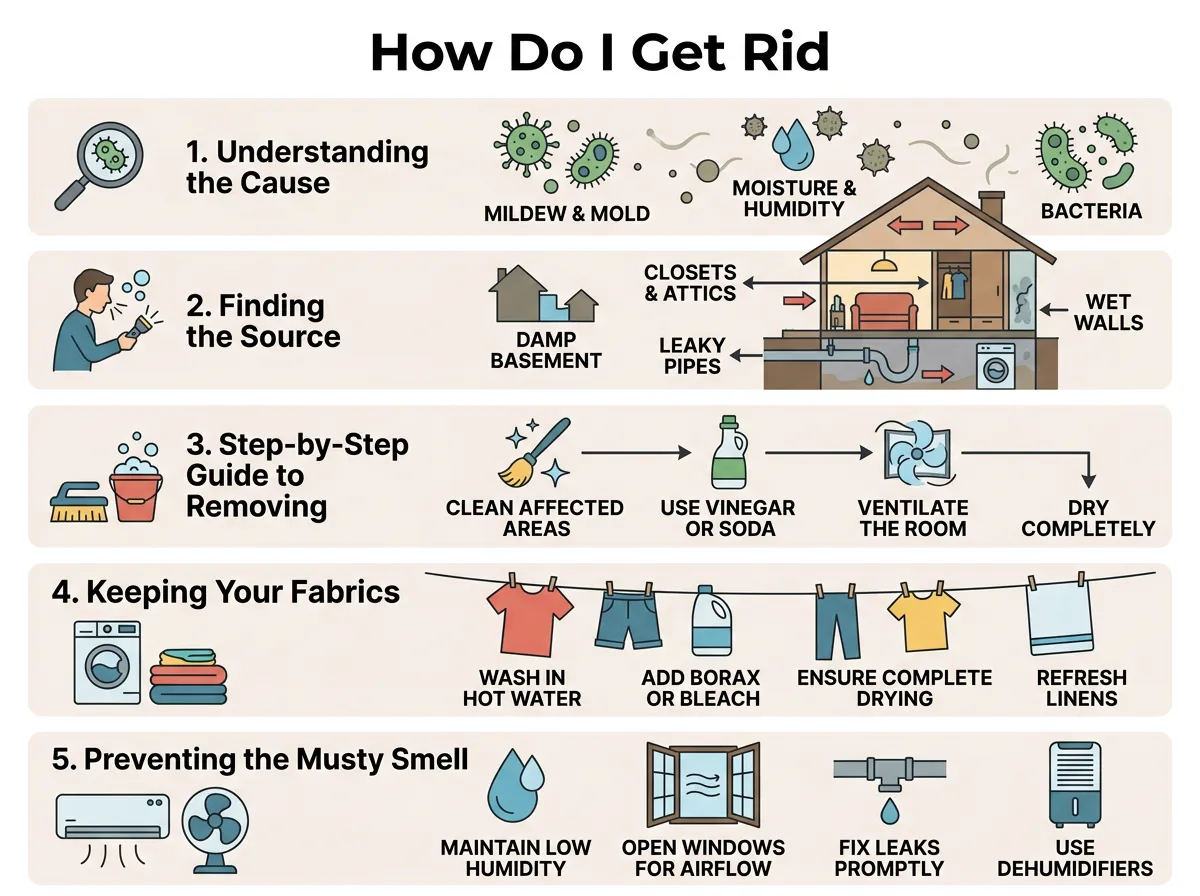
How Do I Get Rid of Musty Smell? — key points at a glance
Check Your Basements and Crawl Spaces
Basements are the number one suspect for damp odors. They are often underground, cool, and poorly ventilated. Check your basement walls for condensation or water stains. Look at the corners where walls meet the floor. Even a tiny hairline crack can let outdoor moisture seep inside, creating a breeding ground for mold.
Inspect Closets and Carpets
Closets are dark, cramped, and often lack airflow. If you hang clothes up while they are still slightly damp, mold can grow quickly. Carpets are another major culprit. Spills, pet accidents, or humid air can trap moisture deep inside carpet fibers. Walk around your rooms and sniff closer to the floor to see if your rugs are the source.
Look Inside Your Appliances
Have you checked your washing machine lately? Front-loading washing machines are famous for trapping water in their rubber door seals. This trapped water quickly turns slimy and sour. Dishwashers and refrigerators can also harbor mold behind or underneath them if there is a slow leak in the water line.
Step-by-Step Guide to Removing Musty Smells
If you are standing in a damp room wondering, “How Do I Get Rid of Musty Smell?”, do not worry. Once you locate the damp spot, it is time to take action. Follow this easy guide to clean the area and refresh your air.
Step 1: Dry Out the Space
You cannot stop the odor if the area remains wet. Open your windows to let fresh air circulate. Use box fans to blow air across wet surfaces. If you have a humid basement, run a high-quality dehumidifier. Your goal is to bring the relative humidity inside your home down below 50 percent. This stops mold from growing entirely.
Step 2: Clean with Natural Solutions
You do not need harsh chemical cleaners to get great results. In fact, natural ingredients are often safer and highly effective. White vinegar is a fantastic choice because its mild acid kills most mold species. Mix equal parts white vinegar and warm water in a spray bottle. Spray it directly onto the musty surface, let it sit for a few hours, and then wipe it clean. If you prefer to avoid harsh fumes entirely, look into how to rid musty smells naturally using simple household ingredients like baking soda and plant-based soaps.
Step 3: Absorb the Leftover Odors
After cleaning, some lingering scent might remain in the air. You can soak up these odors using cheap household pantry items. Place bowls of dry baking soda or activated charcoal in the affected rooms. These materials act like tiny magnets, pulling bad smells out of the air. Leave them out for a few days, then throw them away.
Keeping Your Fabrics and Clothes Fresh
Soft items are like sponges for bad odors. If your clothes, towels, or blankets smell like a dusty attic, normal washing might not be enough to save them.
Laundering Musty Wardrobes
If you leave clothes in the washing machine too long, they will quickly get that sour smell. To fix this, wash them again on the hottest setting allowed for the fabric. Add one cup of white vinegar to the rinse cycle instead of fabric softener. The vinegar breaks down the odor molecules. To keep your laundry smelling great daily, you can find useful advice on how to keep odours out of your clothes so they stay fresh from the closet to the street.
Revitalizing Soft Furniture
Couches and mattresses cannot go in the washing machine. For these items, start by vacuuming them thoroughly to remove dust. Next, sprinkle a generous layer of dry baking soda over the fabric. Let it sit for at least two hours, or even overnight if possible. The baking soda will draw out the moisture and odor. Finally, vacuum up the baking soda with a brush attachment.
Preventing the Musty Smell from Returning
Cleaning up the mess is great, but preventing it from coming back is even better. You do not want to keep asking, “How Do I Get Rid of Musty Smell?” every few months.
Control Indoor Humidity Levels
Keep an eye on your home’s humidity. You can buy a cheap tool called a hygrometer to measure air moisture. Keep your air conditioner running during hot, humid summer months. Always use the exhaust fans in your bathroom when showering, and leave them running for twenty minutes after you finish.
Boost Your Home’s Airflow
Still air is the friend of mold. Keep your interior doors open to let air move between rooms. Arrange your furniture so it sits a few inches away from walls. This prevents pockets of dead, damp air from forming behind your couch or bed. On dry, breezy days, open up your windows and let nature do the work for you.
Conclusion
Dealing with a damp, earthy odor in your home can feel overwhelming. However, once you know what causes it, the solution is simple. Find the source of the moisture, dry it out completely, and clean the area with natural odor-neutralizing solutions. By keeping your home dry and well-ventilated, you can enjoy clean, fresh air every single day.
Frequently Asked Questions
Why does my house smell musty but I cannot find any mold?
The mold might be hiding in places you cannot see, such as behind drywall, under carpets, or inside wall cavities. Additionally, high humidity alone can make dust mites and old building materials emit a stale, musty odor. Running a dehumidifier can often help clear this up.
Can air purifiers get rid of musty smells?
Yes, but only if they contain an activated carbon filter. True HEPA filters capture mold spores, but they do not stop odors. An activated carbon filter is necessary because it physically traps the gas molecules that cause the smell.
How long does it take for vinegar to get rid of a musty odor?
Vinegar usually neutralizes musty odors within a few hours of application. While the strong smell of vinegar will linger initially, it will dissipate completely once dry, taking the musty odor with it.
Will a dehumidifier eliminate musty smells?
A dehumidifier will stop the musty smell from getting worse by drying out the air and halting mold growth. However, you still need to clean any existing mold or mildew off surfaces to fully remove the lingering odor.
Is a musty smell harmful to my health?
The smell itself is not toxic, but it indicates the presence of mold or mildew, which can cause health issues. Inhaling mold spores can trigger allergies, coughing, sneezing, and asthma attacks in sensitive individuals.
Can I use baking soda on wood furniture to remove smells?
Yes, baking soda is safe to use on most wood furniture to absorb odors. Simply place a bowl of baking soda inside musty wooden drawers or cabinets, close them, and let it sit for a few days to absorb the scent.
