


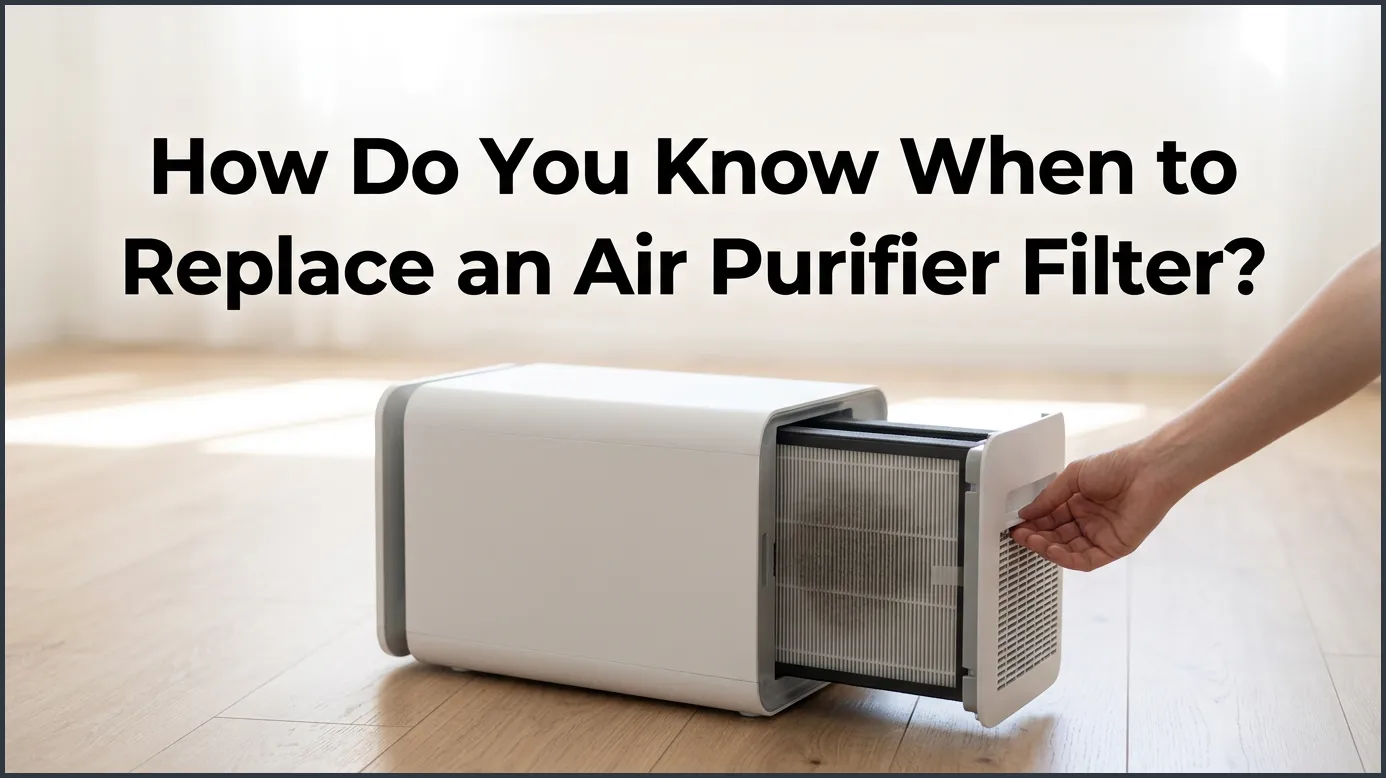
You should replace your air purifier filter every six to twelve months depending on use. Look out for warning signs like musty smells, heavy dust buildup, loud fan noises, or an active indicator light. Keeping your filter fresh ensures your indoor air stays clean and your machine runs smoothly.
Imagine sitting in your favorite chair. You take a deep breath. But instead of fresh air, you smell dust. You look over at your air purifier. It is humming away in the corner. You wonder if it is actually doing its job. This is a very common worry for many homeowners.
We buy these devices to keep our families healthy. We want clean air to breathe. Yet, we often forget about the hard work these machines do. Over time, they collect a lot of dirt, dust, and hair. Eventually, they get full. When this happens, they stop working well.
How can you tell when the time is right for a change? In this guide, we will explore the key signs of a dirty filter. We will look at how different filter types work. We will also share simple tips to keep your machine in top shape. Let us dive in and learn how to keep your home healthy.
Key Takeaways
- Check the indicator light: Most modern air purifiers have a built-in light that flashes when it is time for a change.
- Watch for physical signs: Dark, dusty, or gray filters are clear signs that a replacement is overdue.
- Notice air quality changes: An increase in dust or allergy symptoms suggests your filter has stopped working well.
- Listen to the machine: If your purifier runs louder than usual, the motor is struggling against a clogged filter.
- Follow the timeline: HEPA filters usually last 6 to 12 months, while carbon filters last 3 to 6 months.
- Smell the air: Musty or dirty odors coming from the unit mean the carbon filter is full and needs a swap.
📑 Table of Contents
The Clear Signs Your Filter Is Dirty
Your air purifier is a quiet helper. It works day and night. Because it is quiet, it is easy to forget. But your machine will show signs when it needs help. Here are the most common things to look for.
Visual Dust and Color Change
The easiest test is to use your eyes. Turn off your air purifier. Unplug it from the wall. Open the plastic cover. Pull the filter out and look at it under a bright light. A new filter is bright white. A dirty filter will look gray, brown, or black. You might see thick layers of dust and lint. If it looks dirty, it is dirty. It is time to get a new one.
Weak Air Flow
An air purifier needs to move air. It draws dirty air in. It pushes clean air out. Place your hand near the output vent. Do you feel a strong breeze? Or does the air feel very weak? When a filter is full of dust, air cannot pass through easily. This causes the airflow to drop. If you feel barely any breeze, your filter is clogged.
Strange or Loud Noises
Most air purifiers are very quiet. They make a soft, soothing hum. But a clogged filter makes the motor work twice as hard. This extra stress can cause loud noises. You might hear a high whistling sound. You might hear a rattling noise. If your machine suddenly gets loud, do not ignore it. Check the filter first.
How Do You Know When to Replace an Air Purifier Filter?
This is the big question. Every home is different. A home with three dogs will need new filters fast. A quiet home with no pets will not need them as often. So, how do you know when to replace an air purifier filter in your own home? Let us look at the best ways to tell.
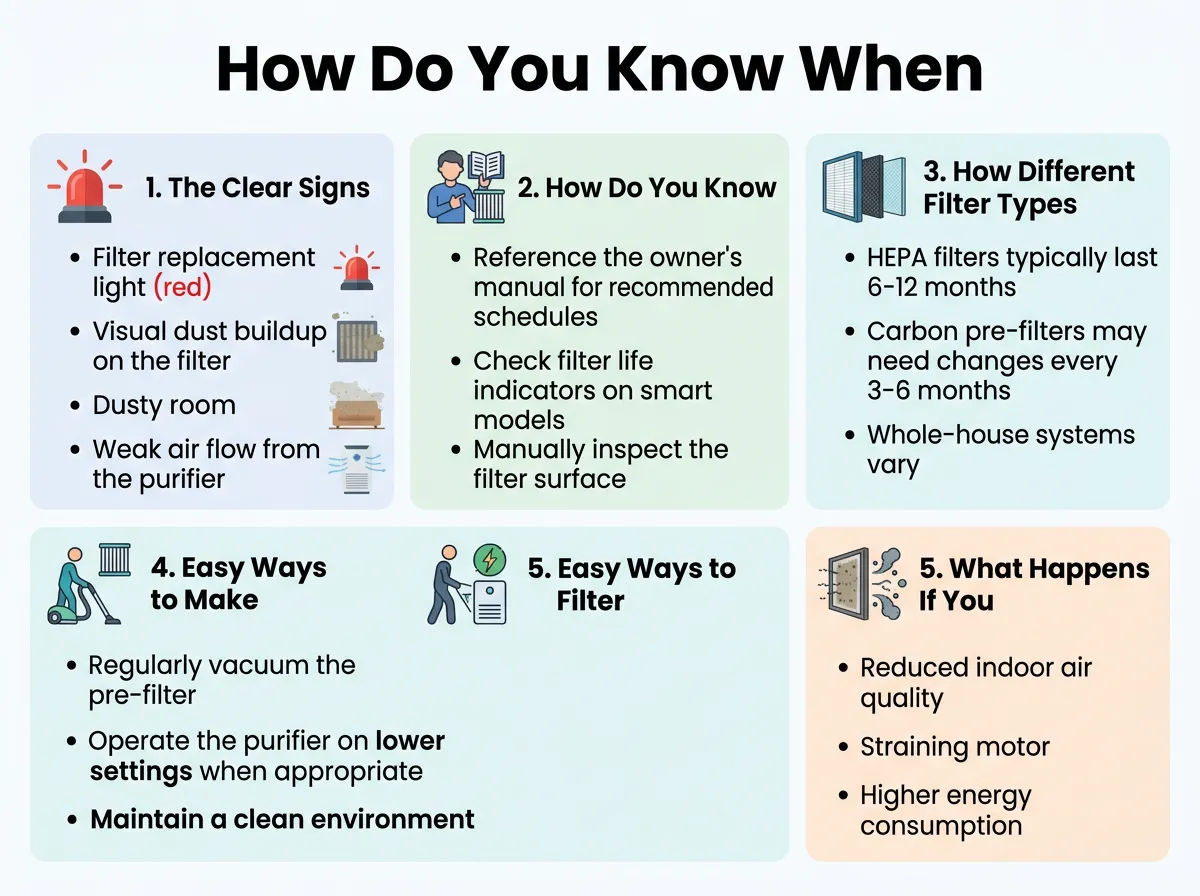
How Do You Know When to Replace an Air Purifier Filter? — key points at a glance
The Filter Indicator Light
Most modern air purifiers have a helpful light on the control panel. This light is your best friend. It will flash red, orange, or yellow when the filter is full. Some machines use simple timers. Other machines measure the actual air pressure inside. When this light turns on, it is time for action. Do not just reset the light. Buy a new filter right away.
The Smell Test
Does your living room smell stale? Do you smell old food, pet odor, or musty air? A good air purifier should remove these smells. It uses a special layer to trap odors. If you notice bad smells returning, the filter is full. It can no longer hold any more odors. A fresh filter will make your home smell clean again.
An Increase in Allergy Symptoms
Do you wake up with a stuffy nose? Do your eyes feel itchy and dry? If your allergies flare up inside, your filter may have stopped working. A clean filter traps pollen, mold spores, and dust mites. When the filter is full, these irritants stay in your air. Your body will feel the change very quickly.
How Different Filter Types Have Different Lifespans
Your air purifier might use more than one filter. Each type of filter has its own job. They also have different lifespans. Let us look at the three main types.
Pre-Filters
This is the first layer of defense. It catches big things like pet hair, lint, and large dust clumps. Many pre-filters are made of plastic mesh or foam. Many of them are washable. You can clean them with water or a vacuum every month. If yours is not washable, replace it every two to three months.
HEPA Filters
HEPA stands for High-Efficiency Particulate Air. This is the main filter. It traps tiny particles like pollen, smoke, and dust. You cannot wash a HEPA filter. Trying to wash it will ruin it. HEPA filters usually last between six and twelve months. If you live in a dusty area, you may need to swap it sooner.
Carbon Filters
These filters contain activated charcoal. Their job is to soak up smells, smoke, and chemicals. Carbon filters get full faster than HEPA filters. They usually last between three and six months. If you cook often or have pets, you will need to change them more frequently.
Easy Ways to Make Your Filter Last Longer
Buying new filters can get expensive. We all want to save money. Luckily, there are simple steps you can take to make your filters last longer. Here is what you can do.
Vacuum the Pre-Filter
If your machine has a separate pre-filter, keep it clean. Take your vacuum cleaner. Use the soft brush attachment. Gently vacuum the dust off the pre-filter once a month. This stops big dust from clogging the main HEPA filter too quickly. It keeps the whole system running smoothly.
Keep Your Home Clean
The cleaner your house, the less your purifier has to work. Dust your tables and shelves once a week. Vacuum your carpets and rugs regularly. If you have pets, brush them outside. This keeps hair and dander out of your indoor air in the first place.
Choose the Right Placement
Do not hide your air purifier in a corner. Do not block it with furniture. It needs space to draw in air. Keep it at least two feet away from walls and curtains. This allows it to pull in air from all sides. It will work better and last longer.
What Happens If You Do Not Change Your Filter?
It is easy to forget about your air purifier. We all lead busy lives. But leaving a dirty filter in your machine can cause real problems. Here is what happens.
Dirty Air in Your Home
First, your air will not be clean. A full filter cannot trap new dust. The dust will simply blow right past it. In fact, a very dirty filter can release old dust back into your room. This defeats the whole purpose of having a purifier.
Higher Electric Bills
A clogged filter blocks the flow of air. Your machine has to work much harder to pull air through the dirt. This means it uses more power. Your electricity bill will go up. Changing your filter on time actually saves you money on power.
A Broken Motor
If the motor works too hard for too long, it will burn out. It will get too hot and break. You might have to buy a whole new air purifier. A new filter is much cheaper than buying a brand-new machine.
The Final Verdict on Filter Replacement
Keeping your air clean is easy when you know the steps. Check your filter once a month. Listen to the sound of the fan. Watch for the red light on top. When you ask yourself, how do you know when to replace an air purifier filter, just remember to watch for these simple signs. By taking care of your air purifier, you take care of your health. Your home will smell fresh. Your family will breathe easy. Make filter changes a regular part of your home care routine today.
Frequently Asked Questions
Can you wash a HEPA air purifier filter?
No, you should never wash a HEPA filter with water. Water will damage the delicate fibers and ruin the filter. Instead, you must replace it with a new one when it gets dirty.
How often should I change my filter if I have pets?
If you have pets, you should change your filter every three to six months. Pet hair and dander clog filters much faster than normal dust. Keeping a clean filter will also help get rid of strong pet odors.
What happens if I run an air purifier with a dirty filter?
Running a dirty filter will reduce the air quality in your home. It also makes the motor work harder, which raises your energy bill. Over time, this extra strain can cause the motor to burn out completely.
Can I just vacuum my HEPA filter instead of replacing it?
You should not vacuum a HEPA filter because the strong suction can tear the delicate material. Vacuuming only removes surface dust but does not clear the trapped particles inside. The only safe way to restore performance is to replace the filter.
Why does my brand-new filter smell strange?
Some new filters have a slight plastic smell when you first open them. This is normal and usually goes away after running the machine for a few hours. If the smell lasts longer, check to see if you forgot to remove the plastic wrap.
How do I reset the filter light on my air purifier?
Most air purifiers do not reset the light automatically when you put in a new filter. You usually have to press and hold the filter button for three to five seconds. Check your machine’s manual for the exact steps for your model.
