


To find out how many air purifiers you need, you must look at your home layout, the size of your rooms, and your air quality needs. For most homes, placing one air purifier in each high-traffic area, such as your bedroom and living room, works best. If you have a large open-concept space, you may need a single high-capacity unit or multiple smaller units.
Imagine walking into your home and taking a deep, clean breath. There are no dust bunnies floating in the air. There are no lingering smells from last night’s dinner. You do not feel a tickle in your throat from pet dander. It sounds like a dream, does it not? Many of us buy air purifiers to turn this dream into a reality. But once you start shopping, a big question pops up. You might sit on your couch, look around, and ask: “How many air purifiers do I need?”
You are not alone in asking this. It is one of the most common questions for new buyers. If you buy too few, you will still sneeze. If you buy too many, your energy bill will soar. Finding the sweet spot is key to clean air and a happy wallet. You want a setup that works without wasting your hard-earned cash.
In this guide, we will break down the science of clean air. We will look at room sizes, home layouts, and special needs. We will also share simple tips to help you choose. By the end, you will know exactly how to set up your home for clean, fresh air.
Key Takeaways
- One Per Room: Most standard air purifiers can only clean the air in a single closed room.
- Measure Your Space: Always check the square footage of your room before buying a machine.
- Look for CADR: The Clean Air Delivery Rate tells you how fast a unit cleans the air.
- Prioritize Bedrooms: Place your first air purifiers where you spend the most time, like bedrooms.
- Consider Layouts: Open floor plans might need larger units or two smaller ones to work well.
- Air Changes Per Hour: Aim for a unit that can clean your room’s air at least four times per hour.
📑 Table of Contents
Understanding How Air Purifiers Work
To know how many units you need, you must know how they work. These machines do not work like whole-house AC units. They are much more local in how they clean.
Airflow and Walls
Air purifiers work by pulling dirty air in and pushing clean air out. They use fans to do this. But air does not move through walls easily. A wall blocks the flow of air. Even a wide doorway can slow down the air cleaning process. This means a single unit cannot clean your entire house. The clean air stays in one room. The dirty air stays in the other rooms.
Square Footage Basics
Every air purifier has a limit. This limit is based on square footage. When you look at a box, you will see a room size rating. This rating assumes the room is a simple, closed box. It does not account for hallways or L-shaped rooms. To make the right choice, you should read a detailed air purifiers buying guide to understand these basic ratings.
The Golden Rule: One Room, One Purifier
Many people think they can buy one huge machine for the whole house. They think leaving the doors open will let clean air drift into other rooms. Sadly, this is not how air physics works. You must follow the golden rule of home air care.
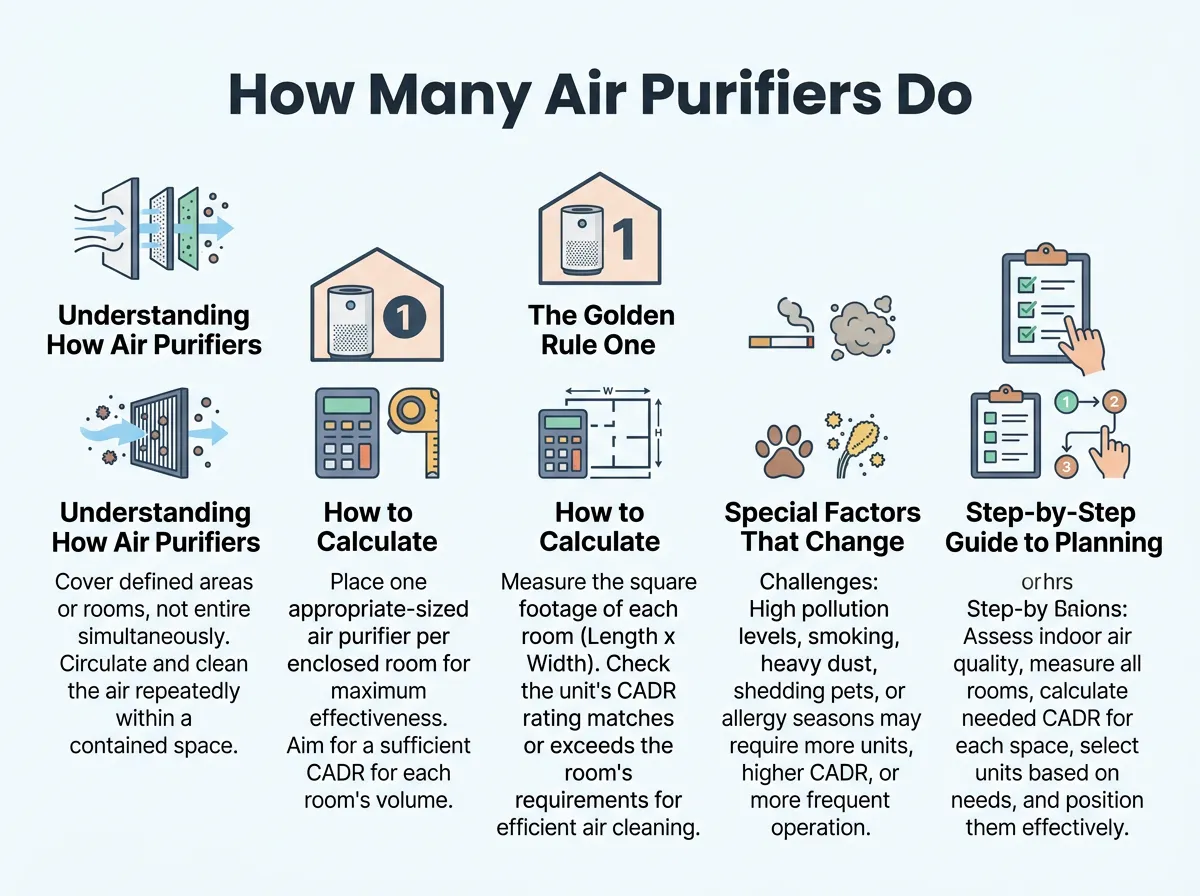
How Many Air Purifiers Do I Need? — key points at a glance
Why Open Doors Do Not Help Much
When you leave a bedroom door open, some air does move. But the exchange rate is very slow. The air purifier in your living room will keep cleaning the living room air over and over. It will barely touch the air in your back bedroom. If you want clean air in your bedroom, you need a machine in that room. One machine cannot be in two places at once.
The Best Spots to Place Them
If you can only buy one or two units, you must choose their spots wisely. Focus on where you spend the most time. For most people, this is the bedroom. You sleep for seven to eight hours a night. Breathing clean air during sleep is vital for your health. The second best spot is the living room. This is where your family gathers. You can learn more about where to put an air purifier to get the best results.
How to Calculate Your Needs Based on Room Size
When you ask yourself, “How many air purifiers do I need?”, you are asking a math question. Do not worry, because the math is very simple. Anyone can do it with a basic calculator.
Measuring Your Space
First, grab a tape measure. Measure the length and width of each room. Multiply these two numbers to get the square footage. For example, a room that is 10 feet wide and 12 feet long is 120 square feet. Once you have this number, you can match it to the machine’s capacity. You can find helpful tips on determining the right air purifier capacity for your specific room dimensions.
Understanding CADR Ratings
CADR stands for Clean Air Delivery Rate. It measures how fast a unit cleans dust, pollen, and smoke. A higher CADR means faster cleaning. As a rule of thumb, look for a CADR that is at least two-thirds of your room’s square footage. If your room is 120 square feet, look for a CADR of 80 or higher. If you have high ceilings, you should get a unit with an even higher CADR. High ceilings mean there is more air in the room to clean.
Special Factors That Change the Equation
Not all homes are the exact same. Some situations require more power. When asking “How many air purifiers do I need?”, you must look at your daily lifestyle.
Pets and Allergies
Do you have dogs or cats? Pet hair and dander float in the air. If you suffer from bad allergies, you need more help. In these cases, you might want to upsize your unit. Buy a machine rated for a larger room than yours. This ensures the air stays clean even during high-allergy seasons. It helps the machine keep up with the constant pet hair.
Smoking or Wildfire Smoke
Smoke is very hard to clear from a room. If someone smokes inside, or if you live in a wildfire zone, you need serious power. You may need to run multiple units in one room to keep the air safe. A HEPA filter with a thick carbon layer is a must for these situations. Carbon is the only thing that removes smoke smells and chemicals.
High Ceilings and Open Lofts
Do you live in a modern home with high ceilings? Standard room size ratings assume an 8-foot ceiling. If your ceilings are 10 or 12 feet high, you have more air volume. You will need a stronger purifier to handle this extra air. Treat a room with high ceilings as if it were 25% larger than its floor size.
Step-by-Step Guide to Planning Your Home Setup
Now let us plan your home layout. How do we answer “How many air purifiers do I need?” for different types of spaces? Let us look at three common examples.
Small One-Bedroom Apartment
In a small apartment, you might only need two units. Put one small unit in your bedroom. Put a medium-sized unit in the main living and kitchen area. This setup keeps the air fresh where you sleep and where you cook. It is simple, cheap, and very effective.
Open-Concept Living Area
Open floor plans are beautiful, but they are hard to clean. If your kitchen, dining room, and living room are all one big space, you have two choices. You can buy one extra-large air purifier. Or, you can buy two medium units and place them at opposite ends of the room. Two units often work better because they create better air circulation.
Large Multi-Story House
For a big house, the planning gets a bit more complex. You cannot easily move machines up and down stairs. A good approach is to treat each floor as a separate zone. For a three-bedroom, two-story house, you might need four to five units. This includes one for each occupied bedroom and one or two for the downstairs living spaces. To help plan your budget, you can read about how to map out how many air purifiers do I need for a larger property.
Simple Tips to Get the Most from Your Units
Once you have your units, you want them to run well. Here are some simple tips to keep your air fresh.
Keep Windows and Doors Closed
Think of your air purifier like an air conditioner. You would not run the AC with the windows open. The same goes for your purifier. Keep windows closed so the machine does not have to clean the whole outdoors. It saves energy and keeps your filters clean longer.
Change Filters Regularly
A dirty filter cannot do its job. Check your filters every few months. Replace them as the maker suggests. This keeps your machines running well. It also keeps your electricity bills low.
Conclusion
Finding the answer to “How many air purifiers do I need?” does not have to be hard. Start by looking at your rooms. Remember the rule of one unit per room for the best results. Focus on your bedrooms first, then move to your living spaces. Measure your rooms and match them to the right CADR ratings. By taking these simple steps, you will create a fresh, clean, and healthy home for you and your family. Enjoy the fresh air!
Frequently Asked Questions
Can one air purifier clean my whole house?
No, a single air purifier cannot clean an entire house because walls and doors block airflow. Clean air cannot easily travel from room to room. For the best results, you need a separate unit for each room you want to clean.
Where is the best place to put an air purifier?
The best place to put your air purifier is in your bedroom since you spend many hours sleeping there. The second best spot is your living room or family room where your family gathers. Keep the unit away from walls and furniture so air can flow freely around it.
Do I need an air purifier in every room?
You do not need a unit in every single room of your house. Focus on the rooms where you spend the most time, like bedrooms and the living room. Rooms like bathrooms, hallways, and guest rooms usually do not need their own units.
Can I move my air purifier from room to room?
Yes, you can move a light unit between rooms, like placing it in the living room by day and the bedroom by night. However, this can be tiring and means the air is only cleaned when the unit is in that room. Having dedicated units in each main room is much more effective.
Should I leave my air purifier on all day?
Yes, you should leave your air purifier running 24/7 for the cleanest air. Most modern units are designed to run constantly on low speed without using much electricity. This prevents dust and allergens from building up in your home.
How do I know what size air purifier to buy?
To choose the right size, measure the square footage of your room by multiplying its length by its width. Then, look for an air purifier with a recommended room size that matches or exceeds your room’s measurements. If you have pets or allergies, choose a unit rated for a slightly larger space.
