


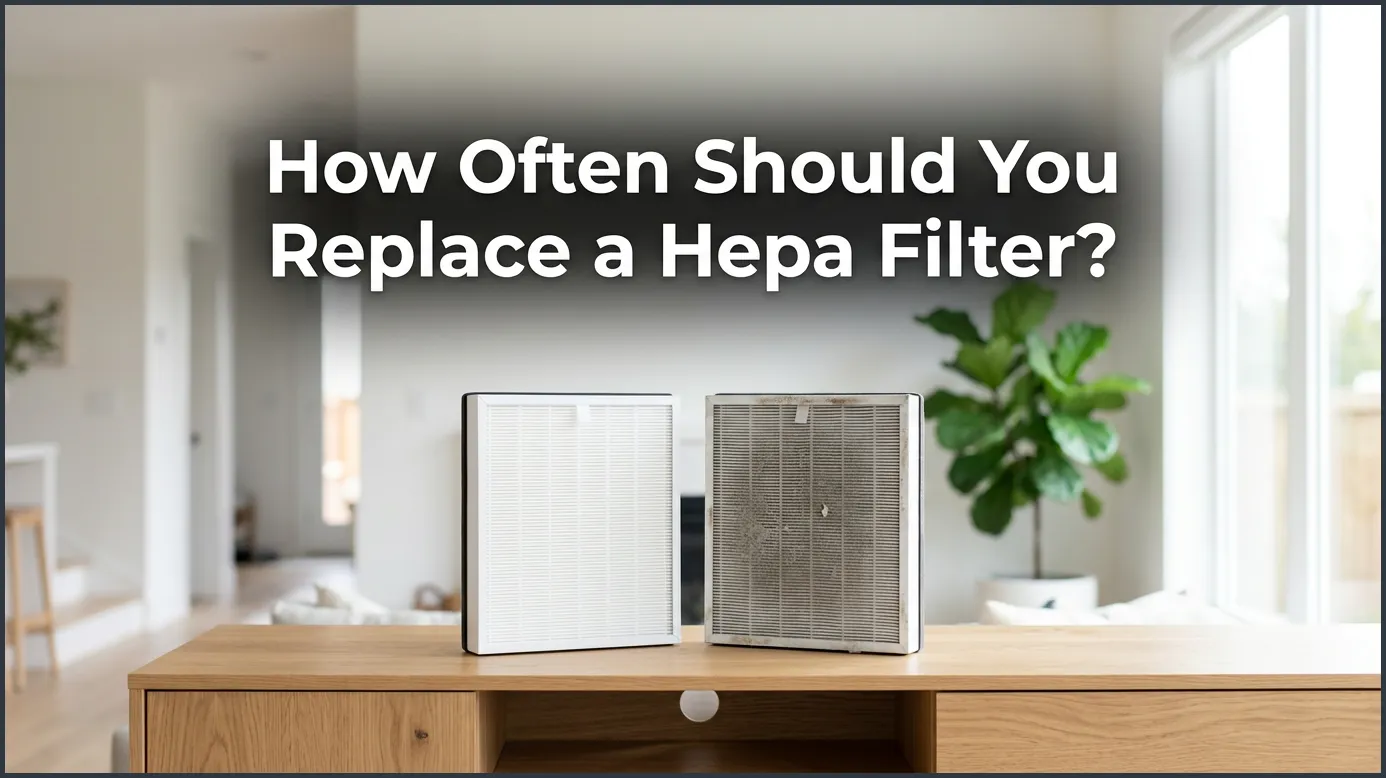
Generally, you should replace a residential HEPA filter every 6 to 12 months depending on usage, air quality, and the manufacturer’s guidelines. For commercial settings or homes with heavy pet dander and allergies, replacements may be needed as often as every 3 to 6 months. Regular maintenance, such as cleaning pre-filters, can help ensure your device continues to run efficiently and keep your indoor air clean.
Imagine walking into your home after a long day. You take a deep breath, expecting a wave of fresh, clean air. Instead, you instantly sneeze. You look over at your air purifier sitting in the corner of the room. It is running, but it seems a bit louder than usual. You realize you cannot remember the last time you checked or changed its filter.
This is a highly common story for many of us. We buy air purifiers to keep our families safe and our homes smelling clean. However, we often forget the basic maintenance that these machines require. Knowing how to care for your unit keeps your air fresh and your energy bills low.
The heart of any high-quality air purifier is its filter. But how often should you replace a HEPA filter to keep it working at its best? In this guide, we will break down everything you need to know. We will look at general timelines, key warning signs, and factors that change how fast your filter gets dirty. Plus, you will learn a few easy tricks to make your filter last longer. Let’s dive in!
Key Takeaways
- Standard Timeline: Most residential HEPA filters should be replaced every 6 to 12 months.
- Pet Owners & Allergies: Homes with pets or severe allergy sufferers may need changes every 3 to 6 months.
- Visual Warning Signs: A filter that has turned dark grey or black needs immediate replacement.
- Pre-Filter Maintenance: Regularly cleaning your unit’s pre-filter can significantly extend the life of the main HEPA filter.
- Avoid Water: Standard HEPA filters are not washable and will be ruined if they get wet.
📑 Table of Contents
What is a HEPA Filter and How Does It Work?
Before we talk about timelines, it helps to understand what a HEPA filter actually does. HEPA stands for High-Efficiency Particulate Air. These filters are made of a very fine, dense web of glass fibers. They are designed to trap tiny particles that other filters simply miss.
The Power of 99.97% Efficiency
A true HEPA filter can trap 99.97% of airborne particles that are 0.3 microns in size. To put that in perspective, a single human hair is about 70 microns wide. This means a HEPA filter easily catches pet dander, mold spores, pollen, dust, and even some bacteria and viruses. It is an incredibly powerful tool for keeping your indoor environment clean.
Why They Eventually Need Replacing
As the filter does its job, it acts like a sticky net. Over time, those tiny glass fibers get covered in dust, hair, and debris. When the spaces between the fibers clog up, air has a hard time passing through. Your machine has to work much harder to pull air through the clogged filter. This can reduce the air quality in your home and wear out your device’s motor. This is why keeping an eye on your filter is so important.
General Guidelines for HEPA Filter Replacement
So, what is the golden rule for swapping out your filter? When asking yourself how often should you replace a HEPA filter, the standard answer is every 6 to 12 months. However, this is a broad estimate. The exact timeline depends heavily on the specific machine you use and where it is located.
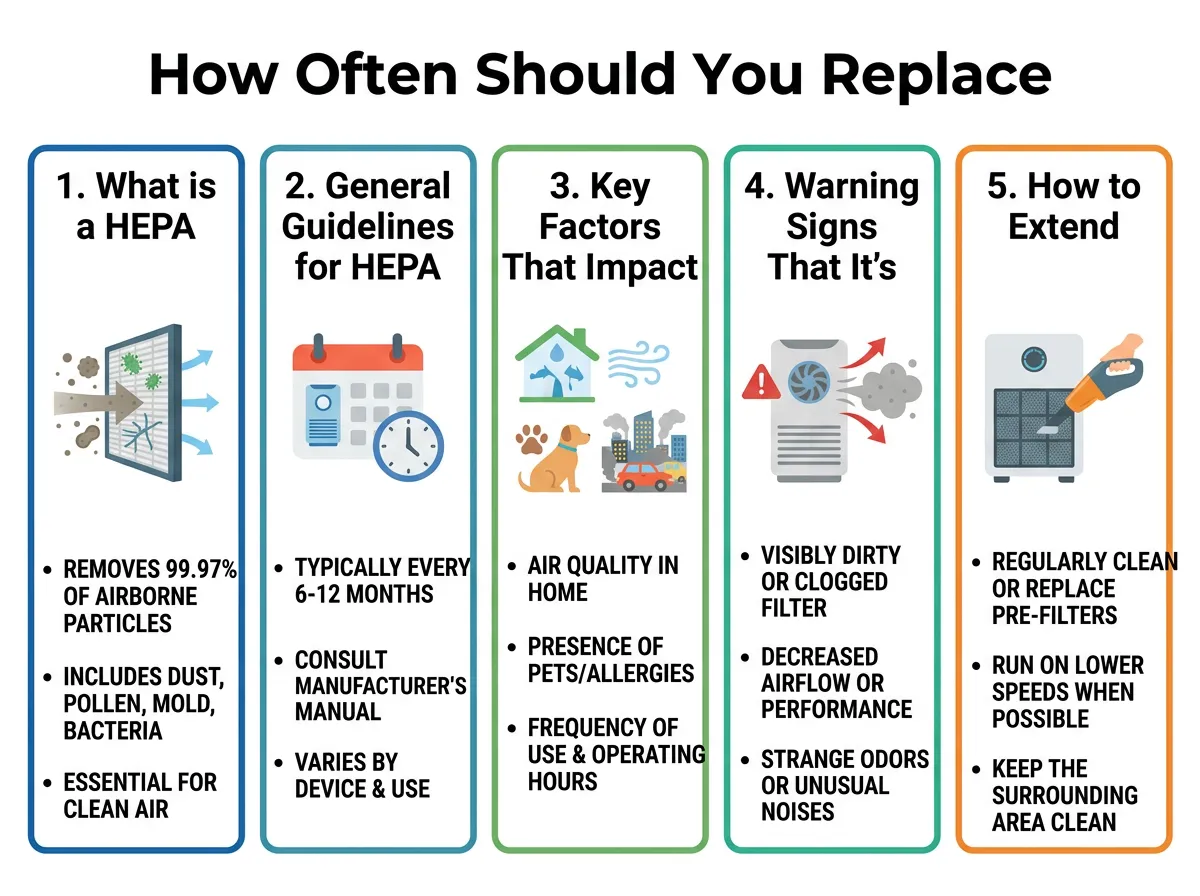
How Often Should You Replace a HEPA Filter? — key points at a glance
Residential Air Purifiers
For standard home air purifiers, a 6 to 12-month window is highly common. Some advanced models with large filters can last up to 2 years under perfect conditions. Always check your user manual first, as it gives the best baseline for your specific model.
Vacuums and HVAC Systems
Did you know many modern vacuum cleaners also use HEPA filters? Because vacuums only run for short periods, their filters last longer. You can usually replace a vacuum’s HEPA filter every 12 months. For central HVAC systems that use HEPA-grade filtration, you should check them every 3 to 6 months. These systems move a massive volume of air through your entire house daily.
Commercial vs. Home Standards
In offices, schools, or laboratories, clean air is critical. In these settings, rules are much stricter. According to professional HEPA filter replacement guidelines, industrial filters may need replacement every few months to maintain strict safety standards. For your home, you do not need to be quite as strict, but staying consistent is key.
Key Factors That Impact the Lifespan of Your Filter
Not all homes are the same. A filter in a quiet, single-person apartment will last much longer than one in a bustling family home. Let’s look at the main factors that change how often you need to replace your filter.
Pets and Dander
We love our furry friends, but they are tough on air filters. Dogs and cats constantly shed hair and dander. This heavy debris can clog up a filter very quickly. If you have multiple pets, you might need to change your filter every 3 to 6 months to keep up with the extra load.
Smoking and Cooking
Tobacco smoke, wood smoke from fireplaces, and cooking grease release tiny particles into the air. These particles are very sticky and can coat the delicate fibers of your HEPA filter. This dramatically shortens its life. If anyone smokes indoors, expect to change your filter twice as often.
Location and Outdoor Air Quality
Your local environment plays a huge role. If you live near a busy highway, a construction site, or in an area prone to wildfires, your indoor air will have more fine dust. In these situations, your filter works overtime. To keep your air fresh during wildfire season, review the recommended air purifier filter change schedules to avoid breathing in dangerous soot.
Warning Signs That It’s Time for a New Filter
What if you forget when you bought your last filter? Luckily, your filter and your air purifier will tell you when they need help. Here are the most common signs to watch for:
The Visual Test
The easiest way to check your filter is to look at it. A brand-new HEPA filter is usually bright white. Open your device and pull the filter out. If it looks dark grey, black, or covered in a thick layer of dust, it is time for a new one. Do not wait for the calendar if it looks visibly dirty.
Reduced Airflow
Put your hand near the air output of your purifier. Is the breeze strong, or does it feel like a gentle whisper? When a filter is clogged, air cannot pass through easily. If the airflow feels weak even on the highest speed setting, your filter is likely full.
Unpleasant Odors
An air purifier should make your home smell clean and fresh. If you notice a musty, dusty, or sour smell coming from the unit, the filter is struggling. This odor often means that mold, bacteria, or old dust has built up inside the filter fibers.
Worsening Allergies
If you or your family members start sneezing, coughing, or experiencing itchy eyes inside the house, your filter may have stopped doing its job. A fresh filter will quickly lower these symptoms by trapping those irritating allergens again.
How to Extend the Life of Your HEPA Filter
Buying replacement filters can get expensive. Fortunately, there are a few simple habits you can build to help your filters last as long as possible.
Use a Pre-Filter
Most modern air purifiers use a multi-stage filtration system. This system includes a pre-filter, which sits in front of the HEPA filter. The pre-filter catches large particles like hair and big dust bunnies. By stopping these large items, it saves the delicate HEPA filter for the tiny particles.
Many pre-filters are washable or vacuum-friendly. Cleaning your pre-filter every 2 to 4 weeks can add months to the life of your HEPA filter. For more practical advice on maintaining your system, check out this helpful filter replacement guide.
Keep Your Home Clean
The less dust in your home, the less work your filter has to do. Regular vacuuming, dusting, and sweeping will keep the overall dust levels down. This simple chore reduces the workload on your air purifier.
Avoid Wet Environments
HEPA filters do not like moisture. If you run your air purifier in a very damp bathroom or right next to a humidifier, the filter fibers can get damp. This can lead to mold growth on the filter itself, which ruins it immediately. Keep your air purifier in dry, well-ventilated areas.
Never Wash a Standard HEPA Filter
Unless your filter is explicitly labeled as “washable,” never get it wet. Water will damage the delicate weave of glass fibers. Even if it looks clean after washing, the microscopic holes will stretch out, making the filter useless.
Conclusion
Taking care of your air purifier is one of the best ways to protect your health and keep your home cozy. So, how often should you replace a HEPA filter? For most homes, the sweet spot is once every 6 to 12 months. Just remember to adjust this timeline if you have pets, live in a dusty area, or deal with seasonal allergies. By keeping an eye out for visual cues, weak airflow, and strange odors, you can easily stay on top of your home’s air quality. Check your filter today and enjoy the fresh, clean air you deserve!
Frequently Asked Questions
Can I wash a HEPA filter to reuse it?
Generally, no. Most HEPA filters are not washable and will be ruined if they get wet. Only wash a filter if the manufacturer explicitly labels it as “washable” or “permanent.”
What happens if I don’t change my HEPA filter?
If you do not change it, the filter will clog with dirt and dust. This reduces airflow, strains the motor, and lets pollutants circulate back into your room.
How do I know if my HEPA filter is dirty?
You can tell by looking for a dark grey or black color, noticing reduced airflow, or smelling musty odors. Many modern purifiers also have an indicator light that turns on when it is time for a change.
Can a dirty HEPA filter make you sick?
Yes, a clogged filter cannot trap allergens, dust, or mold properly. This can trigger sneezing, coughing, asthma attacks, and other respiratory issues for people inside the home.
Do HEPA filters expire if they are not used?
Unused HEPA filters do not expire as long as they are kept dry and sealed in their original packaging. Keep them away from high moisture and dust during storage.
How long does a HEPA vacuum filter last?
A vacuum’s HEPA filter typically lasts about 12 months with normal home use. You should check it every few months and tap off any loose dust to keep it clean.
