


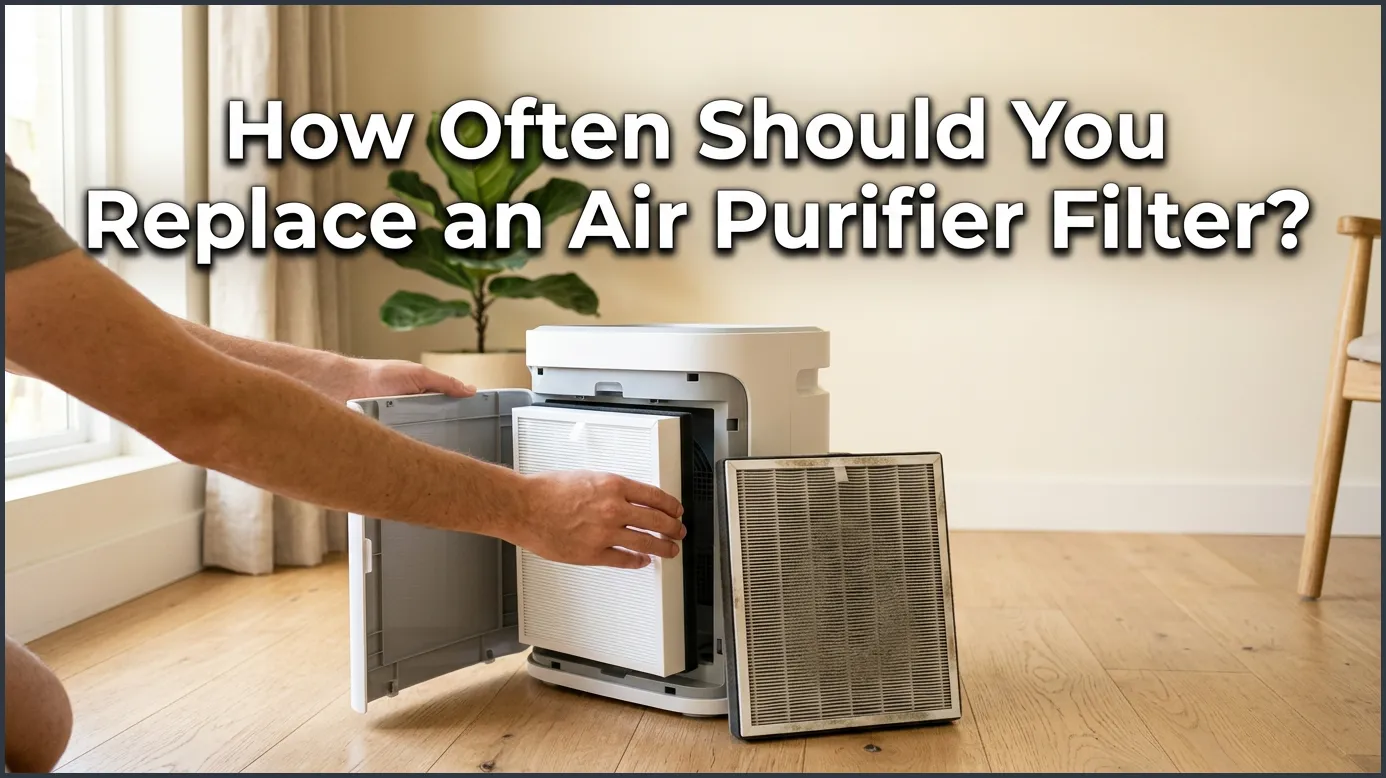
Most HEPA filters need replacement every 6 to 12 months, while carbon filters last 3 to 6 months. Pre-filters should be cleaned or replaced every 2 to 4 weeks to maintain peak efficiency. Always check your manufacturer’s guide and monitor your indoor air quality for the best results.
Imagine walking into your home after a long, tiring day. You expect a breath of fresh, clean air. Instead, your throat feels scratchy, and you notice a thin layer of dust settling on your favorite coffee table. You look over at your trusty air purifier humming quietly in the corner. You bought it to keep your home healthy, but lately, it feels like it is not doing its job anymore.
This common scenario leaves many homeowners wondering about their machine’s maintenance. Specifically, how often should you replace an air purifier filter? It is a simple question, but the answer can vary wildly based on several factors. If you let a filter go too long, you are just spinning your wheels and wasting electricity.
In this complete guide, we will break down the lifespans of different filter types. We will explore the everyday things that cause your filters to clog quickly. You will also learn practical signs that tell you it is time for a change and how to keep your machine running like new. Let us dive in and clear the air!
Key Takeaways
- HEPA Filter Lifespan: Most standard True HEPA filters need to be replaced every 6 to 12 months.
- Carbon Filter Needs: Activated carbon filters, which absorb odors and gases, should be changed every 3 to 6 months.
- Pre-Filter Cleaning: Regular cleaning of the pre-filter every 2 to 4 weeks extends the life of internal filters.
- Environmental Factors: Homes with pets, smokers, or high outdoor pollution require more frequent filter changes.
- Performance Clues: Reduced airflow, musty odors, and unusual noise are clear signs your filter is full.
- Energy Efficiency: Replacing clogged filters reduces the strain on the motor, lowering your energy bills.
📑 Table of Contents
Understanding Your Air Purifier Filters
Before we can answer how often should you replace an air purifier filter, we must look inside the machine. Most modern purifiers do not rely on just one single filter. Instead, they use a multi-stage system to trap different types of particles. Each layer has its own unique job and lifespan.
Pre-Filters
The pre-filter is your machine’s first line of defense. It captures large particles like pet hair, dust bunnies, and lint. By stopping these giant particles early, it protects the delicate filters inside. Most pre-filters are washable or vacuumable. Because they take the heaviest beating, you should clean or replace them every 2 to 4 weeks.
True HEPA Filters
High-Efficiency Particulate Air (HEPA) filters are the heart of your purifier. They trap microscopic particles as small as 0.3 microns. This includes pollen, mold spores, bacteria, and fine dust. Since they trap such tiny particles, they eventually get clogged. Standard guidelines suggest replacing your HEPA filter every 6 to 12 months.
Activated Carbon Filters
Carbon filters have a special job. They do not trap dust. Instead, they absorb odors, smoke, gases, and volatile organic compounds (VOCs). The porous carbon acts like a sponge for smells. Once the pores are full, the filter stops working. To keep your home smelling fresh, you usually need to replace these every 3 to 6 months.
Key Factors That Impact Filter Lifespan
No two homes are exactly alike. Because of this, standard manufacturer estimates do not always fit your specific situation. Several daily factors will determine how often should you replace an air purifier filter in your living space. You can learn more about these variables on the Alen filter usage guide to see how different environments affect performance.
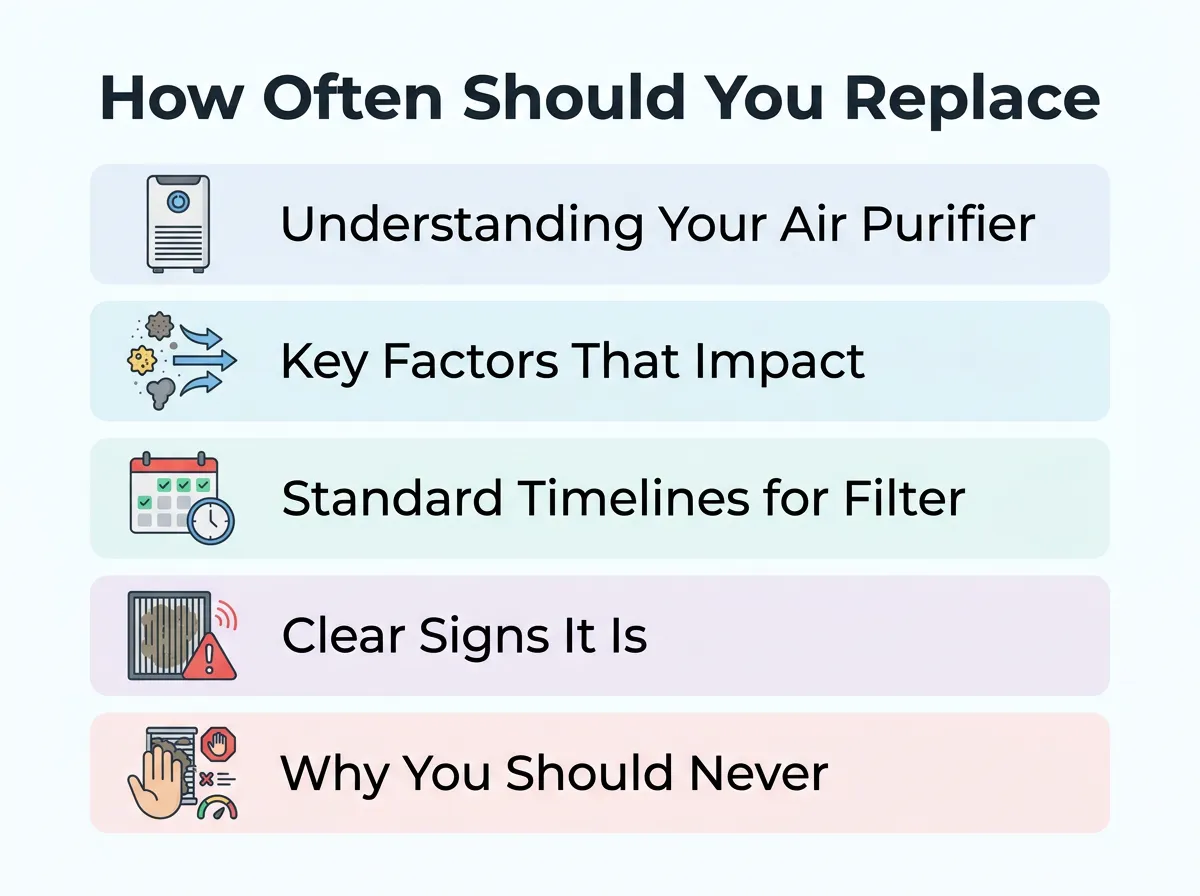
How Often Should You Replace an Air Purifier Filter? — key points at a glance
Air Quality in Your Area
Do you live near a busy highway, a construction site, or in an area prone to seasonal wildfires? High outdoor pollution levels will find their way inside your home. If your local air quality is poor, your air purifier has to work twice as hard. This means your filters will clog much faster than average.
Pets and Smoking
We love our furry friends, but they shed dander and hair constantly. If you have multiple pets, your pre-filter and HEPA filter will fill up quickly. Similarly, tobacco or wood smoke contains tiny, sticky particles. This smoke will coat your filters and saturate carbon layers in a matter of weeks.
Daily Run Time
Do you leave your air purifier running 24/7, or do you only turn it on for an hour before bed? The simple math of air volume matters. The more air that passes through the filter, the faster it collects debris. If your machine runs constantly, expect to change the filter on the shorter end of the recommended timeline.
Standard Timelines for Filter Replacement
To keep things simple, let us look at the general industry standards. When researching how often should you replace an air purifier filter, you will find that having a baseline helps you plan your maintenance budget. Many manufacturers share similar timelines for their parts. For a deep dive into specific brand expectations, you can check out the Hunter Pure Air filter replacement guide.
Here is a quick reference list of average lifespans:
- Pre-filters (washable): Clean every 2-4 weeks; replace only if damaged.
- Pre-filters (disposable): Replace every 2-3 months.
- True HEPA filters: Replace every 6-12 months.
- Activated carbon filters: Replace every 3-6 months.
- Permanent filters: Clean every 3-6 months; replace every 3-5 years.
Clear Signs It Is Time for a Change
What if you lose track of the calendar? Do not worry. Your air purifier and your home will give you clear clues when the filter is full. You just need to know what to look for.
The Indicator Light Turns On
Most modern air purifiers have a filter reset light. This light is usually based on a timer that counts the hours of operation. When the timer hits a limit, the light flashes. While this is a great reminder, do not rely on it blindly. If your home has heavy dust or pets, you might need to change the filter before the light comes on.
Visible Dust and Discoloration
Take a moment to open up your machine and look at the filter. A brand-new HEPA filter is bright white. A fully clogged filter will look dark grey, black, or covered in a thick layer of dust. If it looks dirty, it is dirty. It is time to swap it out for a fresh one.
Reduced Airflow and Increased Noise
When a filter is packed with dirt, the fan has to work much harder to pull air through the tiny pores. You might notice that the airflow coming out of the top of the machine feels weak. You might also hear the motor straining or running louder than usual.
Return of Odors and Allergies
Are you starting to sneeze more often in the morning? Do cooking smells linger in the kitchen for hours? This is a major clue. When your filters are full, they can no longer trap allergens or absorb odors. Your indoor air quality will quickly decline.
Why You Should Never Skip Filter Replacements
Understanding how often should you replace an air purifier filter is about more than just clean air; it is also about efficiency. It can be tempting to delay buying a new filter to save a few dollars. However, skipping this vital step can cost you more money and hassle in the long run. Keeping up with replacements offers several massive benefits.
Protect Your Health
The main reason you bought an air purifier was to breathe cleaner air. A clogged filter simply lets dust, pollen, and mold circulate back into your rooms. By changing your filter on time, you protect your lungs and reduce allergy symptoms.
Save Energy and Protect Your Machine
A clogged filter blocks airflow. This forces your purifier’s motor to work overtime. This extra strain uses more electricity, raising your monthly power bills. Over time, the overworked motor can overheat and burn out completely. According to the Dyson filter replacement benefits guide, timely changes keep your machine running efficiently and protect your investment.
Simple Tips to Extend Filter Life
While you cannot keep a filter forever, you can take simple steps to make it last as long as possible. This helps you get the most value out of every purchase.
Keep Your Home Clean
An air purifier should not replace your regular cleaning routine. Vacuum your carpets, dust your shelves, and sweep your floors weekly. The less dust floating around your rooms, the less your purifier has to capture.
Place Your Purifier Wisely
Give your machine some breathing room. Keep it at least one foot away from walls and furniture. This allows for 360-degree airflow and prevents the machine from working harder than necessary. Avoid placing it in extremely dusty corners.
Vacuum the Pre-Filter
If your machine has a separate pre-filter, vacuum it regularly. Gently running a vacuum brush attachment over the outer screen once a month removes loose hair and dust. This keeps air flowing smoothly to the HEPA filter inside.
Conclusion
Taking care of your indoor air is one of the best things you can do for your health. Knowing how often should you replace an air purifier filter is the key to success. By keeping an eye on the calendar, watching for signs of wear, and doing basic maintenance, you can ensure your home remains a clean haven. Do not wait for your allergies to flare up. Check your air purifier filter today and give your machine the fresh start it deserves!
Frequently Asked Questions
Can I wash a HEPA filter to reuse it?
No, standard True HEPA filters cannot be washed. Wetting them will destroy the delicate fibers and ruin their ability to trap microscopic particles. You must replace them with a new filter once they are dirty.
What happens if I do not change my air purifier filter?
If you do not change your filter, it will become completely clogged and stop cleaning the air. Dust and allergens will remain in your room, and the blocked airflow will put strain on the motor. This can cause your machine to overheat, use more energy, or break down entirely.
Why does my air purifier filter look dirty after only a month?
Your filter might look dirty quickly if you have pets, smoke inside, or live in a highly polluted area. The outer pre-filter is designed to catch large dust and hair quickly, which makes it look dirty even though the inner HEPA filter is still working fine.
Does vacuuming a HEPA filter make it last longer?
Vacuuming a standard HEPA filter is not recommended because the suction can tear the delicate fibers or push dust deeper into the filter. However, you should vacuum the washable pre-filter regularly to keep air flowing smoothly.
How do I know if my air purifier has a washable filter?
You should check your user manual to see if your filter is washable. Usually, only the plastic mesh pre-filters are washable, while HEPA and carbon filters must be replaced with brand-new parts.
Should I run my air purifier 24/7?
Yes, running your air purifier continuously is the best way to keep indoor air clean. However, constant use means you will need to replace the filters closer to the manufacturer’s minimum recommended timeline.
