


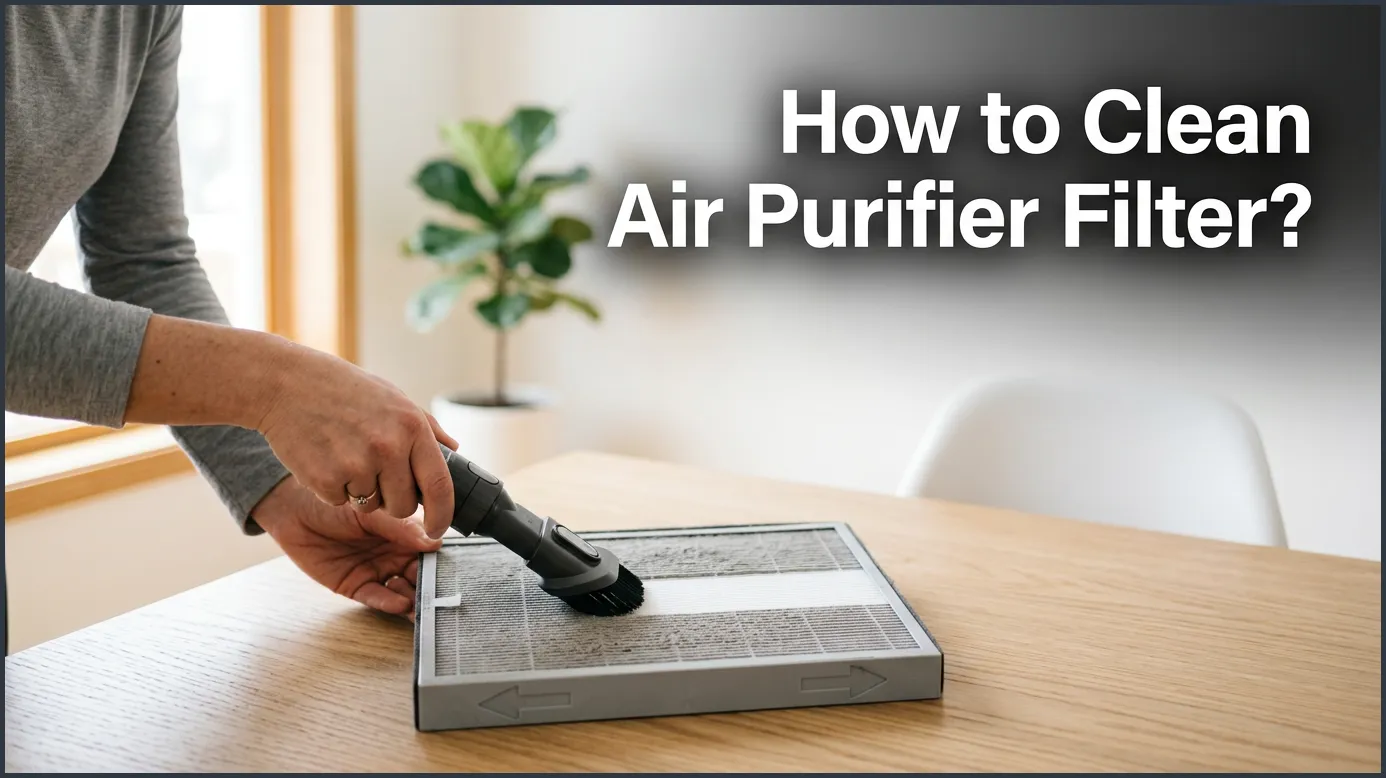
To clean your air purifier filter, first turn off and unplug the unit, then remove the outer cover. If you have a washable filter, rinse it gently under warm water and let it dry completely for 24 hours; if it is a non-washable HEPA filter, gently vacuum away dust using a soft brush attachment. Never wet a non-washable HEPA filter, as this will permanently damage its delicate fibers and ruin its ability to trap particles.
Imagine coming home after a long, busy day. You open your front door and take a deep breath. But instead of fresh, clean air, you smell stale dust and pollen. Your air purifier is sitting in the corner, humming away. Yet, the air does not feel clean anymore. Why is that? The answer is likely sitting right inside your machine. Over time, your purifier traps thousands of tiny particles. Dust, pet hair, and pollen build up on the surfaces. If you do not clean it, the machine has to work twice as hard. It might even stop cleaning your air altogether.
Learning how to clean air purifier filter setups is one of the best ways to keep your home healthy. It saves you money on energy bills. It also helps your machine last for years. In this guide, we will walk you through the entire process. You will learn how to identify your filter type. We will share safe cleaning steps for both washable and non-washable types. By the end, you will know exactly how to keep your air fresh without damaging your unit.
Key Takeaways
- Know your filter type: Only wash filters explicitly labeled as “washable.” Wetting a standard HEPA filter will destroy it.
- Safety first: Always unplug your air purifier before opening the casing or touching the filters.
- Vacuum gently: Use a soft brush attachment on your vacuum cleaner to clean non-washable HEPA and carbon filters.
- Dry completely: Washable filters must dry for at least 24 hours to prevent mold and bacteria growth inside the machine.
- Regular maintenance: Clean your pre-filter every 2 to 4 weeks to extend the life of your main HEPA filter.
- Know when to replace: Cleaning extends life, but most HEPA filters still need replacing every 6 to 12 months.
📑 Table of Contents
- Why Cleaning Your Filter Matters
- Identifying Your Filter Type: Washable vs. Non-Washable
- Step-by-Step Guide: How to Clean a Washable Filter
- Step-by-Step Guide: How to Clean a Non-Washable HEPA Filter
- Keeping Up with Maintenance: A Simple Schedule
- When to Stop Cleaning and Replace Your Filter
- Conclusion
Why Cleaning Your Filter Matters
Many people buy an air purifier and forget about it. They let it run on auto mode day and night. But these machines are not self-cleaning. As the filter fills up with dirt, air cannot pass through easily. This causes a few major problems. First, your air quality drops. If the filter is full, it cannot catch new dust. Some of that dust might even blow back into your room.
Second, your energy bill can go up. The motor has to spin much faster to pull air through a clogged filter. This uses more electricity. Third, your machine will wear out faster. A stressed motor can overheat and break down. Knowing how to clean air purifier filter parts stops these issues before they start. It keeps your unit running quietly and smoothly. For more tips on overall machine care, you can read the Levoit guide on how to clean your air purifier, which covers keeping the entire unit clean.
Identifying Your Filter Type: Washable vs. Non-Washable
Before you touch anything, you must know what kind of filter you have. Putting water on the wrong filter can ruin it instantly. Most modern purifiers use a multi-stage system. This means they have two or three different layers. Let us look at the most common types.
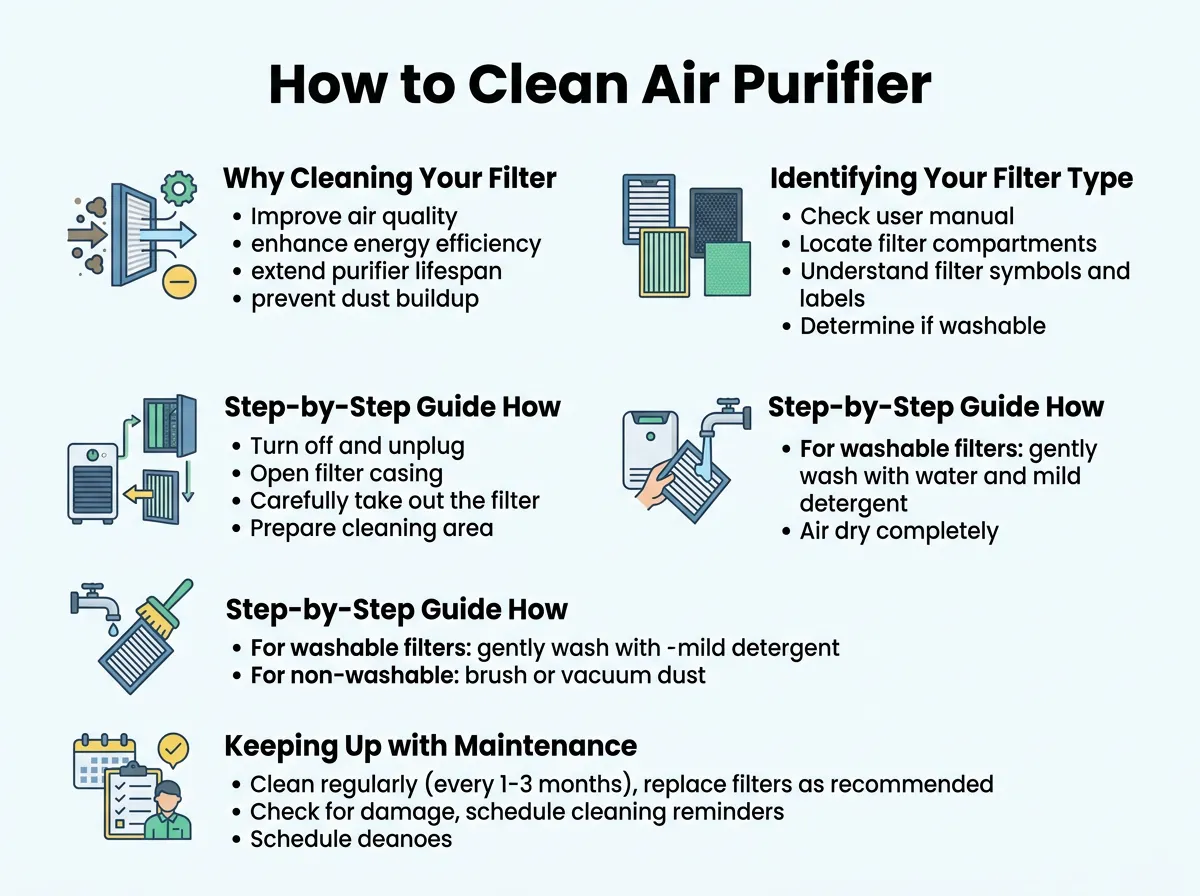
How to Clean Air Purifier Filter? — key points at a glance
The Pre-Filter
This is the first line of defense. It is usually a thin screen made of plastic or foam. It catches large items like pet hair, lint, and big dust bunnies. Almost all pre-filters are washable. They are very tough and easy to clean.
True HEPA Filters
HEPA stands for High-Efficiency Particulate Air. These filters catch 99.97% of tiny particles, including mold, pollen, and bacteria. Most True HEPA filters are not washable. They are made of very delicate paper or glass fibers. If you get them wet, these fibers stick together. This ruins their ability to trap small particles. However, some brands make washable HEPA filters. Always check your user manual first.
Activated Carbon Filters
These filters are black and look like sponges or honeycombs. They are filled with charcoal to trap odors, gases, and smoke. You should never wash an activated carbon filter. Water will wash away the charcoal or fill up the tiny pores that catch smells.
Step-by-Step Guide: How to Clean a Washable Filter
If your machine has a washable pre-filter or a washable HEPA filter, you are in luck. Cleaning them is simple and cheap. Follow these steps to do it safely.
First, turn off your air purifier. Unplug it from the wall outlet. Never clean a machine that is still plugged in. This protects you from electric shocks.
Second, open the front or back cover. This cover usually snaps off easily. Pull the filter out gently. Try not to shake it. If you shake it, dust will fly all over your clean room.
Third, take the filter to your sink or shower. Run lukewarm water through it. Let the water flow in the opposite direction of the airflow. This pushes the dirt out instead of forcing it deeper into the fibers. Do not use harsh soaps or chemical cleaners. Plain water is usually enough. If it is very dirty, a drop of mild dish soap is fine.
Fourth, let it dry. This is the most important step. Shake off the excess water. Place the filter on a clean towel in a well-ventilated room. Let it dry for at least 24 hours. Do not put a wet filter back into your machine. If you do, mold and mildew will grow inside your purifier. This will make your air smell terrible and can ruin the motor.
Step-by-Step Guide: How to Clean a Non-Washable HEPA Filter
What if your manual says your HEPA filter is not washable? Can you still clean it? Yes, but you must be very gentle. You cannot use water. Instead, you will use a vacuum cleaner. Here is how to clean air purifier filter units that use standard HEPA materials.
First, unplug the unit and remove the filter. Take the filter outside if you can. This keeps loose dust from falling on your rugs or furniture.
Second, grab your vacuum cleaner. Attach the soft brush tool. Do not use the bare plastic nozzle. The hard plastic can tear the delicate paper of the HEPA filter.
Third, run the brush gently over the surface. Move in slow, straight lines. Do not press down hard. Let the vacuum suction do the work. You will see the gray dust disappear, revealing the white filter beneath. To learn more about this specific process, you can read this helpful HEPA filter cleaning guide. It offers deep insights into maintaining delicate fibers.
Fourth, vacuum the carbon filter if you have one. Use the same soft brush and light touch. Once you are done, wipe the inside of the empty purifier housing with a dry microfiber cloth. Then, put everything back together.
Keeping Up with Maintenance: A Simple Schedule
To keep your air fresh, you need a routine. You cannot just clean the filter once a year. Here is a simple schedule you can follow to keep your home’s air clean.
Every 2 to 4 Weeks
Clean the pre-filter. Since it catches the big stuff, it gets dirty fast. Cleaning it often keeps air flowing smoothly. This prevents the main HEPA filter from getting clogged too early.
Every 3 to 6 Months
Inspect your HEPA and carbon filters. If you have pets or live in a dusty area, vacuum them. If you live in a clean environment, you might only need to do this every six months. For detailed schedules based on brand, check out the Blueair guide on how to clean an air purifier.
Once a Year
Do a deep clean of the entire machine. Wipe down the plastic cover. Clean the air quality sensor with a cotton swab. Replace any filters that are worn out or damaged.
When to Stop Cleaning and Replace Your Filter
Cleaning can extend the life of your filters, but it cannot make them last forever. Eventually, you must buy new ones. How do you know when it is time?
First, look at the color. A new HEPA filter is bright white. Over time, it turns gray, then black. If your filter is dark gray even after you vacuum it, it is time for a new one. The fibers are packed tight with microscopic dust that your vacuum cannot reach.
Second, listen to your machine. Is it making a loud humming noise? Is it blowing less air than usual? This means the filter is clogged. If cleaning does not fix the airflow, buy a replacement.
Third, smell the air. If your purifier starts to smell musty or sweet, the filters may have trapped moisture or mold. This is dangerous. Do not try to clean a moldy filter. Throw it away immediately and put in a fresh one. Most brands recommend replacing HEPA filters every 6 to 12 months for best results.
Conclusion
Keeping your air purifier clean is a simple task that makes a huge difference. By taking just twenty minutes every month, you can breathe easier. You will protect your family from allergies and dust. Plus, you will save money by helping your machine run efficiently. Always remember to check your manual, avoid water on non-washable parts, and let washable filters dry fully. With these easy steps, your air purifier will keep your home smelling sweet and clean for years to come.
Frequently Asked Questions
Can you wash a HEPA filter with water?
No, you should not wash a standard HEPA filter with water. Water will damage the delicate paper or glass fibers and make the filter useless. Only wash a HEPA filter if it is explicitly labeled as washable by the manufacturer.
How often should I clean my air purifier filter?
You should clean the pre-filter every 2 to 4 weeks to remove large dust and hair. The main HEPA and carbon filters should be checked and vacuumed every 3 to 6 months. Regular cleaning keeps the machine running at its best.
Can I use a hair dryer to dry my washable filter?
No, you should not use a hair dryer or any heat source to dry your filter. High heat can warp the plastic frame or damage the filter fibers. Let the filter air dry naturally on a flat surface for at least 24 hours.
How do I know if my filter is washable?
Check your air purifier’s user manual or look at the filter frame itself. Washable filters will have labels like “washable” or “permanent.” If the label says “True HEPA” without mentioning washing, treat it as non-washable and use a vacuum instead.
Why does my air purifier smell bad after cleaning?
A bad smell usually means the washable filter was put back into the machine while it was still damp. Moisture inside the dark machine creates the perfect home for mold and bacteria to grow. Remove the filter and let it dry completely, or replace it if the smell stays.
Can I vacuum an activated carbon filter?
Yes, you can vacuum an activated carbon filter using a soft brush attachment. Use light pressure to suck away surface dust without cracking the carbon. Never use water on a carbon filter, as this ruins its odor-absorbing pores.
