


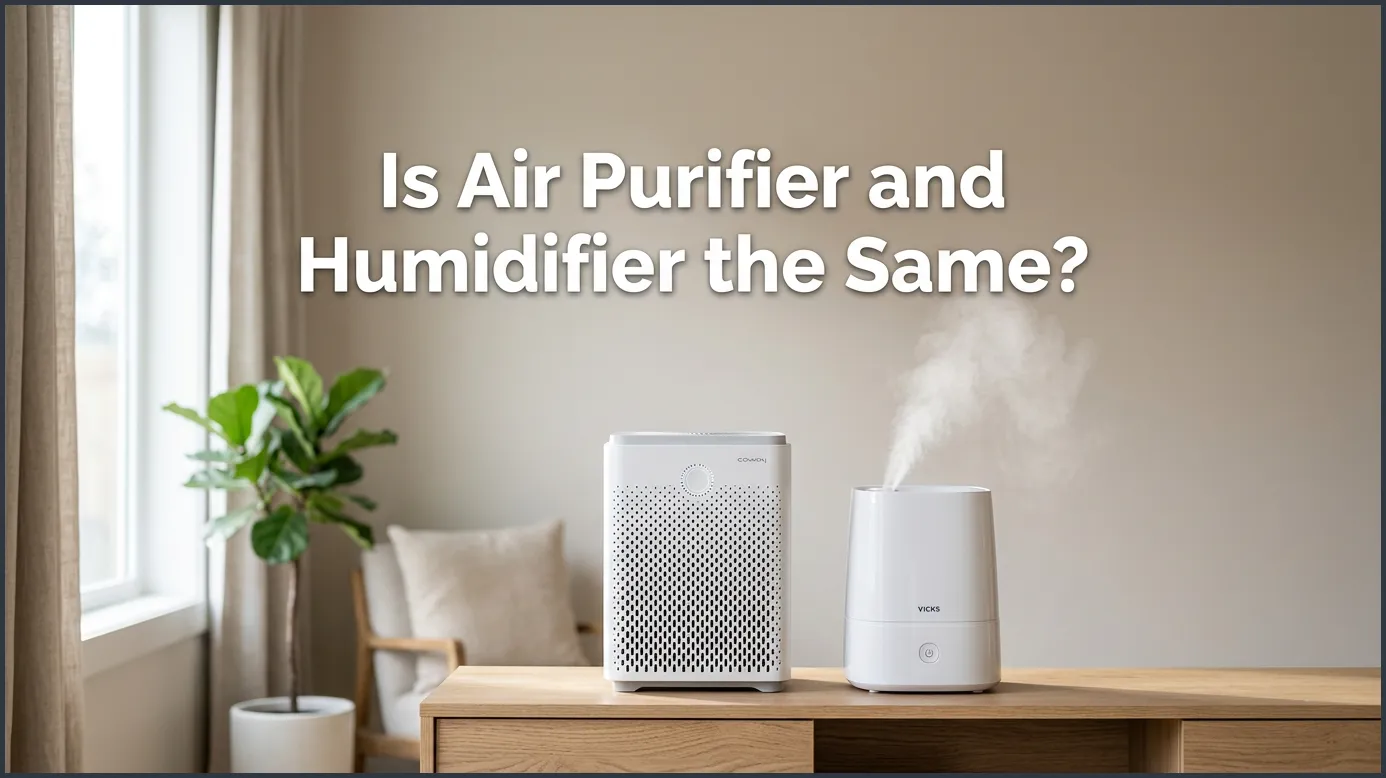
No, air purifiers and humidifiers are not the same; they perform completely different functions for your indoor air. An air purifier cleans your air by trapping dust, pollen, smoke, and allergens. A humidifier, on the other hand, adds moisture to dry air to help soothe irritated skin, eyes, and throat.
Imagine waking up on a cold winter morning. Your throat feels scratchy and dry. At the same time, you notice dust floating in the morning light. You know you want to fix your indoor air, but the options at the store are confusing. You see shelves filled with sleek, humming machines.
Some boxes promise to clean your air. Other boxes promise to add moisture to your room. It is easy to get confused when you look at these gadgets. You might wonder if these two devices do the exact same thing under different names. Both machines sit on your table, make a soft hum, and aim to make you feel better, but they do very different jobs.
In this guide, we will look at how each machine works. We will explore what they do for your health and how to choose the right one. By the end, you will know exactly which device fits your home and how to use them together for the best results.
Key Takeaways
- Different Functions: Air purifiers clean the air of contaminants, while humidifiers add moisture to dry indoor air.
- Health Benefits: Purifiers help with allergies and asthma by trapping particles, while humidifiers soothe dry skin, sinuses, and chapped lips.
- Maintenance Needs: Purifiers require regular filter replacements, whereas humidifiers need frequent cleaning to prevent mold and bacterial growth.
- Combo Devices: If you need both, 2-in-1 hybrid units exist that can clean and humidify your space simultaneously.
- Perfect Pair: You can safely run both devices in the same room to achieve clean, perfectly humidified air.
📑 Table of Contents
What is an Air Purifier and How Does It Work?
An air purifier is like a security guard for your indoor air. It pulls air in, cleans it, and pushes it back out. This machine does not add anything to your air. Instead, it only takes bad things out.
Inside the machine, there is a fan and at least one filter. The fan draws in the air from your room. The air passes through the filter, which acts like a tiny net. This net catches particles that are too small for your eyes to see.
The Role of HEPA Filters
Most good air purifiers use what is called a HEPA filter. This stands for High-Efficiency Particulate Air. This filter is very good at its job. It can catch 99.97% of tiny particles, including dust, pollen, mold spores, and pet dander.
If you have pets, a HEPA filter is a lifesaver. It grabs the tiny flakes of skin that pets shed. It also traps floating hairs. For a deep dive into how these devices compare, you can read about the differences on the Alen Air Purifiers vs Humidifiers guide.
Activated Carbon Filters for Smells
Some purifiers also have a black filter made of carbon. This carbon filter is great for smells. It can soak up smoke, cooking odors, and gases. If you cook with strong spices or have a smoker in the house, a carbon filter is very helpful.
What is a Humidifier and How Does It Work?
A humidifier does the opposite of a purifier. It does not clean the air at all. Instead, it adds water to the air. When the air in your home is too dry, it can cause problems for your skin and breathing.
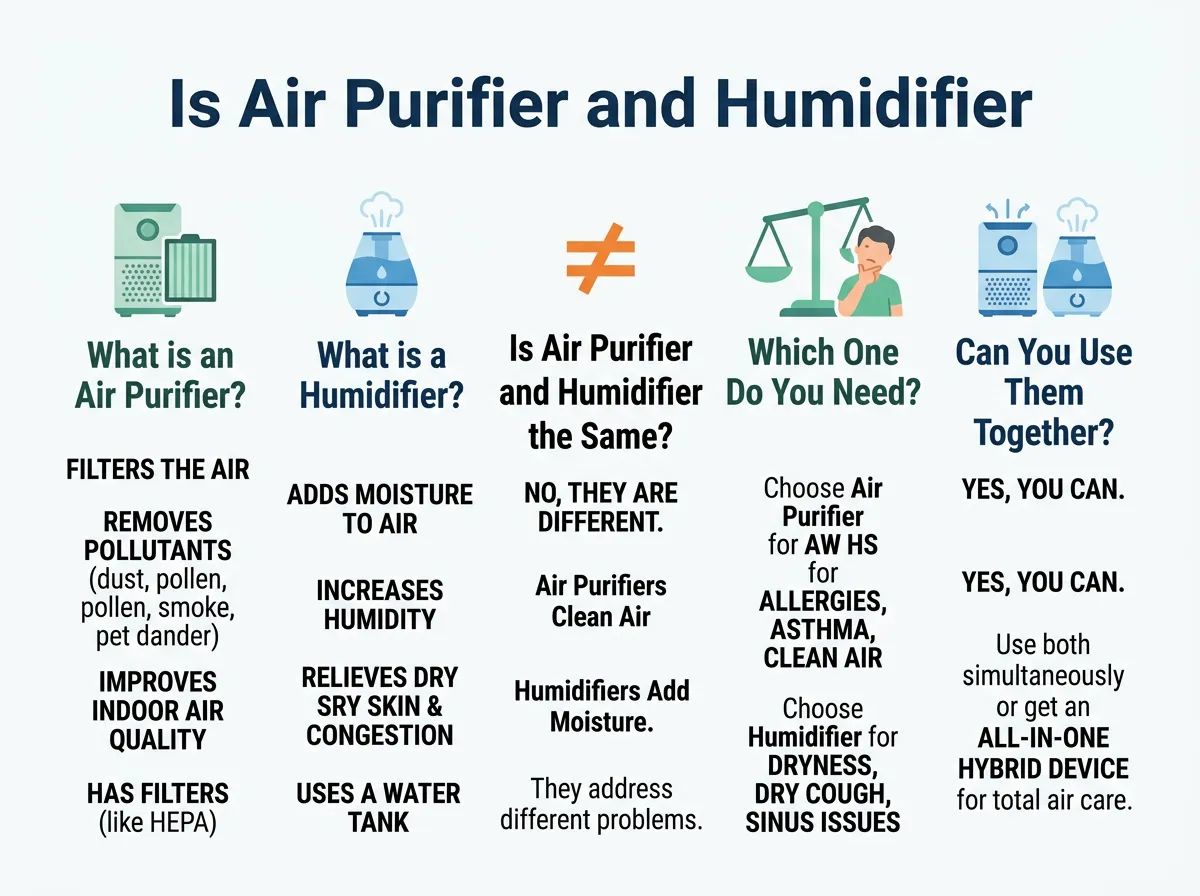
Is Air Purifier and Humidifier the Same? — key points at a glance
A humidifier has a water tank. It takes this water and turns it into a fine mist. Then, it pushes this mist into your room. This raises the humidity level, making the air feel softer and warmer.
Cool Mist vs. Warm Mist
There are two main types of humidifiers. Cool mist humidifiers use a small vibrating plate or a fan to make a cool vapor. They are safe for kids because there is no hot water inside. Warm mist humidifiers use a heating element to boil the water first. This creates a warm, cozy steam.
Using a humidifier is great during the cold winter months. When you turn on your heater, your indoor air can get as dry as a desert. A humidifier helps bring that moisture back.
Is Air Purifier and Humidifier the Same? Key Differences Explained
To answer the big question: no, they are not the same. They are like apples and oranges. They look a bit alike, but they do completely different things.
The main difference is their goal. An air purifier aims to clean your air by removing harmful particles. A humidifier aims to wet your air by adding moisture.
Let us look at a quick comparison:
- Air Purifier: Removes dust, pollen, smoke, and pet dander. It uses filters. It does not change the moisture levels.
- Humidifier: Adds water mist to the air. It uses a water tank. It does not clean the air or remove dust.
Because they do different things, they also need different care. An air purifier needs new filters every few months. A humidifier needs to be washed with water and vinegar very often. If you do not clean a humidifier, mold can grow in the water tank. You can learn more details about these distinct functions from the Dyson differences between an air purifier and a humidifier guide.
Which One Do You Actually Need?
Now you know how they differ, but which one should you buy? The answer depends on your health goals and your home environment.
When to Choose an Air Purifier
You should buy an air purifier if you suffer from allergies. If pollen makes you sneeze or dust makes your eyes itch, a purifier is your best friend. It is also a must-have if you have asthma.
People with pets should also choose an air purifier. It keeps pet hair and dander off your furniture and out of your lungs. Finally, if you live in an area with wildfire smoke or heavy city pollution, a purifier will help keep your lungs safe.
When to Choose a Humidifier
You should buy a humidifier if you live in a dry climate. If you wake up with a bloody nose, dry throat, or cracked lips, your air is too dry. A humidifier will fix these issues quickly.
It is also great for when you are sick. When you have a cold or the flu, a humidifier helps thin out mucus. It keeps your nasal passages moist, which makes it easier to sleep at night. For more tips on choosing between the two, check out the Molekule air purifier vs humidifier comparison.
Can You Use an Air Purifier and a Humidifier Together?
Yes, you can absolutely use both at the same time. In fact, using them together can give you the perfect indoor environment. One machine will make your air clean, while the other makes it comfortable.
But you must use them correctly to get the best results. Here are some simple tips for using both devices in the same room.
Keep Them Apart
Do not place them right next to each other. If a humidifier is too close to an air purifier, the moisture can get into the purifier’s filter. This dampness can ruin the HEPA filter and cause mold to grow inside the purifier. Keep them at least six feet apart.
Use Distilled Water
Always fill your humidifier with distilled water. Tap water contains minerals. When the humidifier turns tap water into mist, it can create a fine white dust. This dust will float in the room and clog your air purifier’s filter very quickly.
Look for a 2-in-1 Combo
If you do not want two separate machines, you can find combo units. These are called humidifying air purifiers. They clean your air and add moisture at the same time. They save space and use only one power outlet.
Conclusion
To sum up, an air purifier and a humidifier are not the same. They are two different tools designed for two different jobs. One cleans, and the other moistens.
If your main issue is dust, allergies, or pet hair, get an air purifier. If your main issue is dry skin, sinus pain, or a scratchy throat, get a humidifier. If you want the ultimate home comfort, you can use both together. Just remember to keep them a few feet apart and keep them clean. Now you can shop with confidence and create the healthy, comfortable home you deserve!
Frequently Asked Questions
Can I use an air purifier and a humidifier in the same room?
Yes, you can use both in the same room at the same time. Just make sure to place them at least six feet apart so the moisture does not ruin the purifier’s filter. Using both together gives you clean, comfortable air.
Which is better for allergies, an air purifier or a humidifier?
An air purifier is much better for allergies because it actively filters out triggers like pollen, dust, and pet dander. A humidifier only adds moisture to the air, which can soothe dry throat symptoms but won’t remove allergens. For long-term allergy relief, choose a purifier.
Do humidifiers clean the air?
No, humidifiers do not clean the air at all. They only add moisture to dry rooms by releasing water mist. If you want to remove dust, smoke, or germs from your air, you need to use an air purifier.
What happens if I put my humidifier too close to my air purifier?
If they are too close, the damp mist from the humidifier can get trapped inside the air purifier’s filter. This can ruin the HEPA filter and make it stop working. Over time, the damp filter can also grow mold and release bad smells into your room.
Do I need to use distilled water in my humidifier?
Yes, it is highly recommended to use distilled water in your humidifier. Tap water contains minerals that can create a fine white dust when misted into the air. This white dust can irritate your lungs and quickly clog the filter of your nearby air purifier.
Can an air purifier dry out the air?
No, an air purifier does not dry out the air. It only filters out solid particles and odors without changing the room’s humidity levels. If your air feels too dry, you will need to run a humidifier alongside your purifier.
