


No, an air purifier and a humidifier are not the same; they serve completely different functions for your indoor air. While an air purifier cleans the air by removing allergens, dust, and pollutants, a humidifier adds moisture to dry air to ease breathing and skin irritation. Understanding these differences helps you choose the right device to improve your home comfort and health.
Picture this: you wake up in the middle of the night. Your throat feels dry, your nose is stuffed up, and you can see dust motes floating in the morning light. You know you need to improve your indoor air quality, but you are not sure where to start. You head online and see dozens of gadgets, all claiming to make your home healthier. Two of the most popular machines are air purifiers and humidifiers. They look similar, sit on your side table, and plug into the wall. But what do they actually do?
When looking at these devices, many people ask: is an air purifier the same as a humidifier? It is easy to confuse the two because both aim to make the air in your room feel better. However, they go about this goal in completely different ways. Mixing them up can lead to buying a machine that does not solve your specific home comfort problems. Let us dive deep into how these devices work, how they differ, and how to choose the right one for your needs.
In this guide, we will break down the science behind both machines. We will explore their unique health benefits, look at practical examples of when to use each, and even explain how you can use them together for the ultimate home setup.
Key Takeaways
- Function: Air purifiers clean the air by trapping pollutants, while humidifiers add moisture to dry indoor environments.
- Health Benefits: Purifiers are best for allergies, asthma, and dust removal; humidifiers are ideal for dry skin, sinus congestion, and dry coughs.
- How They Work: Purifiers use fans and filters (like HEPA); humidifiers use water tanks and evaporative or ultrasonic technology.
- Combined Use: You can safely run both devices in the same room to achieve clean, perfectly humidified air.
- Maintenance: Purifiers require regular filter replacements, whereas humidifiers require frequent cleaning to prevent mold and bacteria growth.
📑 Table of Contents
- What is an Air Purifier and How Does It Work?
- What is a Humidifier and How Does It Work?
- Is an Air Purifier the Same as a Humidifier? The Key Differences
- Can You Use an Air Purifier and a Humidifier Together?
- How to Choose the Right Device for Your Home
- Maintenance and Care Tips for Both Devices
- Conclusion
What is an Air Purifier and How Does It Work?
An air purifier is a device designed to clean the air inside a room. It does not add anything to your air. Instead, it acts like a high-tech vacuum for microscopic particles. It pulls the air from your room into the machine, runs it through a series of filters, and pushes the clean air back out.
The HEPA Filter Difference
Most high-quality air purifiers use a True HEPA (High-Efficiency Particulate Air) filter. This filter is the gold standard for air cleaning. It can trap 99.97% of tiny particles that are as small as 0.3 microns. To put that in perspective, a single human hair is about 70 microns wide. That means a HEPA filter can trap things you cannot even see, such as pollen, pet dander, mold spores, and dust mites.
Many purifiers also include an activated carbon filter. This layer is crucial because HEPA filters cannot trap gases or smells. The carbon filter absorbs odors from cooking, pets, and smoke, leaving your room smelling fresh and clean.
Who Benefits Most from an Air Purifier?
If you suffer from seasonal allergies or asthma, an air purifier can be a life-changer. By removing pollen and mold from the air, it reduces the triggers that cause sneezing and itchy eyes. Pet owners also benefit greatly, as these machines constantly pull pet hair and dander out of circulation.
What is a Humidifier and How Does It Work?
Unlike a purifier, a humidifier does not clean your air at all. Instead, its sole job is to add moisture to the air. If you live in a dry climate, or if your winter heating system dries out your home, a humidifier is the tool you need. It holds water in a tank and releases it into the room as a fine mist.
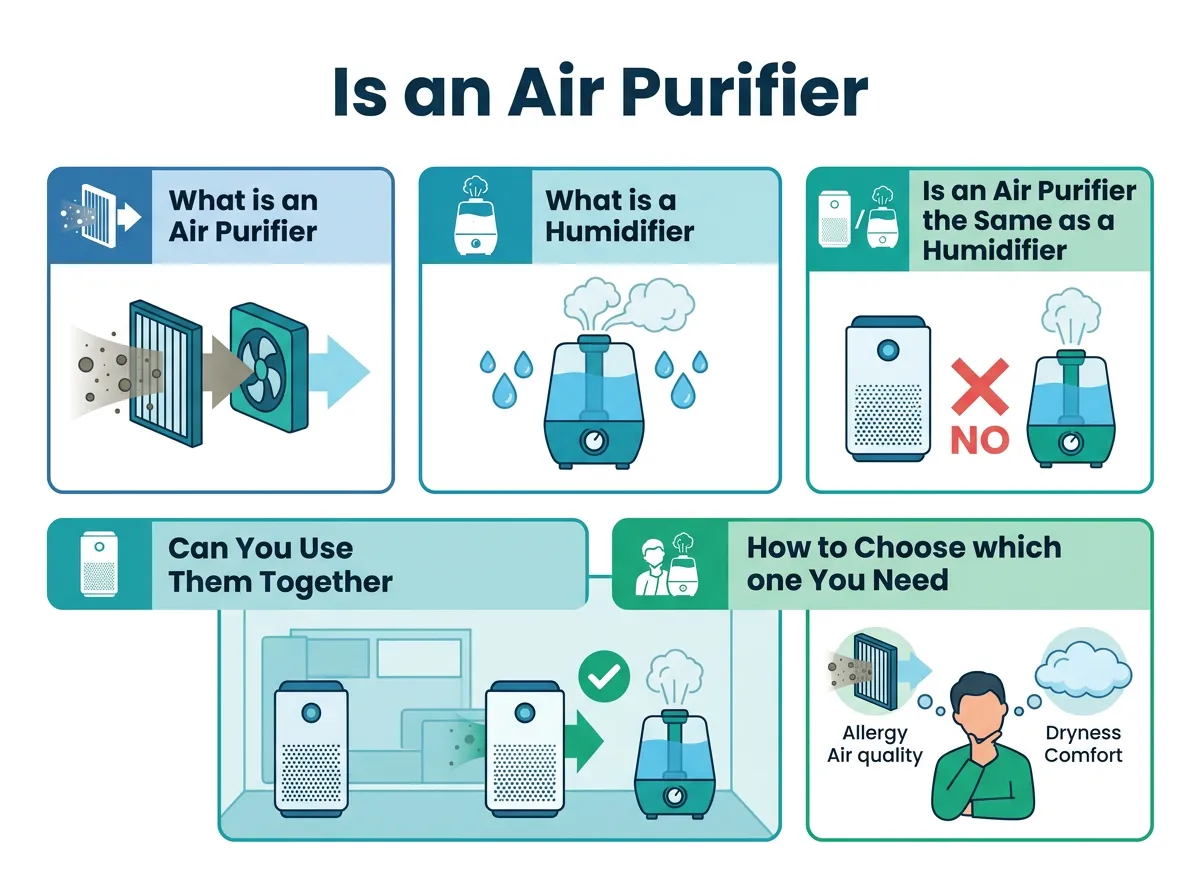
Is an Air Purifier the Same as a Humidifier? — key points at a glance
Cool Mist vs. Warm Mist
When shopping for a humidifier, you will find two main types: cool mist and warm mist. Cool mist humidifiers are highly popular, especially for homes with kids or pets, because there is no heating element that could cause accidental burns. They use ultrasonic vibrations or a simple wick and fan to create a cool vapor. Warm mist humidifiers use a heating element to boil water before releasing it as a warm steam. This can help warm up a chilly room and kill off bacteria in the water tank.
Who Benefits Most from a Humidifier?
Humidifiers are fantastic for anyone dealing with dry skin, chapped lips, or nosebleeds. If you catch a cold, a humidifier can soothe a dry, tickly cough and clear up sinus congestion by keeping your nasal passages moist. They are also highly beneficial for wooden furniture and musical instruments, which can crack when the air gets too dry.
Is an Air Purifier the Same as a Humidifier? The Key Differences
To help you decide between the two, let us look at their differences side by side. When people ask, is an air purifier the same as a humidifier, the answer lies in their primary goals and how they treat the air in your room.
Here is a quick look at how they differ in action:
- The Core Task: An air purifier removes unwanted particles from the air. A humidifier adds water vapor to the air.
- The Air Flow: Purifiers use powerful fans to circulate air through dense filters. Humidifiers use heating elements or vibrating plates to disperse water.
- Allergy Relief: Purifiers get rid of the actual allergens (dust, pollen). Humidifiers do not remove allergens, but they can soothe irritated throats caused by those allergens.
- The Output: A purifier outputs dry, clean air. A humidifier outputs moist air.
Can You Use an Air Purifier and a Humidifier Together?
The short answer is yes! In fact, using them together is often the best way to create a perfect indoor climate. They do not interfere with each other because they do different jobs. The air purifier will keep the air clean, while the humidifier will keep it comfortable and moist.
Tips for Dual Usage
If you decide to use both in the same room, keep these quick tips in mind to get the best results:
First, do not place them right next to each other. If a humidifier is too close to an air purifier, the moisture mist might get sucked directly into the purifier’s dry filters. This can ruin the HEPA filter and cause mold to grow inside the purifier. Try placing them on opposite sides of the room.
Second, always use distilled or demineralized water in your humidifier. Tap water contains minerals that can be released into the air as a fine white dust. Your air purifier will see this dust as a pollutant and work overtime to clean it up, which wears out your filters much faster.
How to Choose the Right Device for Your Home
If you only want to buy one machine right now, you need to identify your main discomfort. Ask yourself what bothers you the most when you are resting in your home.
Choose an Air Purifier If:
- You have asthma, dust allergies, or pollen allergies.
- You have pets and want to reduce dander and hair.
- You want to eliminate cooking odors, smoke, or musty smells.
- You live near a busy road and worry about outdoor pollution entering your home.
Choose a Humidifier If:
- You live in an arid desert climate or experience very dry winters.
- You wake up with a dry throat, dry eyes, or bloody noses.
- Your skin feels tight, itchy, or flakey.
- You want to relieve cold and flu symptoms like congestion and croup.
Maintenance and Care Tips for Both Devices
Both machines require regular care to keep working safely and effectively. Neglecting them can actually make your indoor air worse.
For your air purifier, you must check the filters regularly. HEPA filters usually need to be replaced every 6 to 12 months, depending on how often you run the machine. Carbon pre-filters may need replacing every 3 months. If the filters are dirty, the machine will struggle to pull air through, which wastes electricity and reduces its cleaning power.
For your humidifier, clean it every few days. Because they hold standing water, humidifiers can easily become breeding grounds for mold and bacteria. If you run a dirty humidifier, you are spraying those germs directly into the air you breathe. Empty the tank daily, rinse it out, and use white vinegar to descale any mineral buildup once a week.
Conclusion
Now you can confidently answer the question: is an air purifier the same as a humidifier? They are completely different tools designed for different jobs. One is a master cleaner that rids your home of invisible dust and allergens. The other is a moisture booster that saves your skin and throat from the harsh effects of dry air.
By understanding these differences, you can make an informed choice that truly improves your home life. Whether you choose the cleansing power of a purifier, the soothing moisture of a humidifier, or decide to team them up, your lungs will thank you!
Frequently Asked Questions
Is an air purifier the same as a humidifier?
No, they are not the same. An air purifier removes dust, pollen, and pollutants from the air to clean it, while a humidifier adds moisture to dry air to increase the humidity level.
Can I use both an air purifier and a humidifier in the same room?
Yes, you can absolutely use both devices together. Just make sure to place them on opposite sides of the room so the moisture from the humidifier does not damp the filters of the air purifier.
Do air purifiers dry out the air?
No, air purifiers do not dry out the air. They only filter out solid particles and gases, having no effect on the moisture levels or humidity of your room.
Which device is better for allergies?
An air purifier is much better for allergies because it actively traps and removes allergens like dust mites, pollen, and pet dander from the air. A humidifier can only soothe irritated throat and nasal passages but does not remove the allergen sources.
Do humidifiers clean the air?
No, humidifiers do not clean the air or remove any dust or pollutants. Their sole function is to release moisture into the room to raise the humidity level.
How often do I need to clean these devices?
Humidifiers need to be emptied and rinsed daily, and deep-cleaned with vinegar once a week to prevent mold. Air purifiers do not need daily cleaning, but their filters must be replaced every 6 to 12 months depending on usage.
