


Air ionizers clean your indoor air by releasing negatively charged ions that stick to airborne dust, pollen, and smoke. This electrical charge causes the tiny particles to clump together and fall out of the air or cling to nearby surfaces. While they are very quiet and budget-friendly, it is important to choose an ozone-free model to keep your home healthy.
Imagine sitting in your favorite chair on a sunny afternoon. As a beam of sunlight streams through the window, you notice thousands of tiny specks floating in the air. Dust, pet dander, and pollen are constantly swirling around our living spaces. It can make you stop and wonder what you are actually breathing in every day.
If you are looking for a way to clear the air, you have likely come across several types of air purifiers. One term that pops up constantly is the “air ionizer.” You might wonder, what do ionizers do, and are they the right choice for your household? It can feel a bit overwhelming with all the science terms out there.
In this guide, we will break down the science in a simple, friendly way. We will look at how these devices work, what they can clean, and the pros and cons of using them. By the end, you will know exactly how they fit into a healthy home. Let us dive in and clear the air!
Key Takeaways
- Charge-Based Cleaning: Ionizers use electricity to create negative ions that attach to positive dust particles.
- Particle Removal: They are highly effective at removing tiny particles like smoke, pollen, and pet dander from the air.
- Odor Reduction: Negative ions can help neutralize bad smells and make your indoor space feel fresher.
- Low Noise and Maintenance: Most ionizers run silently and do not require expensive replacement filters.
- Surface Dust: Because they make particles fall out of the air, you may need to dust your furniture and floors more often.
- Ozone Safety: Always look for certified ozone-free models to protect your lungs and ensure clean indoor air.
📑 Table of Contents
How Do Air Ionizers Actually Work?
The Science of Negative Ions
To understand these devices, we have to look at a little bit of chemistry. Do not worry, we will keep it very simple! An air ionizer, which is also known as an air ioniser, uses electricity to create negative ions. Ions are simply tiny molecules that carry an electrical charge.
Normally, the air in your room has a balance of positive and negative charges. An ionizer plugs into your wall and sends a constant stream of negative ions out into the room. These negative ions act like tiny magnets searching for a partner. They float around your room, looking for something to cling to.
The Clumping Effect
Most floating pollutants in your home have a positive charge. This includes things like dust, mold spores, and pollen. Since opposites attract, the negative ions from your machine rush over to stick to these positive particles.
When they join together, it creates a clumping effect. The particles get heavier and heavier. Soon, they are simply too heavy to float in the air. They fall down onto the floor, your carpets, or nearby tables. This process removes them from the air you breathe.
What Do Ionizers Remove From Your Air?
When people ask, what do ionizers do to clean a room, the answer lies in their ability to target very tiny particles. They are highly active against the microscopic things that standard filters sometimes miss.
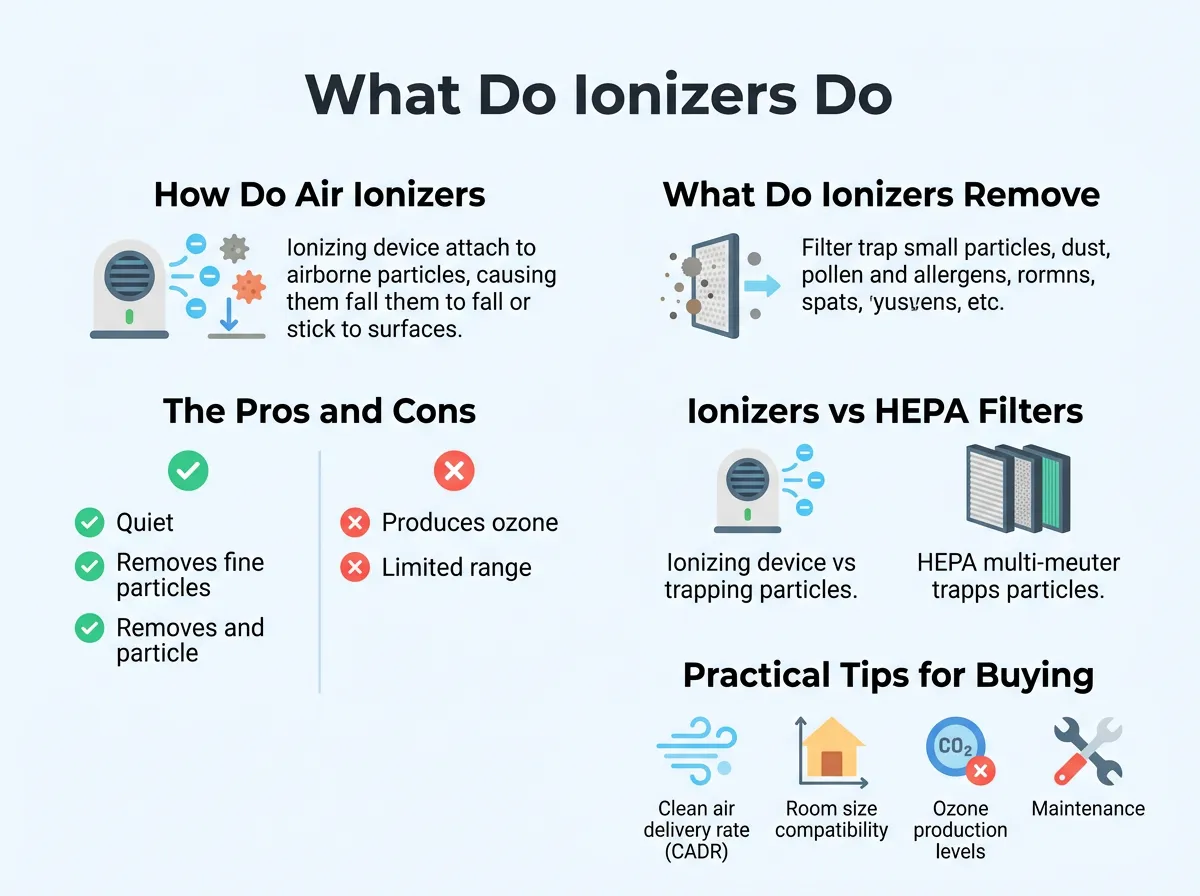
What Do Ionizers Do? — key points at a glance
Trapping Dust and Pollen
Dust and pollen are the main causes of seasonal allergies. These particles can hover in your air for hours, causing you to sneeze or cough. An ionizer quickly attaches to these particles, making them drop to the floor. To learn more about how this affects your body, you can read about what does an ionizer do for your health and breathing.
Knocking Down Smoke and Odors
Smoke particles are incredibly small and hard to catch. Standard filters often let them pass right through. Negative ions are perfect for this job. They attach to smoke from cooking, fireplaces, or cigarettes. This clears the air quickly. It also helps neutralize the molecules that cause bad odors, leaving your home smelling clean and fresh.
The Pros and Cons of Using an Ionizer
When thinking about what do ionizers do, we also have to look at both sides of the coin. No air cleaning technology is perfect, and ionizers have unique benefits and drawbacks.
The Good: Quiet and Easy to Maintain
One of the best things about ionizers is how quiet they are. Most of them do not use a loud fan to pull air through a thick filter. They just silently release ions. This makes them perfect for bedrooms or quiet home offices. They also do not require you to buy expensive replacement filters every few months. This can save you a lot of money over time.
The Bad: Dust on Surfaces and Ozone Concerns
Since the heavy dust clumps fall out of the air, they have to land somewhere. You might notice a thin layer of dust on your television, tables, or floors near the device. This means you will need to vacuum and dust your surfaces a bit more often.
The most important concern is ozone. Some ionizers produce small amounts of ozone as a byproduct of the electrical charge. Ozone can irritate your lungs, especially if you have asthma. It is wise to check the EPA guidelines on ozone-generating air cleaners to make sure you choose a safe model for your family.
Ionizers vs. HEPA Filters: What is the Difference?
To understand the difference, we must ask: what do ionizers do that standard filters cannot? They use two very different methods to clean your space.
Physical Traps vs. Electrical Charges
A HEPA filter is a physical trap. A fan blows air through a dense, paper-like filter. The dust gets caught inside the fibers, and clean air comes out. The dust stays locked inside the machine until you throw the filter away. An ionizer does not collect the dust inside a filter. Instead, it changes the charge of the room’s air so the dust falls to the ground.
Can You Use Both Together?
Yes, and this is actually the best way to clean your air! Many modern air purifiers have both technologies built into one machine. The HEPA filter catches the large dust bunnies and pet hair. Meanwhile, the ionizer targets the tiny smoke particles and odors. This gives you a complete clean.
Practical Tips for Buying and Using an Ionizer
If you decide to add an ionizer to your home, here are a few simple tips to get the best results:
- Look for safety labels: Always look for models certified by safety boards, like the California Air Resources Board (CARB). These are tested to make sure they do not produce harmful ozone.
- Place it in the open: Put your ionizer in a spot with good airflow. Avoid hiding it behind furniture. This helps the ions spread throughout the room.
- Clean nearby surfaces: Keep a microfiber cloth handy. Wipe down the table or floor around the ionizer once a week to catch the fallen dust.
- Wash the collection plate: If your model has a metal collection plate, slide it out and wash it with warm, soapy water every few weeks. This keeps the machine running at its best.
Finding the Right Balance for Clean Indoor Air
Understanding what do ionizers do helps you make a smart choice for your home. These clever devices are fantastic for clearing away tiny smoke particles, dust, and pollen. They run quietly and keep your maintenance costs very low.
Just remember to choose a certified ozone-free model and be ready for a little extra dusting. By using the right tools, you can create a fresh, clean, and comfortable environment for you and your family to enjoy every single day.
Frequently Asked Questions
What is the difference between an air purifier and an ionizer?
An air purifier usually uses a fan to pull air through a physical HEPA filter to trap dust. An ionizer releases charged particles into the air to make dust clump together and fall to the floor. Many modern machines combine both methods for a better clean.
Are air ionizers safe to use in your home?
Yes, air ionizers are safe if they do not produce harmful levels of ozone. You should always look for certified ozone-free models, such as those approved by CARB. These models keep your air clean without irritating your lungs.
Do ionizers remove smells from a room?
Yes, they are very good at reducing bad odors and smoke. The negative ions attach to the tiny odor molecules and neutralize them. This helps clear away cooking smells, pet odors, and cigarette smoke quickly.
How often do I need to clean my ionizer?
If your ionizer has a built-in metal collection plate, you should clean it every two to four weeks. Simply slide the plate out, wipe it down with a damp cloth, let it dry, and pop it back in. If your model does not have a plate, you will just need to dust the surrounding furniture regularly.
Do ionizers help with dust and pet allergies?
Yes, they are highly effective at reducing allergy triggers like dust mites, pollen, and pet dander. By charging these particles, they force them out of the air you breathe and onto the floor. This can bring quick relief to people who sneeze often at home.
Where is the best place to put an air ionizer?
You should place your ionizer in an open area with good airflow, such as on a table or shelf. Keep it away from walls and corners so the ions can spread easily. Also, place it on a surface that is easy to wipe clean, as dust will settle nearby.
