


An air purifier is a portable home device that pulls in dirty indoor air, traps airborne pollutants like dust, pollen, and smoke, and releases clean air back into your room. By using specialized filters, it sanitizes the air you breathe, helping to reduce allergy symptoms and eliminate bad odors. Ultimately, it acts as a constant shield for your home’s indoor air quality.
Picture a sunny afternoon in your living room. A bright beam of sunlight streams through the window. As you look closer at the light, you see thousands of tiny specks floating in the air. These little particles are always there, even when you cannot see them. Every day, we breathe in dust, pollen, pet dander, and small bits of pollution. It makes you wonder about the air quality inside your own home.
Many people turn to home appliances to solve this invisible problem. You might have heard of these machines, but you might still ask yourself: What Does an Air Purifier Do? It is a common question. While the basic goal is to clean the air, the way these devices work is actually very interesting. They do much more than just sweep away dust.
In this guide, we will explore the inner workings of these helpful devices. We will look at how they clean your air, the different types of filters they use, and how they can benefit your health. By the end, you will know exactly how they work and how to choose the best one for your home.
Key Takeaways
- Traps Airborne Pollutants: Air purifiers capture dust, pollen, pet dander, and mold spores to make your home cleaner.
- Uses HEPA Filters: High-efficiency particulate air (HEPA) filters are the industry standard, removing 99.97% of tiny particles.
- Neutralizes Odors and VOCs: Models with activated carbon filters absorb cooking smells, pet odors, and chemical fumes.
- Supports Respiratory Health: Cleaner air means less exposure to asthma triggers and common seasonal allergy symptoms.
- Protects Your Lungs: Regular use helps keep invisible, harmful particles from settling deep inside your respiratory tract.
- Requires Regular Maintenance: To keep an air purifier running well, you must replace or clean its filters as directed.
📑 Table of Contents
Understanding the Invisible World Inside Your Home
The Problem with Indoor Air
Most of us think of pollution as something outside. We think of car exhaust, factory smoke, and smog. However, indoor air can actually be much dirtier than outdoor air. We spend most of our time inside. Because our homes are sealed tight to keep in heat or cool air, bad particles get trapped. They have nowhere to go, so they build up over time.
What Are We Breathing?
Indoor air is full of tiny guests. Dust mites live in our carpets and bedding. Our pets shed hair and microscopic skin flakes called dander. Mold spores can grow in damp corners. Even cooking dinner releases smoke and small grease particles into the room. Every time we spray cleaner or paint a wall, we release chemicals. An air purifier helps deal with all of these invisible issues.
How Air Purifiers Clean Your Air
The Air Purification Process
At its heart, an air purifier is a very simple machine. It consists of two main parts: a fan and a filter. The fan spins to draw the air from your room into the machine. As the air passes through, it must go through one or more filters. These filters act like a giant net. They catch the bad particles and hold onto them.
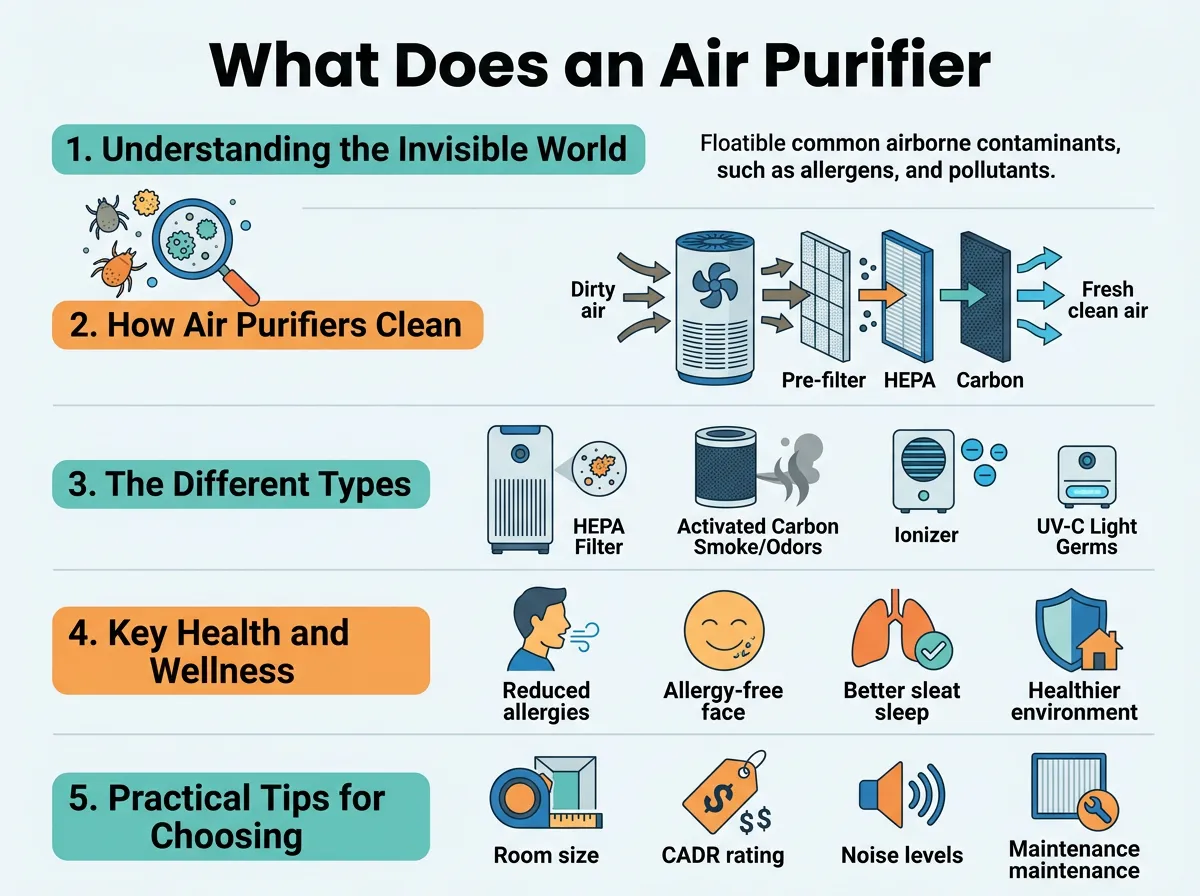
What Does an Air Purifier Do? — key points at a glance
How Do Air Purifiers Work?
Once the filter traps the dirty particles, the clean air is pushed back out. The fan blows this fresh air back into your room. This process happens over and over again. To understand the mechanics, it helps to learn how do air purifiers work in detail. By constantly circulating the air, the machine slowly lowers the number of bad particles in your home.
The Different Types of Filters and What They Do
The Mighty HEPA Filter
The most important part of any air purifier is the filter. Not all filters are the same. The best ones use a HEPA filter. HEPA stands for High-Efficiency Particulate Air. These filters are made of very fine fibers tangled together. They can trap 99.97% of particles that are 0.3 microns in size. To put that in perspective, a single human hair is about 70 microns wide. HEPA filters are great for trapping dust, pollen, and pet dander.
Activated Carbon Filters
While HEPA filters are great for solid particles, they cannot stop smells or gases. That is where activated carbon filters come in. These filters use charcoal that has been treated with oxygen. This treatment opens up millions of tiny pores between the carbon atoms. These pores trap gases, smoke, and odors. If you want to get rid of cooking smells or pet odors, you need a machine with a carbon filter.
Ionic and UV Filters
Some air purifiers use other technologies. Ionic purifiers send out charged molecules into the air. These molecules stick to dust particles, making them too heavy to float. The dust then falls to the floor or sticks to a metal plate in the machine. UV purifiers use ultraviolet light to kill germs, mold, and bacteria. However, most experts agree that HEPA and carbon filters are the safest and most effective options for daily use.
Key Health and Wellness Benefits
Allergy and Asthma Relief
For people with allergies or asthma, these machines can be life-changing. Dust, pollen, and pet dander are common triggers. They make you sneeze, itch, and cough. By removing these triggers from the air, an air purifier helps your lungs relax. There are many surprising benefits of an air purifier for daily wellness, especially when it comes to reducing seasonal allergy symptoms.
Better Sleep and Less Dusting
Clean air can also help you sleep better. When you breathe clean air, your body does not have to fight off irritants while you rest. This means less waking up with a stuffy nose. As a bonus, you will also notice less dust settling on your furniture. Since the machine traps the dust first, you do not have to clean your shelves nearly as often. Doctors often discuss what to know about air purifiers when helping patients manage indoor environments for better respiratory health.
Practical Tips for Choosing and Using Your Device
Finding the Right Size
Air purifiers are not one-size-fits-all. Every machine is rated for a specific room size. Before you buy one, measure your room. Look for the CADR rating, which stands for Clean Air Delivery Rate. This number tells you how fast the machine can clean the air. You want a machine with a high CADR rating that matches or exceeds your room’s square footage.
Placement Matters
To get the best results, you must put your machine in the right spot. Do not hide it behind a couch or in a corner. It needs space around it to pull in air. Keep it at least three feet away from walls and furniture. The bedroom is usually the best place to put your first purifier, as you spend about eight hours there every night.
Maintenance and Filter Changes
An air purifier is only as good as its filter. Over time, the filter gets clogged with dust and dirt. If you do not change it, the machine will stop working well. Most HEPA filters need to be replaced every 6 to 12 months. Carbon filters usually need to be changed every 3 to 6 months. Always check the manual for your specific machine.
Conclusion: Is an Air Purifier Right for You?
At the end of the day, these devices are simple but highly effective tools. They take the dirty air in your room, clean it, and give it back to you. They help you breathe easier, sleep better, and keep your home cleaner. While they cannot solve every dust problem, they make a noticeable difference in your daily life. If you want a fresh, clean home, adding an air purifier is a great step toward a healthier lifestyle.
Frequently Asked Questions
Can an air purifier help with pet allergies?
Yes, air purifiers are highly effective for pet allergies. They use HEPA filters to capture tiny pet dander and hair floating in the air. This significantly reduces the triggers that cause sneezing and itchy eyes.
Do air purifiers remove household odors?
They can, but only if they contain an activated carbon filter. Regular HEPA filters cannot trap gases or smells, but carbon filters absorb odors from cooking, pets, and smoke. Always check the filter types before buying.
Should I leave my air purifier on all the time?
Yes, it is best to leave your air purifier running continuously on a low setting. Indoor air quality changes constantly as we move, cook, and open doors. Keeping it on ensures the air stays clean around the clock.
Do air purifiers cool the room down?
No, air purifiers do not cool the air like an air conditioner. They have a fan inside, which can create a gentle breeze that feels cool, but they do not change the actual temperature of the room.
How often do I need to replace the filters?
Most HEPA filters need to be replaced every 6 to 12 months, depending on how often you use the machine. Activated carbon filters usually require replacement every 3 to 6 months. Always follow the manufacturer’s guidelines.
Can an air purifier prevent mold growth?
An air purifier can capture airborne mold spores, which helps prevent them from spreading and settling. However, it cannot stop mold from growing if you have an active water leak or high humidity in your walls.
