


An ionizer in an air purifier releases negatively charged ions into your room to attach to floating dust and pollen. This process makes these particles heavy, causing them to clump together and fall to the ground or get trapped by filters. It helps clear the air of tiny irritants that standard filters might miss.
Imagine walking into your living room on a bright, sunny afternoon. As the sunlight streams through the window, you notice a swirling cloud of tiny dust motes dancing in the light. It is a bit shocking to see how much stuff floats around in our homes. You might wonder how you can clean up this invisible mess.
When shopping for a home appliance to clean your indoor air, you will see many technical terms. You will see HEPA, active carbon, and something called an ionizer. If you are like most people, you probably want to know: What Does an Ionizer Do in Air Purifier machines? And is it actually a feature you need for your home?
In this guide, we will break down how this technology works. We will look at the science of negative ions and how they trap dust. We will also discuss safety, benefits, and how to get the most out of your device. Let us dive in and clear the air!
Key Takeaways
- Particle Clumping: Ionizers release negative ions that attach to dust, pollen, and smoke, causing them to clump together and fall out of the air.
- Enhanced Filtration: They help standard HEPA filters capture very tiny particles more easily by making them larger.
- Ozone Concerns: Some ionizers can produce small amounts of ozone, so it is vital to choose ozone-free or low-ozone models.
- Surface Settling: Heavy particles fall onto floors and furniture, meaning you will need to dust and vacuum regularly.
- Odorous Relief: By removing airborne molecules, ionizers can help reduce light odors and smoke in your home.
📑 Table of Contents
- What Does an Ionizer Do in Air Purifier Units? The Simple Science
- What Does an Ionizer Do in Air Purifier Systems Compared to HEPA?
- The Real Benefits of Having an Ionizer
- Are There Any Drawbacks or Safety Concerns?
- How to Choose and Use an Ionizer Safely
- Common Myths About Air Ionizers
- Conclusion: Is an Ionizer Right for You?
What Does an Ionizer Do in Air Purifier Units? The Simple Science
To understand this technology, we must look at how nature cleans itself. Have you ever noticed how fresh the air smells after a big thunderstorm? That crisp, clean scent is not just in your head. Lightning storms create millions of negative ions. These ions attach to particles in the air, making them fall to the earth.
The Science of Negative Ions
An air ionizer mimics this natural process. Inside the machine, there are tiny metal needles or pins. The machine sends electricity to these pins. This process releases millions of negatively charged molecules, called ions, into your room.
These negative ions act like tiny magnets. In your home, most floating particles have a positive charge. This includes dust, pet dander, and pollen. When the negative ions meet these positive particles, they lock together. You can learn more about air ioniser technology to see how this electrical process has evolved over the years.
Making Particles Heavy
Once the ion and the dust particle join, they become heavy. They can no longer float in the air. Instead, they fall down onto your floor, walls, or nearby furniture.
By making the particles heavy, the ionizer removes them from your breathing zone. This prevents you from inhaling them. It is a simple but highly effective way to clear the air.
What Does an Ionizer Do in Air Purifier Systems Compared to HEPA?
It is easy to get confused by all the options on the market. Many people ask: What Does an Ionizer Do in Air Purifier models that a HEPA filter cannot do? The answer lies in how they target dirt.
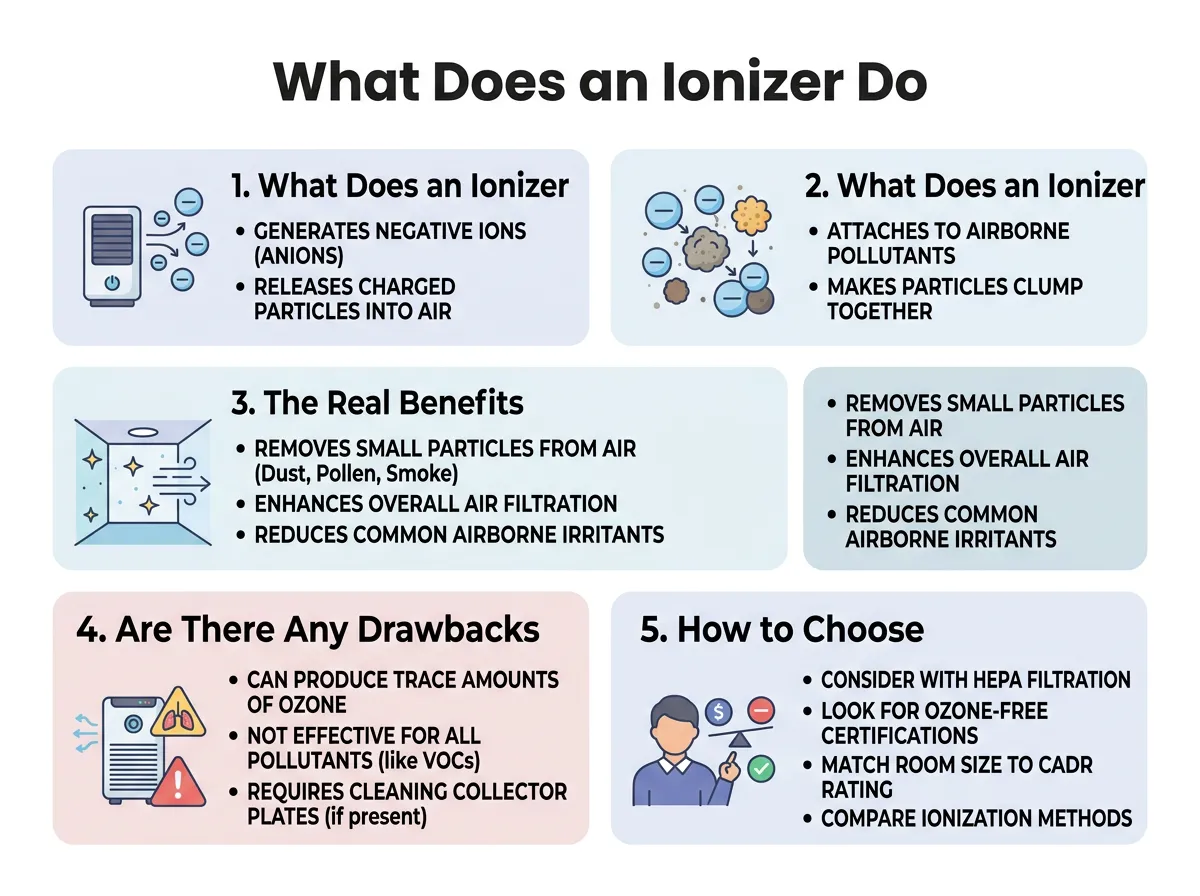
What Does an Ionizer Do in Air Purifier? — key points at a glance
Active vs. Passive Purification
A standard HEPA filter is a passive cleaner. It sits inside the machine and waits for air to pass through. A fan pulls the air in, the filter traps the dust, and clean air blows out. If a dust particle is stuck across the room, a HEPA filter might take a long time to pull it in.
An ionizer is an active cleaner. It does not wait for dust to come to it. Instead, it sends out ions to search for dust in every corner of your room.
Why They Work Better Together
Many modern machines combine both systems. This is the ultimate setup for clean air. The ionizer causes tiny particles to clump together. Once they form larger clumps, the HEPA filter can trap them much more easily.
If you want to read about the detailed differences, check out this guide on what an ionizer does and how it compares to other filters. Combining these two methods gives you the best of both worlds.
The Real Benefits of Having an Ionizer
Now that you know the basics, let us look at the practical perks. Why should you want an ionizer in your home?
Clearing Fine Dust and Smoke
Standard filters sometimes struggle with very small particles. This includes smoke from cooking or wild fires. Because negative ions work at a molecular level, they can easily bind to tiny smoke particles. This makes them highly effective at clearing smoky haze and odors from a room.
Reducing Seasonal Allergens
If you sneeze a lot in the spring, an ionizer can help. Pollen is relatively large, but it floats easily. When ions attach to pollen, they quickly drop to the floor. This keeps the pollen out of your nose and eyes, helping you breathe easier.
Are There Any Drawbacks or Safety Concerns?
While this technology is great, it is important to be aware of how it works in your home. There are a few things to keep in mind before you buy.
The Question of Ozone
Some older or industrial ionizers can produce a gas called ozone. Ozone can irritate your lungs if you breathe in too much of it. It is very important to look for devices that are certified ozone-free.
For your safety, always review the official EPA guidelines on ozone-generating air cleaners. This will help you choose a safe model that keeps your family healthy.
Dust on Your Furniture
Since the ions make dust fall to the ground, you might notice more dust settling on your tables and shelves. The dust is no longer in the air, but it is still in your room. To fix this, you will need to dust and vacuum your floors a bit more often.
How to Choose and Use an Ionizer Safely
If you decide to get one, how do you make sure you use it right? Here are some simple tips to keep in mind.
Look for Certifications
Always buy an air purifier that is certified by trusted agencies. In the United States, look for CARB certification. This means the California Air Resources Board has tested the unit and found it safe from ozone.
Tips for Best Results
- Place it in the center: Put your unit in an open area so the ions can spread easily.
- Vacuum regularly: Since dust will fall to the floor, use a vacuum with a HEPA filter once a week.
- Clean the unit: Wipe down the front of the machine where ions exit. Sometimes dust can build up there.
Common Myths About Air Ionizers
There is a lot of information online, and some of it can be confusing. Let us clear up two big myths.
Myth 1: They Kill All Viruses Instantly
While negative ions can neutralize some bacteria, they are not a magic shield. They help reduce airborne germs by making them fall to the ground. However, they do not sterilize your entire home instantly.
Myth 2: You Never Need to Replace Filters
Some people think that if they have an ionizer, they do not need filters. This is false. A true clean home needs both. The filter traps the dust, while the ionizer helps clump it together.
Conclusion: Is an Ionizer Right for You?
So, What Does an Ionizer Do in Air Purifier systems? It acts as an active helper. It sends out negative ions to clump dust, pollen, and smoke together so they fall out of the air. This makes your room cleaner and helps your physical filters work even better.
If you struggle with fine dust or allergies, a unit with an ionizer can be a great addition. Just make sure to pick a certified, ozone-safe model. With the right setup, you can enjoy fresh, crisp air every single day!
Frequently Asked Questions
Does an ionizer clean the air?
Yes, an ionizer helps clean the air by releasing negative ions. These ions attach to particles like dust and pollen, making them heavy so they fall to the ground. This process effectively removes them from your breathing space.
Are ionizers safe for pets?
Ionizers are generally safe for pets as long as they do not produce harmful ozone. Always look for a certified ozone-free model to protect your pets’ sensitive lungs. Regular vacuuming is also important since the dust will settle on the floor where pets walk.
Do I need to clean an ionizer?
Yes, you should clean the outer grill of your ionizer regularly. Dust can sometimes build up around the area where the ions are released. Wiping it down with a dry cloth keeps it running efficiently.
Can I run an ionizer all day?
Yes, you can run an ozone-safe ionizer all day on a low setting. Running it continuously ensures that new dust and allergens are instantly neutralized. However, make sure your room has some air circulation to keep things fresh.
Does an ionizer remove odors?
An ionizer can help reduce light odors, such as smoke or cooking smells, by clumping the odor-causing particles together. However, for strong gas or chemical smells, an activated carbon filter is much more effective. Combining both technologies works best for smell removal.
Is an ionizer the same as a HEPA filter?
No, they are different technologies. A HEPA filter is a physical mesh that traps dust as air passes through it, while an ionizer sends out electrical charges to clump particles together in the room. They work best when used together in a single unit.
