


An ionizer on an air purifier releases negatively charged ions into your indoor air. These ions attach to positive particles like dust, pollen, and smoke, causing them to clump together and become heavy. As a result, these pollutants fall out of the air or get trapped much more easily by your purifier filters.
Picture this. You walk into your living room on a bright, sunny morning. A warm beam of light streams through the glass window. In that light, you see a million tiny spots of dust dancing in the air. You take a deep breath. Then, your nose starts to itch. It makes you wonder how much of that floating dust you breathe in every single day.
You want clean, fresh air for your family. So, you start to shop for an air purifier. As you look at different models, you see a special feature listed on the box. That word is “ionizer.” Many brands say this feature is a must-have for a clean home. But what does it actually do? You might ask yourself: What does an ionizer do on an air purifier?
This guide will answer that question in very simple words. We will look at how this tool works. We will check its benefits. We will also talk about safety and how to use it the right way. By the end, you will know if you need one for your home.
Key Takeaways
- Releases Negative Ions: The ionizer sends out tiny negative charges that seek out positive air pollutants.
- Creates Heavy Clumps: Once attached, the dust clumps together and drops out of the air you breathe.
- Boosts Filter Power: It helps your HEPA filter catch tiny particles that might otherwise slip through.
- Combats Tough Odors: Ionizers are highly effective at reducing smoke, pet smells, and stale cooking odors.
- Ozone Awareness: Some models make tiny amounts of ozone, so it is best to choose a certified ozone-free unit.
- Flexible Settings: Most modern units let you turn the ion function on or off with the press of a button.
📑 Table of Contents
Understanding the Basics of Air Charges
What Are Ions?
Let us start with some simple science. Everything around us is made of tiny parts called atoms. These atoms have electric charges. Some charges are positive. Some charges are negative. An ion is just an atom that has gained or lost a charge.
In nature, negative ions are everywhere. You can find them near waterfalls. They exist at the beach where waves crash. They are in forests after a heavy rain. Have you ever felt super fresh and alert near a waterfall? That feeling comes from negative ions. They make the outdoor breeze feel clean and sweet.
The Electric Connection
In your home, the air is often full of positive charges. Dust, pollen, mold, and pet dander tend to carry a positive charge. Nature loves balance. Opposites attract each other. This means negative charges want to stick to positive charges. This simple rule of attraction is the secret behind how ionizers clean your room.
What Does an Ionizer Do on an Air Purifier?
How the Process Works Step-by-Step
Let us look closely at our main question. What does an ionizer do on an air purifier? To put it simply, it acts like a magnet for airborne dirt.
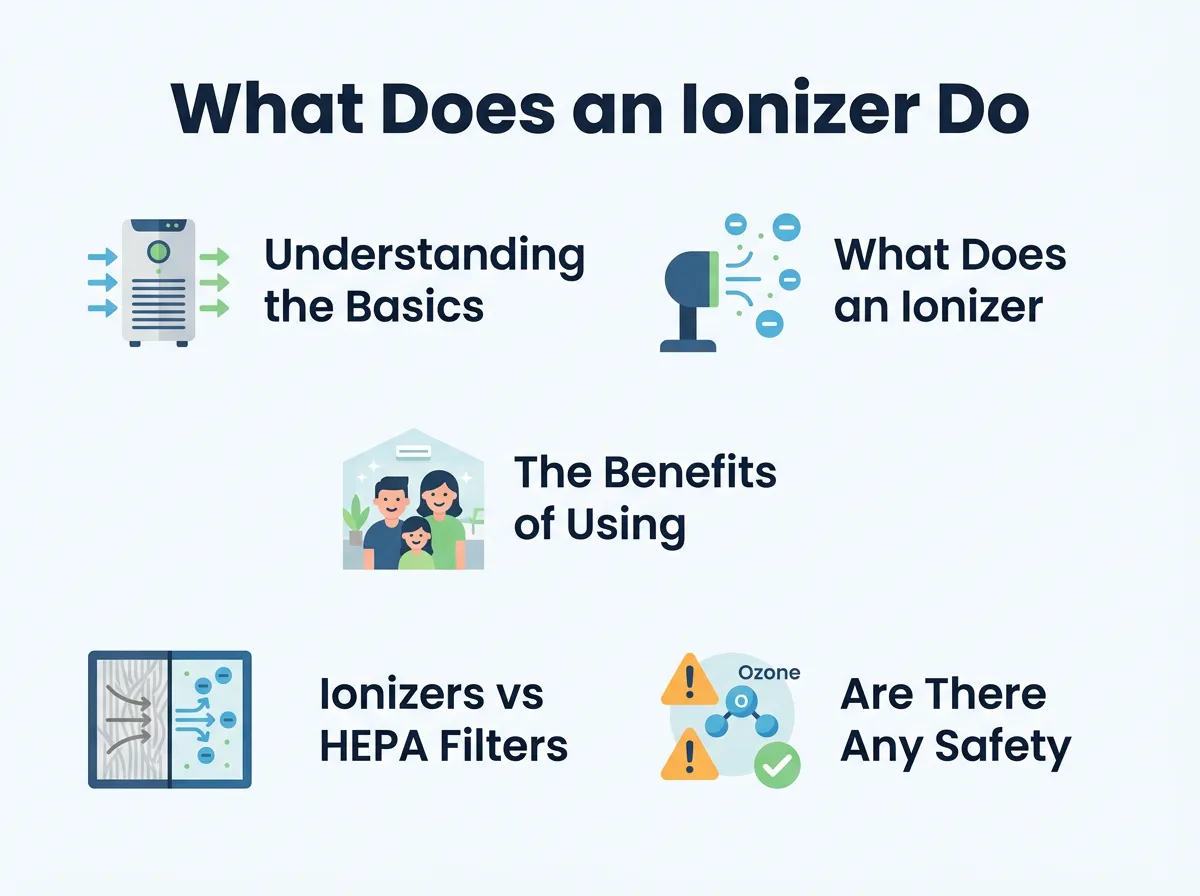
What Does an Ionizer Do on an Air Purifier? — key points at a glance
First, you plug in your machine and turn it on. The ionizer inside goes to work. It uses electricity to create a stream of negative ions. Then, it shoots these tiny negative charges out into your room.
Second, these negative ions float through the air. They seek out positive particles. They find floating dust, pet hair, and mold spores. They quickly cling to them. This action changes the electric charge of the dust particles.
Making the Dust Heavy
Third, a neat reaction happens. When negative ions stick to dust, they form a clump. As more dust joins in, the clump gets bigger and heavier. Have you ever rubbed a balloon on your hair? It makes your hair cling to the balloon. This is static cling. The same thing happens to the dust.
Soon, the clump is too heavy to float in the air. It falls down. It lands on your floor, your rug, your sofa, or your table. This means the dust is no longer floating in the air you breathe. When you ask, what does an ionizer do on an air purifier, the answer is simple. It stops dust from floating so you do not breathe it into your lungs.
The Benefits of Using an Ionizer
Clearing Very Small Particles
Standard paper filters are great. But some dust spots are too small for them to catch. These tiny spots can slip right through standard screens. An ionizer solves this problem. By making tiny spots stick together, they grow larger. Once they are big, they cannot slip through filters anymore. This makes your whole air system work much better.
Removing Smells and Smoke
Do you cook fish? Do you have dogs or cats? Do you live with someone who smokes? If so, you know how hard it is to get rid of tough smells. Smoke particles are very small and light. They can hang in the air for hours or even days. An ionizer can help. The negative ions grab onto smoke particles and pull them down fast. This helps clear the smell from your room in a short time.
Fighting Airborne Germs
Some studies show that negative ions can do even more. They can attach to mold spores, bacteria, and viruses. Once they attach, they can break down the outer layer of these germs. This can make the germs harmless. It helps keep your family healthy, especially during cold and flu season.
Ionizers vs. HEPA Filters
How They Differ
You might ask, what does an ionizer do on an air purifier that a basic paper filter cannot? It is important to know that they are very different tools. A HEPA filter is a physical wall. It is like a super fine net. A fan blows air through this net, and the net traps the dust. The dirt stays locked inside the filter until you throw it away.
An ionizer does not use a physical net. It does not trap anything inside itself. Instead, it sends out a signal to make the dirt fall to the ground. It changes the state of the room rather than just cleaning the air that passes through the machine.
Why They Work Best Together
If you use only an ionizer, you will get dusty floors and tables. If you use only a filter, you might miss the tiny spots. But when you combine them, you get the perfect cleaning team. The ionizer clumps the tiny dust spots together. Then, the fan pulls these bigger clumps into the HEPA filter. The filter traps them easily. This keeps your floors clean and your air fresh. It is the best way to clean a room.
Are There Any Safety Concerns?
The Ozone Issue
We must talk about safety. When some older ionizers make negative ions, they also make a gas. This gas is called ozone. Ozone is made of three oxygen atoms. High up in the sky, ozone protects us from the sun. But inside your home, ozone can be bad for your body. It can irritate your eyes and throat. It can make you cough. If you have asthma, it can make it hard to breathe.
How to Stay Safe and Healthy
Do not worry. You can still use an ionizer safely. Many modern air purifiers are designed to be safe. They produce zero ozone or very low levels. When you shop, look for a certified safe label. Look for approval from groups like the California Air Resources Board (CARB). They test machines to make sure they do not release dangerous gases into your home. Also, most purifiers have a button to turn the ionizer off. You can run it when you are out of the room, then turn it off when you come back in.
Tips for Buying and Using Your Machine
Look for the Right Labels
Always check the box before you buy. Before you buy, ask yourself what does an ionizer do on an air purifier to make your space cleaner. Look for words like “ozone-free” or “CARB certified.” This ensures your family stays safe while enjoying clean air.
Regular Cleaning Tips
Remember that ionizers make dust fall. This means you will need to dust your tables and vacuum your rugs a bit more often. If your purifier has a metal collector plate instead of a paper filter, clean it once a week. These plates pull in the charged dust like a magnet. They can get dirty very fast. Wash them with warm water and soap, then let them dry completely before you slide them back in.
Conclusion
Air quality is key to a happy, healthy home. Now you have a clear answer to what does an ionizer do on an air purifier. It is a smart tool that uses electric charges to fight dust, smoke, and odors. It turns tiny, floating dirt into heavy clumps that fall out of the air you breathe. While they work best when paired with a strong HEPA filter, they add an extra layer of protection. Just keep ozone safety in mind and choose a certified safe model. With the right machine, you can breathe easy and enjoy fresh, clean air every single day.
Frequently Asked Questions
What is the difference between an ionizer and a HEPA filter?
A HEPA filter is a physical net that traps dust as air passes through it. An ionizer sends out charged particles to make dust clump together and fall to the floor. They work best when used together in one machine.
Does an air ionizer kill viruses and bacteria?
Yes, negative ions can attach to airborne germs like bacteria and viruses. Once attached, they can disrupt the outer cell wall of the germ, which can make it harmless. This helps reduce the spread of sickness in your home.
Is it safe to leave an ionizer on all day?
It is safe if your air purifier is certified ozone-free or meets strict CARB standards. If you are worried about ozone, you can turn the ionizer feature off when you are in the room and run it only when you are away.
Do ionizers make dust settle on furniture?
Yes, because ionizers make dust particles heavy, they will fall out of the air onto your floors and furniture. You will need to vacuum and dust your flat surfaces a bit more often to keep them clean.
Can you turn off the ionizer on an air purifier?
Most modern air purifiers come with a separate button to turn the ionizer function on or off. This gives you complete control over when you want to use the technology in your home.
Does an ionizer help with pet allergies?
Yes, ionizers are highly effective at clump-forming pet dander and hair. By pulling these allergens out of the air, it keeps them from entering your nose and eyes, which can ease your allergy symptoms.
