


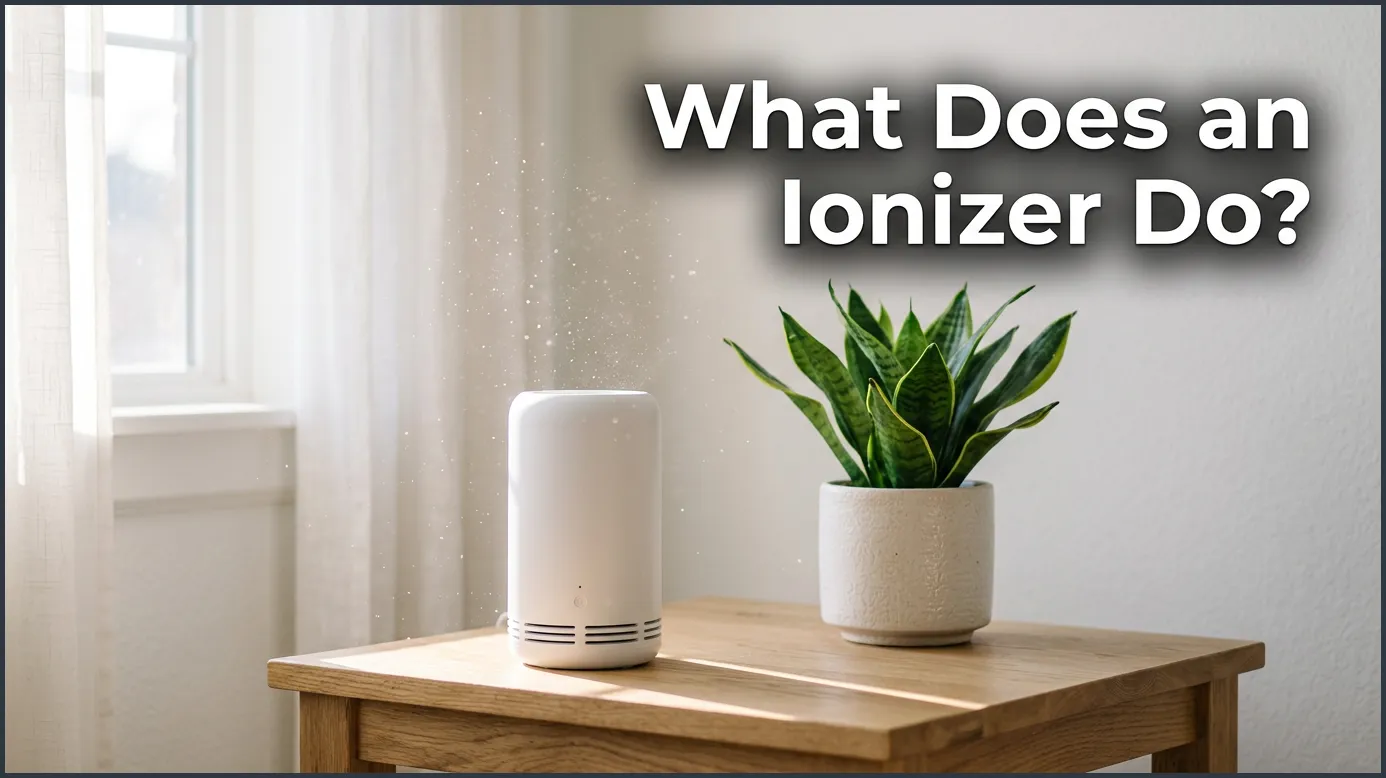
An ionizer releases negatively charged ions into the air to attach to positively charged airborne particles like dust, pollen, and smoke. This process causes these pollutants to clump together and fall out of the air or stick to nearby surfaces, effectively cleaning the indoor environment. By removing these tiny irritants, ionizers help create a fresher, healthier space for you to breathe easily.
We all want to breathe clean air inside our homes. Yet, indoor air is often full of tiny particles we cannot see. We live with dust, pet hair, pollen, and smoke every single day. When you open your windows, you hope for a fresh breeze. Instead, you might just let in more outdoor pollution. It is easy to feel like you are losing the battle against stuffy indoor air.
You might have heard of a special device called an air ionizer. People say it can make your home feel as fresh as a mountain peak. But how can a small machine do that without a big, loud fan? You might wonder, what does an ionizer do to clean the air you breathe?
In this guide, we will dive deep into how these devices work. We will look at the science behind negative ions. We will also compare them to regular air filters and talk about safety. By the end, you will know exactly if an ionizer is right for your home.
Key Takeaways
- Static Charge Clean: Ionizers emit negative ions that bond with positive airborne pollutants like dust and pollen.
- Particle Drop: Once bonded, the heavy clumps fall to the floor or stick to walls, removing them from your breathing zone.
- Ozone Caution: Many traditional ionizers produce small amounts of ozone, which can be a respiratory irritant.
- No Filters: Unlike HEPA purifiers, standalone ionizers do not trap particles inside a physical filter.
- Allergy Relief: They are excellent for reducing airborne allergens, pet dander, and secondhand smoke quickly.
- Complementary Use: Ionizers work best when paired with mechanical filters that capture the fallen debris.
📑 Table of Contents
How Does an Ionizer Work?
To understand what does an ionizer do, we have to look at the tiny world of molecules. Everything around us has an electrical charge. Most dust, pollen, and allergen particles in your home have a positive charge. These tiny pests are very light. Because they are light, they float in the air for a long time. You breathe them in without even knowing it.
An ionizer changes this game by using static electricity. It sends out a stream of negative ions into your room. If you want to know more about the science of this process, you can read about what does an ionizer do to help clear these particles on Healthline.
Let us make a simple comparison. Imagine you are walking outside after a heavy rain. The air feels crisp and smells wonderful. This happens because nature makes negative ions during storms. Lightning strikes and moving water from rivers create these ions. They clean the air naturally. An ionizer brings this natural power right into your home. It uses a small metal needle to charge the air.
The Concept of Static Attraction
Think about what happens when you rub a balloon on your hair. Your hair sticks to the balloon because of static cling. An ionizer works on the exact same idea. The negative ions released by the device search for positive particles. When they meet, they stick together.
The Ionization Process
Once the negative ion bonds with a dust particle, the particle becomes heavy. It can no longer float in the air. The heavy clump falls to the ground. It might also stick to nearby walls, tables, or your TV screen. The air is now cleaner because the dust is no longer floating in your breathing zone.
What Does an Ionizer Do in Your Home?
Now that we know the science, let us look at the daily benefits. What does an ionizer do for your living room, bedroom, or kitchen? Its main job is to clear the air of things that make you sneeze.
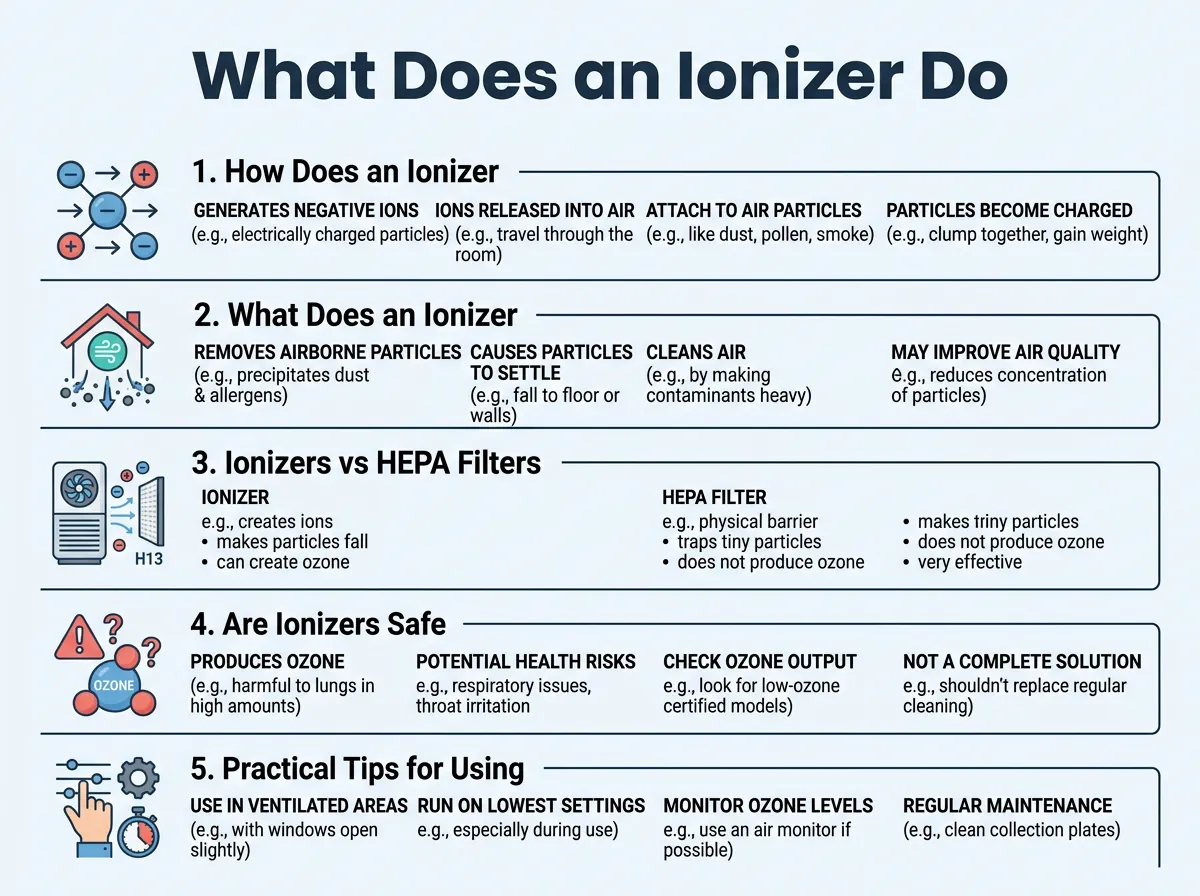
What Does an Ionizer Do? — key points at a glance
Eliminating Dust and Pollen
Dust and pollen are the enemies of anyone with allergies. They settle on your eyes and nose, causing itchy feelings. An ionizer is great at dropping these allergens out of the air fast. It works silently in the background, making the air feel lighter.
Reducing Odors and Smoke
Cooking smells and pet odors can linger for days. If you have a smoker in the house, the smell is even harder to clear. Smoke particles are very small, which makes them hard for regular filters to catch. An ionizer targets these tiny smoke molecules. It clumps them together so they fall down, which helps clear up the smell. You can learn more about how this improves your space by checking this guide on what does an ionizer do and its impact on air quality.
Think of a pet owner who loves their cat but hates the smell of the litter box. Or think of a home cook who loves to fry fish but hates the oily smell that stays in the kitchen. An ionizer can help. The negative ions attach to the tiny odor molecules. These heavy molecules then drop to the floor. This means you do not have to spray chemical air fresheners to hide the smell. Instead, the smell is gone.
Ionizers vs. HEPA Filters: What is the Difference?
Many people get confused between ionizers and standard air purifiers. It is vital to know how they differ before you buy one. When we compare these systems, we must ask: what does an ionizer do that a HEPA filter cannot?
A HEPA filter is a passive cleaner. It uses a fan to pull air through a thick, paper-like filter. The filter traps the dust and keeps it inside the machine. You must replace these filters every few months, which can cost money.
An ionizer is an active cleaner. It does not wait for air to pass through it. Instead, it sends ions out into the room to clean the air. There are often no filters to change. However, the dust does not vanish. It just lands on your floor or furniture. This means you will need to dust and vacuum your home more often.
Let us look at maintenance. A HEPA filter needs regular care. You have to open the machine, pull out the dirty filter, and put in a new one. This can be messy and cost a lot of money over time. With an ionizer, there are no filters to buy. You save money in the long run. However, you will need to spend a little more time sweeping your floors.
Are Ionizers Safe to Use?
This is a very important question. While ionizers are great at clearing dust, they have a small drawback that you must know about.
Understanding Ozone Emissions
Some ionizers create a gas called ozone as a byproduct of making ions. Ozone is a molecule made of three oxygen atoms. While ozone high up in the sky protects us from the sun, ground-level ozone is bad for our lungs. It can cause coughing, throat irritation, and chest pain.
Because of this risk, the government keeps a close eye on these machines. You can read the official guidelines on what are ionizers and other ozone-generating air cleaners from the EPA to stay safe.
How to Choose a Safe Ionizer
Not all ionizers are the same. Many modern devices are designed to produce zero or very low ozone. Look for models that are certified by safety groups like the California Air Resources Board (CARB). These models are tested to ensure they do not harm your health.
Practical Tips for Using an Ionizer
If you decide to use an ionizer, here are some easy tips to get the best results. If you want to know what does an ionizer do in a real home setting, look at how it handles pet dander. It makes the dander drop, but only if you place the machine in the right spot.
First, place your ionizer in an open area. Do not hide it behind a couch or under a table. It needs space to send out its ions.
Second, be ready to clean. Since the dust falls out of the air, it will land on your floor. You should vacuum your carpets and wipe your tables once a week. Some ionizers have a metal plate inside that attracts the dirty clumps. If yours has one, slide it out and wash it often.
Third, pair it with a HEPA filter. Using both devices together is the best way to clean your air. The ionizer clumps the tiny particles together. Then, the HEPA filter can trap them easily.
Conclusion
So, what does an ionizer do? In simple terms, it uses the power of physics to clear your indoor air. By sending out negative charges, it helps heavy dust and smoke fall out of your breathing space. While it does not trap the dust like a traditional filter, it is a quiet and effective way to fight allergies.
Just remember to pick a model that is safe and produces little to no ozone. Pair it with regular cleaning, and you will enjoy fresh, crisp air in your home every day.
Frequently Asked Questions
Do ionizers remove dust permanently?
No, ionizers do not trap dust. They make dust heavy so it falls to the ground, which means you must sweep or vacuum it up.
Are ionizers safe for pets?
Most modern ionizers are safe for pets if they do not produce ozone. Be sure to check for ozone-free certification before using one around dogs or cats.
Can I leave an ionizer on all day?
Yes, you can run an ionizer all day because they use very little power. However, make sure your room is well-ventilated to avoid any buildup of static or trace ozone.
Do ionizers kill viruses and bacteria?
Some ionizers can reduce airborne bacteria and viruses by clumping them together and dropping them from the air. However, they do not sterilize surfaces like medical cleaners do.
Do ionizers make rooms dusty?
Yes, they can make nearby surfaces look dustier because they pull dust out of the air and deposit it onto tables and walls. This is actually a sign that the machine is working.
Is an ionizer the same as an ozone generator?
No, they are not the same. An ionizer is built to clean the air using negative ions, while an ozone generator is designed to create ozone gas to kill odors and mold.
