


An ionizer releases negative ions into the air to bind with airborne particles like dust, pollen, and smoke. This process makes the particles too heavy to float, causing them to fall out of the air or stick to nearby surfaces. As a result, ionizers help clean your indoor air and reduce the allergens you breathe every day.
Have you ever walked outside right after a heavy rain? The air feels so fresh. It smells clean and new. You want to take a deep, long breath. That fresh feeling happens because of nature. Nature has its own way of cleaning the air. It uses tiny charges to wash the sky. But what if you could have that same fresh feeling inside your house? Many people use a special device to try to get this. This device is called an air ionizer.
You might have seen these devices in stores. They look small and sleek. They promise to make your home smell great. They promise to clear out the dust. But you might wonder how they work. You might ask yourself, “What Does Ionizer Do?” to help your home. It is a very fair question to ask. After all, you cannot see the air. You cannot see the tiny particles floating in your living room.
In this guide, we will look at this tool. We will explain the science in easy terms. You will learn how these machines clean your rooms. We will look at the pros and cons of using one. By the end, you will know if you need one for your home. Let us dive in and explore the facts.
Key Takeaways
- Particle Removal: Ionizers release negative ions that attach to dust, pollen, and smoke, making them fall to the ground.
- Odors and Smoke: They are highly effective at clearing tiny particles like smoke and stale odors from indoor spaces.
- No Filters Needed: Unlike HEPA filters, basic ionizers do not rely on physical filters to trap pollutants.
- Ozone Caution: Some ionizers produce tiny amounts of ozone, so it is vital to choose certified ozone-free models.
- Easy Maintenance: Ionizers require very little upkeep, though you will need to dust surrounding surfaces more often.
📑 Table of Contents
How Does an Ionizer Actually Work?
To understand the process, we have to look at science. But do not worry. We will keep it very simple. It all comes down to tiny charges in the air.
The Power of Negative Ions
Everything around us is made of atoms. Atoms can have charges. Some charges are positive. Some are negative. An ionizer is a machine that plugs into your wall. When you turn it on, it sends out electricity. This electricity goes to tiny needles inside the device. These needles create negative charges. The machine then shoots these negative charges out into your room. We call these negative charges “negative ions.” They are like tiny, invisible magnets. They float through your bedroom and kitchen. They look for things to grab onto.
Clumping Particles Together
The air in your home is full of floating dust. It has pet hair, pollen, and mold. Most of these floating things have a positive charge. You can think of them as opposites. In science, opposites attract. The negative ions from your machine find the positive dust. They stick together. This is just like static cling on your clothes. When they stick together, they get heavy. A single speck of dust is very light. It can float for hours. But when ten specks clump together, they become heavy. They cannot float anymore. They fall down to the floor.
What Does Ionizer Do to Clean the Air?
Now we can answer the core question. What Does Ionizer Do to make your rooms clean? It does not trap dust inside a box. Instead, it changes how dust behaves.
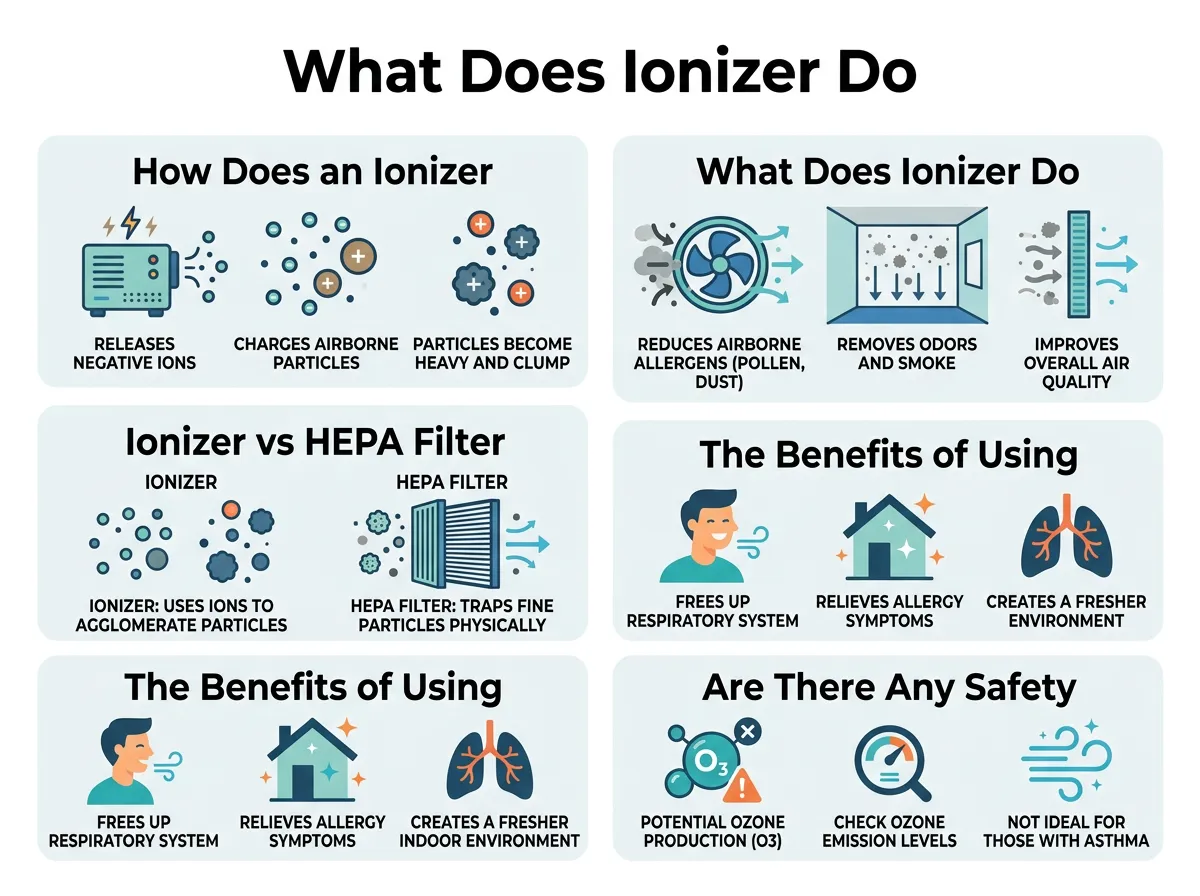
What Does Ionizer Do? — key points at a glance
Fighting Dust and Pollen
If you have allergies, you know how hard it is to breathe. Pollen comes in through open windows. Dust sits on your bookshelves. When you walk by, the dust flies up. You breathe it in, and then you sneeze. So, What Does Ionizer Do to stop this? It stops the dust from floating. Once the ions touch the dust, the dust drops. It lands on your floor. It lands on your table. This means the dust is no longer in the air. Since it is not in the air, you cannot breathe it in. Your nose and lungs get a break.
Clearing Out Smoke and Smells
Smoke is very hard to clean. It has tiny particles that linger. If you cook fish, the smell stays for days. If someone smokes a cigarette, the smoke gets into the walls. What Does Ionizer Do to clear out smoke? It works fast. The negative ions rush to the smoke particles. They bind to them instantly. The smoke drops to the ground. This gets rid of the hazy look in the room. It also helps get rid of the bad smell. The air starts to smell clean and fresh again.
Ionizer vs. HEPA Filter: What is the Difference?
Many people get confused. They think all air cleaners are the same. But an ionizer is not the same as a HEPA filter. They work in very different ways.
How Filters Trap Dust
A HEPA filter is like a giant, tight net. A fan blows air through the net. The dust gets stuck in the holes. The clean air passes through. This means the dust is trapped inside the machine. You have to take the filter out and throw it away. Then you have to buy a new one. This can cost a lot of money over time. But it keeps the dust inside the machine.
How Ionizers Drop Particles
An ionizer does not have a fan or a net. It does not pull air in. Instead, it shoots ions out. So, What Does Ionizer Do differently? It makes the dust fall to the floor. This means the dust is still in your room. It is just on the carpet instead of in the air. You do not have to buy new filters. This saves you money. But you do have to vacuum your floors more often. You also have to wipe your tables. The dust has to go somewhere, and that somewhere is your furniture.
The Benefits of Using an Ionizer
There are many good reasons to use this device. Let us look at how it can help your life.
Better Sleep and Breathing
Dirty air can make it hard to sleep. You might wake up with a stuffy nose. You might cough during the night. An ionizer cleans the air while you sleep. By dropping the dust, it lets you breathe easy. Many people say they sleep much better with one on. They wake up feeling fresh. Their eyes do not itch as much.
Low Maintenance Costs
Most home appliances need a lot of care. But an ionizer is very simple. It has no moving parts. It does not have filters to change. You just plug it in and let it run. It uses very little power. This makes it a great choice if you want to save money. You do not have to buy parts every month. You just need to keep the area around it clean.
Are There Any Safety Concerns?
We must look at both sides of the story. While these tools are great, they have one main risk. You should know about this risk before you buy one.
Understanding Ozone Risks
Some ionizers can make a gas called ozone. Ozone is made of three oxygen atoms. It is good high up in the sky. It blocks the sun. But ozone is bad to breathe. It can hurt your lungs. It can make asthma worse. Not all ionizers make ozone. Some only make negative ions. But some older models make quite a bit. You must be careful when you shop.
How to Stay Safe
How can you protect your family? What Does Ionizer Do to stay safe? You should look for safety labels. Look for devices that are “ozone-free.” Many groups test these tools. They make sure they are safe for your home. Always read the box before you buy. If you have asthma, talk to your doctor first. They can help you pick the best tool.
Simple Tips for Getting the Best Results
If you decide to buy one, you want it to work well. Here are some easy tips to get the most out of your device.
Where to Place Your Ionizer
Place your device in an open area. Do not hide it behind a couch. It needs room to shoot out the ions. A high shelf is a great spot. The ions can float down from above. This helps them cover the whole room. Keep it away from walls if you can. Sometimes, the dust will stick to the wall near the machine. This can leave a dark spot. We call this the “black wall effect.”
Cleaning Up the Fallen Dust
Remember, the dust is now on your floor. What Does Ionizer Do to clean it up? Nothing! That part is up to you. You must vacuum your carpets once a week. You should wipe your tables with a damp cloth. If you do not clean, the dust will just sit there. When you walk, you might kick it back up into the air. Good cleaning habits make your ionizer work twice as well.
Conclusion
Clean air is key to a happy home. Now you have the answer to “What Does Ionizer Do?”. It uses the power of science to clear the air. It sends out negative ions. These ions grab dust and smoke. They make them fall to the floor. It is a simple and cheap way to make your rooms fresh. Just make sure to choose a safe model. Pair it with good cleaning habits. If you do this, you will enjoy fresh air every single day. You will breathe easy and live well.
Frequently Asked Questions
Do ionizers remove dust?
Yes, ionizers help remove dust from the air. They release negative ions that bind with dust particles to make them heavy. The dust then falls to the floor where you can easily clean it up.
Can you leave an ionizer on all day?
Yes, you can run an ionizer all day long. They use very little power and work best when they run constantly. Just make sure your model is certified to be ozone-free for safety.
Is an ionizer good for asthma?
It can help by removing triggers like pollen and dust from the air. However, some models produce ozone, which can irritate sensitive lungs. Always choose an ozone-free model if you have asthma.
Do ionizers kill viruses?
Ionizers can help reduce viruses in the air by clumping them with other particles so they drop. However, they do not kill germs as effectively as a UV light or a HEPA filter. They should not be your only line of defense.
Where should I place my ionizer?
You should place your ionizer on a high shelf in an open area. This allows the negative ions to spread out and cover the whole room. Keep it a few feet away from walls to prevent dark dust spots.
Do ionizers smell?
A safe, ozone-free ionizer should not have a strong smell. If you notice a sweet, metallic scent, your device might be producing ozone. If this happens, you should turn it off and check its safety rating.
