


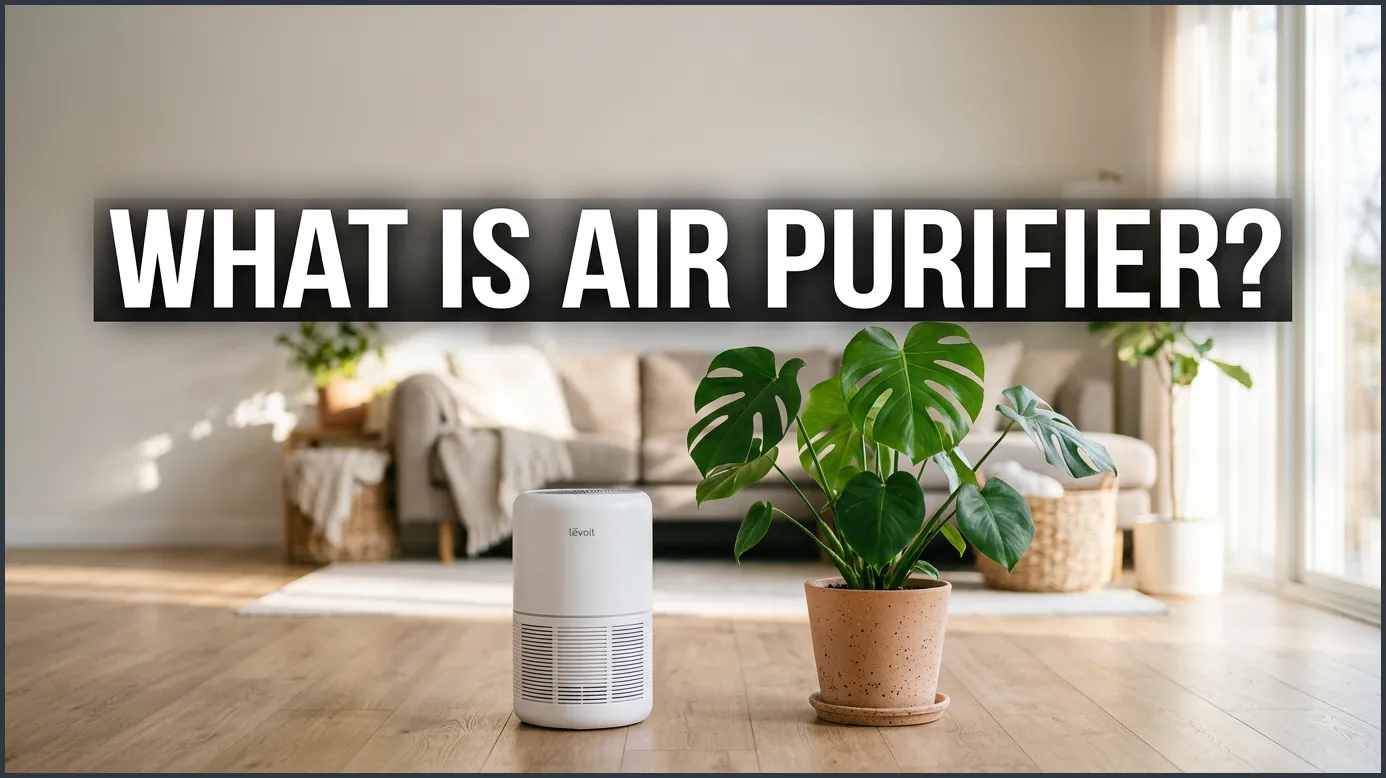
An air purifier is a portable home appliance designed to remove airborne contaminants from the air in a room. By pulling indoor air through special filters, these devices capture dust, pollen, smoke, and other tiny pollutants before releasing clean air back into your living space. Using an air purifier can significantly improve your home’s indoor air quality and help you breathe much easier.
Have you ever sat in your favorite chair and watched a beam of sunlight cut through the window? If you look closely, you will see millions of tiny dust particles dancing in the light. It is a bit shocking to realize that we breathe this very air every single second. Our homes feel clean and safe, but the air inside is often filled with invisible pollutants. From pet dander and cooking smoke to outdoor pollen, our indoor spaces can trap a lot of dirt.
If you want to breathe easier, you might be looking for a simple solution. You have probably seen small, quiet machines sitting in the corners of offices or homes. If you are wondering, what is air purifier technology and how does it clean your home, you have come to the right place. In this guide, we will explore everything you need to know about these helpful appliances. We will look at how they work, the different types of filters, and how to choose the best one for your budget.
Key Takeaways
- Definition: Air purifiers are indoor appliances that clean the air by trapping harmful pollutants and particles.
- How They Work: They use fans to draw in room air, pass it through advanced filters, and recirculate clean air.
- HEPA Filtration: High-Efficiency Particulate Air (HEPA) filters are the industry standard, catching 99.97% of tiny particles.
- Health Benefits: These devices reduce allergy triggers, ease asthma symptoms, and neutralize bad odors.
- Main Types: Choose between HEPA, activated carbon, ionic, and UV-light purifiers based on your personal needs.
- Smart Placement: Put your purifier in high-traffic rooms or bedrooms, ensuring the air intake vents are never blocked.
📑 Table of Contents
What Is Air Purifier Technology?
An air purifier is a portable household appliance designed to clean the air in a single room. It removes harmful particles, gases, and allergens from the air. The history of the air purifier dates back more than a century. Early models helped protect miners and firemen from dangerous smoke. Today, these devices are sleek, quiet, and perfect for everyday use in our homes.
Our modern homes are built to be very energy-efficient. This means they are sealed tightly to keep heat in during the winter and cold air in during the summer. However, this tight seal also traps pollutants inside. Without fresh air moving through, the air inside can become stale and dirty. A clean air device works constantly to refresh your indoor environment.
The Hidden Pollutants in Your Home
You might think your home is spotless, but invisible pollutants are always floating around. Every time you sweep, cook, or brush your dog, you release particles into the air. Dust mites live in our carpets and bedding. Mold spores can grow in damp bathrooms and kitchens. Pollen drifts in through open doors and windows. Even worse, household cleaners and paints can release chemical fumes into your living space. An air cleaner acts as a protective shield against these silent irritants.
How Does an Air Purifier Work?
At its core, a clean air machine is quite simple. You can think of it as a highly advanced window fan. However, instead of just blowing air around, it actually scrubs the air clean before releasing it back into the room.
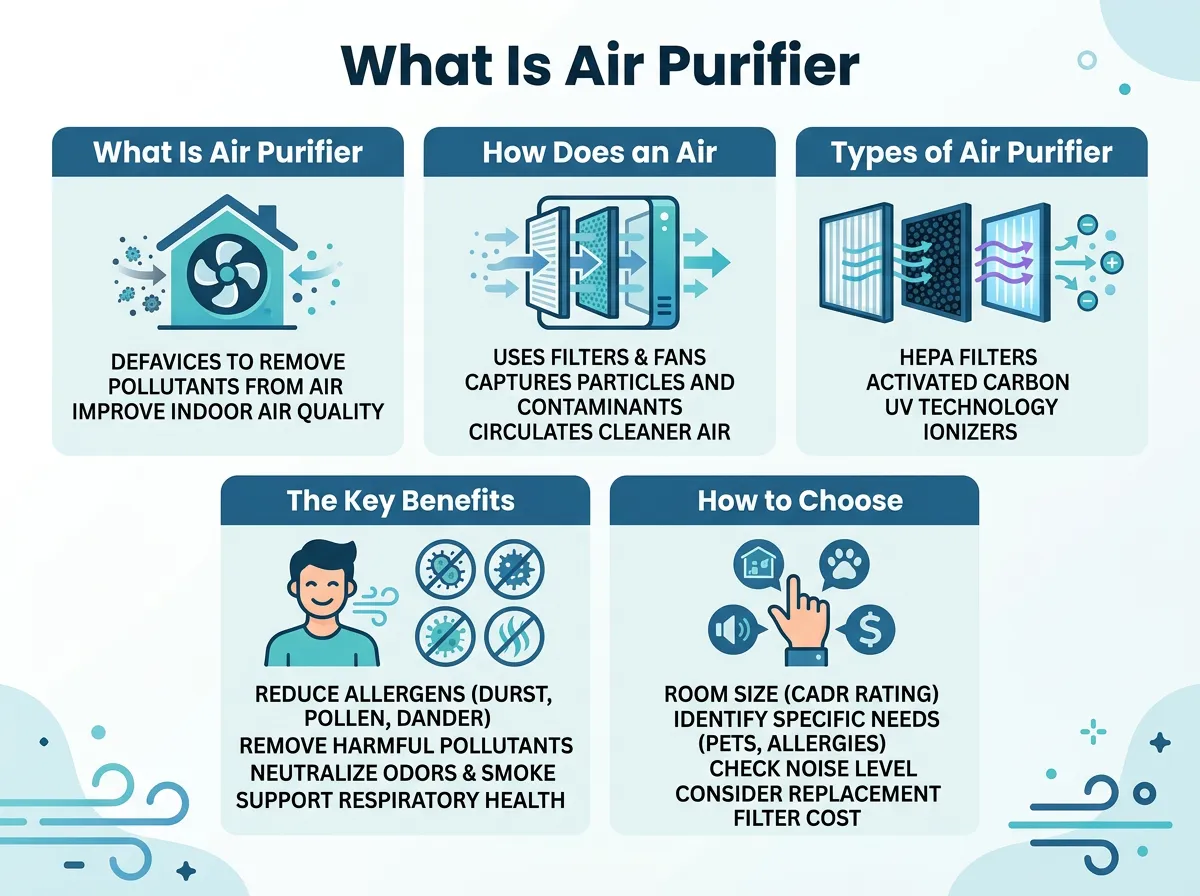
What Is Air Purifier? — key points at a glance
The process is continuous and very efficient. The machine works in a loop to ensure that every corner of your room stays fresh. Let us break down exactly how this happens step-by-step.
The Step-by-Step Cleaning Cycle
First, the device uses an internal motor and a quiet fan to pull dirty air into its intake vents. Once inside, the air is forced through a series of specialized filters. These filters act like tiny, dense nets that trap particles of all sizes. Finally, the clean, purified air is pushed back out into your room. A good machine will cycle and clean all the air in a room several times every hour, ensuring you always breathe fresh air.
Types of Air Purifier Filters Explained
The real secret to any clean air machine is its filter system. Different filters are designed to tackle different types of pollution. Most high-quality machines use a combination of filters to get the job done right.
Understanding these filters will help you choose the best model for your needs. Here are the three most common filter types you will find on the market today.
HEPA Filters
HEPA stands for High-Efficiency Particulate Air. This is the absolute gold standard of air filtration. A true HEPA filter is made from a dense web of tiny glass fibers. It can trap 99.97% of particles as small as 0.3 microns. To put that in perspective, a human hair is about 70 microns wide! This means HEPA filters easily capture dust, pollen, pet dander, and mold spores.
Activated Carbon Filters
While HEPA filters are great for trapping physical particles, they cannot stop smells or gases. That is where activated carbon filters come in. These filters use treated charcoal to absorb gases, chemicals, and household odors. If you want to eliminate strong cooking smells, pet odors, or chemical fumes, make sure your machine has an activated carbon layer.
UV Light and Ionic Filters
Some machines use ultraviolet (UV) light to kill mold spores and bacteria as they pass through. Others use ionizers, which release charged particles into the air. These charged particles stick to dust, making them heavy so they fall to the floor. While these modern methods are helpful, they work best when paired with a physical HEPA filter.
The Key Benefits of Using an Air Purifier
Why should you consider adding one of these machines to your home? There are many wonderful health and lifestyle benefits. In fact, medical experts at WebMD highlight how these devices can improve your daily well-being.
Investing in your indoor air is one of the easiest ways to protect your health. Let us look at some of the most common benefits you will experience.
Relief from Allergies and Asthma
If you suffer from seasonal allergies, you know how hard it is to stop sneezing. Pollen and mold spores can easily make their way inside. A clean air machine captures these allergens before they land on your furniture or get breathed in. This can dramatically reduce your sneezing, coughing, and itchy eyes, especially during spring and autumn.
Getting Rid of Stubborn Pet Dander
We love our pets, but they shed more than just fur. Pet dander consists of tiny flakes of skin that animals shed naturally. Dander floats easily in the air and can cause severe allergic reactions. A good clean air device traps this dander effortlessly. This allows you to cuddle your pets without constant sneezing or watery eyes.
Better Sleep Quality
Breathing clean air can help you sleep much better. When your bedroom air is full of dust and allergens, your body reacts. You might experience congestion, coughing, or a dry throat during the night. By keeping a quiet unit running in your bedroom, you can enjoy uninterrupted, deep sleep and wake up feeling refreshed.
How to Choose the Right Air Purifier
With so many models available, finding the right one can feel a bit confusing. However, you can make the decision easy by focusing on a few key factors. Before you buy, it is helpful to consult the Consumer Reports buying guide to compare specific model ratings.
By matching the machine to your lifestyle, you will get the absolute best results. Here is what you should look for when shopping.
Check the CADR Rating
CADR stands for Clean Air Delivery Rate. This rating measures how fast the unit can filter smoke, dust, and pollen. The higher the CADR number, the faster the unit cleans the air. Always check this rating to ensure the machine is powerful enough for your needs.
Match the Room Size
An appliance made for a small bedroom will not work well in a large living room. Manufacturers clearly state the maximum square footage each model can handle. Measure your room first, then choose a model designed for that specific space or slightly larger.
Look at Noise Levels and Energy Costs
Since these devices run for many hours a day, look for quiet models. Many have a special “night mode” that keeps the fan whisper-soft. Also, check the energy label. Choose a unit that is energy efficient so your monthly power bill stays low.
Simple Tips for Getting the Most Out of Your Device
Once you bring your new machine home, you want to make sure it performs at its best. Here are some quick, practical tips to maximize its efficiency.
With just a little bit of care, your machine will run beautifully for years to come.
Perfect Placement is Key
Do not hide your device behind a couch or in a tight corner. It needs room to work! Place it in an open area where air can flow freely into the intake vents. Keep it at least a couple of feet away from walls and furniture.
Keep Windows and Doors Closed
Your machine cannot clean the whole outdoors! If you leave your windows wide open while running the device, you are just letting new dust and pollen inside. Keep windows closed when the machine is on to let it do its job efficiently.
Change Filters Regularly
Filters do not last forever. Over time, they get completely clogged with dust and hair. Most manufacturers recommend replacing HEPA filters every six to twelve months. Check your user manual and replace them on time to keep the air flowing clean and fresh.
Conclusion
An air purifier is a simple, highly effective tool for improving your indoor life. By pulling in dirty air, trapping harmful particles, and releasing clean air, these machines protect your health and comfort. Whether you suffer from allergies, share your home with pets, or simply want to breathe fresher air, this device is a worthy investment. Take your time to choose the right size and filter type, keep the filters clean, and enjoy a healthier, happier home today.
Frequently Asked Questions
Do air purifiers really work?
Yes, air purifiers are highly effective at capturing airborne particles like dust, pollen, pet dander, and smoke. They draw air through specialized filters to trap these pollutants, significantly improving indoor air quality. However, they are most effective when paired with regular cleaning and dust control.
Can I leave my air purifier on all night?
Yes, it is completely safe and actually recommended to leave your air purifier running all night. Most modern devices have a quiet sleep mode designed for night use and consume very little energy. Running it continuously ensures you breathe clean air while you sleep, which can help prevent morning congestion.
Where should I place my air purifier?
You should place your air purifier in an open area where air can flow freely into the intake vents, at least a few feet away from walls or furniture. It is best to place it in the room where you spend the most time, such as your bedroom or living room. Avoid putting it in corners or behind large objects that block airflow.
How often do I need to change the filters?
Most manufacturers recommend replacing HEPA filters every six to twelve months, and activated carbon filters every three to six months. However, this depends on how often you run the device and the air quality in your home. Many units have a handy filter indicator light that lets you know exactly when it is time for a change.
Do air purifiers help with dust?
Yes, air purifiers are excellent at capturing airborne dust particles before they have a chance to settle on your furniture. This can significantly reduce the amount of dusting you need to do around your home. However, they cannot remove heavy dust that has already settled on carpets, couches, or tables.
Do air purifiers cool down a room?
No, air purifiers do not cool down a room because they do not have cooling elements like air conditioners. While the internal fan creates a gentle breeze that might feel slightly cool if you sit close to it, the machine only circulates and cleans the existing air. They are purely designed to improve air quality rather than regulate temperature.
