


An ionizer is a specialized air-purifying device that releases negatively charged ions into the air to neutralize airborne pollutants like dust, pollen, and smoke. By attaching to these particles, the ions make them heavy, causing them to fall to the floor or stick to nearby surfaces where they can easily be cleaned. This process helps freshen indoor spaces and remove tiny particles that standard filters might miss.
Imagine walking into a room and instantly feeling like you are standing near a rushing waterfall or deep in a fresh pine forest. That crisp, clean feeling in the air is not just in your head. It is the result of natural chemistry at work. In our modern, sealed homes, indoor air can quickly become stale, dusty, and full of invisible particles that make us sneeze. If you have been looking for ways to clear the air, you have likely run into a curious device called an ionizer.
This technology sounds like something straight out of a science fiction movie. However, it is actually a very common tool used to clean the air we breathe every day. If you are asking yourself, “What Is an Ionizer?” and wondering if you need one, you are in the right place. We will break down how these devices work, what they do to your air, and how they compare to other air cleaners on the market.
By the end of this guide, you will know exactly how these quiet little machines change your indoor environment. You will also learn how to choose the right one and how to use it safely in your home. Let us dive into the science of clean air made simple.
Key Takeaways
- How It Works: Ionizers emit negative ions that attach to airborne pollutants, making them heavy so they fall out of the air.
- Particle Target: They are highly effective at clearing tiny microscopic allergens, including dust, smoke, and pet dander.
- Easy Maintenance: Unlike standard air purifiers, many ionizers do not require expensive replacement filters.
- Ozone Safety: It is crucial to choose a certified ozone-free model to protect your lungs from respiratory irritation.
- Perfect Pairing: Ionizers work best when paired with a HEPA filter to catch and trap the fallen particles permanently.
📑 Table of Contents
Understanding the Science of Ionizers
To understand what an ionizer does, we have to look at the tiny world of atoms. Everything around us is made of atoms, and these atoms have electrical charges. Some are positive, some are negative, and some are neutral. In nature, forces like wind, waves, and sunlight constantly create negative ions. These negative ions are what make outdoor air feel so fresh and clean.
What Are Ions?
An ion is simply an atom or molecule that has lost or gained an electrical charge. In the air, molecules like oxygen can gain an extra electron. When they do, they become negative ions. These negative ions are highly active. They want to bind with other particles in the air to balance themselves out. Sadly, indoor spaces usually lack these fresh, negative ions. Instead, our homes are full of positive ions created by electronics and stagnant air.
The Attraction Process
Most airborne pollutants have a positive charge. This includes dust, pollen, mold spores, and pet dander. Since opposites attract, negative ions are naturally drawn to these positive particles. When a negative ion meets a positive dust particle, they stick together. This simple bond is the secret key to how an ionizer cleans the air in your living space.
How Does an Ionizer Work in Your Home?
Now that we know the basic science, let us look at the machine itself. An ionizer is a small electrical device that plugs into your wall. It does not rely on physical screens or paper filters to trap dirt. Instead, it uses electricity to change the charge of the air around it.
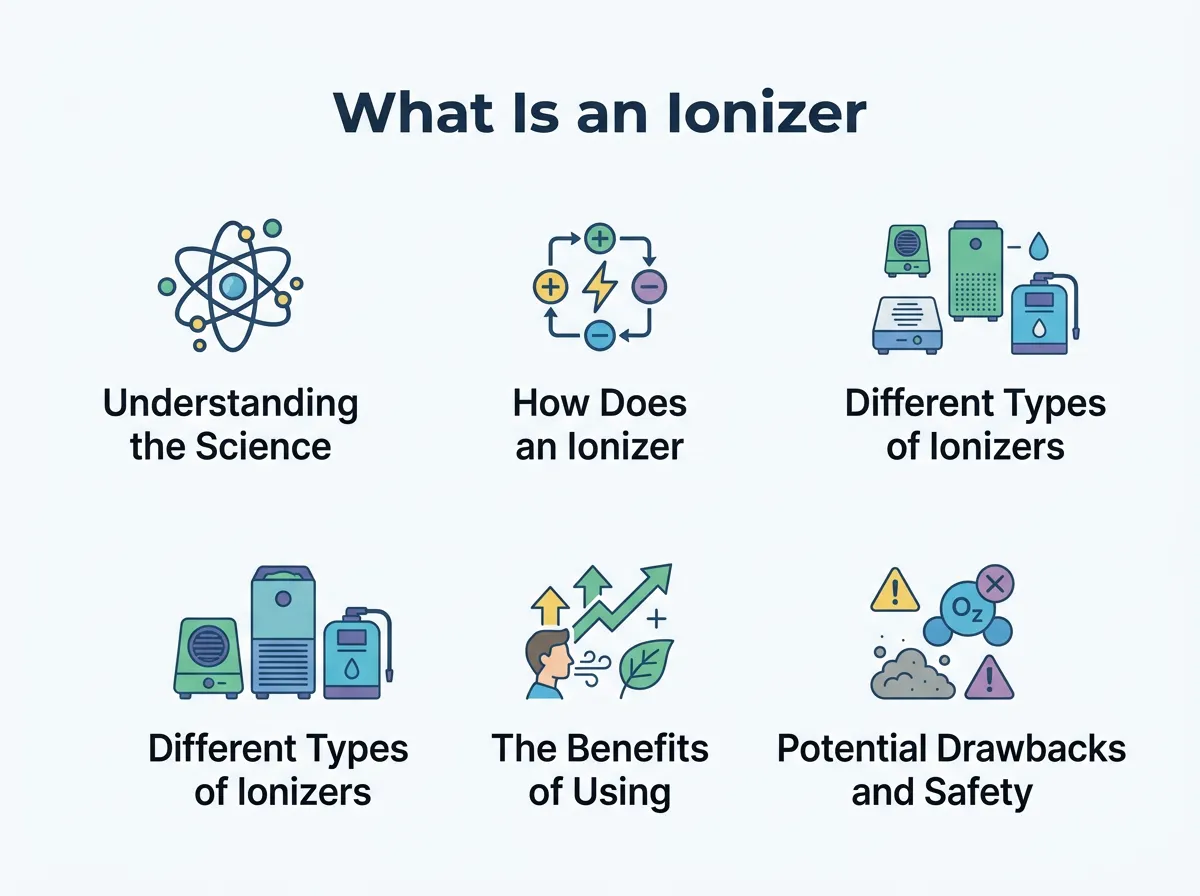
What Is an Ionizer? — key points at a glance
Emitting the Charge
Inside the device, there is a small built-in component that generates a high-voltage electrical current. This current is sent to tiny metal needles or needles made of carbon fiber. As the electricity flows through these needles, it releases a stream of negative ions directly into your room. This process is silent and invisible to the naked eye.
Clumping the Particles
Once the negative ions enter the room, they spread out quickly. They float through the air and search for positive particles. When they find a dust mite, a grain of pollen, or a piece of pet dander, they latch onto it. As more and more ions stick to a single dust particle, the particle becomes heavier. It is like adding tiny weights to a floating balloon.
Grounding the Dust
Eventually, the clump of dust and ions becomes too heavy to float in the air. Gravity takes over, and the heavy clump falls to the ground. It may land on the floor, on your carpet, or on nearby tables and shelves. Once the dust lands, it is no longer floating in the air. This means you can no longer breathe it into your lungs, which is a major win for your health.
Different Types of Ionizers
Not all ionizers are built the exact same way. Some are standalone units, while others are built into larger appliances. Understanding the differences will help you choose the best option for your specific needs.
Electrostatic Precipitators
This is a very popular type of ionizer. It does not just send dust to the floor. Instead, it has built-in metal plates that carry an opposite charge. As the ionized dust floats past these plates, the dust is pulled right onto them. The dust sticks to the plates like metal to a magnet. You can easily slide these plates out and wipe them clean, which saves you money on buying replacement filters.
Needlepoint and Fan-Assisted Ionizers
Some units do not have collection plates. They simply use a small fan to blow the negative ions deep into the room. These needlepoint units are often small and highly portable. They are great for small bedrooms or office spaces. However, because they do not collect the dust, you will need to vacuum or dust your room more often to clean up the fallen debris.
The Benefits of Using an Ionizer
Why do so many people love these machines? There are several great benefits to adding one of these devices to your home. Here are some of the most common reasons people buy them.
Tackling Microscopic Allergens
Standard air filters often struggle with very small particles. Tiny things like smoke, viruses, and ultra-fine dust can slip right through cheap paper filters. Since ionizers work on a molecular level, they can easily target these tiny pests. If you suffer from seasonal allergies or asthma, this can bring great relief to your itchy eyes and runny nose.
Reducing Stubborn Odors
Negative ions do more than just drop dust to the floor. They can also help neutralize molecules that cause bad smells. If you have pets, cook with strong spices, or have a musty basement, an ionizer can help. It breaks down the odor-causing compounds in the air, leaving your home smelling clean and fresh without the use of chemical sprays.
Potential Drawbacks and Safety Concerns
While these machines are great, they are not perfect. There are a few things you should keep in mind before you buy one for your home.
The Ozone Question
Some ionizers produce a tiny amount of ozone as a byproduct of the electrical charge. Ozone is a gas that can irritate your lungs if you breathe in too much of it. To stay safe, look for devices that are certified as “ozone-free” or meet strict safety standards, such as those set by the California Air Resources Board (CARB).
The Clean-Up Duty
Because ionizers cause dust to fall out of the air, that dust has to go somewhere. You might notice a thin layer of dust forming on your TV stand, walls, or floor near the device. This is sometimes called the “black wall effect.” To prevent this, you will need to dust and vacuum your room regularly to keep the fallen particles from being kicked back into the air.
Ionizers vs. HEPA Filters: Which Is Better?
Many people get confused between ionizers and HEPA filters. They both clean the air, but they do it in completely different ways. Let us compare the two to see which one fits your life.
The Physical Barrier of HEPA
A HEPA filter is a thick, paper-like filter. A fan pulls air through this filter, and the dirt gets physically trapped inside the fibers. HEPA filters are amazing at catching 99.97% of dust and pollen. However, they need to be replaced every few months, which can get costly over time. They also do not neutralize odors as well as negative ions can.
The Active Reach of Ionizers
While HEPA filters are passive and wait for air to pass through them, ionizers are active. They send out ions to clean the air across the entire room. They do not have filters to clog, which makes them very low-maintenance. For the best results, many experts suggest using a hybrid device. A machine that combines a HEPA filter with an ionizer gives you the best of both worlds.
Tips for Getting the Most Out of Your Ionizer
If you decide to bring one of these devices into your home, follow these simple tips to get the best results:
- Place it in the center: Put your device in an open area where the air can circulate freely. Avoid hiding it behind couches or curtains.
- Clean the plates: If your unit has collection plates, wash them once a week with warm water and soap. This keeps the electrical attraction strong.
- Vacuum often: Use a vacuum with a HEPA filter to pick up the dust that the ionizer drops onto your carpet. This stops the dust from returning to the air.
- Check the safety labels: Always verify that your device is certified safe and does not produce harmful levels of ozone.
Conclusion
An ionizer is a powerful, quiet, and efficient tool for improving your indoor air quality. By using the natural power of negative ions, it clears away the tiny particles that physical filters often miss. While they require a bit of extra dusting and careful attention to ozone safety, they are a fantastic way to keep your home smelling sweet and feeling fresh. Whether you use one on its own or pair it with a HEPA filter, you are sure to breathe a whole lot easier.
Frequently Asked Questions
Do ionizers actually clean the air?
Yes, ionizers are highly effective at removing small particles like dust, smoke, and pollen from the air. They do this by emitting negative ions that attach to these particles and make them fall to the ground. However, they do not physically trap the dust unless they have a built-in collection plate.
Are ionizers safe for pets?
Most modern ionizers are perfectly safe for pets as long as they do not produce ozone. Ozone can be harmful to the sensitive respiratory systems of cats, dogs, and birds. Always choose an ozone-free model to ensure your pets stay safe and healthy.
How often should I clean my ionizer?
If your device has electrostatic collection plates, you should clean them every one to two weeks. Simply slide the plates out, wipe them down with a damp cloth or wash them with soapy water, and let them dry completely before putting them back. Keeping them clean ensures the device runs at peak performance.
Can I leave an ionizer on all day?
Yes, you can safely leave an ionizer running all day and night. Most units use very little electricity, making them highly energy-efficient to run continuously. Just make sure the room has some ventilation and that you vacuum up the fallen dust regularly.
What is the difference between an ionizer and an air purifier?
An air purifier is a broad category of devices, which usually includes physical filters like HEPA filters that trap dirt. An ionizer is a specific type of air purifier that uses electrical charges to clump particles together so they fall out of the air. Many modern air purifiers combine both technologies for the best results.
Do ionizers help with smells?
Yes, ionizers are great at reducing indoor smells from cooking, pets, and smoke. The negative ions break down the chemical bonds of odor-causing molecules in the air. This helps neutralize the bad scents rather than just masking them with artificial fragrances.
