


Yes, a high-quality air purifier with a True HEPA filter will help with mold by trapping airborne mold spores before they can land and grow. However, while purifiers are excellent for cleaning the air and reducing allergy symptoms, they cannot remove existing mold growing on physical surfaces. To completely solve a mold problem, you must combine air filtration with moisture control and physical cleanup.
Imagine walking into your basement. You take a deep breath, but the air feels heavy. A damp, earthy smell fills your nose. You look in the corner and see a dark stain on the wall. Your chest feels tight, and you start to sneeze. Mold has moved into your home, and it is making you feel sick.
Many homeowners face this exact problem. You want a quick and easy way to clean the air. You look at your options and wonder, will air purifier help with mold? It seems like a simple fix. You just plug it in, turn it on, and let it do the work. But does it really solve the problem?
In this guide, we will answer that question in detail. We will look at how mold spreads. We will explain how air purifiers work to catch these tiny pests. You will also learn how to choose the best machine for your home. Finally, we will share a simple plan to get rid of mold for good.
Key Takeaways
- HEPA filters work: A True HEPA filter traps 99.97% of airborne mold spores.
- Prevents spreading: Purifiers stop spores from drifting to new damp spots in your home.
- Reduces odors: Carbon filters help get rid of that musty mold smell.
- Not a cure-all: Air purifiers cannot clean up mold that is already growing on walls or floors.
- Moisture is the key: You must fix water leaks and lower humidity to stop mold for good.
📑 Table of Contents
How Mold Grows and Spreads in Your Home
To solve a problem, you must first understand it. Mold is a type of fungus. It is a natural part of our world. Outdoors, mold helps break down dead leaves and trees. But indoors, mold can cause big trouble for your house and your health.
The Life of a Mold Spore
Mold does not have seeds. Instead, it makes tiny drifts of dust called spores. These spores are very small. You cannot see them with your eyes. They float through the air like tiny dust motes. They can enter your home through open windows, doors, or your air vents. They can even hitch a ride on your clothes or your dog.
Why Mold Loves Your House
Mold spores are always in the air. Most of the time, they do not cause issues. But they need three things to grow. They need warmth, food, and water. Your drywall, wood, and carpet are great food sources for mold. If these materials get wet, mold can start to grow in just 24 to 48 hours. Once it lands on a wet spot, it roots down. Then, it starts to make more spores. Soon, you have a big colony on your wall.
Will Air Purifier Help with Mold Spores?
The short answer is yes. Air purifiers are great tools. But you must understand what they can and cannot do. They act like a net for your air. They do not act like a sponge for your walls.
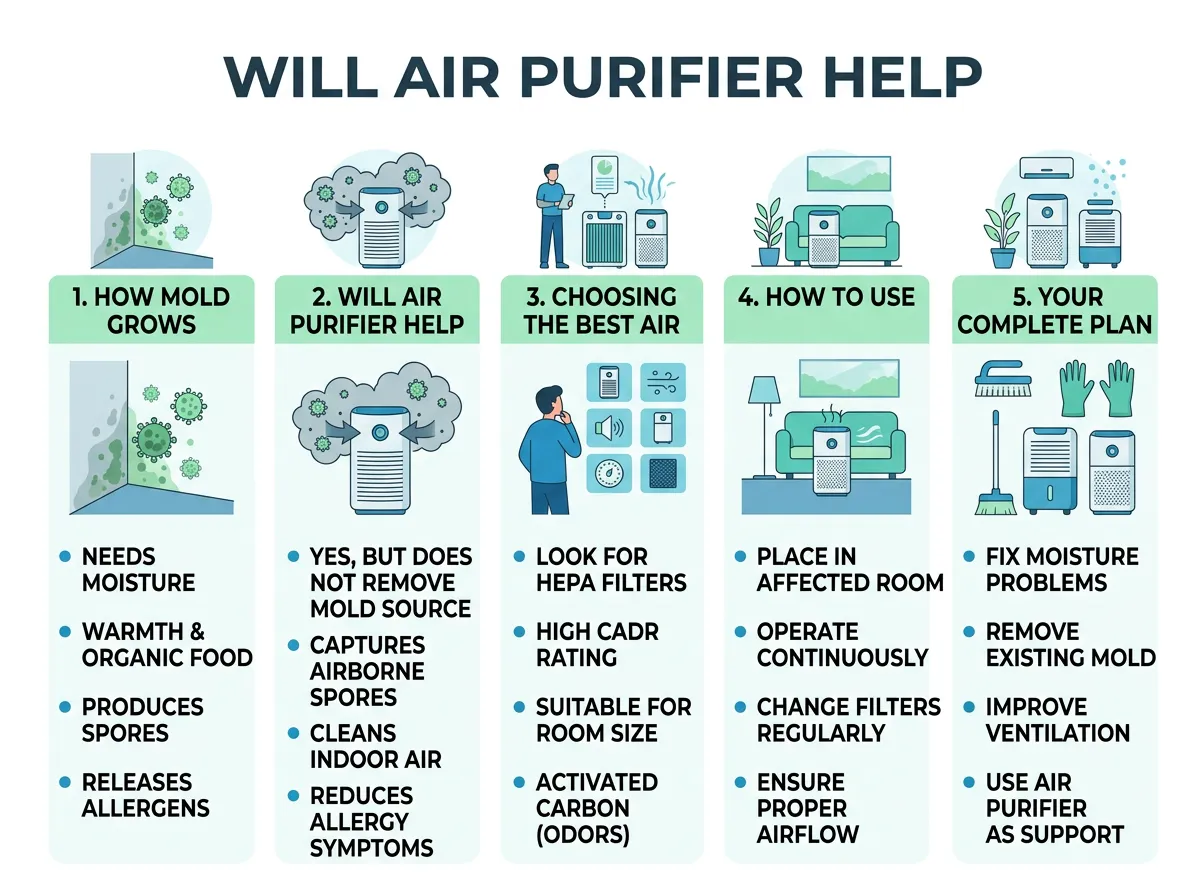
Will Air Purifier Help With Mold? — key points at a glance
How Filters Catch the Spores
When mold grows, it sends thousands of spores into the air. An air purifier draws this dirty air inside using a fan. The air passes through a very tight filter. A True HEPA filter is the gold standard for this job. It can catch tiny particles. This includes mold spores, dust, and pollen. By trapping these spores, the purifier keeps them from landing on your walls. It helps you trap mold spores before they can start new colonies.
What Air Purifiers Cannot Do
It is vital to know the limits of these machines. Will air purifier help with mold that is already on your bathroom tiles? No, it will not. An air purifier cannot clean up active mold growth. It cannot scrub your walls. It cannot kill the mold roots inside your drywall. If you have a black patch on your wall, you must clean it by hand. The purifier will only catch the spores that fly into the air during the cleanup.
Choosing the Best Air Purifier for Mold
Not all air purifiers are the same. Some are great for dust but poor for mold. If you want to fight mold, you must look for specific features.
The Power of True HEPA Filters
Do not buy a cheap filter. Look for the words “True HEPA” on the box. A True HEPA filter is tested to trap 99.97% of particles as small as 0.3 microns. Mold spores are usually between 2 and 100 microns. This means a True HEPA filter will easily catch them. You can find some of the best air purifiers for mold that use these high-grade filters to clean large rooms quickly.
Using Carbon to Fight Musty Smells
Mold has a very strong smell. It is a damp, sour odor. A HEPA filter traps the spores, but it cannot stop the smell. For that, you need an activated carbon filter. This filter uses treated charcoal to absorb gases and odors. It traps the smelly molecules in the air. This keeps your home smelling fresh and clean.
Avoid Ozone Generators
Some machines claim to kill mold using ozone. Be very careful with these. Ozone can irritate your lungs. It can make asthma worse. It is not safe to use ozone in rooms where people or pets are present. Stick to safe, physical filtration like HEPA and carbon. Many of these safe models are tested for mold spore removal to ensure they perform well without hurting your health.
How to Use Your Purifier for the Best Results
Once you buy a purifier, you must use it the right way. Just plugging it in is not always enough. Here are some simple tips to get the most out of your machine.
Find the Perfect Spot
Do not hide your purifier behind a couch. Do not put it in a tight corner. It needs space to work. Keep it at least two feet away from walls and furniture. Place it in the room where you spend the most time. If you have a damp basement, put it there. This helps the machine draw in air from all sides.
Run It All Day and Night
Some people only turn their purifier on for an hour. This is a mistake. Mold spores are always floating. You should run your purifier 24 hours a day. Most modern units use very little electricity. You can set it to a low speed at night so it is quiet.
Change the Filters on Time
Filters get dirty over time. A clogged filter cannot do its job. Check your manual to see how often to swap filters. Usually, you should change HEPA filters every 6 to 12 months. When you change a filter with mold on it, wear a mask. Take the filter outside to throw it away. This stops spores from flying back into your clean room.
Your Complete Plan to Get Rid of Mold
An air purifier is just one piece of the puzzle. To win the war on mold, you must use a full plan. Here are three steps to clear mold out of your home.
Step 1: Stop the Water
Mold cannot grow without water. If you have a leak, fix it. Check under your sinks. Look at your roof. If your basement is damp, buy a dehumidifier. Keep your indoor humidity below 50%. Use exhaust fans when you shower or cook. This dries out the air and starves the mold.
Step 2: Clean the Mold Safely
If you see mold, you must clean it up. For small areas, you can use soap and water. You can also use vinegar or a mild bleach mix. Wear gloves, goggles, and a face mask. Scrub the mold off hard surfaces. If mold gets into carpet or ceiling tiles, you may need to throw them away.
Step 3: Run Your Air Purifier
Turn your air purifier on high while you clean. Cleaning stirs up millions of spores. The purifier will catch them before they can land somewhere else. Keep running it after you finish to keep the air fresh.
Conclusion
So, will air purifier help with mold in your home? Yes, it absolutely will. It is a powerful ally that keeps your air clean. It protects your lungs by trapping tiny spores and clearing away musty smells. But remember, it cannot fix a water leak or wipe a wall clean. Use your air purifier as part of a complete plan. Stop the moisture, clean up the mess, and let your purifier do the rest. Soon, you will breathe easy in a fresh, healthy home.
Frequently Asked Questions
Will an air purifier kill mold on my walls?
No, an air purifier cannot kill or remove mold that is already growing on your walls. It only traps airborne mold spores that float through the air. You must physically scrub and treat the mold on your walls to get rid of it.
What filter is best for catching mold spores?
A True HEPA filter is the best option for catching mold spores. It can trap 99.97% of tiny particles, including spores as small as 0.3 microns. Avoid cheap filters, as they let tiny mold spores pass right through.
Can mold grow inside an air purifier filter?
Yes, if the air purifier is turned off or kept in a very damp room, mold can grow on the dirty filter. To prevent this, run your purifier continuously and replace your filters on schedule. Some filters also have a special coating to stop mold from growing on them.
Does an air purifier help with mold smells?
Yes, but only if the air purifier has an activated carbon filter. While a HEPA filter traps the physical spores, the carbon filter absorbs the gases and odors that cause that musty mold smell.
How long does it take an air purifier to clear mold spores?
In most medium-sized rooms, a good air purifier can clean the air in about 30 to 60 minutes. However, you should leave the machine running continuously to catch new spores as they are released.
Is it safe to sleep in a room with mold if I use an air purifier?
An air purifier will make the room much safer by lowering the number of spores in the air. However, if there is a large amount of active mold on the walls, it is best to clean the mold and fix the source of moisture before sleeping there long-term.
