


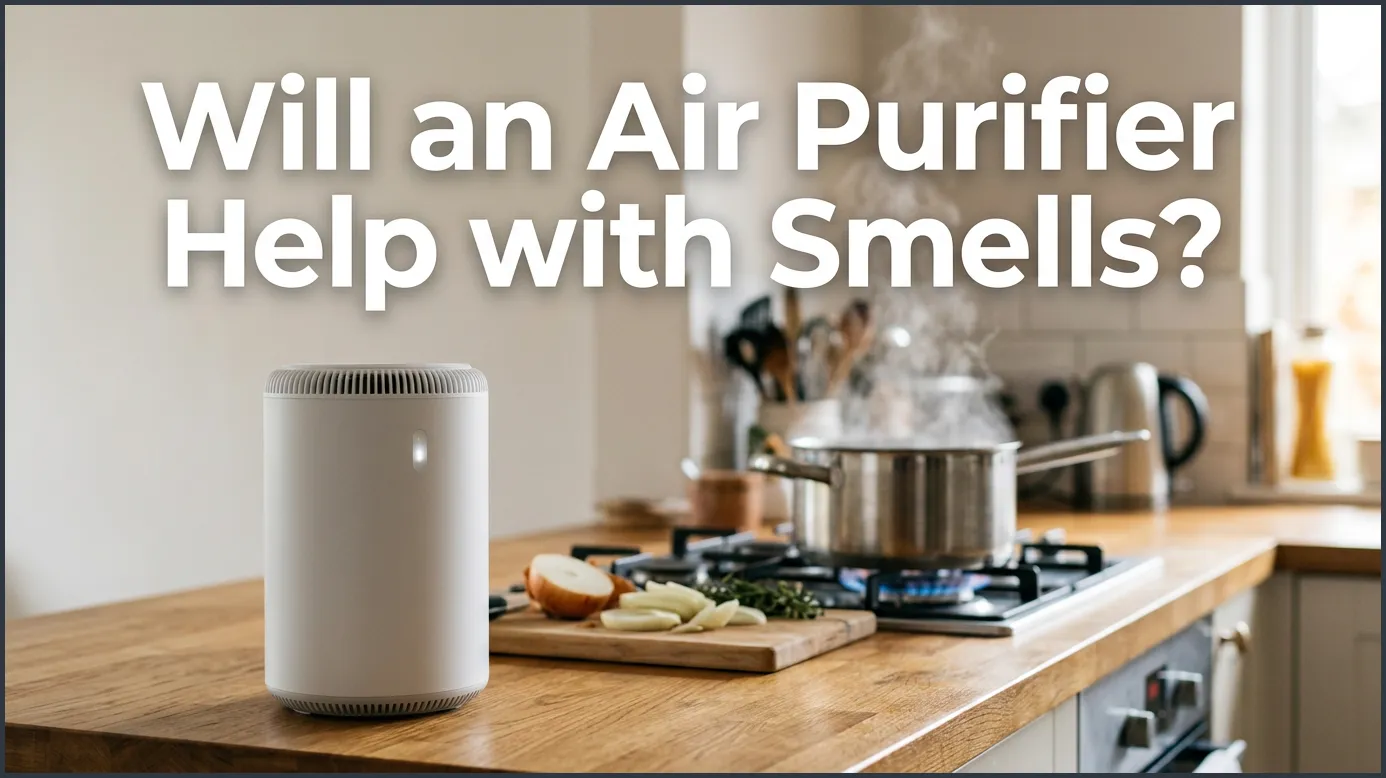
Yes, an air purifier can help with smells, but only if it contains an activated carbon filter. While standard HEPA filters capture solid particles like dust and allergens, they cannot trap gas-phase odor molecules. An activated carbon filter chemically binds and neutralizes stubborn odors from pets, cooking, and smoke to keep your living space smelling clean and fresh.
Imagine walking through your front door after a long day at work. You expect to find the comforting, familiar scent of your home. Instead, you are hit by a wall of leftover fish from last night’s dinner, a damp dog, or a musty closet. We have all been there. It is incredibly frustrating to clean your house from top to bottom only to have stubborn odors linger in the air. You might try burning scented candles, spraying synthetic air fresheners, or opening your windows, but these solutions often just mask the problem or make it worse.
This leaves many homeowners searching for a more permanent, reliable solution. You might be staring at that dusty corner of your living room and wondering: will an air purifier help with smells? It is a very common question. Air purifiers are famous for trapping airborne dust, pollen, and pet dander. But can they actually scrub the air clean of nasty odors, or are they just expensive fans that move dirty air around? Many people ask: will an air purifier help with smells from old paint or wet pets? Let us dive into how these devices work and how you can use them to make your home smell amazing.
In this guide, we will break down the science of indoor smells. We will look at why some air purifiers work miracles on tough odors while others fail completely. You will also learn exactly what features to look for when shopping for an odor-busting air purifier. Finally, we will share some easy, practical tips to maximize your device’s performance. By the end of this article, you will know how to create a fresher, cleaner, and healthier living space for you and your family.
Key Takeaways
- Carbon is Key: Only air purifiers with activated carbon filters can trap gas-phase odors and volatile organic compounds (VOCs).
- HEPA Alone is Not Enough: Standard HEPA filters trap solid particles like dust and pet dander but do not stop smells.
- Source Removal First: To truly clean the air, always find and clean the physical source of the odor first.
- Room Size Matters: Ensure your purifier’s CADR rating matches the size of the room for effective odor control.
- Filter Replacement is Crucial: Old, saturated carbon filters will stop absorbing smells and can even release odors back into the room.
📑 Table of Contents
The Science of Household Odors
To understand if an air purifier can solve your household odor issues, we first need to look at what a smell actually is. Odors are not just imaginary things. They are made of actual physical matter floating through your home. When you smell something, your nose is picking up tiny chemical compounds. These compounds are often called Volatile Organic Compounds, or VOCs for short. They easily turn into gases at room temperature and travel quickly through the air.
Particulate vs. Gaseous Odors
Not all smells in your home are created equal. Some smells come from solid particles floating in your living space. For example, when you burn toast, tiny bits of carbon rise into the air. Pet odors often ride on tiny flakes of dead skin, which we know as dander. These are particulate odors. They are relatively large and heavy compared to other air pollutants. If you keep asking yourself, will an air purifier help with smells in my small apartment, the answer depends heavily on whether the smell is a particle or a gas.
On the other hand, many of the worst household smells are purely gaseous. This includes things like ammonia from a dirty cat litter box, natural cooking gases, or the harsh chemicals in fresh paint. These molecules are incredibly tiny. They are thousands of times smaller than a single speck of dust. Because they are so small, they do not settle on floors or tables easily. Instead, they bounce around your room, getting trapped in your carpets, curtains, and furniture. Understanding this difference is key to answering the question: do air purifiers help with smell?
How Air Purifiers Tackle Smells
If you want to know, will an air purifier help with smells, the answer lies entirely in the type of filter inside the machine. An air purifier is essentially a fan that pulls air through a series of filters. However, different filters do different jobs. If you buy the wrong type of air purifier, you might still end up dealing with smelly air day after day.
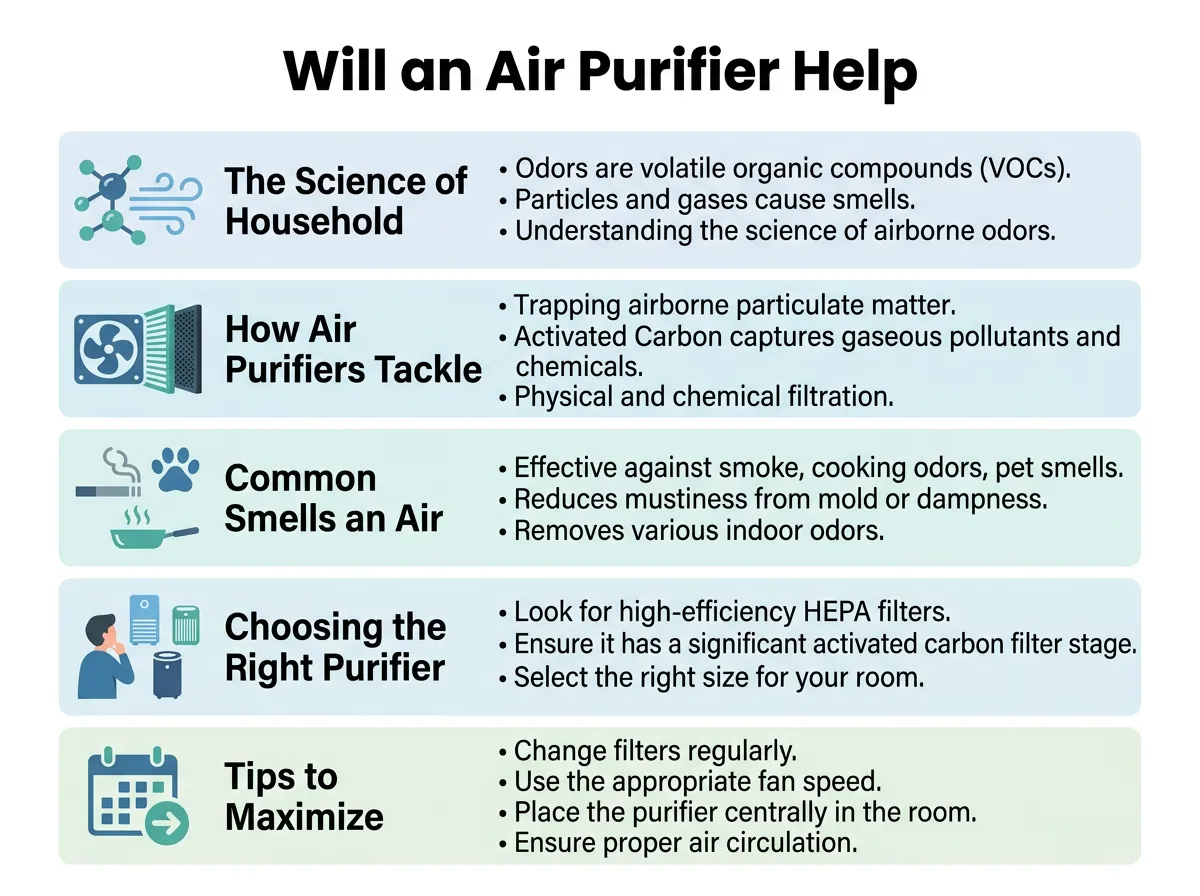
Will an Air Purifier Help With Smells? — key points at a glance
Why HEPA Filters Are Not Enough for Odors
Most modern air purifiers come with a True HEPA filter. These filters are amazing at catching solid particles. They can trap 99.97% of tiny airborne particles like dust, mold spores, and pollen. But here is the catch: HEPA filters are terrible at stopping smells. Because gaseous odor molecules are so tiny, they are far too small for a HEPA filter to catch. They simply slip through the tiny gaps in the HEPA material like water through a net. If your air purifier only has a HEPA filter, it will not make your home smell any better.
The Magic of Activated Carbon
To get rid of smells, you absolutely need an activated carbon filter. This is the real hero of indoor odor control. Activated carbon is charcoal that has been treated with oxygen. This treatment opens up millions of tiny pores between the carbon atoms. It creates a massive internal surface area. In fact, just one gram of high-quality activated carbon can have a surface area of over 10,000 square feet!
When gaseous odors pass through this filter, they stick to the carbon through a process called adsorption. Note that this is different from absorption. Instead of soaking up the smell like a sponge, the odor molecules chemically bond to the outside of the carbon pores. Once they bond, they are trapped for good. This is why you must choose a unit with a thick carbon layer if you want to remove smells and odors from your home.
Common Smells an Air Purifier Can Remove
When you have the right filter setup, you will see a massive difference in your indoor air quality. So, what kind of smells can you target? There are several common types of odors you can get rid of using a quality air purifier in your daily life.
Cooking and Food Odors
We all love a good home-cooked meal. But nobody wants their bedroom or living room to smell like fried bacon, fish, or onions three days later. Cooking oils and spices vaporize into the air when heated. An activated carbon filter is great at catching these greasy, heavy food odors. It keeps your kitchen smelling fresh even after a big cooking session. You might wonder, will an air purifier help with smells like musty basement air too? Yes, the carbon will grab those musty gases as well.
Pet Smells and Dander
Pets bring endless joy to our lives, but they also bring unique scents. Between wet fur, dirty litter boxes, and natural skin oils, pet odors can quickly take over a house. A dual-filter system works best here. The HEPA filter catches the dander and hair that carry the smell. Meanwhile, the carbon filter absorbs the ammonia and musk gases. This double attack is the best way to keep your home smelling pet-free.
Smoke and VOCs
Whether it is from a cozy fireplace, a burnt dinner, or tobacco, smoke is highly intrusive. Smoke consists of both tiny ash particles and harmful chemical gases. A standard air purifier will fail to clean it. However, a thick activated carbon filter will trap the dangerous VOCs and chemicals found in smoke. This protects your lungs and eliminates the stale, smoky smell from your walls and furniture.
Choosing the Right Purifier for Odor Control
If you are shopping for a new device, you might ask: will an air purifier help with smells if I get a cheap, small model? The short answer is usually no. You need to look closely at the specifications before you buy. Here are the two most important factors to check.
Look at the Clean Air Delivery Rate (CADR)
The CADR tells you how fast the purifier can clean the air in a specific room. If a purifier is too small for your living room, the air will not pass through the filters fast enough to remove smells. Always match the purifier’s recommended room size to your actual space. It is often smart to buy a slightly larger model than you need so it can run quietly on lower speeds while still cleaning the air effectively.
Check the Carbon Filter Thickness
Many cheap air purifiers claim to have a carbon filter. However, if you look closely, it is often just a thin sheet of foam coated in a tiny bit of carbon dust. This will get saturated with smells in just a few days. For serious odor issues, look for a purifier with a heavy, pellet-based carbon filter. These filters contain pounds of actual carbon pellets. They last much longer and can tackle the top culprits of home odors with ease.
Tips to Maximize Your Purifier’s Odor-Busting Power
Buying a great air purifier is only half the battle. You also need to use it correctly to get the best results. Here are some simple, practical tips to keep your air smelling fresh day after day.
Combine Purifiers with Source Control
An air purifier is an air cleaner, not a magic wand. If you have a rotting bag of trash in the kitchen, a purifier cannot stop the smell if the trash stays there. Always find and remove the source of the odor first. Throw away old food, wash dirty pet beds, and wipe down moldy surfaces. Once the source is gone, turn on your purifier to clear out any remaining smells from the air.
Replace Your Filters Regularly
Carbon filters have a limited lifespan. Once every tiny pore in the carbon is filled with an odor molecule, the filter is full. It cannot trap any more smells. If you keep running a saturated filter, it can actually start releasing those trapped smells back into your home! Check your manufacturer’s manual. Most carbon filters need to be replaced every six to twelve months, depending on how smelly your home is.
Conclusion
So, will an air purifier help with smells? Yes, it absolutely will! However, you must make sure you choose a machine with a high-quality, thick activated carbon filter. A simple HEPA filter is great for allergies, but it cannot stop gaseous odors on its own. By pairing a HEPA filter with a thick layer of carbon, you can say goodbye to stubborn pet, cooking, and smoke odors. Place your purifier in the right room, keep up with filter changes, and enjoy the clean, fresh air you deserve.
Frequently Asked Questions
Can a HEPA filter get rid of bad smells?
No, a HEPA filter alone cannot eliminate odors. HEPA filters are designed to capture solid particles like dust and pollen, but they let tiny gas-phase odor molecules pass right through. You need an activated carbon filter to trap smells.
How long does it take for an air purifier to remove a smell?
In most medium-sized rooms, a properly sized air purifier can clear out odors within 30 to 60 minutes. The exact time depends on the fan speed and the strength of the smell. Running the purifier on high will speed up this process significantly.
Will an air purifier help with dog and cat smells?
Yes, air purifiers are very effective at handling pet odors. The HEPA filter captures pet hair and dander, while the activated carbon filter absorbs the gases that cause pet musk and litter box smells. This dual action keeps your home smelling clean.
Do air purifiers get rid of cigarette smoke smell?
Yes, but you will need a heavy-duty air purifier with a thick activated carbon filter. Cigarette smoke contains both particles and gaseous chemicals, so a standard filter won’t work. Look for a unit specifically designed for smoke removal with several pounds of carbon.
Why does my air purifier smell bad?
If your air purifier is releasing a bad smell, your filters are likely dirty or saturated. When a carbon filter gets completely full, it can no longer absorb smells and may begin releasing trapped odors back into the room. Simply replacing your filters with fresh ones will solve this problem.
Where should I place my air purifier for the best odor control?
For the best results, place your air purifier close to the source of the smell, such as near the kitchen stove or your pet’s bed. Make sure the unit has at least a foot of clear space around it so air can flow freely. Avoid placing it in corners or behind furniture where airflow is blocked.
